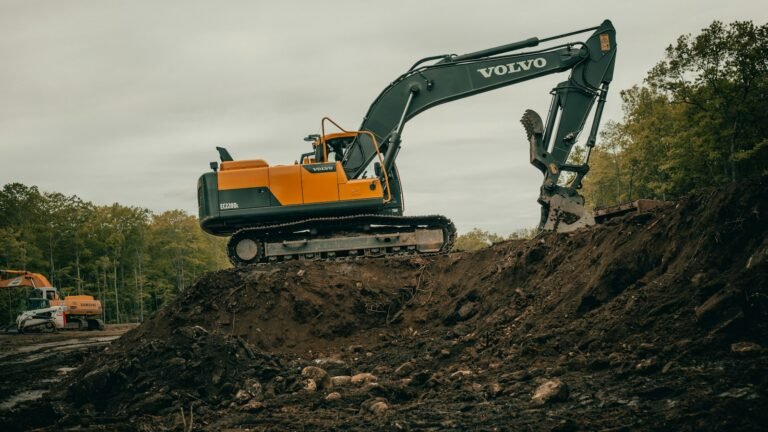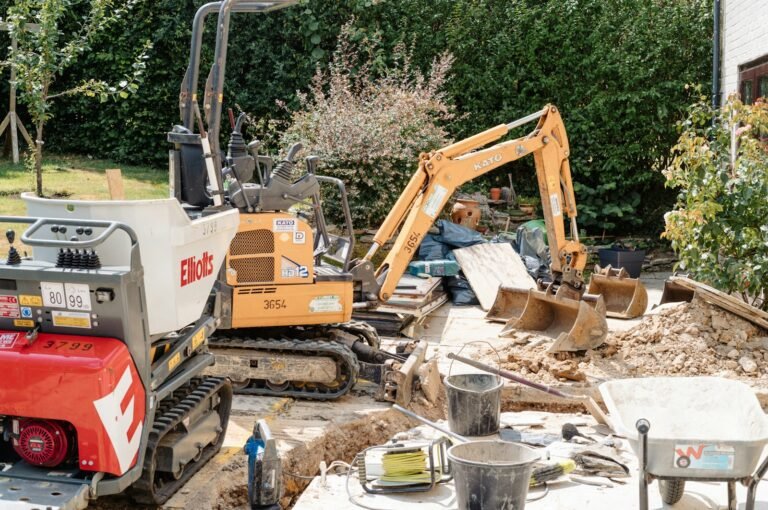
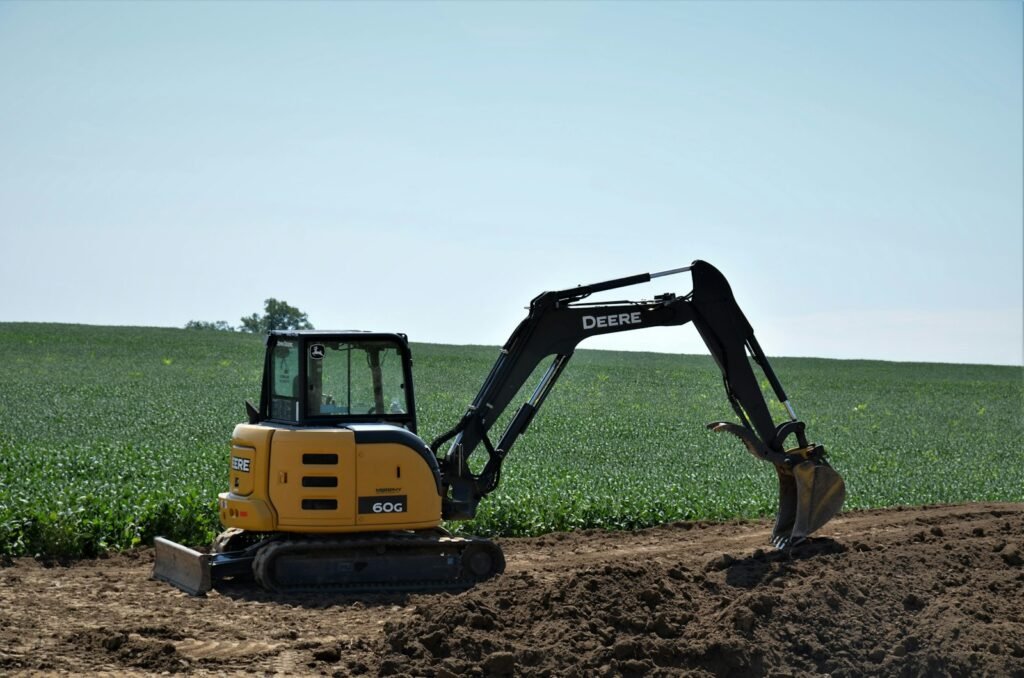
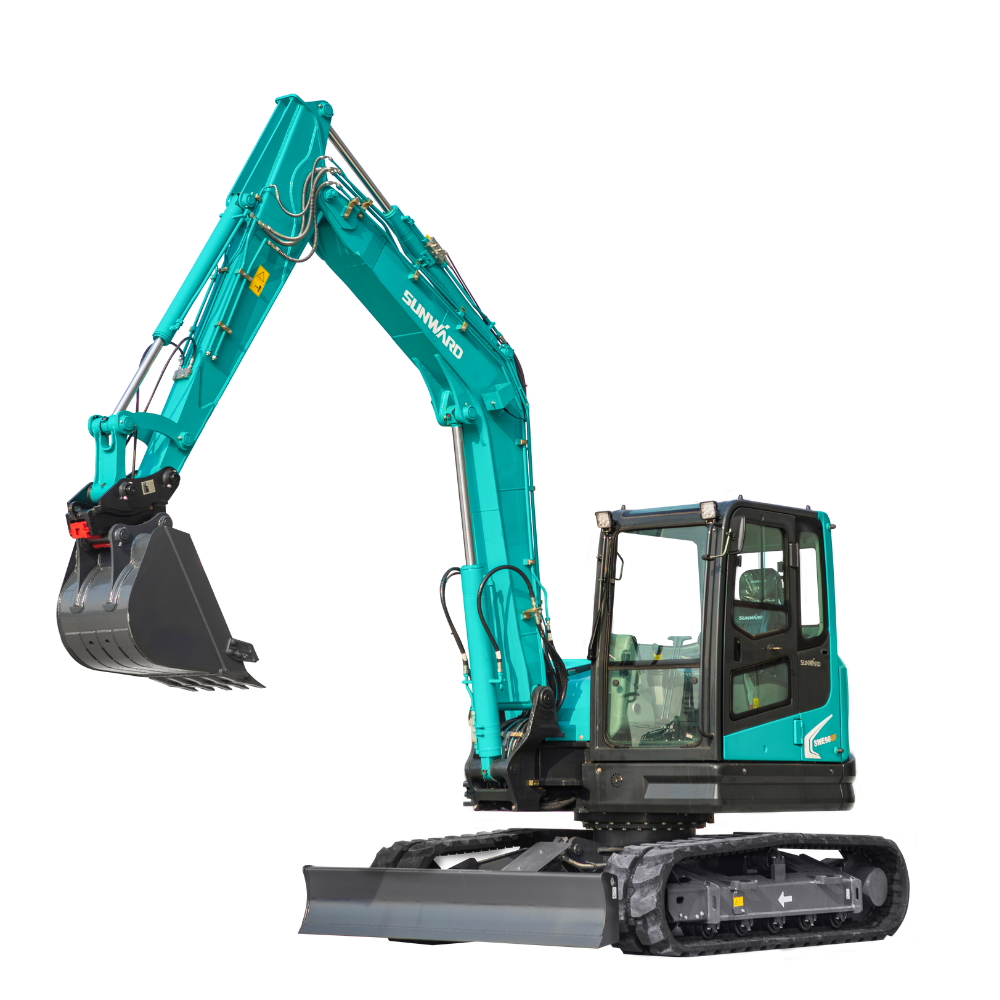
6 tonne excavator hire is the sensible step up when a mini digger starts to feel like a teaspoon. From our depot near Okehampton we hire the Sunward SWE 60UF, a 6-tonne zero tail swing machine built for medium groundworks: house plot foundations, drainage runs, farm yard reshaping and site clearance.
In this guide
It digs deeper and loads faster than a 3.5-tonner, yet still slews inside its own tracks, so it works happily next to walls, hedges and parked vehicles. This guide covers what it suits, what it doesn’t, how to prepare your site, and how to plan the hire so the machine earns its keep from the first morning.
Where a 6 tonne excavator fits in the range
Our Sunward range runs from the 0.8-tonne SWE 08B up to the 9-tonne SWE 90UF. The 6-tonne sits in the middle for a reason. It has the weight and hydraulic power to dig firm clay and rocky ground without bouncing, and the reach to load a tipper or dumper from one position, but it is still compact enough to deliver to a building plot down a Devon lane.
| Machine | Class | Typical work | Think twice if |
|---|---|---|---|
| Sunward SWE 35UF | 3.5t zero tail | Extensions, garden landscaping, smaller drainage jobs | You have hundreds of cubic metres to move |
| Sunward SWE 60UF | 6t zero tail | House plots, longer drainage runs, farm yards, site strip | Access is through a domestic side gate |
| Sunward SWE 90UF | 9t full-size | Bulk dig, demolition, ponds and lagoons | The site is tight or the ground is soft |
If your job sits between two sizes, tell us the depth, the volume of spoil and the access width, and we’ll recommend one. Oversizing costs you in transport and ground damage; undersizing costs you in days. You can see every size side by side on our construction equipment hire page.
Typical jobs for 6 tonne excavator hire
Self-build and house plot groundworks
On a single plot the 6-tonne will strip topsoil, dig strip or trench foundations, excavate for drainage and service trenches, and backfill afterwards. It handles a full day of foundation digging at a steady pace and can load spoil straight into a dumper or a waiting lorry. Many self-builders on the edge of towns like Okehampton, Crediton or Launceston find it is the one machine that sees them through from setting out to backfill.
Farm yards and tracks
Reprofiling a muddy yard, cutting in a new hardstanding, digging out a collapsed culvert or regrading a farm track are classic 6-tonne jobs. It moves enough material per bucket to make real progress, and on Culm clay ground across mid and north Devon the extra weight helps it bite where a smaller machine would struggle.
Drainage and attenuation
Long land drain runs, soakaways and small attenuation crates are well within its reach. Pair it with a tracked dumper or the electric HG 1000 wheeled dumper so the excavator keeps digging while someone else shuttles spoil.
Site clearance and landscaping
Grubbing out shrubs and small stumps, levelling for a garden building base or shaping banks on a larger landscaping scheme. On a smallholding it can also cut in a level pad for a field shelter or dig the base for a polytunnel in a day or two.
Why zero tail swing helps on medium sites
A conventional excavator’s counterweight swings out beyond the tracks when it slews. On an open field that doesn’t matter. On a house plot with a neighbour’s fence, a scaffold, or a parked van, it does. The SWE 60UF keeps its rear within its own footprint, so the operator can concentrate on the bucket rather than the back end.
The trade-off is that zero tail machines carry their weight in a more compact package, so stability over the side at full reach should always be respected, particularly on sloping ground. Remember too that the boom and bucket still sweep well beyond the tracks, so you still need an exclusion zone around the machine. It is smaller, not zero.
Buckets, attachments and lifting
Most medium groundworks need two or three buckets: a narrower trenching bucket for drainage and services, a general-purpose digging bucket, and a wide grading or ditching bucket for shaping and finishing. Tell us the trench widths you need and we’ll confirm what is available with the machine.
For breaking out old concrete, rock or footings, ask us about breaker options. We’ll tell you what is available or point you in the right direction. Never fit an attachment you haven’t been shown how to connect and lock, and always carry out the quick hitch check before you start work and every time you change a bucket.
Lifting pipes, manhole rings or crates with an excavator is a lifting operation. HSE’s guidance on the Lifting Operations and Lifting Equipment Regulations (LOLER) applies, and an excavator should only lift where the manufacturer allows it, using a marked lifting point, with the safe working load known and the machine thoroughly examined for lifting. Tell us at booking if you intend to lift, so we can talk through the machine’s set-up, and plan each lift rather than improvising with a chain over the bucket teeth.
Planning delivery and access
A 6-tonne excavator travels on a plant transporter, so the delivery vehicle needs to get close enough to unload it safely. Before you book, check:
- Access width at the narrowest point, including gateposts and mirrors on the delivery vehicle.
- Ground at the unloading point: firm and level is best, and soft verges after a wet Devon winter are not.
- Overhead cables near the unload area and the dig area.
- Low bridges or weight-restricted lanes on the approach. Send us the postcode and we’ll look at the route.
- Underground services. Mark them before the machine arrives and check with LinesearchbeforeUdig and the local utility companies.
We recommend booking 24 to 48 hours ahead for larger machines. Across most of Devon and Cornwall we can often deliver the same day or next day, subject to availability. Transport is quoted separately from the hire, based on distance from our depot.
What to send us when you enquire
The fastest quotes come from messages that answer the obvious questions up front. A WhatsApp with the following usually gets you a clear answer within the hour during business hours:
- The site postcode and a pin or what3words for the gateway if the address is vague.
- What you’re digging: foundations, drains, a pond, a yard, and roughly how deep and how long.
- The narrowest width on the route in, and a photo of the gateway and the unloading area.
- Your start date and how long you expect to need the machine.
- Which buckets you need, and whether you plan to break out concrete or lift anything.
- Whether you’ll have a trained operator, or need to discuss options.
If you’re not sure whether the 6-tonne or a smaller zero tail machine suits the site better, say so. We’d rather recommend the right size than send something that sits idle or struggles.
Site preparation before the machine arrives
A 6-tonne digger moves a lot of material quickly, so a little preparation saves days. The jobs worth doing before delivery are simple:
- Set out the work. Pegs, string lines or spray paint for foundations and trench lines, with depths and falls written down for the operator.
- Decide where spoil goes. Topsoil in one heap for reuse, subsoil in another, and anything leaving site loaded straight into lorries or dumpers. Keep heaps well back from the edges of excavations.
- Plan a haul route. If the ground is soft, put down stone or matting before the first wet day rather than after the ruts appear.
- Have trench support on site. HSE’s guidance on excavations is clear that support or battering should be decided before digging starts, and that no ground can be relied on to stand unsupported in all conditions.
- Fence off the working area. Especially on a family self-build, keep children, pets and visitors well away from the machine and open trenches.
A worked example: groundworks on a self-build plot
To show how a typical hire runs, here is an illustrative sequence for a detached house plot on the edge of a mid Devon town, with strip foundations, a foul drain to the road and a soakaway for surface water. Every plot is different, so treat it as a planning aid, not a promise.
- Day 1: machine delivered, topsoil stripped from the footprint and stockpiled for the garden.
- Days 2 to 3: foundation trenches dug to the depth building control signs off, with spoil loaded to a dumper or lorry.
- Day 4: foundations poured. The machine digs the soakaway pit and the first section of drainage trench while the concrete goes in.
- Day 5: drainage runs completed and backfilled in layers once inspected, and the site tidied for the bricklayers.
In practice, weather, inspections and concrete deliveries move things around, which is why many self-builders take a week and extend if needed. Let us know before the original end date and we’ll arrange an extension, subject to availability.
Seasonal advice for groundworks in the South West
Timing makes a real difference to how far a week of 6 tonne excavator hire gets you. Much of Devon and Cornwall sits on heavy clay, killas or granite-derived soils that drain slowly, and the wettest months turn unprotected haul routes into soup. Late spring to early autumn is usually the most productive window for foundations, drainage and yard work, and it is also when machines are most in demand, so book early if your dates are fixed.
Winter work is perfectly possible with planning. Strip only as much topsoil as you can cover with the day’s work, keep trench runs short so they can be backfilled before rain gets in, and have a pump or bucket ready for water in the bottom of foundations. Ask us about pumps and we’ll tell you what’s available or point you in the right direction. On farms, work around livestock housing and lambing so the machine isn’t fighting for yard space.
Frost matters too. Building control won’t want concrete poured on frozen ground, and a hard frost can stop a pour you planned the excavator around. Check the forecast before you book the concrete, not just the digger.
What affects the cost of a 6-tonne hire
We don’t publish prices for 6 tonne excavator hire because the right quote depends on the job. WhatsApp us for a current quote. The main factors are:
- The hire period. Weekly hire usually works out better value per day than several separate day hires.
- Transport, which is charged by distance from our depot and by how many deliveries and collections you need.
- Extra buckets or attachments.
- Fuel. Machines go out full and should come back full, and our terms require white diesel only.
- Cleaning, if the machine comes back caked in clay.
- Insurance, which you arrange separately.
Operators, training and insurance
Hire is self-drive unless otherwise agreed. A 6-tonne excavator is a serious machine: whoever operates it must be trained and competent, and on most commercial sites that means a recognised card such as CPCS or NPORS. The Provision and Use of Work Equipment Regulations (PUWER) require people using work equipment to have adequate training. On a private self-build you may not be asked for a card, but the machine is no more forgiving, so if you are not experienced, bring in someone who is.
Insurance is not automatically included with our hire. Many customers arrange plant hire cover through our partner insurance4plant.co.uk before the machine is delivered.
Daily checks and safe digging
- Walk round the machine before starting: tracks, pins, hoses, leaks, mirrors and glass.
- Grease the pivot points as shown at handover.
- Check the quick hitch locking every time a bucket goes on.
- Keep the dozer blade down on the digging side for stability.
- Keep the machine and spoil heaps back from trench edges.
- Never let anyone stand in the slew zone or walk under a raised bucket.
- If something sounds or feels wrong, stop and call us. Don’t attempt repairs yourself.
What happens on delivery and collection
On the day, our driver unloads the machine at the agreed point and talks through the basics: controls, the quick hitch, greasing points, fuel and any machine-specific checks. Someone responsible should be on site to sign the delivery note and look over the excavator’s condition with the driver. Point out anything you’re unsure of then, not halfway through the first trench.
At the end of the hire, call or WhatsApp us to off-hire and get your reference number. Park the machine where the transporter can reach it, bucket down, with the keys where agreed. It should come back reasonably clean, with all buckets and attachments, and with a full tank. A quick scrape and wash of the tracks and bucket at the end of the job avoids a cleaning charge, which on a clay site is worth the half hour.
How long to hire for, and the Flex Hire option
A soakaway or short drainage run might only need a day or two of 6 tonne excavator hire. Foundations and drainage on a house plot often run to a week or more, which is why weekly hire is our most popular period. If groundworks are spread over several months, look at long-term rental at monthly rates, which includes on-site servicing.
Contractors who swap between machine sizes may find Flex Hire better value. The Flex Hire page lists 6-tonne and 9-tonne excavators in Tier 4 (£1,495 +VAT and delivery per month), which also includes every lower tier, so you can move from a mini to the 6-tonne to a dumper as the job changes. Servicing is included, kit can be swapped at any time and there’s no long-term contract. Confirm the tier for the machines you need when you enquire.
Common mistakes with 6 tonne excavator hire
Ordering the machine before the haulage. A 6-tonne fills a small dumper in a couple of buckets. If spoil can’t leave the dig fast enough, you are paying for an excavator to wait.
Forgetting the off-hire call. Hire charges run until you call us and get an off-hire reference. Telling the driver on site isn’t enough.
Digging before services are traced. On a plot that once had a bungalow or farm building, old water pipes, cables and drains are common. Scan, mark and hand dig near anything you find.
Frequently asked questions
Can a 6 tonne excavator dig house foundations?
Yes. Strip and trench foundations for a typical house plot are well within its capability. Check the depth and width on your drawings and tell us so we can match the buckets.
Will it fit through a field gate?
Often, but measure first. Gate widths and gateposts vary a lot, so send us the narrowest width on the route and we’ll confirm.
Is a 6-tonne better than two smaller machines?
For bulk digging and loading, usually yes, because one larger machine moves more per hour. For several small separate tasks at once, two minis can work better.
Do you supply an operator?
Our standard hire is self-drive. If you need an operated machine, ask us and we’ll discuss what we can arrange.
Can I collect it myself?
Collection from our depot is possible during opening hours if you have a suitable vehicle and plant trailer rated for the weight. Most customers find delivery simpler for a machine this size.
What happens if it breaks down?
Call or WhatsApp us straight away. We’ll assess the problem and arrange a repair or replacement as quickly as we can.
Book 6 tonne excavator hire with 4Counties Hire
Send us the site postcode, your dates, what you’re digging and any access limits. WhatsApp or call 07841 036064 (Mon–Fri 7:30am–5:30pm) for a current quote, browse the full construction fleet, or use our contact page for written quotes and accounts.