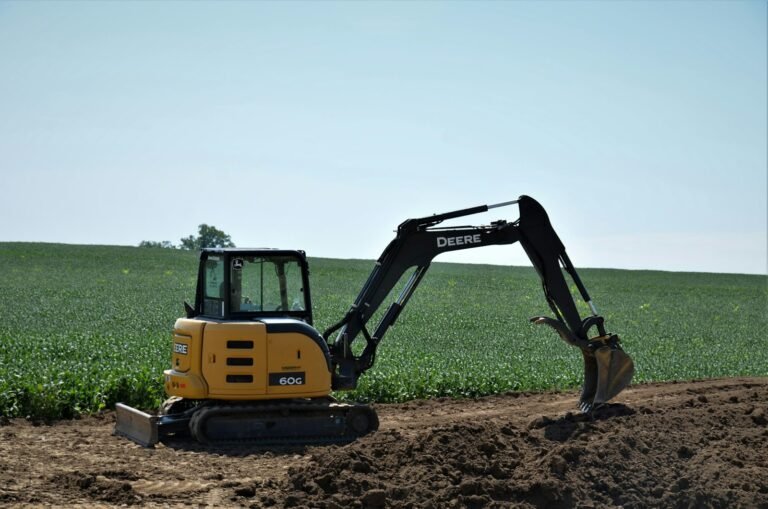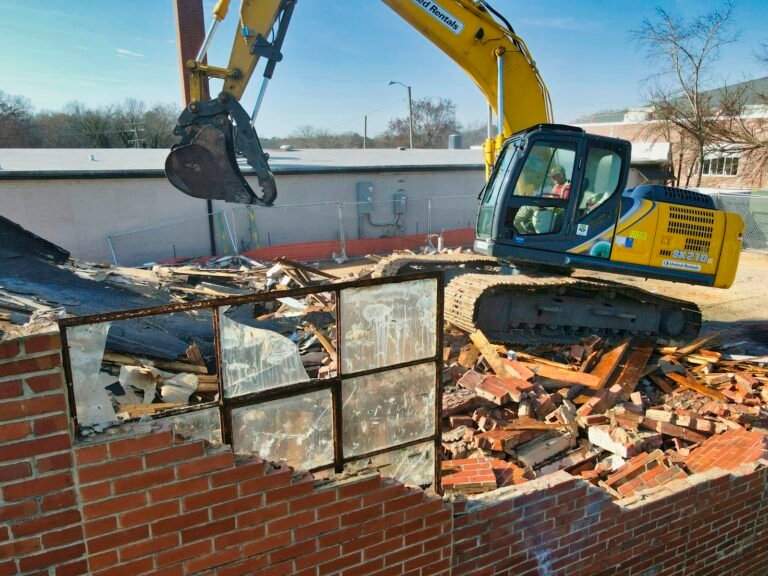
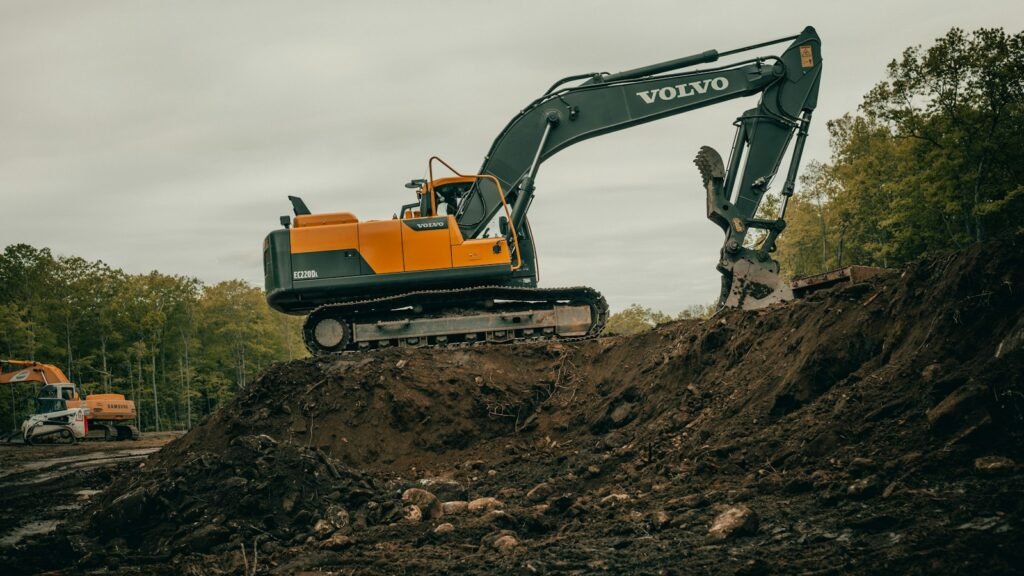
9 tonne excavator hire makes sense when the volume of material, not the access, is the main problem. The Sunward SWE 90UF is the largest excavator in our fleet: a full-size 9-tonne machine for bulk digging, heavy demolition, ponds and farm lagoons. We deliver it from our depot near Okehampton across Devon, Cornwall, Somerset and Dorset. This guide covers what a 9-tonner does well, how to plan the haulage and ground so it stays productive, the consents worth checking for ponds and demolition, and when it is worth putting on Flex Hire instead of a straight weekly hire.
In this guide
What a 9-tonne machine changes on site
Stepping up from a 6-tonne isn’t just about a bigger bucket. A 9-tonne machine has more breakout force, a longer dig depth and reach, and the weight to stay planted when ripping out old footings or heavy, stony subsoil. That translates into fewer passes per cubic metre and less time repositioning.
The flip side is that it needs more room. It is heavier to transport, it needs firmer ground to work from, and on a tight domestic plot a smaller zero tail machine is often the better choice. A 9-tonne pays its way where there is space to swing and somewhere for the spoil to go.
| Question | Points to a 6-tonne (SWE 60UF) | Points to a 9-tonne (SWE 90UF) |
|---|---|---|
| How much material? | Tens to a few hundred cubic metres | Hundreds of cubic metres or more |
| How much space? | Walls, fences or traffic close by | Open ground with room to slew |
| Ground conditions | Soft pasture or sensitive surfaces | Firm working platform available |
| Haulage | One or two dumpers | Several dumpers or loading to lorries |
| Typical job | House plot, yard, drainage run | Pond, lagoon, bulk strip, demolition |
Best jobs for 9 tonne excavator hire
Bulk excavation and site strip
Reducing levels for a new building pad, stripping topsoil from a larger site, or digging out for a basement or retaining wall. Paired with a tipper lorry or a fleet of dumpers, the SWE 90UF keeps material moving all day.
Ponds, lakes and lagoons
Digging a wildlife pond, re-profiling a silted farm pond or forming the banks of a reservoir needs reach and volume. The extra reach of a 9-tonne lets the operator work from the bank and shape slopes more evenly. See the consents section below before you start.
Demolition and breaking out
Pulling down old farm buildings, lean-tos and outbuildings, or breaking out thick slabs and foundations. Ask us about breaker and demolition attachment options when you enquire. We’ll tell you what is available or point you in the right direction.
Farm drainage and ditching
Clearing and re-cutting long field ditches or installing main drains across heavy clay. On the wet Culm ground of north and west Devon, getting drainage right can transform a field, and a 9-tonne gets through the distance quickly.
Planning a pond or lagoon dig
Ponds are among the most satisfying jobs for a big excavator, and among the easiest to get wrong. A few points to settle before the machine arrives:
- Know your water source. A pond fed by rainfall and run-off is very different from one fed by a stream or spring. Damming or diverting a watercourse, or taking water from one, can need licences from the Environment Agency, and planning permission may apply to larger excavations.
- Test the subsoil. Dig a trial hole or two. Good clay will hold water; free-draining shillet or sand won’t without a liner.
- Design the profile. Gentle margins for wildlife and safety, steeper sides only where the ground will stand, and a spillway so overflow doesn’t scour the bank.
- Plan the spoil. A modest pond produces a surprising volume. Decide where it goes before you dig, and don’t pile it where it will slip back or wash into a watercourse.
- Pick your weather. Clay that handles well in a dry June turns to grease in November.
Slurry stores are a separate matter. GOV.UK’s guidance on storing silage, slurry and agricultural fuel oil says you must notify the Environment Agency at least 14 days before building a new store or substantially changing an existing one, and sets rules on location, capacity and design life. Check the current guidance and speak to your adviser or engineer early. This is general information, not legal advice.
Demolition: what to check first
A 9-tonne excavator will pull down a block shed or a tired lean-to with ease, but demolition is planned work, not a free-for-all. HSE’s demolition guidance sets out the essentials:
- A refurbishment and demolition asbestos survey before work starts. Old cement roof sheets, flues and soffits on farm buildings are common culprits.
- A written method and sequence that keeps debris inside a defined exclusion zone.
- Notice to the local authority where it applies, often six weeks before demolition starts. Ask building control whether your structure needs it.
- Isolated services: electricity, water and gas disconnected and confirmed dead.
- Keeping the machine a safe distance from the structure, and people out of the drop zone entirely.
Clean concrete and brick from demolition can often be crushed and reused on site. Ask us about our Dragon tracked jaw crushers, and check the waste exemption rules before you start crushing.
Keeping a 9-tonne productive
Most lost time on bulk digs comes from the machine waiting, not digging. A few habits make a big difference:
- Plan where spoil goes before the machine arrives. Stockpile locations, haul routes and tipping points should all be marked out.
- Match the haulage to the digger. One small dumper can’t keep up with a 9-tonne. Consider several dumpers, or loading straight to lorries.
- Set up so the operator loads over the side of the tracks with a short slew, not a full turn.
- Keep the working platform level and firm. Build a pad from suitable hardcore if the ground is soft.
- Grease and walk round the machine every morning. Report anything unusual to us straight away.
- Check the quick hitch every time a bucket is changed. HSE’s guidance on excavators and quick hitches explains why this matters.
Building a package around the excavator
A big excavator is the centre of a small fleet rather than a job on its own. On farm work, the John Deere 6155R tractor and the Bailey 10-ton low loader trailer from our agricultural hire range can move spoil or stone around the holding, and the same trailer can shift smaller machines between fields. On demolition, a Dragon jaw crusher turns clean rubble into hardcore for the new yard or track. On site strips, tracked dumpers keep the excavator loading rather than waiting.
Tell us the whole job when you enquire and we’ll suggest a sensible combination, with deliveries timed so each machine arrives when it is needed rather than sitting idle on hire.
Ground, access and delivery
A 9-tonne excavator arrives on a plant transporter, so the delivery vehicle needs a suitable route and a safe unloading area close to the work. Narrow Devon lanes with high hedge banks, weight-restricted bridges and soft gateways are the usual obstacles. Send us the postcode, the gateway width and a note of anything unusual on the approach and we’ll plan the delivery.
Once on site, think about where the machine will track. A 9-tonne on wet pasture will leave a mark, and on peat or soft clay near the Somerset Levels it can sink if you are not careful. Bog mats or a hardcore haul road may be needed.
Keep well back from the edges of excavations, ditches and banks, and never work near overhead power lines without a safe system of work. Remember that a 9-tonne’s reach puts the bucket much higher than a mini’s, so check the line height and agree a safe distance with the network operator if lines cross the site.
Seasonal timing in the South West
Pond and drainage work on heavy ground is far easier in a dry spell, typically late spring to early autumn, when haul routes hold up and spoil can be spread or stockpiled without turning to slurry. If your job has to happen in winter, allow extra days for weather and budget for matting or stone to protect access routes.
Booking a few days ahead also helps, as larger machines are often in demand when the ground dries out. On farms, fit the dig around silage, harvest and housing, when yards, tractors and trailers are tied up. Ditching is often best done in late summer when flows are low and you can see what you’re doing, but check whether nesting birds or protected species need to be considered along hedges and banks.
A worked example: a farm pond restoration
Here is an illustrative plan for re-profiling a silted, rain-fed farm pond of roughly 30m by 20m in mid Devon. It shows how the parts fit together rather than any particular customer’s job.
- Before hire: confirm no watercourse is being dammed or diverted, check for services and overhead lines, and agree where the silt and spoil will go.
- Day 1: SWE 90UF delivered. Build a stone pad at the bank for the machine to work from and drain down remaining water if needed.
- Days 2 to 4: silt removed from the bank and spread thinly on agreed land, or stockpiled to dry. Banks reshaped with a shallow margin on the sunny side.
- Day 5: spillway cut and armoured with stone, bank tops tidied and the pad removed.
With two tracked dumpers or a tractor and trailer running spoil, a week is a realistic target. With one small dumper it could easily stretch to two.
Delivery day, handover and off-hire
When the transporter arrives, the driver needs a firm, level spot to drop the ramps and enough room to track the machine off without clipping hedges or gateposts. Have the gate open, vehicles moved and someone responsible on site to sign the delivery note. The driver will run through the controls, the quick hitch, greasing points and daily checks. Ask questions then: it is much easier than phoning from the far side of a field.
Fuel is your responsibility during the hire. The machine arrives full and should go back full, and our terms require white diesel (DERV) only. On a long bulk dig a 9-tonne gets through a fair amount, so arrange a bowser or regular deliveries rather than ferrying cans.
When you’ve finished, call or WhatsApp us to off-hire and get a reference number. Charges run until that reference is issued, so don’t rely on telling the driver. Park the excavator where the transporter can reach it, bucket on the ground, and scrape off the worst of the mud. A machine that comes back caked in clay will be cleaned at your cost.
Weekly hire, long-term rental or Flex Hire
| Option | Best for | Notes |
|---|---|---|
| Daily or weekly hire | One-off pond, demolition or bulk dig | Weekly is our most popular period |
| Long-term rental | Groundworks spread over months | Monthly rates, on-site servicing included |
| Flex Hire Tier 4 | Contractors and farms using varied kit | £1,495 +VAT and delivery per month, includes 9T excavators and tractors |
Flex Hire gives you one flat monthly fee and the freedom to swap kit any time. Tier 4 covers the 6-tonne and 9-tonne excavators, and it also covers every machine in the lower tiers: minis, crushers, forklifts and tractors. Servicing, collection and redelivery are included, there’s no long-term contract, and there is a 10% rebate. For a contractor who needs a 9-tonne for a fortnight, then a mini and a dumper, then a tractor for the rest of the month, it can work out simpler than a string of separate hires.
If you’ll keep the same 9-tonne on one site for months, ask about long-term rental instead.
What affects the cost of 9 tonne excavator hire
WhatsApp us for a current quote. The figure depends on the hire period, the transport distance from our depot, how many deliveries and collections are needed, extra buckets or attachments, and whether the machine comes back clean and full of white diesel. The biggest cost on bulk digs is often not the excavator at all but the haulage and tipping, so price those first. If you can reuse spoil on site, landscaping banks or filling low spots, a 9-tonne can save far more than it costs.
Common mistakes on bulk digs
- Underestimating bulking. Dug material takes up more space than it did in the ground, so spoil heaps and lorry loads are bigger than the hole suggests. Allow for it in your haulage and stockpile plans.
- Tracking over the same line all week. A 9-tonne going back and forth on wet grass will rut it badly. Use mats or stone, or vary the route.
- Digging too close to buildings and banks. Undermining a wall, a slurry store or a hedge bank causes far bigger problems than the dig itself. Keep a margin and get engineering advice for anything structural.
- Booking the machine before the consents. Ponds, demolition and lagoons can all need paperwork. Sort it first, or you’ll be paying for a machine you can’t use.
- Travelling with the boom stretched out. Travel with the bucket low but clear and the boom tucked in, and track slowly over uneven ground.
Operators and insurance
All our excavators are hired self-drive unless agreed otherwise. A 9-tonne machine should only be operated by a trained, competent person, and most sites will expect a CPCS or NPORS card for the category. Insurance isn’t included automatically; you can arrange plant hire cover through our partner insurance4plant.co.uk. Before digging, check for buried services with LinesearchbeforeUdig and local utility records.
If you don’t have a ticketed operator, mention it when you enquire about 9 tonne excavator hire and we’ll discuss what we can arrange. A good operator on a big machine is the single biggest factor in how much you get done, so it is rarely the place to save money.
Frequently asked questions
How much can a 9 tonne excavator dig in a day?
It depends on ground, haulage and operator skill far more than on the machine. The biggest factor is usually how quickly spoil is taken away, so plan your haulage carefully.
Is a 9-tonne too big for a farm yard?
Not on most farms. Where buildings, slurry pits or services are close together, a 6-tonne zero tail machine may be easier to work with.
Can I use it for demolition?
Yes, for suitable structures, with the right attachment and a demolition plan. Check for asbestos first and keep people well clear of the drop zone.
Do you deliver 9-tonne excavators to Cornwall and Somerset?
Yes, we cover all four counties from our depot. Delivery is quoted by distance, so send us the postcode.
Do I need a liner for a new pond?
Only if the ground won’t hold water. Dig a trial hole, fill it and watch it for a few days. Heavy clay often seals itself; free-draining ground usually needs a liner or imported clay.
Can I hire the 9-tonne for just one day?
Yes, the minimum hire is usually one day. With transport each way, though, a single day of 9 tonne excavator hire rarely makes sense unless the job is very well prepared.
What if the weather stops work?
Hire charges run continuously until off-hire, so plan around the forecast and talk to us early if a wet spell means you want to pause or extend.
Arrange 9 tonne excavator hire
Tell us what you’re digging, the site postcode, dates and access details. WhatsApp or call 07841 036064 for a current quote, view the construction fleet, or send a fleet or account enquiry through our contact page.