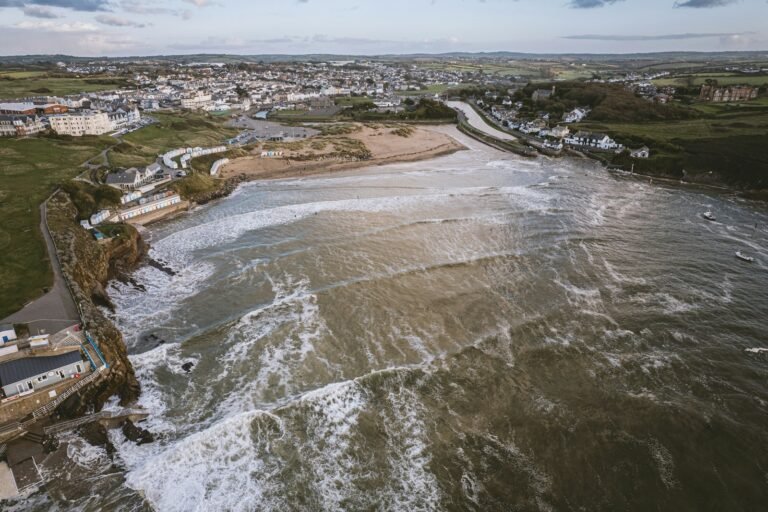
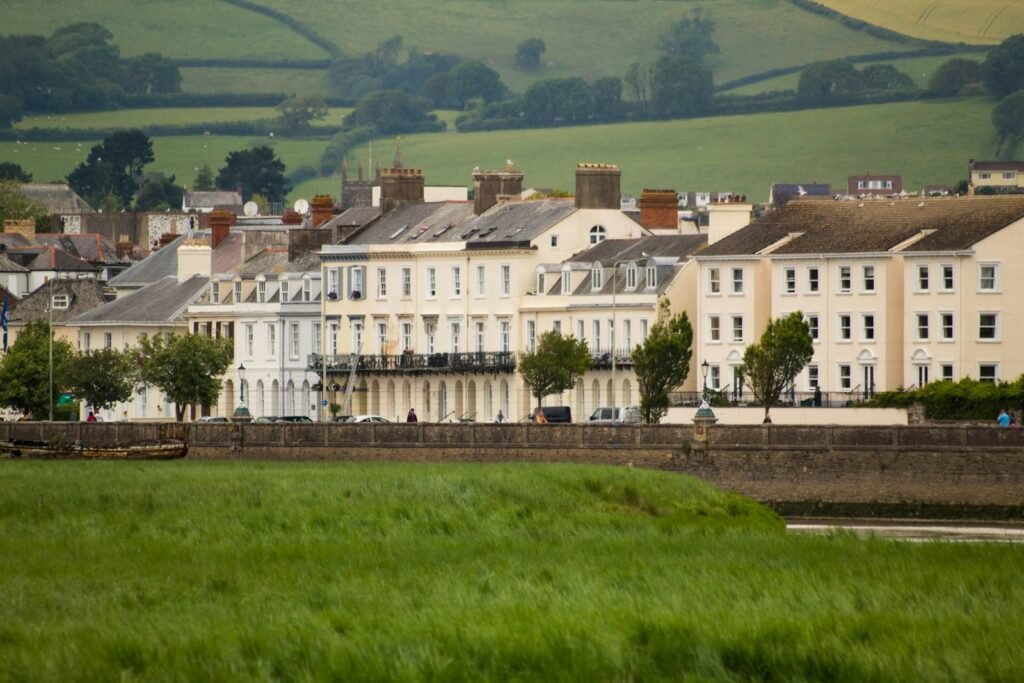
For digger hire Barnstaple and the rest of North Devon, the ground and the weather matter as much as the machine. A lot of the land around the Taw estuary is heavy and slow to drain, coastal properties at Braunton, Croyde and Ilfracombe come with steep or exposed plots, and farm work runs to its own calendar. We deliver Sunward excavators from 0.8 to 9 tonnes across North Devon from our Okehampton depot, about 30 miles to the south. This guide covers how to pick the right size and plan around wet ground.
In this guide
Digger hire Barnstaple: choosing the right size
Size the machine to the job and the access, not to the biggest hole you might dig. The table below is a starting point for typical North Devon work.
| Excavator | Good for | Watch out for |
|---|---|---|
| Sunward SWE 08B (0.8t) | Garden drainage, patios, narrow access in town | Slow on large volumes or heavy clay |
| Sunward SWE 18UF (1.8t) | Extension footings, service trenches, soakaways | Limited reach for deep drainage |
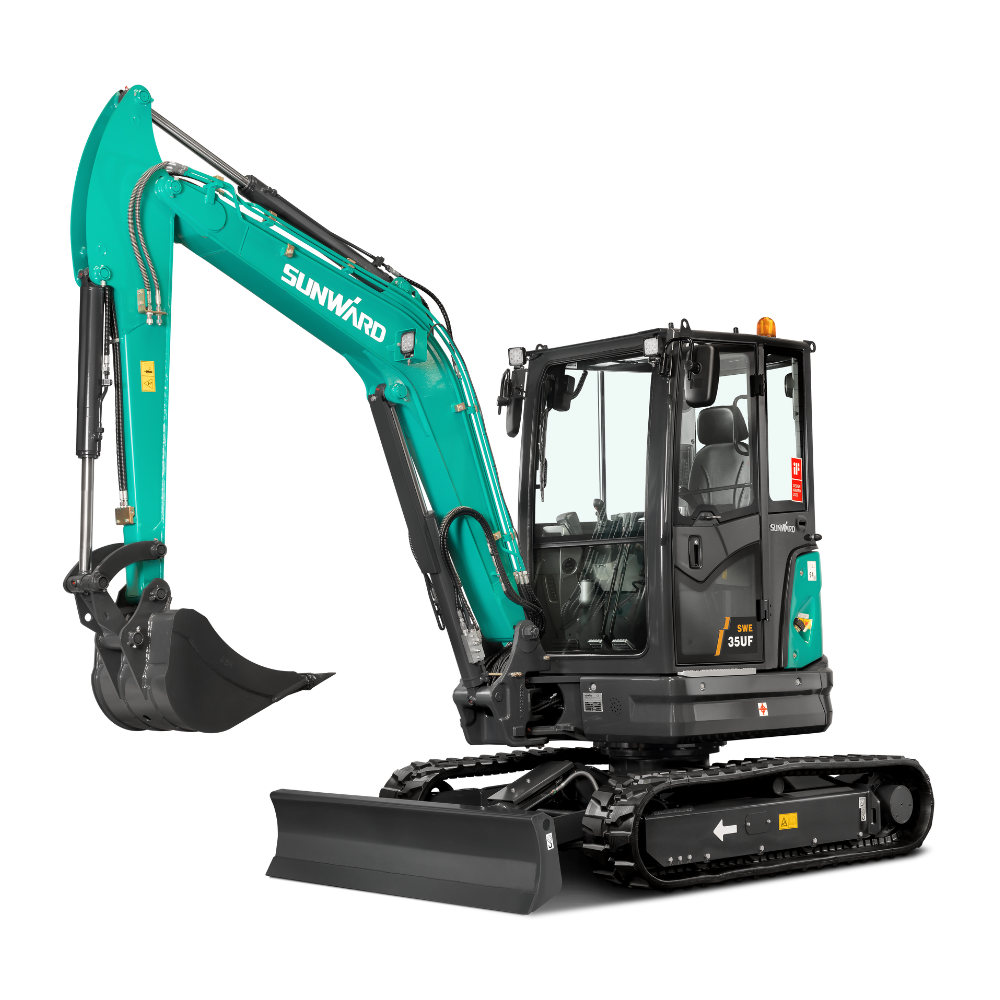
| Sunward SWE 25UF / 35UF (2.5–3.5t) | Driveways, larger extensions, field drains | Needs a wider gateway and firmer route |
| Sunward SWE 60UF (6t) | Farm ditching, yard dig-outs, pond work | Can rut soft ground badly if tracked across wet fields |
| Sunward SWE 90UF (9t) | Bulk dig, site clearance, heavy farm groundwork | Transport and access planning essential |
All of these are on our construction equipment page. If you are between two sizes, send us the job details and we will give you an honest view.
Working on North Devon’s wet ground
Much of the farmland across North Devon and into Torridge is heavy, clay-rich soil that holds water through the winter. Low-lying land around the Taw and the Yeo can stay saturated for weeks. That changes how you plan a dig.
- Pick your window. Late spring to early autumn is usually the easiest time for field and yard work. In winter, expect slower progress and more mess.
- Plan the route in and out. Track the machine along headlands or hard standing rather than across the middle of a wet field.
- Keep spoil back from trench edges. Wet clay slumps, and heaps near the edge add load. HSE’s excavation guidance is clear that no ground can be relied on to stand unsupported.
- Use tracked carriers. A Mechbadger or Hyundai tracked dumper copes with mud far better than a wheeled barrow.
- Clean the tracks before the road. Clay picked up on site ends up on the lane. Scrape down before you leave.
Farm drainage and groundwork
A lot of our North Devon hires are on farms. Typical jobs include clearing and re-cutting ditches, laying land drains, digging out a yard for new concrete, and burying water pipes to troughs.
Ditches and land drains
A 6 tonne excavator with a ditching bucket is the usual choice for field ditches. For new land drains, a 2.5 to 3.5 tonne machine is often enough and does less damage on the way in.
Bringing in the rest of the kit
Larger farm jobs often need more than a digger. Our agricultural range includes the John Deere 6155R tractor, the Nardi FAST 3m ripper for loosening compacted subsoil, the Venieri 1.63D pivot loader for yards, and the Bailey 10-ton low loader for moving plant between fields or farms.
Working near the Taw, Torridge and other watercourses
If your dig is close to a river, stream or flood bank, check before you start. Work on or near a main river, or in its floodplain, may need a flood risk activity permit from the Environment Agency. The GOV.UK page on flood risk activity permits explains the distances and exemptions, which are wider for tidal stretches like the Taw estuary. Check the current guidance and allow time for an application. This is general information, not legal advice.
Coastal and town jobs: Braunton to Ilfracombe
Coastal property work in North Devon brings different problems to farm work.
- Ilfracombe and Combe Martin have steep streets and gardens cut into the hillside. Smaller machines and tracked dumpers suit stepped plots, and unloading needs planning.
- Braunton, Croyde and Saunton have sandier ground near the dunes, which digs easily but collapses easily. Support or batter back any trench people will enter.
- Barnstaple town has terraced streets and limited parking. Measure side access before booking and tell us where a lorry can stop.
Salt air is hard on machines, so give anything used near the beach a freshwater wash before it comes back.
Before the digger arrives
A little preparation saves a wasted first morning, especially on a farm where the machine may have to travel some distance from the gate to the work.
- Mark out the dig with spray paint or pegs so the operator can start straight away.
- Find buried services. Farms often have unrecorded water pipes and cables to outbuildings, so ask whoever laid them and follow HSE’s guidance on underground services.
- Decide where the spoil goes. Topsoil and subsoil should be kept in separate heaps if the ground is going back to grass.
- Check the delivery route. A low loader needs a firm, wide entrance and somewhere to turn. Overhanging branches and low wires on narrow North Devon lanes can be a problem.
- Have fuel arranged. Machines arrive with a full tank and should go back full. Our hire terms require white diesel (DERV) in all diesel equipment, not red diesel.
- Agree who will sign for the machine and check its condition on arrival.
On farms, also think about livestock. Move stock out of the working area and away from open trenches, keep gates shut behind the delivery lorry, and make sure the excavator is parked with the bucket on the ground and keys removed at the end of each day. For digger hire Barnstaple jobs on holiday properties, tell guests or neighbours when the lorry is due so the drive is clear.
Delivery across North Devon
From Okehampton we head north through Hatherleigh and Great Torrington, so Barnstaple, Bideford and the surrounding villages are well within reach. The A361 and A39 link the main towns, and we can usually reach Braunton, Ilfracombe and South Molton on the same run. Delivery is quoted separately and confirmed before you book. Booking 24 to 48 hours ahead gives the best chance of your preferred date.
When you send your digger hire Barnstaple enquiry, a map pin or what3words location is useful for farms where the postcode covers a wide area. Tell us whether the lorry can turn in the yard or will need to reverse in from the lane, and whether there are any weight-restricted bridges on the approach. If the machine has to travel across fields from the gate, mention that too, so we can suggest the right size and you can plan a firm route before it arrives.
Digger hire Barnstaple worked example: draining a wet field corner
Here is an illustrative scenario, not a real customer, to show how a typical North Devon drainage job is planned. A livestock farm near Barnstaple has a field corner that stays waterlogged from autumn to spring. Stock poach it every winter, and the gateway beside it is a quagmire. The plan is a herringbone of land drains feeding a main carrier drain, which runs into an existing ditch along the boundary.
Step by step
- Walk the field after rain. Note where water sits, where it seeps out of the bank and where the outfall ditch is. The levels decide everything, so take simple readings with a laser or string line if you can.
- Clear the outfall first. There is no point laying new drains into a blocked ditch. Re-cut it with a 6 tonne excavator and a ditching bucket, keeping the spoil back from the edge.
- Dig the carrier drain. Start at the outfall and work uphill so water always has somewhere to go. A 2.5 or 3.5 tonne machine with a narrow bucket keeps the trench tidy.
- Lay the laterals. Perforated pipe in the side trenches, joined to the carrier, then backfill with clean stone to near the surface so water can reach the pipe.
- Reinstate. Put the topsoil back last, and keep it separate from subsoil throughout so the grass comes back properly.
- Loosen the rest of the field. If the ground is compacted, the Nardi FAST 3m ripper behind the John Deere 6155R helps water reach the new drains.
Hire plan
On a job like this, the bigger excavator is only needed for a day or two on the ditch, then a mid-sized machine does the rest. Booking both together, with a tracked dumper for stone, and sending the big machine back as soon as the ditch is done keeps the hire cost down. Pick a dry spell in late summer or early autumn if the work can wait.
Septic tanks and treatment plants on rural properties
Plenty of farms, cottages and holiday lets around Barnstaple are off mains drainage, and replacing or upgrading the system is a common reason to hire a digger. The rules are strict, so check them before you dig.
Under the Environment Agency’s general binding rules for small sewage discharges to surface water, a septic tank must not discharge directly to a ditch, stream or other watercourse. If yours does, the guidance says you must upgrade it, for example by connecting to a public foul sewer, replacing the septic tank with a small sewage treatment plant, or installing a drainage field so it discharges to ground instead.
There are further rules on volumes, British Standards, distances from protected sites and maintenance. This is general information, so check the current guidance or speak to a drainage specialist before you start.
Digging for a new tank or plant
- A 2.5 to 3.5 tonne excavator usually handles the hole for a domestic tank, with a bigger machine for larger units or rock.
- Plan where the old tank’s contents go. Desludging must be done by a registered waste carrier.
- On wet North Devon clay, the hole can fill with groundwater quickly. Have a plan to keep it dry while the unit is installed, and ask us if you need help finding the right kit.
- Keep people out of deep excavations unless they are properly supported.
A seasonal calendar for North Devon groundwork
On heavy ground, timing can matter as much as machine choice. This is a rough guide to how the year tends to go around Barnstaple and the Taw valley.
| Months | Ground | Good jobs for the period |
|---|---|---|
| December to February | Often saturated, low-lying land may flood | Yard and building work on hard standing, hedge laying, planning next season’s drainage |
| March to May | Drying slowly, nesting season under way | Building footings, driveway and garden work. Avoid hedge cutting during nesting season. |
| June to August | Firmest of the year, though clay can bake hard | Field drainage, ditching, new tracks, pond work and anything needing big machines in fields |
| September to November | Rain returns, ground softens | Finish field work early, then move to yards, concrete bases and septic tank upgrades |
Coastal properties at Braunton, Croyde and Ilfracombe are often easiest to work on outside the summer holiday season, when lanes are quieter and holiday lets are empty.
Whatever the season, keep an eye on the forecast for the days around your hire rather than the month as a whole. A dry week in February can be more productive than a wet one in July, and because hire charges run until off-hire, it pays to start promptly when the weather window opens and to off-hire as soon as the work is finished.
Moving a digger yourself between North Devon sites
Farmers and builders who work across several sites often prefer to tow their own machines. We hire plant and flatbed trailers for this, from the Brian James 9ft plant trailer (2,700kg GVW) for micro and mini diggers to the Ifor Williams 18ft tilt bed for drive-on loading. For heavier farm machinery, the Bailey 10-ton low loader goes behind a tractor.
Check what your licence allows before you set off. GOV.UK’s guide to towing with a car explains that if you passed your car test from 1 January 1997, you can usually tow a trailer of up to 3,500kg maximum authorised mass, and that drivers who passed before then have a wider entitlement. Your vehicle’s own towing limit still applies and is often lower. Check the current guidance and your handbook.
- Add the machine weight, the trailer weight and any buckets together, and stay within the trailer’s GVW and the vehicle’s limit.
- Load the machine so the weight sits slightly forward of the trailer axle, with the bucket down and the arm tucked in.
- Use rated chains or straps at each tie-down point, and recheck them after the first few miles.
- Take the narrow lanes slowly. Many North Devon lanes have high banks, blind bends and few passing places.
Hire periods and what affects the cost
We do not publish hire rates, as every quote depends on the machine, the period and the delivery. WhatsApp us for a current quote. Things that make the biggest difference are:
- Hire length. Weekly hire is better value per day than daily hire, and suits most North Devon jobs once the weather is factored in.
- Delivery distance. Transport is quoted separately from the hire, based on distance from our depot near Okehampton. Several machines on one delivery costs less than separate trips.
- Extras. Additional buckets, dumpers, compactors and trailers all add to the total, but can save days of labour.
- Weekend use. Hire runs continuously, and weekend use on a weekly hire may cost extra.
- Returning the machine clean and full. Clay-caked tracks or an empty tank mean cleaning or refuelling charges.
For farms and contractors with steady work, long-term rental gives monthly rates with on-site servicing included, and Flex Hire gives one flat monthly fee with swaps whenever you need them. Tier 2, which adds excavators and crushers, is £895 +VAT and delivery per month, and Tier 4 at £1,495 includes 9 tonne excavators and tractors.
Frequently asked questions
Can I hire a digger in Barnstaple for a weekend?
Yes, subject to availability. Hire charges run from delivery to off-hire, including weekends, so let us know your plans and we will quote the right period.
Will a digger damage my wet field?
It can. Use the lightest machine that will do the job, track along firm routes, and avoid the wettest months if the work can wait.
Do you supply a driver?
Hire is self-drive unless otherwise agreed, and the hirer must make sure the operator is trained and competent. Ask us if you need help.
Can I tow a mini digger myself?
Often, yes, with a suitable vehicle and plant trailer. Check your licence and your vehicle’s towing limit first, and ask us about our trailers.
Can I replace a septic tank myself with a hired digger?
You can do the excavation if you are competent, but the system must meet the Environment Agency’s general binding rules and building regulations. Many people use a drainage specialist for the design and installation, and hire the plant for the groundwork.
What licence do I need to tow a mini digger?
If you passed your car test from 1 January 1997, GOV.UK says you can usually tow a trailer up to 3,500kg maximum authorised mass. Your vehicle’s towing limit also applies. Check the current guidance before you set off.
Is a 6 tonne digger too big for North Devon lanes?
Not usually for delivery, but the final access matters. Tell us about gateway widths, weight limits and turning space, and we will advise whether a 6 tonne machine or something smaller makes more sense.
Book digger hire in Barnstaple and North Devon
For digger hire Barnstaple customers can arrange quickly, WhatsApp or call 07841 036064 (Mon–Fri 7:30am–5:30pm) with the machine, site postcode, dates and access details. We aim to reply within the hour. For written quotes and multi-machine jobs, use our contact page.