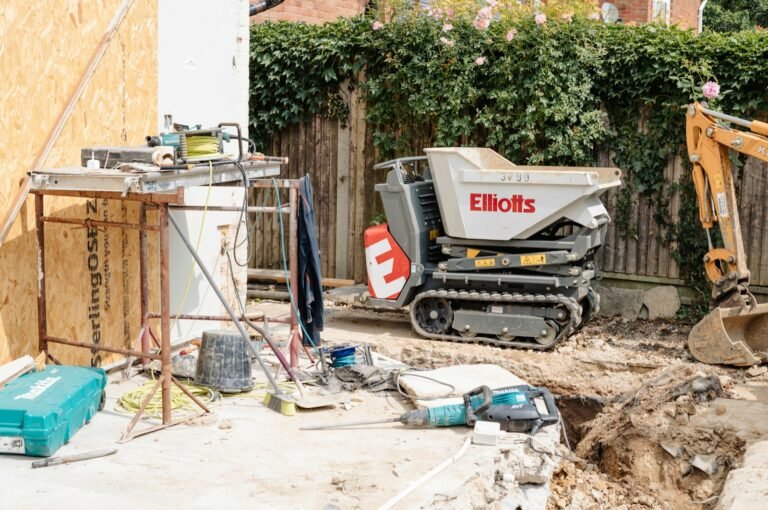
A garden makeover usually goes wrong in one of two ways: the wrong machine for the access, or the right machines booked in the wrong order. Good landscaping equipment hire starts with how kit gets into the garden and where spoil and materials will go, then lines up each machine for the week it is needed. This guide walks through a typical rear-garden project in Devon or Cornwall, phase by phase, with the kit we would suggest at each step.
In this guide
Start with access, not the wish list
Most landscaping problems are access problems. Before you pick a machine, measure three things: the narrowest point between the road and the garden (side gate, passage or a gap in a hedge), any steps or steep ramps on the route, and the ground the machine will cross. Then send us those measurements with photos.
- Narrow side passage: a micro digger such as the Sunward SWE 08B, plus a narrow tracked carrier or the Hyundai 500kg tracked dumper. Ask us for current track widths and compare them with your tape measure.
- Through a lawn you want to keep: rubber tracks and low ground pressure matter. The Tracspider Elektro Joe electric tracked transporter is designed to move material across grass with very little marking.
- Through the house: not ideal. If it is the only route, protect floors and door frames, and keep to hand-movable kit.
- Steep or terraced garden: common in South Devon coastal towns and Cornish valleys. Tracks beat wheels here, and a tipping tracked carrier keeps loads stable on slopes. Never traverse a slope steeper than the machine’s operating limits.
Phase 1: clearance
Overgrown shrubs, old conifers and brambles come out first. A battery strimmer and blowers from the CRAMER electric range are quiet enough for early starts in residential streets. Branches and brash go through a chipper rather than filling a skip: the GL&D 5.5 inch tracked chipper is self-propelled and can be driven round to the back of a property, while the 6.5 inch towable unit suits jobs where it can sit at the roadside or on a drive.
Check for nesting birds in hedges and shrubs during spring and summer before you cut, and leave active nests alone. Stumps can be dug out later with the digger once the ground is clear.
Phase 2: groundworks and levels
This is the digger phase: reducing levels for a terrace, digging footings for a retaining wall, trenching for lighting ducts or an irrigation line, and grubbing out stumps. Book everything that needs a digger into one block so you are not paying for it twice.
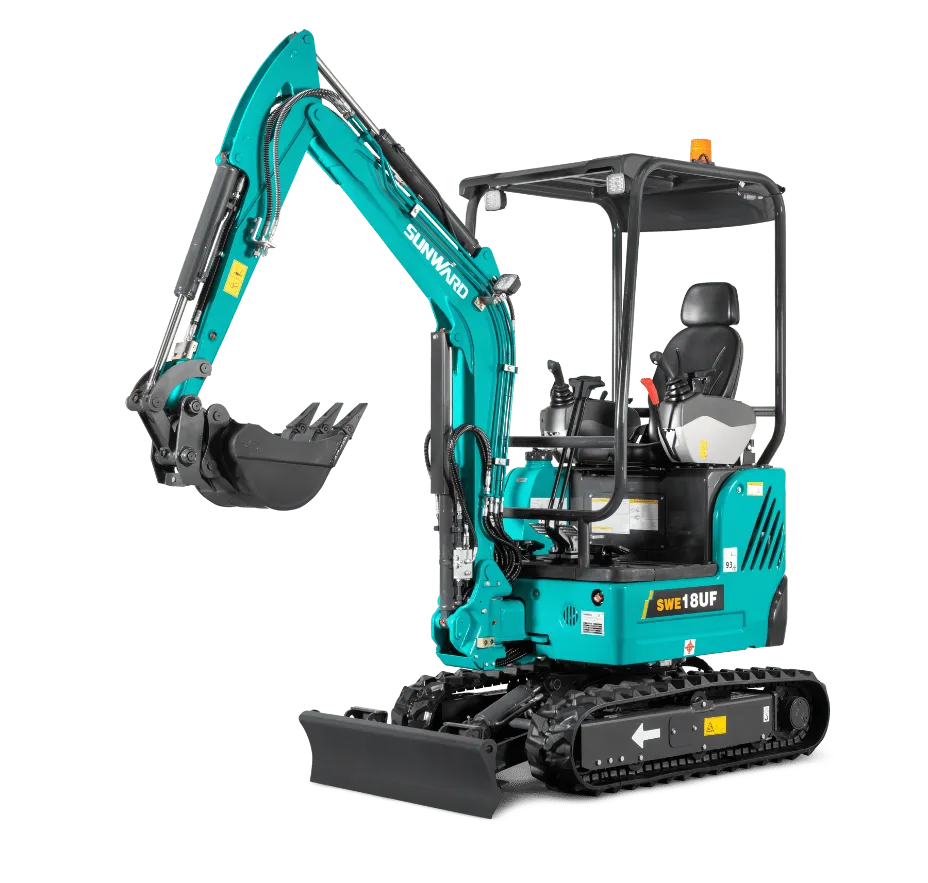
The SWE 08B is the go-to for tight rear gardens; our guide to the Sunward SWE 08B micro excavator covers what it handles. With wider access and more earth to move, the zero tail SWE 18UF digs faster and still works close to fences. Pair either with a tracked dumper or the Tracspider 1000kg bed carrier from our construction equipment so spoil goes out to the skip or grab point without barrowing.
For lighting cable or irrigation, a dedicated trencher is quicker and neater than a digger. The Mak Brent MAK 40 wheeled trencher cuts a narrow 40cm-deep slot, so turf can be lifted and relaid with minimal disturbance.
Before any digging, check for buried services. Garden runs of electric cable to sheds and outside lights are rarely on any plan, so use a cable locator as well as the utility records.
Phase 3: hard landscaping
Walls, steps, paths and paved areas follow. The main hire items here are a mixer and a plate compactor. A Weber MT CF 1-III Hd or CF 2-II Hd forward plate handles path and patio sub-base in a garden; the lighter machine is easier to manhandle down steps. Raised beds and sleeper walls need little more than hand tools, though a dumpy bag lifter can save backs when sleepers and stone arrive in bulk.
Deliveries are a planning point in themselves. If a lorry drops dumpy bags of sand, gravel and topsoil on the drive, the Dragon LT1000 dumpy bag lifter (1,000kg safe working load) lets you move and place bags without a crane-equipped lorry or a telehandler. Ask us whether it suits your surface and the route through to the garden.
Phase 4: soil and soft landscaping
New lawns and beds are only as good as the soil under them. On larger plots, paddocks being turned into gardens and new-build sites with stony subsoil, the Flexiever towable screener separates topsoil from stones and roots so you can reuse your own soil rather than buying it in.
For seeding a large area, the Conagri MEGA 1.25m stone burier with overseeder buries surface stones and sows in one pass, producing a fine, level seedbed. It is tractor-mounted, so pair it with the Captain 26HP compact tractor from our sports and landscaping range. On a small town garden you will rake by hand, but on half an acre or more this pairing saves days.
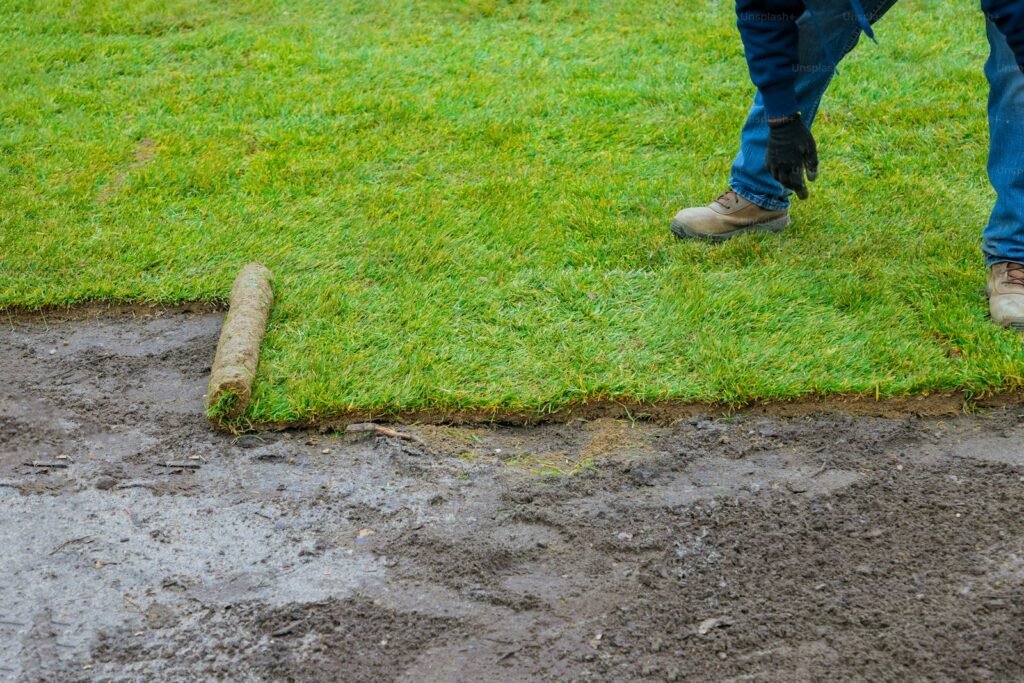
Turf needs laying within a day or so of delivery in warm weather, so do not let it arrive before levels are finished and the soil is raked and firmed.
Landscaping equipment hire sequence at a glance
| Phase | Typical kit | Notes |
|---|---|---|
| Clearance | CRAMER strimmer and blower, GL&D chipper | Quiet battery tools for residential sites |
| Groundworks | Sunward SWE 08B or SWE 18UF, tracked dumper or carrier, MAK 40 trencher | Book as one block |
| Hard landscaping | Weber MT plate, mixer, Dragon LT1000 lifter | Time with material deliveries |
| Soil and seed | Flexiever screener, Captain tractor and MEGA stone burier | Larger plots |
| Final tidy | Brendon power washer, CRAMER mower | Clean paving and first cut |
Keeping the project on schedule
Devon and Cornwall weather is the biggest variable. Clay soils across much of mid Devon turn sticky after rain, and tracking a machine over saturated lawn will leave ruts that take a season to recover. Build a day or two of slack into your hire, and consider a weekly rate on the core kit so a wet day does not cost you an extra booking.
Landscape contractors who need landscaping equipment hire across several gardens at once may find Flex Hire simpler: one flat monthly fee and the freedom to swap a digger for a chipper or a plate as each job moves on.
Matching machine size to the garden
Bigger machines dig faster, but only if they can get in and turn round once they are there. As a starting point:
| Garden type | Typical access | Digger | Material mover |
|---|---|---|---|
| Small town or terraced garden | Side passage or through a rear lane | Sunward SWE 08B | Hyundai 500kg tracked dumper or barrows |
| Suburban rear garden | Side gate or driveway | SWE 08B or SWE 18UF | Tracspider 1000kg carrier or Mechbadger dumper |
| Large plot or new-build with open access | Wide gateway | SWE 18UF or SWE 25UF | Tracked dumper, Dragon LT1000 for bagged materials |
| Paddock to garden, or estate grounds | Field gate | SWE 25UF or SWE 35UF | Captain 26HP tractor with MEGA 1.5T tipping trailer |
These are pairings we would start a conversation with, not fixed rules. A big garden with a 900mm gate still needs a small machine, and a small garden with a long run of retaining wall may justify a heavier digger for a day.
How much material will you actually move?
People underestimate weight more than volume. A garden that needs 10 cubic metres of soil out and a few bulk bags of stone in will see many tonnes pass through the side gate, and every tonne is a trip with a carrier or dumper. Rough densities help you plan:
- Topsoil: roughly 1.2 to 1.5 tonnes per cubic metre, more when wet.
- Clay subsoil: heavy, and it bulks up once dug, so a cubic metre in the ground becomes noticeably more in a skip.
- Type 1 sub-base: around 2 tonnes per cubic metre once compacted.
- Sharp sand and gravel: roughly 1.5 to 1.8 tonnes per cubic metre.
Divide the total by what your carrier can safely carry per trip and you will see quickly whether a 500kg dumper is enough or whether the 1,000kg Tracspider is worth it. It also tells you how many skips or grab lorry loads to book, which is the other half of good landscaping equipment hire planning.
A worked example: a sloping garden in South Devon
Here is an illustrative project of the kind common in the hillside streets of Torbay and the South Hams. It is a typical shape, not a real customer job. A 12m by 8m rear garden falls about a metre from the house to the back fence. The owner wants a level patio by the house, a sleeper retaining wall, a lawn on the lower level and a path down the side. Access is a 1m side passage with two steps.
- Week 1, two days: clearance with a battery strimmer and the GL&D 5.5 inch tracked chipper for overgrown shrubs.
- Week 1, three days: SWE 08B and Hyundai 500kg tracked dumper. Cut the patio area, form the bank for the retaining wall, dig footings and a trench for lighting duct. Spoil goes to a grab lorry on the road.
- Week 2: build the sleeper wall and steps by hand, with a mixer for post footings. Plate compactor for the patio sub-base and path.
- Week 3: patio and path laid. Topsoil spread and raked on the lower lawn.
- Week 3 or 4: turf laid once levels are final. First cut with a CRAMER mower when it has rooted.
The digger is on site for three days out of a three-week project. Booking it as a single block, with everything that needs digging done at once, is where most of the saving comes from.
Retaining walls, steps and slopes
Changing levels is where garden projects get serious. Soil is heavy, and wet soil behind a wall pushes much harder than dry soil. A few practical points:
- Low sleeper or block walls holding back a modest height are common DIY projects. Taller walls, walls near a boundary or a building, and walls holding back a driveway or slope need design input from an engineer.
- Every retaining wall needs drainage behind it: free-draining stone against the back of the wall and a way for water to escape, such as weep holes or a perforated pipe at the base.
- Do not undercut a neighbour’s boundary or a bank without a plan for supporting it. Cuts can slump overnight after rain.
- Steps should have consistent risers. Mark them out with string and pegs before you dig, so the digger cuts the right profile first time.
Keep the digger and dumper well back from the top of any cut, and never work across a slope steeper than the machine’s limits. Tracked machines are more stable than wheeled ones, but they are not immune to tipping on soft, steep ground.
Booking timeline for a landscaping project
- Six to eight weeks before: finalise the design and levels, and get prices for materials.
- Four weeks before: check for buried services through LinesearchbeforeUdig, measure access and send us photos so we can confirm machines.
- Two to three weeks before: book the landscaping equipment hire, skips or grab lorry and material deliveries, all timed to the same plan.
- The week before: confirm delivery times, tell the neighbours, clear the access route and lift anything fragile from the path.
- On the day: walk the route with our driver, agree where the machine will be left overnight and keep children and pets clear.
Planning permission and garden work
Most garden landscaping does not need planning permission, but front-garden paving, raised decking, structures near boundaries and work in conservation areas or to listed buildings can. Check with your council before you start.
What affects the cost of landscaping equipment hire
We quote each job individually rather than publishing hire prices. The main factors are the size of machine, how long you need it, how many separate deliveries are involved, and the distance from our depot near Okehampton. Grouping kit into fewer deliveries and choosing the smallest machine that will do the job efficiently usually keeps costs down. Insurance is not included automatically, so allow for cover when you budget.
Common landscaping mistakes
- Ordering turf or plants before the groundworks are finished.
- Leaving no route out for the digger once walls and paths go in.
- Burying builder’s rubble under new lawns, where it shows through as dry patches every summer.
- Forgetting falls on paving, so water runs back to the house.
- Cutting silica-producing materials such as paving and blocks without dust control; see the HSE guidance on silica dust.
Timing your project around the South West seasons
The time of year changes what is sensible. Late spring and early autumn are usually the best windows for garden groundworks in Devon and Cornwall: the ground is workable, turf and seed establish well, and there is enough daylight for a full day on the machines.
- Winter: fine for clearance, chipping and hedge work outside the bird nesting season, and for hard landscaping in dry spells. Clay soils are at their worst, so avoid tracking across lawns you want to keep, and protect fresh mortar from frost.
- Spring: a busy season for landscapers and for hire. Book early, check hedges and shrubs for nesting birds before cutting, and sow or turf once soil has warmed.
- Summer: dry ground makes digging and tracking easier, but new turf needs regular watering and some coastal clay soils bake hard. Plan heavy digging for the cooler part of the day.
- Autumn: warm soil and returning rain suit seeding and planting. Leaves and wet weeks shorten the working window, so build in slack.
Holiday-let owners in coastal areas often want work finished before Easter or after the summer season. If that applies to you, talk to us early, because those windows are when everyone else wants the same machines.
What happens on delivery and collection
We deliver from our depot near Okehampton on a lorry or trailer, so we need a firm, level place to unload close to the property. Narrow residential streets, steep driveways and parked cars all affect where that can be, so mention them when you book. Our driver will run through the controls on delivery; if anyone on your team is less familiar with a machine, say so then.
At the end of the hire, leave machines clean enough to inspect and somewhere we can reach them. If you finish early, tell us and we can often collect sooner. If the weather has cost you days, ask about extending before the hire ends rather than after.
Before any digging, check for buried pipes and cables with a free enquiry on LinesearchbeforeUdig.
Frequently asked questions
What is the smallest digger I can hire for a back garden?
Our smallest is the Sunward SWE 08B at 0.8 tonnes. Send us your gate width and we will confirm whether it, or a carrier, will get through.
Will tracked machines damage my lawn?
Rubber tracks spread the load, but repeated turning on wet grass will scuff it. Lay ground protection on the main route and avoid working after heavy rain.
Can you deliver to a property with no parking outside?
Often, yes, but tell us about narrow lanes, parking restrictions and overhead cables when you enquire so we can plan the drop.
Do I need to be trained to use the kit?
Hire is self-drive, and the person operating each machine must be competent and suitably trained. Ask us if you are unsure what is needed.
How long should I hire a micro digger for a garden makeover?
For most rear gardens, two to four days of digging covers the groundworks if you group all the digging tasks together. Tell us what you are building and we will suggest a sensible block.
Can I hire a tracked carrier on its own to move soil?
Yes. The Tracspider and our tracked dumpers are often hired alone when the digging is done by hand but the material still has to travel through the garden.
What should I put down to protect the lawn?
Ground protection mats or boards along the main route spread the load. Keep turns gentle and avoid working on saturated grass.
Plan your garden project with us
Tell us the garden size, access measurements, what you are building and your dates, and we will suggest a sensible order of landscaping equipment hire and a current quote. WhatsApp or call 07841 036064, or send details through our contact page.