Towing a plant trailer with a car or pickup is legal for most UK drivers, but three separate limits all have to line up: what your licence allows, what your vehicle is rated to tow, and what the trailer is rated to carry. Since December 2021, most car licence holders can tow trailers up to 3,500kg maximum authorised mass without an extra test. That headline rule is only the start. A loaded plant trailer with a mini digger on it is heavy, and getting the weights, brakes and tie-downs right matters far more than with a garden trailer.

In this guide
This is general information. Always check the current guidance on GOV.UK and your vehicle handbook before towing.
What your driving licence allows
Licence entitlement depends on when you passed your car test:
- Passed from 1 January 1997: since 16 December 2021 you can tow trailers up to 3,500kg maximum authorised mass (MAM) without taking a separate car and trailer test. DVSA stopped car and trailer tests in 2021, and the BE category is added to your licence when a new photocard is issued.
- Passed before 1 January 1997: you can usually drive a vehicle and trailer combination up to 8,250kg MAM.
- The combined limit: GOV.UK’s licence category guidance says that on a category B licence the combined MAM of vehicle and trailer must not exceed 7,000kg, with the towing vehicle itself up to 3,500kg for petrol and diesel vehicles.
Heavier combinations need lorry entitlements. GOV.UK’s towing with a car page sets out the current rules. MAM is the maximum weight the trailer is designed to carry including itself, shown on its plate, not what it happens to weigh on the day.
Weights: your vehicle, the trailer and the load
A licence that covers a 3,500kg trailer does not mean your vehicle can tow one. Check these figures before towing a plant trailer:
| Figure | Where to find it | What it tells you |
|---|---|---|
| Maximum towing weight (braked) | Vehicle handbook or manufacturer’s plate | The heaviest braked trailer the vehicle can pull |
| Gross train weight | Manufacturer’s plate | Maximum combined weight of vehicle, trailer and load |
| Maximum nose weight | Handbook or towbar plate | The downward load allowed on the tow ball |
| Trailer gross vehicle weight (GVW) | Trailer plate | Maximum weight of trailer plus load |
| Trailer unladen weight | Trailer plate or manufacturer | Subtract from GVW to find payload |
Payload is the trailer’s GVW minus its unladen weight. Then compare that payload with the actual transport weight of the machine plus any buckets or attachments on board. Many people forget the buckets. A mini digger’s quoted weight is often its operating weight, so ask us for the figure that applies when it is loaded for transport.
Matching machines to our trailers
Our trailer hire range includes the Brian James 9ft plant trailer (2,700kg GVW, 9ft × 4ft 4in bed) for compact kit such as a 0.8 tonne Sunward SWE 08B or a small tracked dumper, and the Indespension 10ft plant trailer (10ft × 5ft 6in, with ramps) for slightly larger loads. The Ifor Williams 18ft flat bed and tilt bed trailers suit longer loads and wheeled equipment. Tell us the machine and your towing vehicle and we will suggest the right combination.
A worked weight example
This is an illustration of the method, using one of our trailers and one of our machines. Always use the figures on the actual plates and in your own vehicle handbook.
Step one: the trailer
The Brian James 9ft plant trailer has a gross vehicle weight of 2,700kg. That is the most the trailer and its load together may weigh. Subtract the trailer’s own unladen weight, shown on its plate, and what remains is the payload you can carry.
Step two: the load
A Sunward SWE 08B is a 0.8 tonne class machine. Add any extra buckets you are taking, plus anything else on the bed such as fuel cans or tools. Ask us for the machine’s transport weight with the buckets you are hiring, rather than relying on a brochure figure.
Step three: the towing vehicle
Now add the trailer’s unladen weight to the load. That total is what your vehicle is actually pulling. It must be within the vehicle’s maximum braked towing weight, and the vehicle, trailer, passengers and anything in the load bed together must stay within its gross train weight. Many pickups are rated to tow 3,500kg, but loading the truck bed with tools and materials can push the whole combination over the gross train weight long before the trailer reaches its own limit.
Step four: the licence
Finally, check the trailer’s MAM against your licence entitlement and the 7,000kg combined limit on a category B licence. If all four checks pass, you are ready to look at loading and securing.
Brakes, coupling and dimensions
Trailers over 750kg must have a working braking system. Plant trailers are braked, and they use a breakaway cable that applies the trailer brakes if it becomes detached. Clip the breakaway cable to a proper attachment point on the towbar, not around the tow ball neck where it can slip off.
For a car or van up to 3,500kg, the trailer can be up to 2.55 metres wide and 7 metres long. If the trailer or load is wider than the back of your vehicle, fit towing mirrors so you can see along both sides.
Securing the machine properly
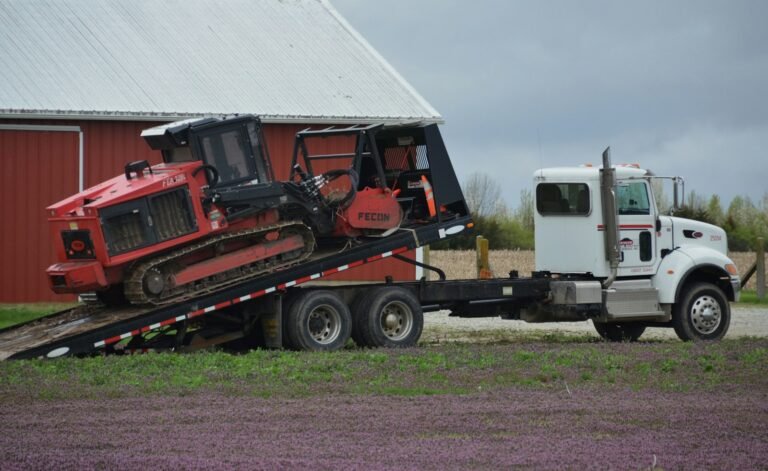
A mini excavator that shifts on a trailer can pull the combination off line, and one that comes loose is a serious danger to everyone else on the road. DVSA’s guidance on securing loads sets out the principles, and they apply to plant on a trailer as much as to a lorry.
- Use the machine’s tie-down points. Excavators and dumpers have marked lashing points. Don’t lash around hydraulic rams, hoses or the dipper arm.
- Restrain all four corners. Chains with tensioners, or straps rated for the load, front and rear, angled to stop movement forwards, backwards and sideways.
- Check the rating. Every strap or chain should carry a label showing its lashing capacity. Frayed, cut or unlabelled straps should not be used.
- Put the bucket down. Rest the bucket and blade on the bed and engage any slew or travel locks so the upper structure can’t swing.
- Secure loose items. Spare buckets, fuel cans and tools need their own restraint, not just a place on the bed.
- Re-tension after a few miles. Tracks settle and straps stretch, especially on the first stretch out of a site.
Speed limits and lane rules
Unless signs say lower, the national limits when towing are 30mph in built-up areas, 50mph on single carriageways and 60mph on dual carriageways and motorways. You must not use the right-hand lane of a motorway with three or more lanes while towing, unless other lanes are closed.
These are maximums, not targets. Real-world speeds when towing a plant trailer are usually lower. The A30 out of Okehampton is fine, but the moment you turn off onto Devon and Cornish lanes, with steep hills, tight bends and oncoming tractors, slow down and allow much longer stopping distances.
Driving with a loaded plant trailer
Towing a plant trailer changes how your vehicle accelerates, brakes and corners. The roads around our depot near Okehampton test that quickly.
Braking and hills
Stopping distances are longer with a heavy trailer, so leave far more space to the vehicle in front and brake earlier and more gently. On the steep descents that are common across Devon and Cornwall, drop to a lower gear before the hill rather than riding the brakes all the way down. Overrun brakes on the trailer work with your vehicle’s brakes, but they can overheat on long descents if you rely on them too much.
Snaking and wind
The Highway Code says that if a trailer starts to swerve or snake, you should ease off the accelerator and reduce speed gently rather than braking harshly. Snaking is far more likely with poor nose weight or too much speed. Exposed stretches, such as the A30 across Bodmin Moor or roads over Dartmoor, can catch a trailer with strong crosswinds, so slow down in gusty weather.
Lanes and passing places
On single-track lanes, remember your combination is much longer than your vehicle alone. Look further ahead for passing places, and be prepared to reverse a short distance only if you can do it safely. If a lane looks too tight for a loaded trailer, it probably is.
Checklist before towing a plant trailer
- Hitch on firm, level ground and check the coupling is locked onto the ball. Lift the jockey wheel fully and stow it.
- Attach the breakaway cable correctly.
- Connect the electrics and check every light: indicators, brake lights, tail lights and number plate lamp.
- Fit a number plate on the trailer showing the towing vehicle’s registration.
- Check trailer tyres for pressure, damage and tread, and check wheel nuts.
- Load the machine with the weight slightly forward of the axle so there is positive nose weight within the towbar limit.
- Lower the bucket or blade onto the bed, engage any slew lock, and switch off and remove the key.
- Secure the machine with chains or rated straps at its designated tie-down points, front and rear.
- Raise and secure the ramps or tailgate.
- After the first mile or so, stop somewhere safe and recheck straps and coupling.
Trailer condition and maintenance
Light trailers up to 3,500kg do not currently go through an annual MOT-style test in Great Britain, so it is down to the person towing to make sure the trailer is roadworthy. Trailers hired from us are checked between hires, but you should still look before you set off, and check again on a long hire.
- Tyres: pressures to the trailer manufacturer’s figure, no cuts or bulges, and no signs of cracking from age.
- Wheels and bearings: wheel nuts tight, and no rumbling or excessive heat from the hubs after a journey.
- Coupling: the head locks securely onto the ball, and the breakaway cable is intact, not frayed or kinked.
- Brakes: the handbrake holds, and the overrun brakes operate smoothly with no snatching.
- Lights and plate: every lamp working, lenses intact and the number plate clean and legible.
- Bed and ramps: no cracked boards, ramps that lock in place, and tie-down points in good condition.
If you find a fault on one of our trailers, don’t tow it. Call or WhatsApp us and we will sort it.
Hiring a machine and trailer together
If you plan on towing a plant trailer yourself, it makes sense to book the machine and trailer as a matched pair. As a rough guide:
| Trailer | Bed size | Typical loads |
|---|---|---|
| Brian James 9ft plant trailer | 9ft × 4ft 4in, 2,700kg GVW | Micro excavators, the Hyundai 500kg tracked dumper, compaction kit |
| Indespension 10ft plant trailer | 10ft × 5ft 6in, with ramps | Slightly larger compact plant and mixed loads |
| Ifor Williams 18ft tilt bed | 18ft × 6ft 8in | Wheeled equipment and machines that drive on |
| Ifor Williams 18ft flat bed | 18ft × 7ft 5in | Long loads, materials and vehicles |
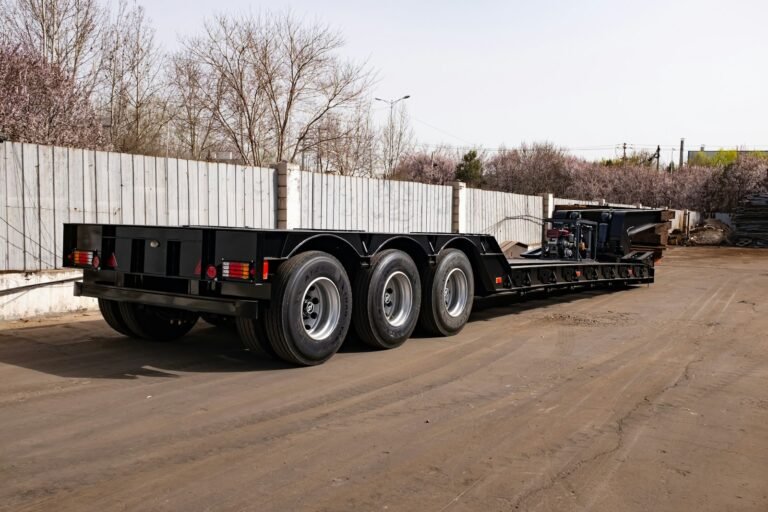
The Bailey 10-ton low loader on our agriculture page is a much heavier trailer designed for tractor towing, so it is a different conversation; ask us if you need one. For machines over a few tonnes, our own delivery is usually the safer and simpler option.
Reversing and unloading on site
Reversing a loaded plant trailer down a farm track or into a tight driveway takes practice, so get someone to guide you and agree hand signals first. Unload on firm, level ground with the trailer still coupled to the vehicle and the handbrake on. Keep people well clear of the ramps while the machine tracks off, and track down slowly in a straight line with the bucket held low.
Common mistakes
Most problems when towing a plant trailer come from a handful of avoidable errors.
- Assuming a pickup can tow 3,500kg in every configuration without checking the plate.
- Forgetting attachments and fuel when working out payload.
- Loading the machine too far back, giving low or negative nose weight, which can cause dangerous snaking.
- Using worn or unrated ratchet straps.
- Driving onto a soft verge or field entrance to unload and getting stuck.
Unhitching safely
If you need to leave the trailer on site, unhitch on level, firm ground. Apply the trailer handbrake and chock the wheels before you lower the jockey wheel and take the weight off the tow ball. Disconnect the electrics and the breakaway cable last of all, just before lifting the coupling clear. Never unhitch a loaded trailer on a slope, and never stand between the vehicle and the trailer while either could move. A wheel clamp or hitch lock on a trailer left overnight is also worth asking your insurer about.
When delivery beats towing it yourself
Towing a plant trailer yourself saves the delivery charge, but it is not always the cheaper or safer option once you count everything. Delivery usually makes more sense when:
- The machine is near your limits. If the weights only just work on paper, a small error with buckets or fuel can push you over.
- You have little towing experience. Reversing a loaded trailer into a tight drive at the end of a long day is where many scrapes happen.
- The route is difficult. Steep, narrow lanes with few passing places are hard work with a loaded trailer.
- Your time is worth more on site. Two round trips to the depot, one to collect and one to return, can take most of a working day.
- The hire is longer. On a weekly or monthly hire, the delivery cost is spread over more working days.
We deliver and collect across Devon, Cornwall, Somerset and Dorset, with transport quoted separately by distance from our depot. On long jobs, long-term rental includes delivery and collection as part of the contract.
Frequently asked questions
Can I tow a mini digger on a standard car licence?
If you passed from 1 January 1997, you can tow trailers up to 3,500kg MAM since December 2021. Your vehicle must also be rated to tow the combined weight.
Do I need towing training?
It is not required for most car drivers, but a towing course is worthwhile if you are new to heavy trailers, particularly reversing and loading.
Can you deliver instead of me towing?
Yes. We deliver and collect from Okehampton across Devon, Cornwall, Somerset and Dorset, quoted separately by distance. If you would rather not tow, ask for delivery when you book a machine from our construction range.
Is my load insured while towing?
Not necessarily. Check that your plant hire insurance covers equipment in transit.
Can I tow a plant trailer with a van or pickup?
Yes, if the vehicle is rated to tow the laden trailer weight and stays within its gross train weight. Check the plate on the vehicle and the handbook, not a figure from a sales brochure.
What speed can I tow at on the A30?
The national limit when towing is 60mph on dual carriageways, and 50mph on single carriageway sections, unless signs show a lower limit. With a loaded plant trailer, driving below the limit is often sensible. GOV.UK lists the current speed limits.
Can I be stopped and checked while towing?
Yes. Police and DVSA can stop and check vehicles, including weights and load security. Running overweight or with an insecure load can lead to penalties, so work out the weights before you go. Our FAQ page covers collection from the depot.
Hire a plant trailer
Tell us what you need to move and what you will tow it with. WhatsApp or call 07841 036064, Monday to Friday 7:30am to 5:30pm, or use our contact page.