Tractor stone crusher hire lets you rebuild a rutted farm track, a poached gateway or a stony field without importing lorry loads of aggregate. The machine we hire for this is the Valentini 2.3 Leon, a PTO-driven, tractor-mounted crusher with a 2.3m working width. It breaks stone where it lies and leaves a dense, crushed surface you can roll and use. Below we cover what it does well, what tractor it needs, how to run a track job from start to finish, and when a tracked jaw crusher or bought-in stone makes more sense.
In this guide
What a tractor-mounted stone crusher actually does
A PTO stone crusher is a heavy rotor in a steel housing, carried on the three-point linkage and driven from the tractor‘s PTO. As you drive forward slowly, the rotor picks up stone from the surface and the top layer of ground, smashes it against the housing and lays it back down as smaller, graded material mixed with fines.
That matters because a track fails when the stone on top is loose and the water gets underneath. Crushing in place turns loose cobbles and old hardcore into a tighter mix that locks together when rolled. On fields, the same action breaks up surface stone so it no longer damages mowers, balers and drills.
It is not a quarry crusher. It works the ground you drive over, at a walking pace, and it suits farms, estates and long private lanes rather than stockpiles of demolition rubble.
Typical jobs for stone crusher hire in the South West
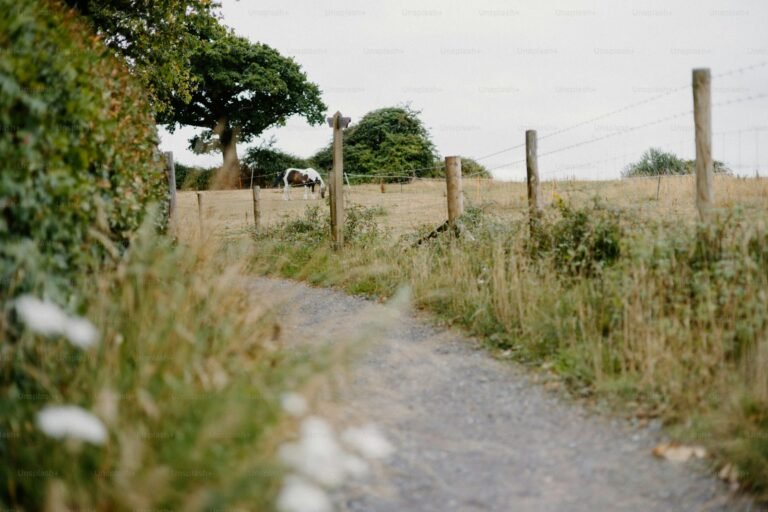
West Country ground gives the crusher plenty of work. Around Okehampton and the edges of Dartmoor, granite and shaley stone (what many locals call shillet) work up through tracks every winter. In Cornwall the killas slate soils are shallow and stony, and in mid and north Devon the heavy Culm clays turn gateways into mud baths by February.
- Farm and forestry tracks: re-crushing the existing stone, adding a top-up layer where needed, and re-forming a camber so water runs off.
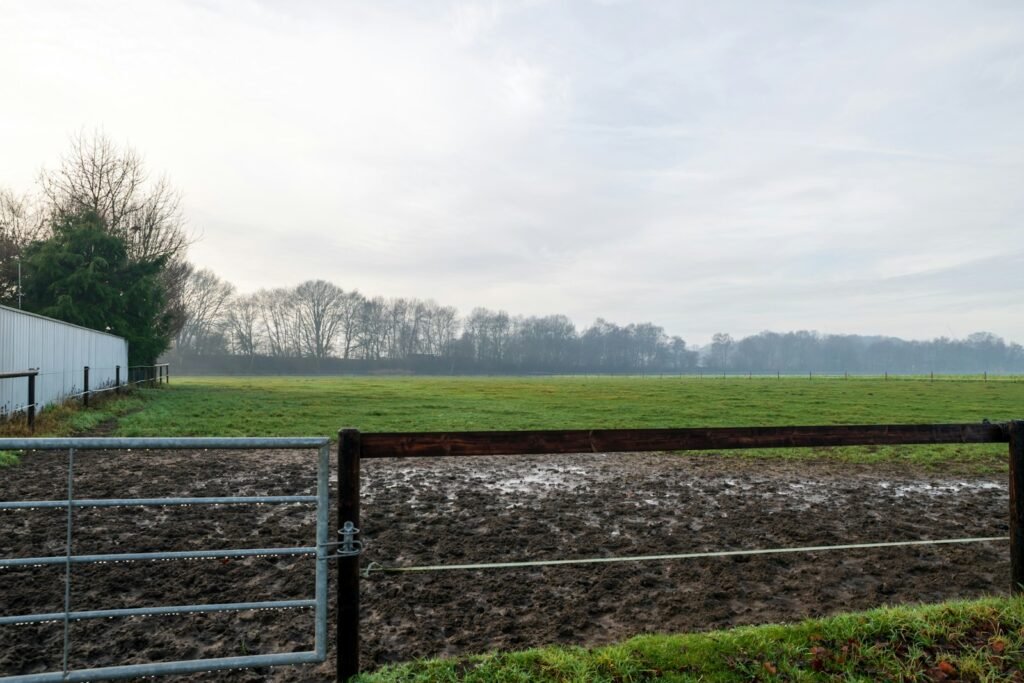
- Gateways and feed areas: laying a layer of stone over a poached gateway and crushing it in so stock and tractors are not sinking.
- Stony reseeds: breaking surface stone before reseeding a ley, so the seedbed is easier to roll and later cuts do less damage to machinery.
- Yard edges and parking areas: turning a delivery of rough stone into a firm, level standing.
- Long private drives: refreshing a potholed estate drive without the cost of a full new surface.
What tractor do you need?
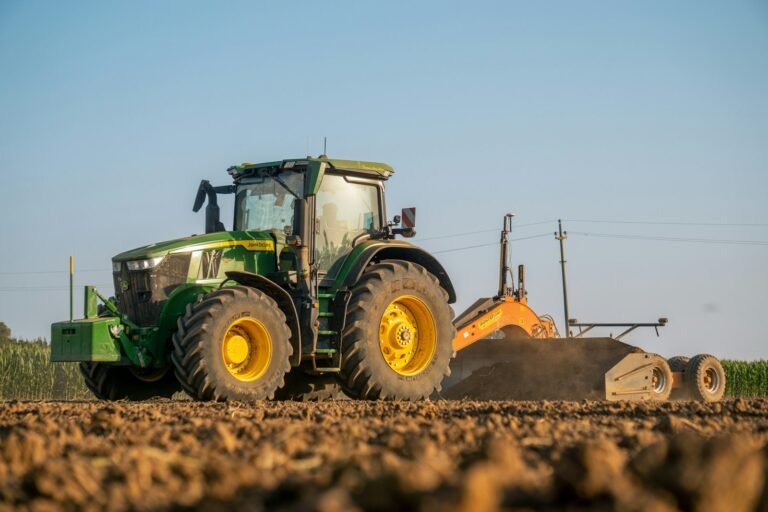
This is the first question to answer, because a stone crusher is one of the hungriest PTO implements there is. It needs a well-powered tractor with the right PTO speed, enough linkage lift capacity to carry the machine, and enough weight on the front to stay planted. A tractor that is short of power will stall the rotor, overheat or simply crawl.
When you WhatsApp us, tell us the make, model and horsepower of your tractor, its PTO speeds and whether it has front weights. We will check it against the crusher’s requirements before we deliver. If your own tractor is not up to it, we can talk about hiring a tractor alongside the crusher. Our John Deere 6155R (155HP, 4WD) is on the agriculture equipment page, and we will tell you honestly whether it is the right match for the job.
How to rebuild a farm track with a stone crusher
A good result comes from the preparation and the finish as much as the crushing. This is the method that works on most West Country tracks.
- Walk the track first. Mark soft spots, culverts, buried pipes and any services. Note where water runs across the surface.
- Sort the drainage. Clear roadside ditches and cut-off drains. No surface lasts if water sits underneath it.
- Grade off the high centre. A grass-and-mud ridge down the middle should come off before crushing, so you are working stone, not soil.
- Top up where needed. Where the old stone has gone, lay a layer of new stone or clean hardcore so the crusher has material to work.
- Crush in slow passes. Keep forward speed low and let the rotor do the work. Two passes are often better than one fast one.
- Re-form the camber. Shape the surface so it sheds water to the sides.
- Roll it. Compact the crushed surface while it is slightly damp. A firm, closed surface is what keeps the rain out.
Plan the job for a drier spell in late spring, summer or early autumn. A sodden track will smear rather than crush, and you will struggle for traction.
Stone crusher, jaw crusher or bought-in stone?
The tractor crusher is one of three ways to get a firm surface. This table shows where each fits.
| Option | Best for | Watch out for |
|---|---|---|
| Valentini 2.3 Leon PTO crusher | Long tracks, gateways and stony fields where the stone is already in place or spread first | Needs a suitably powerful tractor; works the surface, not a stockpile |
| Dragon 400 or 450 tracked jaw crusher | Turning a heap of stone or broken concrete into usable sized material | Material has to be loaded in by excavator and then spread |
| Bought-in aggregate | Short runs, or where there is little stone on site | Haulage onto narrow lanes and the cost of large tonnages |
The tracked jaw crushers sit in our construction equipment range alongside the excavators you would use to feed them. Many farm jobs use both: a jaw crusher to process a heap of old building stone, then the tractor crusher to work it into the track.
Waste rules if you bring material in
Crushing stone that is already in your field or track is usually straightforward. Bringing in broken concrete, bricks or demolition rubble from elsewhere is different, because that material can count as waste, and using or treating it may need a registered waste exemption. The Environment Agency’s guidance on the U1 exemption for using waste in construction is a good starting point. Check the current guidance before you accept a load of rubble for your track.
Practical points before the crusher arrives
- Confirm delivery access. The crusher comes on a lorry or trailer, so tell us about narrow lanes, weight limits or tight gateways.
- Have the tractor ready, greased and with the PTO shaft guard in good order.
- Keep people and livestock well clear while it runs. Crushers can throw stone.
- Use white diesel (DERV) in any hired diesel kit, in line with our fuel policy.
- Arrange insurance for hired equipment. It is not included automatically, and we refer customers to insurance4plant for plant hire cover.
Planning your stone crusher hire: a simple timeline
Most track jobs go wrong in the planning, not on the day. Working back from the date you want the crusher on site makes it far easier to hit a dry window and avoid paying for hire days spent waiting.
- Three to four weeks before: walk the track, measure its length and width, and photograph the worst sections. Decide whether you need to bring in extra stone and how much.
- Two to three weeks before: clear ditches, cut back overhanging hedges and open up any blocked cross-drains or culverts. Drainage work is best done first so the track has a chance to dry out.
- Two weeks before: WhatsApp us with your tractor details, postcode, track length and dates. We check the match and confirm availability.
- One week before: order and spread any top-up stone so it is in place when the crusher arrives. Book the roller, or arrange to borrow one.
- A few days before: watch the forecast. If heavy rain is coming, it is usually better to move the start date than to crush a saturated track.
- On the day: have the tractor fuelled, greased and parked where the crusher can be hitched safely, with the PTO shaft ready to check for length.
A weekly hire gives you room to work around showers, which is often the deciding factor in a Devon or Cornish summer. If you have tracks on several farms or a contract to work through, ask about our long-term rental rates, which include on-site servicing.
A worked example: a 400m farm track on clay ground
To show how the steps fit together, here is an illustrative scenario rather than a real job. A beef farm in mid Devon has a 400m track from the yard to its outlying fields. The first 150m is reasonably firm. The rest has lost most of its stone into the clay, has a grassy centre ridge and holds water in the wheel ruts from November to April.
- Drainage: the farmer clears the roadside ditch along the low side and cuts two shallow cut-off grips across the track where water currently runs down it.
- Preparation: the centre ridge is graded off with a front loader and the soil pushed to the side, not left on the track.
- Top-up: clean stone is tipped and spread along the worst 250m, enough to give the crusher a solid layer to work.
- Crushing: the first 150m gets a single pass to break up loose cobbles. The rebuilt section gets two slow passes.
- Finishing: the surface is shaped with a slight camber and rolled while damp, then left to settle before heavy trailers use it.
In a scenario like this, the crushing itself is often the quickest part of the job. Most of the time goes on the drainage and stone spreading, which is why getting those done before the crusher arrives keeps the hire short.
What affects the cost of stone crusher hire
We do not publish hire prices because every job is different. WhatsApp us for a current quote. These are the factors that shape it, so you can plan the job to keep the total down.
| Factor | Why it matters | How to keep it in check |
|---|---|---|
| Hire period | Daily, weekly and monthly rates differ, and hire runs continuously until off-hire | Do the drainage and stone spreading before delivery so the crusher is working from day one |
| Delivery distance | Transport is quoted separately, based on distance from our depot near Okehampton | Group jobs on neighbouring farms into one hire |
| Tractor | If your own tractor is not suitable, a tractor hire is added | Send us your tractor details early so there are no surprises |
| Imported stone | Bought-in aggregate and haulage can cost more than the hire itself on long tracks | Use stone already on the farm, or process a heap with a jaw crusher first |
| Insurance and fuel | Cover for hired plant is not included, and fuel is the hirer’s cost | Arrange cover in advance and return the kit full to avoid refuelling charges |
Delivery, hitching and collection
The crusher arrives on our transport, so the delivery point needs firm ground and room for the vehicle to turn. A level yard or hardstanding near the start of the track is ideal. Tell us about any weak bridges, low branches, steep or single-track lanes and tight farm gateways when you book, as these decide what vehicle we send and where we can unload.
When it arrives, someone responsible should be there to sign the delivery note and look over the machine with the driver. Before you start work, check that the PTO shaft is the correct length for your tractor when the crusher is raised and lowered, that the guards are complete and that the linkage pins are secure. Ask any questions at this point, while the driver is still with you.
When you have finished, give the crusher a wash down to remove mud and stone, leave it somewhere our vehicle can reach, and call or WhatsApp us to off-hire. Hire charges run until the off-hire is confirmed with the office, so telling a driver on site is not enough. Kit returned dirty may be cleaned at your cost.
Best months in the South West
Late May to September usually gives the driest tracks in Devon and Cornwall, with early autumn often good once silage and harvest traffic has eased. Book early for that window, as it is when most farms want track work done.
Common mistakes to avoid
- Crushing soil, not stone. A crusher cannot make a firm track out of mud. If there is little stone left, add some first.
- Skipping the drainage. A beautifully crushed surface will break up again within a winter if water still runs down the middle of it.
- Driving too fast. High forward speed leaves larger lumps and an uneven finish. Slow down and let the rotor work.
- Leaving it unrolled. A loose crushed surface lets rain straight in. Rolling closes it up.
- Working in the wet. Saturated ground smears, the tractor loses traction and the result does not last.
- Hitting hidden services. Water pipes to troughs and old field drains often run under or across farm tracks. Mark them before you start.
Do you need permission for a new farm track?
Repairing and resurfacing an existing track is normally a maintenance job. Forming a brand new track is different. On agricultural units of 5 hectares or more, a new private way for farming purposes can often be built under agricultural permitted development rights, but you usually have to apply to the local planning authority first to find out whether its prior approval is needed.
Smaller holdings, and land in national parks such as Dartmoor and Exmoor, can face extra limits. The rules are set out in Part 6 of the General Permitted Development Order. Speak to your planning authority before you build, and check the current guidance.
Defra’s farming rules for water also expect you to take reasonable precautions against soil erosion, and making tracks is one of the activities it mentions. A cambered, well-drained track that sheds water into a ditch rather than straight down a field into a stream helps on both counts.
Frequently asked questions
Can a stone crusher deal with large boulders?
A tractor-mounted crusher is built for surface stone and track material, not big boulders. Pull large rocks out with an excavator first and break or bury them, then let the crusher handle the rest.
How long does a farm track job take?
It depends on length, how much stone you add and how many passes you need. Tell us the length and condition of the track and we will suggest whether a daily or weekly hire suits better.
Can I use the crusher on grassland?
Yes, it is commonly used to break stone on fields before reseeding. Work it in dry conditions and expect to roll and reseed afterwards.
Do you deliver to Cornwall and Somerset?
We cover Devon, Cornwall, Somerset and Dorset from our depot near Okehampton in mid Devon. Same-day delivery is often possible across most of Devon and Cornwall.
Can I hire the stone crusher and a tractor together?
Yes. If your tractor is not suited to the crusher, ask about our John Deere 6155R. We will tell you honestly whether it is the right match before you book.
Is stone crusher hire available on Flex Hire?
Our Flex Hire tiers let you swap kit within one monthly fee, and Tier 4 includes tractors. Ask us which tier covers the implements you need.
What happens if the crusher breaks down?
Stop work, then call or WhatsApp us. Do not attempt repairs yourself. We assess the fault and arrange a repair or replacement as quickly as we can.
Book stone crusher hire from Okehampton
Send us the job details on WhatsApp or call 07841 036064 (Monday to Friday, 7:30am to 5:30pm): your tractor make and horsepower, site postcode, track length and dates. We will check the match and come back with a current quote. For written quotes or accounts, use our contact page.