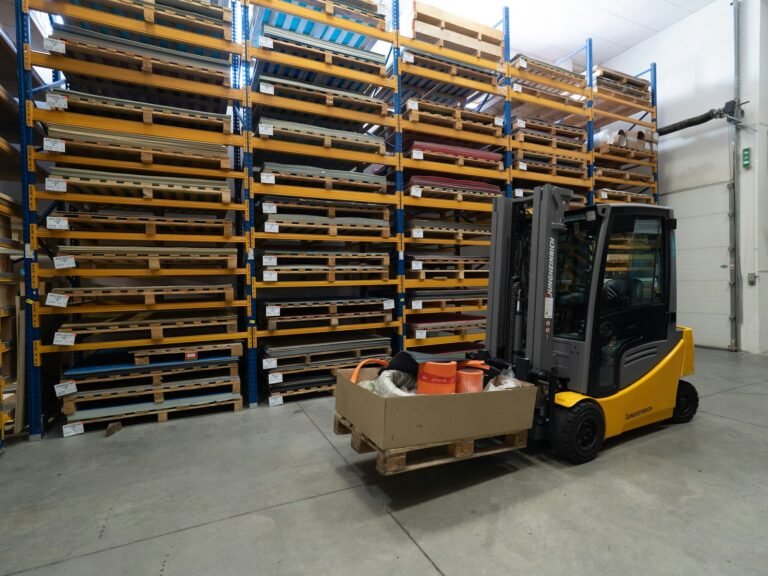
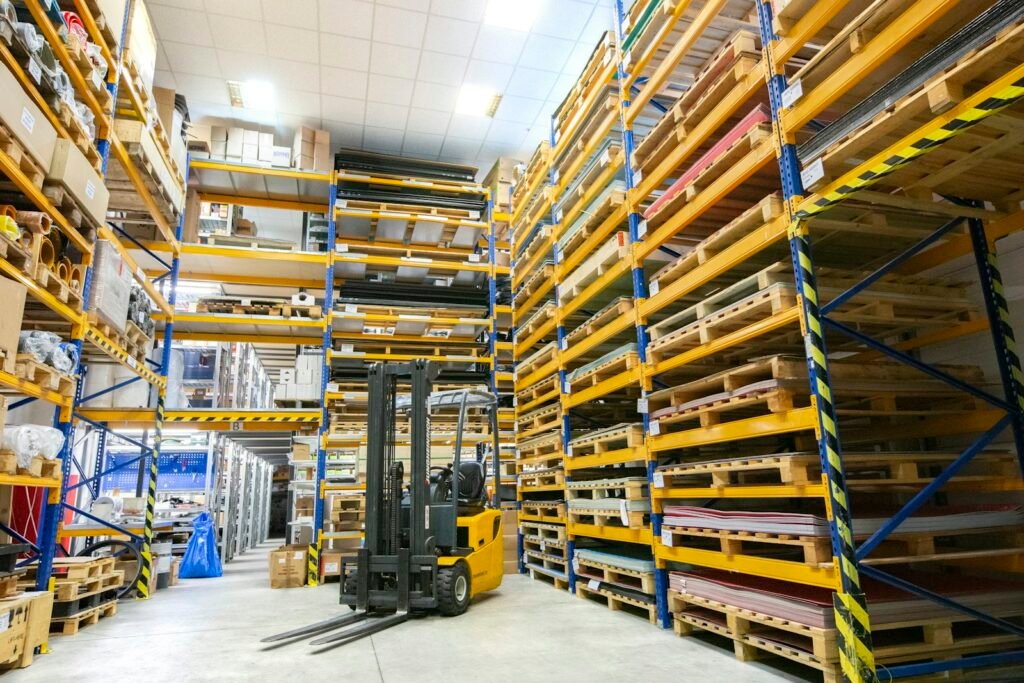
Peak season stretches every warehouse at once: more pallets in, more orders out, more temporary staff, and floors that get dirty faster than anyone can clean them. Short-term warehouse equipment hire lets you add forklifts, stackers, access and cleaning kit for the weeks you need them, without buying machines that stand idle in February. This guide covers what to hire, how to plan charging and training, and when to book.
In this guide
When peak season hits in the South West
For most distribution and e-commerce operations, the peak runs from late October through Black Friday to Christmas, with returns spilling into January. In Devon and Cornwall there is often a second peak: retailers, food producers and wholesalers serving the tourist trade build stock through spring and run flat out through summer. Agricultural merchants and feed suppliers have their own seasonal swings.
Look at last year’s figures and mark when pallet movements started climbing, not just the busiest week. That is when the extra kit needs to arrive.
Summer peaks in holiday areas
Businesses serving the holiday trade in Cornwall, the South Hams, North Devon and the Dorset coast often see their real peak between Easter and the end of the school holidays. Food and drink wholesalers, cash-and-carries and holiday park suppliers build stock in spring, then run long days through July and August. The planning is the same as a Q4 peak, but the booking window is earlier: kit for a summer peak is best arranged in late winter or early spring, before landscapers and event organisers are also competing for delivery slots.
Choosing the right warehouse equipment hire mix
Our warehouse and cleaning fleet is fully electric for material handling: zero exhaust fumes, which suits indoor warehouses, food distribution and clean environments.
| Machine | Capacity | Best for |
|---|---|---|
| EP F4 electric pump truck | Up to 2,000kg | Loading docks, trailer unloading, moving pallets across the floor |
| EP ESL 122 electric pallet stacker | 1,200kg, racking up to 5m | Compact warehouses and lower racking without a full forklift |
| CESAB B420 electric forklift | 2,000kg, integrated side-shift | General warehouse and logistics work |
| EP EFL 253 electric forklift | 2,500kg | Heavier loads; a replacement for a diesel or gas truck indoors |
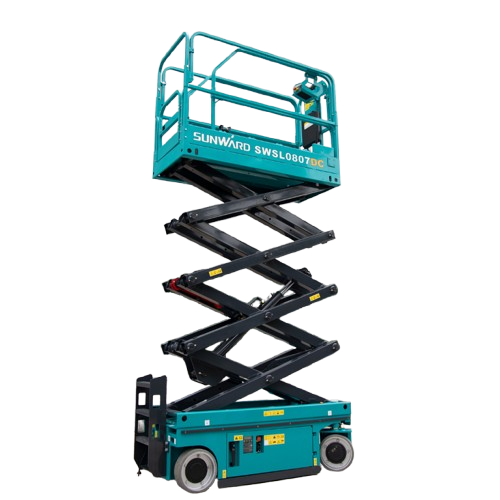
| Sunward 0807DC scissor lift | 8m platform height | Racking maintenance, signage, lighting, high-level stock checks |
Match machines to tasks rather than defaulting to another forklift. A busy goods-in dock often needs more pump trucks rather than another counterbalance, while a mezzanine or racking expansion may only need a stacker. Check your heaviest pallet weights and top beam heights against each machine’s rated capacity at height, which is lower than its capacity at ground level.
Keeping floors clean under pressure
More traffic means more dust, shrink-wrap scraps and spills, and dirty floors reduce grip for trucks and people. Adding cleaning kit to your warehouse equipment hire for the peak keeps standards up without pulling staff off picking:
- Eureka E50 ride-on scrubber: large-area wet scrubbing and drying in one pass.
- Eureka E36 walk-behind scrubber: compact, for medium areas and retail units.
- Eureka Picobello 151 Ecovac push sweeper: quiet, manual sweeping for aisles and tight spaces.
- Big Brute industrial vacuum: wet and dry pick-up of dust, debris and spills.
- Brendon 35KPE power washer: yards, loading bays and external areas.
Schedule scrubbing between shifts or in quieter windows so wet floors and cleaning machines are not competing with forklift traffic.
Choosing a scrubber for your floor
Match the machine to the area and the layout. A ride-on scrubber such as the Eureka E50 covers large open floors quickly, but it needs space to turn at the end of aisles. The walk-behind E36 suits narrower aisles, retail units and smaller warehouses. Where the job is dry debris rather than grime, such as shrink-wrap scraps, pallet splinters and dust, the Picobello 151 push sweeper is quick, quiet and needs no water.
Think about where operators will fill and empty the scrubber tanks, and where machines will charge, before they arrive. Floors with heavy oil or tyre marking may need a couple of passes, and spills should be dealt with as they happen rather than left for the evening clean.
Charging, space and floor plan
Electric fleets need a charging plan. Before machines arrive, decide where each will charge, check you have suitable sockets and enough electrical capacity, and keep charging areas ventilated, clear and away from pedestrian routes. If you run two or three shifts, map when each machine will charge so you are not left with flat trucks at the start of a shift. Ask us for the charging requirements of each machine when you enquire.
Extra machines also need parking, turning room and segregated walkways. Walk the floor with your plan and mark out routes before the peak, not after the first near miss.
Traffic management on a busier floor
More machines and more temporary staff mean more chances for people and trucks to meet. Before the peak, review your traffic plan: separate pedestrian walkways from truck routes with barriers or clear markings, set one-way routes where aisles allow, and agree speed limits for busy areas. Keep visiting lorry drivers in a safe waiting area away from loading operations. Mark charging bays and parking spots so machines are not left in walkways at the end of a shift. Brief agency staff on the layout on their first day, including where they must not walk.
Training and inspections
Hire is self-drive, and the hirer is responsible for making sure every operator is trained and competent on the machine they use. HSE’s Approved Code of Practice for rider-operated lift trucks (L117) sets out the training expected, and temporary staff are no exception. Plan training into agency onboarding, and only issue keys to trained operators. Pedestrian stackers and scissor lifts need trained operators too.
Lift trucks must be thoroughly examined at regular intervals under LOLER. The HSE guidance on thorough examination of lift trucks explains what that involves; ask about the thorough examination status of hired kit when it arrives, and keep up daily pre-use checks on every machine.
Short-term, long-term or Flex Hire
Weekly and monthly hire covers a defined peak. If you are adding capacity for several months, long-term rental gives monthly rates with on-site servicing included. If your needs swing through the year, Flex Hire gives one flat monthly fee with the freedom to swap kit any time, servicing included and no long-term contract. Tier 3 at £995 +VAT and delivery per month adds forklifts; ask us which tier covers the mix of kit you need.
For several machines at once, use our contact form to request a tailored fleet proposal with a single account manager.
After the peak: returns and off-hire
January brings returns, stock counts and a lot of empty pallets. Rather than sending everything back on the first working day, keep a pump truck and a scrubber on for the returns surge and the deep clean, then off-hire the forklifts once put-away volumes drop. A scissor lift is useful for a few days after peak to tidy high-level locations and replace damaged racking labels.
Common peak-season mistakes
- Booking extra forklifts when the bottleneck is actually dock unloading or picking.
- Forgetting that more electric machines means more charging points and charging time.
- Putting untrained agency staff on trucks in the first busy week.
- Letting floor cleaning slide until spills and debris cause a slip or a load incident.
- Leaving the booking until November, when the same machines are wanted everywhere.
Warehouse equipment hire peak checklist
- Review last year’s volumes and mark when the ramp-up started.
- List tasks by area: goods-in, put-away, picking, despatch, cleaning, maintenance at height.
- Check pallet weights, racking heights, aisle widths and floor condition.
- Plan charging points and shift charging rotas.
- Line up operator training for temporary staff.
- Arrange insurance; it is not automatically included, and insurance4plant.co.uk offers plant hire cover.
- Book kit by early autumn for a Q4 peak, or late winter for a summer peak.
Working out how many machines you need
The question behind every peak-season warehouse equipment hire enquiry is how many extra machines will cover the extra work. A rough method gets you close enough to start the conversation:
- Estimate peak movements per area: pallets in at goods-in, put-away moves, replenishment and pallets out at despatch, per shift.
- Time a typical cycle: how long one truck takes to collect, move and drop a pallet in that area, including waiting at the dock or for a pick face.
- Work out moves per machine per shift: divide the productive minutes in a shift (after breaks, charging and checks) by the cycle time.
- Divide demand by capacity: that gives a machine count for each area. Round up and keep a spare in mind for breakdowns or training.
- Check the people: machines need trained operators. There is no point hiring four trucks if only two people can drive them.
As an illustration: if despatch needs around 240 pallet moves on a shift and a pump truck realistically manages 30 per hour over a seven-hour working shift, that is about 210 moves per truck, so two pump trucks cover it with room to spare. Your own figures will differ, but the method stops you guessing.
A worked example: a food wholesaler preparing for Christmas
An illustrative case of the kind we see across Devon and Cornwall. A wholesaler near Exeter supplying shops, pubs and holiday parks runs a single day shift most of the year. From mid-November it adds an evening shift and expects roughly a third more pallets through the doors. These figures are typical, not a real customer.
- Goods-in: one extra EP F4 electric pump truck so two lorries can be unloaded at once.
- Put-away: one CESAB B420 electric forklift added to the site’s own truck, so the evening shift has a dedicated machine while the day fleet charges.
- Overflow storage: an EP ESL 122 pallet stacker for a temporary racking area, where lower beam heights do not justify a forklift.
- Cleaning: Eureka E36 walk-behind scrubber for the evening shift, as spillages from chilled stock increase with volume.
- Timing: kit delivered in the first week of November to allow training and familiarisation before the busiest weeks, then the forklift and stacker off-hired in early January, with the pump truck kept until returns settle.
The key points in this example are that each machine solves a specific bottleneck, and the dates are set by when the ramp-up starts, not by the busiest week. If volumes come in lower than forecast, a machine can go back early; if they come in higher, it is far easier to add one more truck to an existing hire than to find a whole fleet at short notice in December.
Lift truck training in three stages
HSE’s lift truck training guidance describes three stages for rider-operated trucks:
- Basic training: the core skills and knowledge, delivered off the job and away from production pressure.
- Specific job training: the controls and operating principles of the particular truck and how it will be used at your workplace. It can be combined with basic training.
- Familiarisation: applying what has been learnt under normal working conditions, on the job and under close supervision.
For peak season, the practical point is that an agency worker’s certificate from another site shows basic training, but the truck they will drive for you and the layout of your warehouse are new to them. Build specific job training and supervised familiarisation into the first days, before volumes peak. HSE also notes that refresher training may be needed for occasional users and people returning after time away, which describes many seasonal staff. Pedestrian stackers, pump trucks and scissor lifts also need operators who are trained and competent on that equipment.
Daily checks and breakdowns
Busy weeks are when checks get skipped and small faults become stoppages. A short pre-use check at the start of every shift, recorded on a sheet kept with the machine, catches most problems early.
- Battery charge level and charging lead condition.
- Tyres and wheels for damage or debris wrapped round them.
- Forks, chains and mast for cracks, wear or damage.
- Brakes, steering, horn, lights and any warning beacons.
- Hydraulic leaks under the machine.
- Seat belt and operator presence systems where fitted.
- On scissor lifts, guardrails, gates, emergency lowering and the platform controls.
If a check finds a fault, take the machine out of use and tell us. For breakdowns on hired kit, call or WhatsApp and we will assess the problem and arrange a repair or a replacement as fast as we can. Lifting equipment used to lift people, such as scissor lifts, has a default thorough examination interval of six months under LOLER, and other lifting equipment twelve months, unless an examination scheme sets different intervals.
What happens on delivery day
Plan deliveries for a quieter part of the day, with a clear route from the gate to the unloading point and someone on site who knows where each machine is going. Our driver will need firm, level ground to unload, so let us know about yard slopes, height barriers, gate times and any site induction requirements in advance.
On arrival, check each machine over with the driver, confirm how it charges and where its paperwork is, and make sure the supervisor knows which operators are cleared to use it. Put machines into service only after their first pre-use check has been done and recorded, and keep keys controlled so untrained staff cannot help themselves on a busy shift.
What affects the cost of warehouse equipment hire
We quote each fleet individually and do not publish hire prices, apart from our Flex Hire tiers. The main factors are the number and type of machines, the hire period, delivery distance from our depot near Okehampton, and whether you need a mix of handling, access and cleaning kit.
Grouping machines into one delivery, and setting dates around the actual ramp-up, usually gives the best value. For moving goods and materials across yards, glasshouses or covered areas where fumes are not acceptable, the electric Tracspider Elektro Joe tracked transporter is another option. Insurance is not included automatically, so arrange cover before the hire starts.
Frequently asked questions
How far ahead should I book warehouse equipment hire for Christmas?
As early as you can, ideally by September, as peak demand for forklifts and stackers rises across every sector at the same time.
Are electric forklifts suitable for outdoor use?
Many are used indoors and outdoors on firm, level surfaces. Tell us your yard surface and slopes and we will advise.
Can I hire a forklift for just a few weeks?
Yes. Weekly and monthly hire both suit a defined peak.
Do you deliver to warehouses outside Devon?
We cover Devon, Cornwall, Somerset and Dorset. Send us your postcode and dates.
Do pallet trucks and stackers need trained operators?
Yes. Anyone using a powered pump truck, stacker, forklift or scissor lift should be trained and competent on that equipment, and you should be satisfied of that before handing it over.
How often do hired scissor lifts need a thorough examination?
Under LOLER, equipment used to lift people has a default interval of six months unless an examination scheme says otherwise. Ask about the examination status when the machine arrives.
Can I keep some machines after the peak and return others?
Yes. Many customers keep a pump truck or scrubber for returns and the January clean, and off-hire forklifts once volumes drop.
Get your peak fleet in place
Tell us your site, the tasks, pallet weights, racking heights and dates, and we will confirm the right machines and a current quote. WhatsApp or call 07841 036064, or use our contact page for a fleet proposal or written quote.