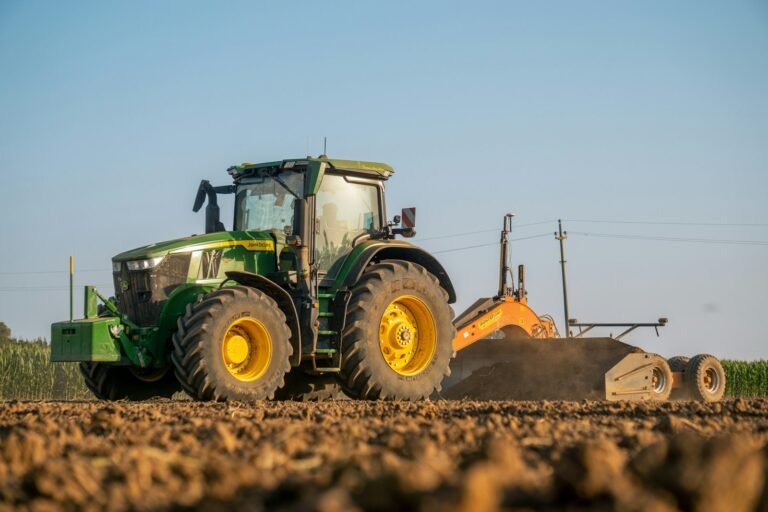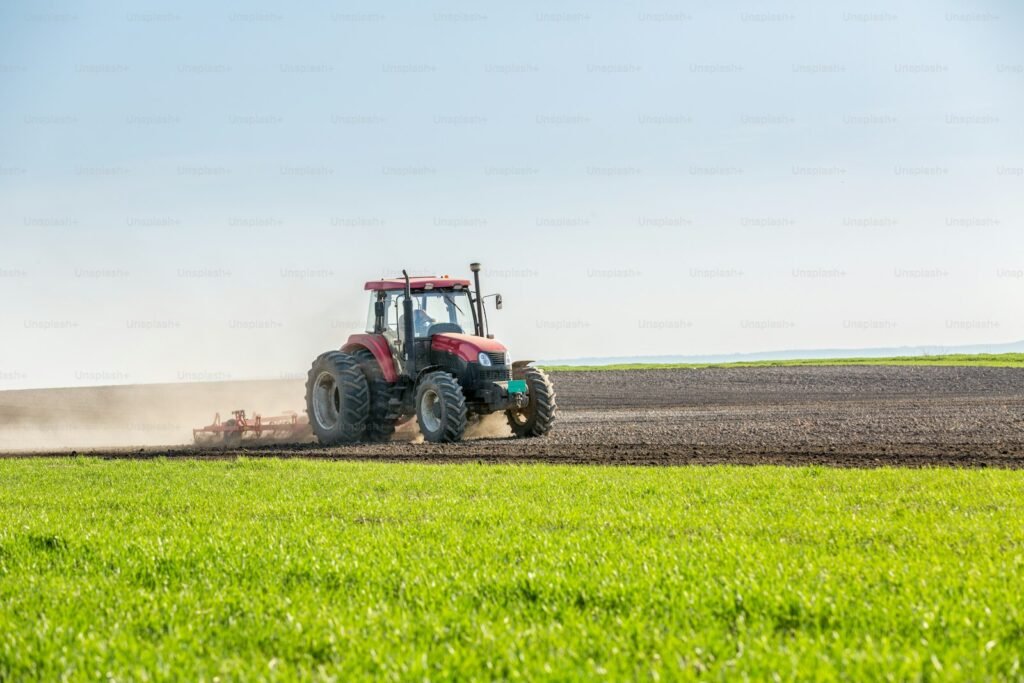
Subsoiler hire is the quickest way to deal with compaction that has built up after a wet winter of feeding, slurry spreading or late harvesting. We hire the Nardi FAST 3m high-speed ripper from our Okehampton depot, a tractor-mounted machine for loosening the subsoil across a 3m working width. Used at the right time and depth it lets water drain, roots go deeper and grass or crops recover. Used at the wrong time it achieves very little. This guide explains how to tell whether you need it, when to do it and how to set it up.

In this guide
Why South West land gets compacted
Devon and Cornwall have long, wet winters and a lot of livestock farming. Ground is travelled when it is soft: feeders in winter, slurry tankers in early spring, silage trailers when the weather allows. Each pass squeezes the soil and, over years, forms a dense layer below cultivation depth that water and roots struggle to get through.
Heavier soils suffer most. The Culm clays of mid and north Devon, the clay vales of Somerset and the poorly drained ground around the edges of Dartmoor and Bodmin Moor all hold water and compact easily. Lighter, free-draining land still compacts in gateways, headlands and tramlines.
Signs you need a subsoiler
- Water lying on the surface for days after rain, especially in patches rather than whole fields.
- Grass that yellows, thins or is invaded by rushes and weeds where machinery travels.
- Crops that yellow and stall in wet spells and wilt early in dry ones, because roots cannot go deep.
- Roots that turn sideways at a set depth when you dig them up.
- A noticeable increase in wheel slip and fuel use when cultivating.
None of these prove compaction on their own. Wet patches can also be failed field drains, and poor grass can be a pH or fertility problem. That is why the next step matters.
Field drains deserve a separate check. If water ponds in a line rather than in wheelings, or a field that drained well for years has started lying wet, look at the outfalls in the ditch first. A blocked outfall or collapsed pipe will not be fixed by ripping. Where the drains are working but water cannot reach them through a compacted layer, subsoiling across the line of the drains, with the tines set above drain depth, can help water find its way down to them again.
Find the compacted layer before you rip
Dig a few spade pits, about 50cm deep, in good and bad parts of the field. Look and feel for a dense, platy layer that resists the spade, has few roots and may smell sour or show grey mottling. Note the depth of the top and bottom of that layer.
The aim is to set the tines just below the bottom of the compacted layer, so it is lifted and shattered rather than cut through. Going far deeper than you need wastes fuel and can bring up poor subsoil. Staying above the layer does nothing. If the pits show no compaction, do not subsoil: spend the money on drainage, lime or reseeding instead.
Timing your subsoiler hire
Soil has to be dry enough at working depth to crack and fissure when the tine passes. If it is moist and plastic, the tine slices a slot and smears the sides, which can make drainage worse. The simple test is to roll a sample from working depth in your hand: if it forms a sausage, it is too wet.
| Period | Typical suitability in the South West |
|---|---|
| Late summer to early autumn | Usually the best window, after harvest or silage when the subsoil is driest |
| Late spring | Possible on lighter land after a dry spell, but check depth moisture |
| Winter | Rarely suitable; subsoil is usually too wet |
| Mid-summer drought | Ground can be too hard for the tractor, and grass may not recover until rain |
Book early for the late summer window, because that is when most farms want ripping done. Weekly hire gives you room to wait for the right days.
Setting up and running the Nardi FAST 3m ripper
Ripping at 3m wide is heavy work, so the tractor has to be matched to the machine. Tell us your tractor model, horsepower and linkage set-up and we will check it. If you need power as well as the ripper, our John Deere 6155R is on the agriculture equipment page and we will tell you whether it suits.
- Set the depth from your pits, just below the compacted layer.
- Do a short test run and dig behind the tines. You want the soil lifted and cracked between tine passes, with little disturbance on top.
- Keep a steady forward speed and straight runs. Avoid sharp turns with the tines in the ground.
- Lift out at headlands and avoid running over freshly loosened ground.
- Work across the slope where it is safe to do so, which helps reduce run-off down the tine slots.
- Watch for stones and field drains. Know where your drains run and set depth to stay clear of them.
After ripping: keep the benefit
Loosened soil is weak for a while and will re-compact if you travel it while wet. Keep heavy machinery off for as long as possible, establish a crop or let grass roots grow into the fissures, and look at what caused the problem in the first place. Lower tyre pressures, controlled traffic, moving feeders around and avoiding the wettest weeks all help.
It is worth digging a couple of spade pits again a year or so later. If the fissures are still open and roots have pushed down through the old compacted layer, the job worked and the field may not need ripping again for several years. If the layer has re-formed, look harder at traffic and stocking in that field, because the cause is still there.
If you have several fields, tracks and a reseed to get through in one season, Flex Hire lets you swap kit within a single monthly fee. Tier 4 covers tractors and our largest machines.
Subsoiler hire or another fix? Matching the tool to the problem
Deep ripping is only one answer to poor drainage and tired ground. Before you commit to subsoiler hire, check that compaction is genuinely the problem and that it sits at a depth a ripper can reach. This table sets out the common options.
| Problem found in the spade pit | Likely fix | Notes |
|---|---|---|
| Dense layer from about 25cm to 45cm, roots turning sideways | Subsoiler or ripper such as the Nardi FAST 3m | Set tines just below the bottom of the layer, in dry conditions |
| Compaction only in the top 10cm to 15cm of grassland | Sward lifter or aeration | Shallower, less disturbance to the grass |
| Fine turf, sports pitches or golf fairways | Turf aeration, such as our Selvatici 1.2m vertical drainage aerator | Towed by a UTV or compact tractor, see our sports and landscaping range |
| Water lying in lines, outfalls blocked | Repair field drains and clear ditches | Ripping will not fix broken drains |
| No compaction, poor grass | Soil test, lime, fertiliser, reseed | Save the fuel and the hire |
Often the answer is a combination. A field may need its outfalls cleared in summer, a ripper pass in late August and a reseed in early September. Planning all three together makes the most of a single dry spell.
A worked example: a silage field on heavy ground
This is an illustrative scenario, not a real customer. A dairy farm in north Devon has a 12-acre silage field on Culm clay. Over two wet springs it has been travelled by slurry tankers and silage trailers on soft ground, and now water sits for days in the headlands and in a band across the middle of the field. Yields have dropped and rushes are creeping in.
- Diagnosis: spade pits in the wet band show a platy, grey-mottled layer from roughly 20cm to 35cm, with roots stopping at its top. Pits in the better corner show no such layer.
- Drains: the outfalls in the boundary ditch are found and cleared, and water starts running from two of them.
- Timing: after second cut silage, with a dry fortnight forecast in late August, the soil at 35cm crumbles rather than rolling into a sausage.
- Setting: tines are set at around 38cm, just below the layer, and a test run is dug to check the soil is lifting and cracking between the legs.
- Work: the wet band and headlands are ripped across the slope. The better corner is left alone.
- Afterwards: stock and tankers are kept off until the grass has rooted down, and the following spring the farm switches to lower tyre pressures on its tanker.
The point of the example is that only part of the field was ripped, at a depth chosen from the pits. That keeps the hire short and the fuel bill down.
What affects the cost of subsoiler hire
We do not publish prices. WhatsApp us for a current quote. These are the things that shape it:
- Hire length: daily, weekly and monthly rates differ. Weekly is our most popular period and gives you room to wait for dry days.
- Tractor: whether you are using your own or hiring a suitable one alongside the ripper.
- Delivery: transport is quoted separately and depends on distance from our depot near Okehampton.
- Scale: several farms or a contracting season may suit monthly hire, long-term rental or Flex Hire better than repeat bookings.
- Running costs: fuel is the hirer’s responsibility and deep ripping uses a lot of it, so ripping only where the pits show a problem saves money.
- Insurance: cover for hired equipment is not included automatically.
The biggest saving usually comes from preparation. If the spade pits are dug, the outfalls checked and the tractor confirmed before the ripper arrives, you can start work the morning it is delivered. Farms that wait until the machine is on the yard to decide which fields need doing often lose the first two days of a weekly hire to walking fields and digging holes. Mark the areas to rip on a field map or a phone photo, note the depth for each, and share it with whoever is driving.
Common mistakes with subsoilers
- Ripping because it is August, not because the field needs it. Always dig first.
- Working too wet. Smeared slots act like pipes for a few weeks and then seal, leaving the field worse.
- Going too deep. Extra depth costs fuel, can bring up poor subsoil and risks clipping field drains.
- Turning with tines in the ground. It strains the machine and tears the surface. Lift out at every headland.
- Running straight back over it. A loaded trailer on freshly ripped ground undoes much of the work.
- Ignoring the cause. If feeders stay in the same gateway and tankers still travel in March, the layer will be back.
Soil, water and the farming rules
Compaction is not just a yield problem. Compacted land sheds water across the surface, carrying soil and nutrients into ditches and streams. Defra’s rules for farmers and land managers to prevent water pollution require you to take reasonable precautions to prevent soil erosion caused by livestock, land management or cultivation. The guidance lists breaking up compacted soil among the precautions you can take, and also requires you to prevent livestock poaching land within 5 metres of a watercourse.
That makes well-timed subsoiling part of good land management on many South West farms, especially on sloping fields above a stream. Ripping across the slope where it is safe, leaving grass buffer strips by watercourses and getting a crop or sward established quickly afterwards all reduce run-off. This is general information, so check the current guidance for your holding.
A short glossary of subsoiling terms
- Pan or plough pan: a compacted layer that forms at the base of repeated cultivation, often 20cm to 35cm down.
- Surface capping: a thin crust on top of bare soil after heavy rain. It is fixed by shallow cultivation, not subsoiling.
- Poaching: damage to wet ground from livestock hooves, common in gateways and around feeders.
- Critical depth: the depth below which a tine stops lifting and cracking the soil and starts compressing it sideways. Working tines too deep for their spacing makes this worse.
- Heave: the upward lift of the soil surface as the tines pass. A small, even heave with little disturbance to the sward is what you are after on grassland.
- Mole drainage: a different technique that pulls a bullet-shaped tool through clay to form unlined channels. It needs its own equipment and a suitable clay content, so do not confuse it with ripping.
- Outfall: the point where a field drain empties into a ditch. Always check these before deciding a field needs ripping.
Using the right words helps when you describe the job to us, to an agronomist or to a contractor, and makes it clearer whether subsoiler hire is the right step at all.
Delivery and getting started
We deliver the ripper on our own transport, so tell us about narrow lanes, weak bridges and tight gateways when you book. A firm, level yard is the best place to unload and hitch up.
Have someone on hand to sign for the machine and look it over with the driver. Before you head to the field, check the linkage pins and that the machine lifts clear of the ground with enough clearance for road travel between fields. Plan your route so you are not carrying a 3m implement down single-track lanes at busy times.
When you are finished, clean off the worst of the soil, leave the ripper where our vehicle can reach it and call or WhatsApp us to off-hire. Hire charges run until off-hire is confirmed, so let us know as soon as the work is done.
Working wet land also brings water rules into play; GOV.UK explains the rules for farmers to prevent water pollution.
Frequently asked questions
Is a ripper the same as a subsoiler?
The terms overlap. Both use deep tines to loosen soil below normal cultivation depth. Ask us about the Nardi FAST and we will explain how it suits your ground.
Can I subsoil grassland?
Yes, with care. Use a shallow setting that lifts the compacted layer without tearing the sward, and do it when the soil is dry enough to crack.
How often should a field be subsoiled?
Only when a spade pit shows a compacted layer. Routine subsoiling of land that does not need it is wasted fuel and time.
Do I need training to use the ripper?
Hire is self-drive, and the operator needs to be competent with the tractor and mounted implements. Insurance is not automatically included, so arrange cover for hired equipment before the hire starts.
Can I book subsoiler hire for next August now?
Yes, and it is worth doing. Late summer is the busiest window. Give us a rough week and we will pencil it in, then confirm closer to the time.
What if wet weather stops me working mid-hire?
Talk to us. Hire runs continuously, so if a long wet spell sets in it may be better to off-hire and rebook once the ground dries, rather than leave the ripper standing.
Can the ripper be used on stony ground?
Yes, with care. Keep a steady speed, watch for large stones lifting to the surface and ease off if the tractor starts to snatch. On very stony moorland-edge fields, shallower settings and slower work protect both the machine and the land.
Arrange subsoiler hire
WhatsApp or call 07841 036064, Monday to Friday 7:30am to 5:30pm, with your tractor details, field postcode, acreage and preferred dates. We aim to reply within the hour in business hours. For written quotes or a farm account, get in touch through our contact page.