Groundworks in wet weather are slower, messier and riskier, but in Devon and Cornwall you can’t simply stop for the winter. The jobs that keep moving are the ones planned around the rain: the right machines for soft ground, a proper plan for site water and silt, protected formation levels and a programme that uses every dry spell. This guide is written from our depot in Okehampton, on the edge of Dartmoor, where a dry week in January is something you notice.

In this guide
What a South West winter means for groundworks in wet weather
The far South West takes the first hit from Atlantic weather systems, and the high ground of Dartmoor, Exmoor and Bodmin Moor is among the wettest in England. Okehampton sits right on the northern edge of Dartmoor, so we see the effect on sites every winter.
What matters for groundworks is not just how much rain falls but how long the ground stays wet. On heavy clay, a site can stay saturated for weeks after a wet spell, and in a wet year the ground may not dry out properly until well into spring. Free-draining sites recover within a day or two of rain stopping. Further east, parts of Somerset and Dorset are generally drier than the moorland fringes, but the low-lying Levels have their own problems with a high water table.
The practical lessons are simple. Expect to lose days between October and March, build that into your programme and your hire period, and treat every dry spell as a window for the weather-sensitive tasks. Groundworks in wet weather are planned, not improvised.
Know your ground
How a site behaves in the wet depends heavily on what is underneath it, and the South West has a wide mix.
- Culm country. Much of mid and north Devon and north-east Cornwall, including the land around Okehampton, Holsworthy and Torrington, sits on Culm Measures shales and sandstones. These weather to heavy, poorly drained clay soils that hold water and smear badly when worked wet.
- Dartmoor and Bodmin Moor. Granite uplands with thin soils, peat and boggy hollows, plus weathered granite that can turn soft and sandy when saturated.
- Red soils of east and mid Devon. Around Exeter and Crediton, the red sandstone-derived soils often drain more freely than Culm clay, though the clay-rich mudstones further east can be sticky.
- The Somerset Levels. Low-lying clay and peat with a high water table, where excavations can fill quickly.
A quick trial pit before the main dig tells you more than any map: how far the topsoil goes, whether the subsoil is clay or stone, and how fast water seeps in.
Choose machines that suit soft ground
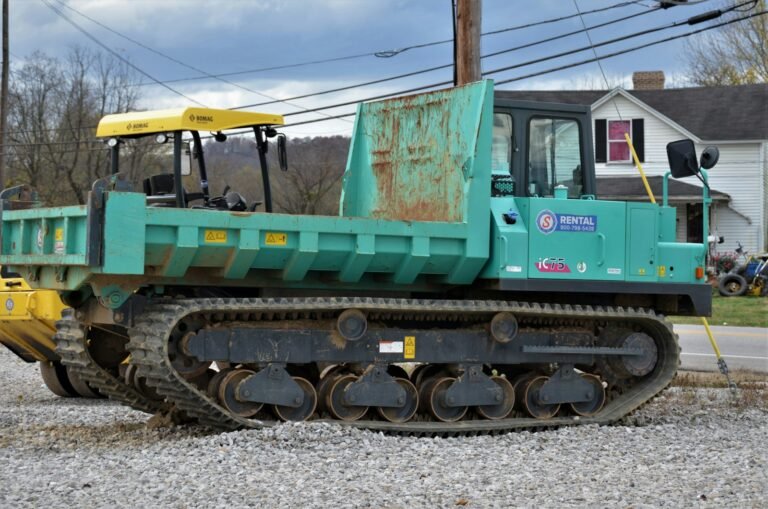
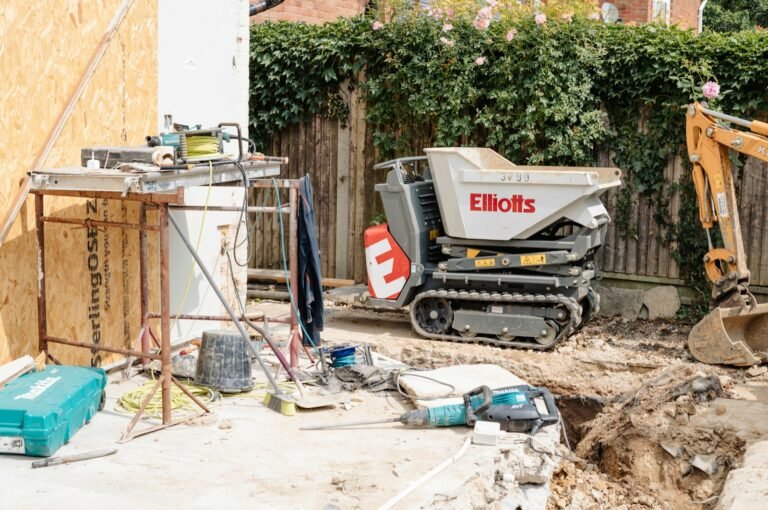
Wheeled kit that is fine in summer can rut a site to pieces in winter. Tracks spread the weight and keep you working when wheels would spin.
| Task | Wet-weather choice | Why it helps |
|---|---|---|
| Moving spoil and stone | Hyundai 500kg or Mechbadger tracked dumper | Tracks grip on mud where a wheeled dumper sinks |
| Carrying across lawns or finished areas | Tracspider electric tracked carrier | Low ground pressure, minimal damage to soft ground |
| Loading, grading and clearing | Sunward SWL 2830 tracked skid steer | Tracked loader that copes better than wheels in mud |
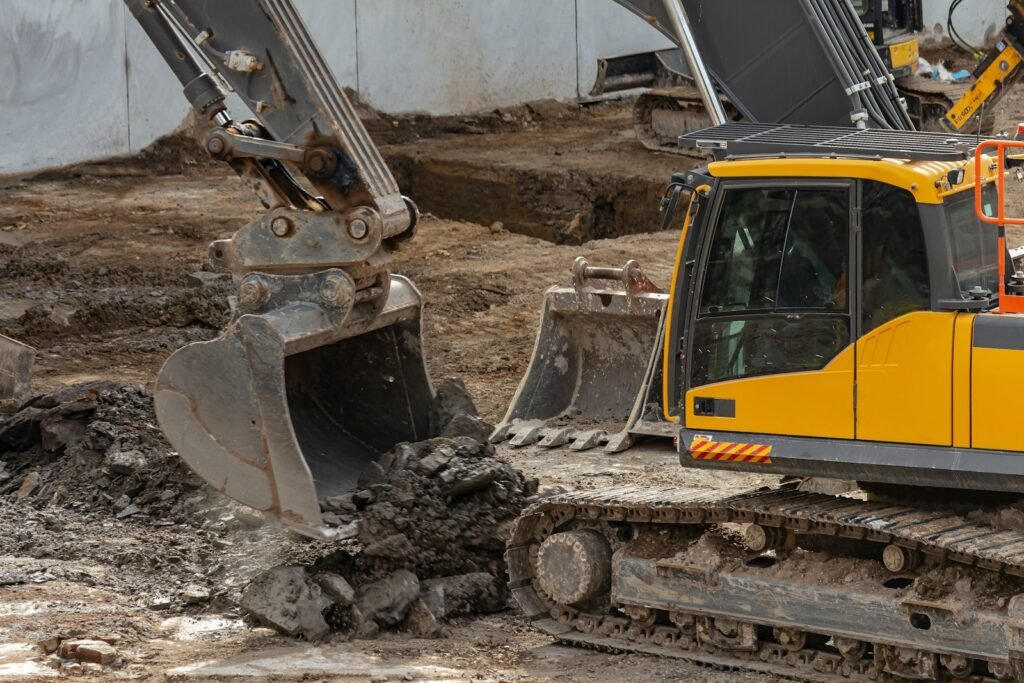
| Excavation on a tight site | Sunward zero tail excavators, 1.8 to 6 tonnes | Machine can work from one spot rather than tracking around |
| Bulk dig on open ground | Sunward SWE 90UF, 9 tonnes | Fewer passes, and can dig from firm ground into soft |
The Tracspider Elektro Joe is worth a mention for winter work on sensitive sites. It is electric, quiet and runs on rubber tracks with low ground pressure, so it can move material across wet grass, gardens or estates without leaving deep ruts. Browse the full construction range for other tracked options.
Ground protection and haul routes
On a wet site, the damage is often done not by the digging but by machines tracking back and forth. One soft route, used fifty times a day, becomes a trench of its own.
- Pick one haul route and stick to it, rather than letting every dumper driver find their own way across the site.
- Build it properly. A geotextile membrane under a layer of crushed stone stops the stone pumping down into wet clay and disappearing. It costs more on day one and far less by week three.
- Use ground protection mats across lawns, verges and finished areas, especially on domestic jobs where the client will judge you on the state of the garden.
- Recycle on site. Hardcore from demolition can be crushed into usable stone with a Dragon jaw crusher, cutting the number of muddy lorry trips in and out.
- Keep loads sensible. A half-full tracked dumper doing more trips can cause less damage than a heavily loaded one sinking on every pass.
When the job is done, the cost of reinstating rutted ground is part of the job. Good protection is usually cheaper than putting it right.
Plan groundworks in wet weather around dry spells
You can’t control the rain, but you can control the order of work. A few principles make a big difference:
- Drainage and access first. Get site drainage, a stoned access route and a hardstanding for deliveries in before anything else.
- Keep stone on site. Having sub-base material ready means you can protect a formation or patch a soft spot as soon as you find it, rather than waiting for a delivery.
- Don’t open more than you can close. Dig only the length of trench or area of foundation you can inspect, blind or backfill that day. Open excavations fill with water overnight.
- Protect the formation. Leave a protective layer of soil above formation level until you are ready to blind or pour, then take it off and get concrete in quickly.
- Use the forecast. Save concrete pours, compaction and finishing work for the drier windows, and keep clearing, ducting and drainage for the wetter days.
- Allow for short days. Winter daylight is limited, so plan the critical tasks for the middle of the day.
Dealing with site water and silt
Water has to go somewhere, and where it goes matters. Silty water from a site must not be allowed to run into drains, ditches or streams, as it can cause pollution. The Environment Agency’s regulatory position statement on temporary dewatering from excavations sets out when clean water can be pumped to surface water without a permit; the main conditions are summarised further down.
Practical steps include:
- Cut off surface water before it reaches excavations with temporary grips or bunds.
- Cover spoil heaps so they don’t wash away.
- Pump to a settlement area or silt bag rather than straight to a watercourse.
- Keep fuel and oil well away from water and on drip trays.
Pumps aren’t in our hire fleet, so ask us and we’ll tell you what’s available or point you in the right direction.
What the rules say about pumping out excavations
The Environment Agency’s regulatory position statement RPS 261 covers temporary dewatering of mainly rainwater from excavations to surface water in England. If you meet its conditions, the Agency will not normally take enforcement action for not having a permit. Key conditions in the current version include:
- The discharge must be uncontaminated water and must not pollute the receiving watercourse.
- It must not run for more than three consecutive months, and pausing does not reset the clock.
- No flocculants, coagulants or chemical dosing, and no concrete wash water, even if treated.
- No discharge of general site drainage from haul roads, storage or working areas.
- Machinery must not be used in the excavation while it is being dewatered.
- No discharge within, or less than 500 metres upstream of, protected sites such as SSSIs, nature reserves and ancient woodland.
- It does not apply to contaminated land, and you must keep records.
Separate rules can apply if you abstract more than 20 cubic metres of water a day. The RPS is reviewed periodically and can change, so read the current version on GOV.UK before you pump, and contact the Environment Agency if you cannot meet the conditions.
Safety in saturated ground
Wet ground is weaker ground. Trench sides that stood up in August can collapse in January, and spoil heaps placed too close to an excavation add load to an already soft edge. HSE’s guidance on excavations is clear that no ground can be relied on to stand unsupported in all circumstances, and that wet ground needs a much flatter slope if you are battering back rather than supporting the sides.
A competent person should inspect excavations at the start of every shift and after any event that may have affected stability, such as heavy rain, keep spoil and machines back from the edge, and never enter an unsupported trench that could collapse. Machines working on slopes are more likely to slide on wet clay, so take extra care on banked Devon fields and coastal sites.
Protecting formations and fresh concrete
A formation that took a day to dig can be ruined by one night of rain. Groundworks in wet weather need a plan for protecting what you have already done.
Formation levels
Leave the last part of the dig until you are ready to blind or pour. If rain softens the bottom of a trench or a slab formation, dig out the softened material back to firm ground rather than pouring onto mud. On clay, even standing water for a few hours can soften the surface.
Blinding and covers
A thin layer of blinding concrete over an approved formation seals it from rain and gives a clean working surface. Tarpaulins or polythene sheeting over open footings, weighted at the edges, keep the worst of the rain out overnight.
Cold as well as wet
Winter on the edge of Dartmoor and Bodmin Moor brings frost as well as rain. Fresh concrete can be damaged if it freezes before it has gained enough strength. Check the forecast for overnight temperatures, have insulating covers ready, and talk to your concrete supplier about suitable mixes and protection in cold weather.
Compaction
Granular sub-base compacts best at the right moisture content. Saturated material and wet clay sub-grade will not compact properly, however long you run a plate over them. Use a Weber MT reversible plate or trench roller in the drier windows, and do not lay sub-base on top of a formation that has turned to slurry.
Keep the road and access clean
Mud carried out of a site entrance onto a lane is a hazard for other road users and a quick way to fall out with neighbours and the highway authority. A stoned entrance, a wheel-cleaning area and a pressure washer such as the Brendon 35KPE help. Brush or scrape the road at the end of each day if mud gets out.
On narrow Devon and Cornish lanes, mud on a bend or a steep hill is especially dangerous for cyclists, motorcyclists and horse riders. Put up appropriate warning signs while the entrance is in use, and agree with your team who is responsible for checking the lane before everyone goes home. It is far easier to keep on good terms with neighbours, and with the highway authority, if the lane is clean every evening.
A wet-weather week: worked example
This is an illustration of how a small job might be programmed around the weather, not a real project. Picture a garden office base and drainage run on heavy ground near Launceston in November, with rain forecast for Tuesday and Thursday.
- Monday (dry): stone access route laid across the lawn on membrane, ground protection mats down, services scanned and marked, and a 1.8 tonne zero tail excavator and tracked dumper delivered together.
- Tuesday (wet): drainage trench dug in short lengths, pipe laid and backfilled with stone the same day. No open trench left overnight.
- Wednesday (dry): base dug to just above formation level, with the final trim and blinding done in the afternoon once the inspection is complete.
- Thursday (wet): footings covered, spoil carted to the skip on the stone route, tools and kit cleaned. Little lost, because nothing depended on dry weather.
- Friday (dry): sub-base laid and compacted, ready for the slab, machines washed down and off-hired.
The weekly hire gave enough slack to move tasks around the rain without paying for an extra delivery, which is the main reason weekly hire is so popular for winter work.
Common wet-weather mistakes
- Opening long trenches and leaving them overnight to fill with water and collapse.
- Letting dumpers find their own routes, turning the whole site into a mud bath.
- Pumping muddy water straight into a ditch, drain or stream.
- Stacking spoil right on the edge of an excavation in saturated ground.
- Pouring onto a softened formation to stay on programme.
- Choosing wheeled kit for soft ground because it was cheaper or available.
- Leaving mud on the lane for the neighbours and the highway authority to find.
Long winter jobs and machine care
If you are running a site through the whole winter, long-term rental keeps the same machines on site with routine servicing covered and a named contact if something needs attention. Wet, gritty conditions are hard on tracks, pins and undercarriage, so wash down regularly, grease daily and report any fault early.
A few winter habits help keep hired machines working:
- Clear packed mud out of the tracks and undercarriage at the end of each day, before it sets hard overnight.
- Grease pins and bushes daily, as water and grit wash grease out faster in winter.
- Keep the fuel tank topped up at the end of each day to reduce condensation, using white diesel only.
- Park on firm, level ground, out of hollows that flood, with the bucket lowered to the ground.
- Check lights work if you are starting or finishing in the dark.
If your winter work moves between several small sites rather than one long job, a Flex Hire account lets you swap from an excavator to a tracked dumper or a carrier as each job needs.
Frequently asked questions
Can you lay concrete in wet weather?
Light rain is manageable with care, but heavy rain can damage a fresh surface and wash out cement. Plan pours for dry windows and have covers ready.
Is it worth carrying on with groundworks in wet weather or should I wait?
It depends on the site. Free-draining ground with good access can keep going; heavy clay with poor access may cost more in damage and delays than it saves.
Will tracked machines damage a lawn?
All machines leave some mark on soft ground, but low ground pressure tracked carriers and dumpers do far less damage than wheeled kit.
Do hire charges stop when it rains?
No. Hire runs continuously from delivery until you off-hire, whatever the weather. That is why it pays to plan wet-day tasks, or to choose a hire period with enough slack to absorb a lost day.
Tracked or wheeled dumper for winter work?
On soft ground, a tracked dumper such as the Hyundai 500kg or the Mechbadger is usually the better choice. Wheeled dumpers suit firm, stoned surfaces and yards. The HG 1000 electric wheeled dumper is ideal on hard standing.
Can I compact sub-base in the rain?
Light rain on free-draining stone is usually manageable. Waterlogged material, or a clay formation that has turned soft, will not compact properly, so wait for a drier window or dig out the soft material first.
Keep your winter job moving
Tell us about your site, the ground and the work, and we’ll suggest machines that suit the conditions. WhatsApp or call 07841 036064, Monday to Friday 7:30am to 5:30pm, or use our contact page.