Tracked carrier hire solves a specific problem: moving materials across ground where wheels would sink, rut or simply not fit. Our Tracspider 1000kg bed carrier and the Tracspider Elektro Joe are electric tracked transporters with low ground pressure, quiet running and zero exhaust emissions. That makes them ideal for steep slopes, finished lawns, sandy beaches, glasshouses and indoor spaces. Here is where they work best, how they differ from a dumper, how to plan the route and the charging, and what to expect when tracked carrier hire is delivered from our depot near Okehampton.

In this guide
What a tracked carrier is (and isn’t)
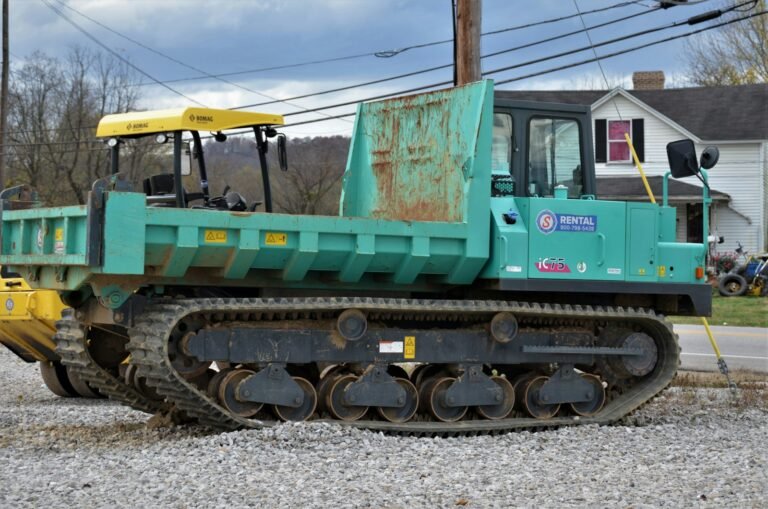
A tracked carrier is a compact transporter on rubber tracks with a load bed, often with a tipping body. Unlike a site dumper, it is designed around low ground pressure and controlled movement rather than speed and brute payload. Unlike a tractor and trailer, it can go where a vehicle can’t: down garden paths, between nursery benches, along a beach or through a stable door.
Both of our carriers are electric. There’s no exhaust and very little noise, so they can be used inside buildings and near homes, livestock, golfers or event guests without causing a disturbance.
Why low ground pressure matters
Ground pressure is simply the machine’s weight, plus its load, divided by the area in contact with the ground. Narrow tyres put all that weight on a few small patches, so they sink into soft turf, sand and wet soil. Wide rubber tracks spread the same weight over a much larger footprint, so the pressure on any one point is far lower. That is why a loaded tracked carrier can cross a lawn that would be rutted by a wheelbarrow carrying a fraction of the weight.
Low ground pressure helps in three ways. It protects surfaces you have to hand back in good condition, such as lawns, sports turf and paddocks. It keeps the machine moving on soft ground rather than digging itself in. And it improves grip on slopes, because the tracks have more rubber biting into the surface. It doesn’t make a carrier unstoppable, though: saturated ground still marks, and turning sharply on one spot can scuff turf even on tracks.
Our tracked carriers at a glance
| Machine | Key features | Typical users |
|---|---|---|
| Tracspider 1000kg bed carrier | Electric, tracked, 1000kg payload, zero emission, all terrain | Builders, landscapers, groundworkers on soft or steep sites |
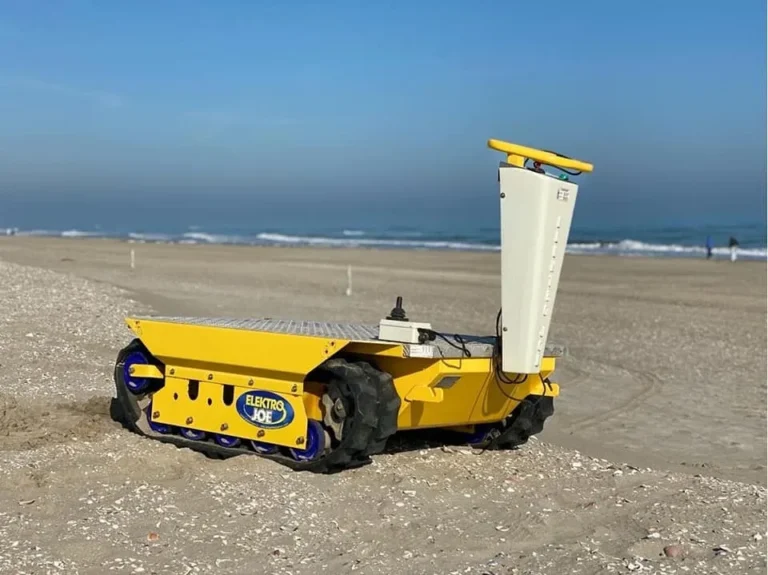
| Tracspider Elektro Joe | Electric tracked transporter, tipping body, indoor and outdoor use, low ground pressure | Estates, nurseries, golf courses, events, stables |
The Elektro Joe has its own Tracspider Elektro Joe hire page with daily, 5-day, 4-week and Flex Hire options. The 1000kg bed carrier sits in our construction equipment range.
Where tracked carrier hire makes the difference
Steep gardens and slopes
Coastal and valley properties across Devon and Cornwall are often built into hillsides, with gardens reached by narrow paths or steps. Shifting a tonne of sandstone, gravel or topsoil up or down by barrow takes all day and wears people out. A tracked carrier keeps the load low and stable, and the tracks grip where wheels would spin. Always travel straight up and down a slope rather than across it, and check the manufacturer’s slope limits.
Lawns, sports turf and golf courses
On fine turf, every rut costs time and money to repair. Rubber tracks spread the weight so the carrier can cross greens, fairways and pitches with minimal marking. That’s why the Elektro Joe suits greenkeepers and grounds teams, who use carriers to move top dressing, sand for bunkers, seed, turf and tools across the course during renovation work without leaving tracks for the members to find the next morning.
We are also the home of Hole in One Rentals, our golf course and greenkeeper specialist hire, and you’ll find related kit on our sports and landscaping page, including dumpy bag lifters, aerators and overseeders.
Beaches and sand
Beach huts, cafés, lifeguard equipment, sea defence repairs and coastal events all involve moving loads over sand. Wheels dig in; tracks float. Many Cornish and north Devon beaches are owned or managed by councils, estates or the National Trust, so if you’re working on a beach, get permission from the landowner first, keep clear of the public, and avoid the soft wet sand near the water’s edge. Rinse the tracks and undercarriage with fresh water afterwards, as salt and sand are hard on any machine.
Glasshouses, nurseries and indoor spaces
Diesel engines aren’t acceptable in a closed glasshouse, polytunnel, stable block, warehouse or covered arena. An electric carrier moves compost, pots, bedding and feed with no fumes. The Tamar Valley has a long history of market gardening, and nurseries across the region work in exactly these conditions: narrow aisles, soft floors and plants that don’t like exhaust.
Hygiene matters in these settings too. Clean soil and plant debris off the tracks before moving between glasshouses, nurseries or farms, so you aren’t carrying weeds, pests or disease from one site to the next. In stables and livestock buildings, a quick wash down at the end of the job keeps the machine and the building tidy.
Events and festivals
Moving staging, bar stock, cable and barriers across a showground without leaving track marks or waking neighbours. Combine a carrier with heating and power from our events hire range, such as Airrex indirect heaters and the Zenessis 25kVA generator, for setting up larger sites.
Event build and breakdown
Event sites are often finished lawns, parkland or farm fields that have to be handed back in good condition. During the build, a carrier can shuttle staging sections, flooring, crates of stock, cable reels and barrier feet from the trailer park to each structure without a vehicle crossing the arena. During breakdown it does the same in reverse, often late at night when engine noise would carry. Plan a single main route across the site, protect it with track matting if the ground is wet, and keep the carrier well away from crowds while the public are on site.
Building and renovation sites
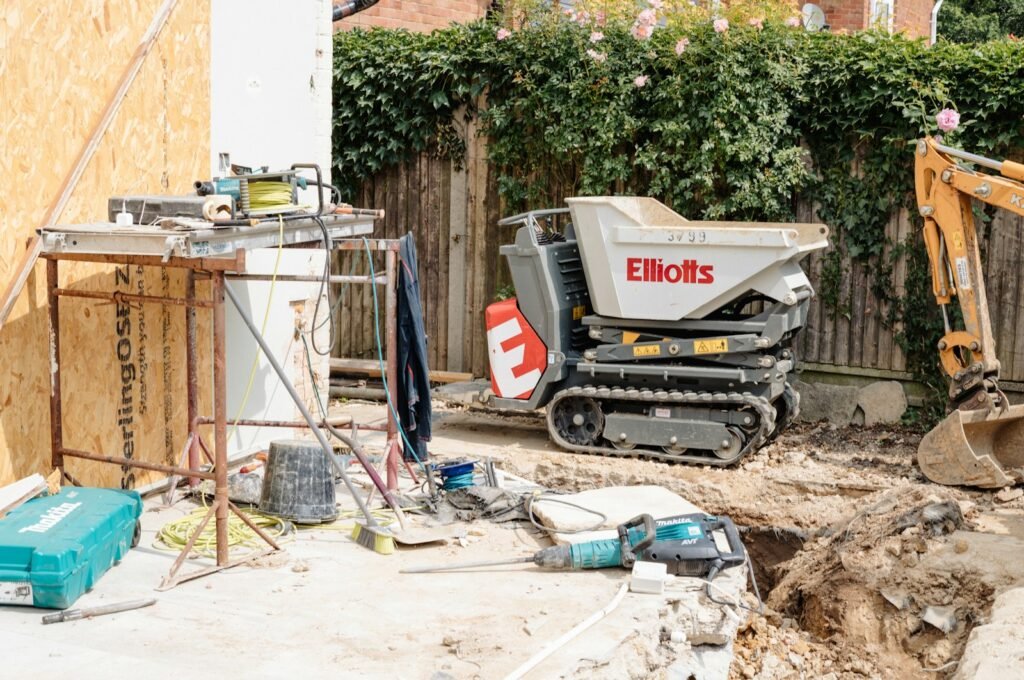
On house renovations and extensions, materials often arrive at the front and are needed at the back, through a side passage or even through the house. A carrier moves bags of plaster, blocks, slabs and tools without exhaust fumes in enclosed spaces and without churning up the garden. On sites with noise restrictions, such as near schools, hospitals or homes early in the morning, a quiet electric carrier lets work start without complaints.
Estates, woodland and smallholdings
Fencing materials to a hillside boundary, logs out of a woodland ride, feed and bedding to a field shelter, or tools along a riverbank footpath. Tracked carriers reach places where a quad and trailer would slide or cut up the ground, and they don’t spook livestock the way an engine can.
Worked example: a tonne of stone up a steep garden
Here is an illustrative plan for a common South West job: a tonne bag of walling stone delivered to the roadside at the top of a steep coastal garden, which needs to reach a new retaining wall 40m down a narrow path with a few shallow steps. It shows how tracked carrier hire changes the job, not a real customer’s project.
- Before hire: measure the path at its narrowest point and photograph the steepest section and the steps. Send them to us so we can confirm the carrier fits and the gradient is within its limits.
- Prepare the route: build simple timber ramps over the steps, cut back overhanging shrubs and mark any soft spots or drain covers.
- Split the load: rather than one heavy trip on a steep slope, fill the carrier with part loads from the bag. Smaller loads are more stable going downhill and easier on the battery coming back up.
- Travel straight down the slope, slowly, with the load kept low and central. Tip or unload at a level spot beside the wall.
- Charge overnight if the job runs to a second day, ready for the next delivery of sand and cement.
By barrow, that same tonne of stone could take two people most of a day and leave the path churned up. With a carrier it becomes a steady, controlled shuttle.
Tracked carrier or tracked dumper?
If the job is pure muck shifting on a building site, a tracked dumper is often the better tool. If you need low noise, no fumes, minimal ground damage or indoor use, a tracked carrier wins. Some customers hire both: a dumper for the dirty work and a carrier for the finished areas.
| Need | Tracked carrier | Tracked dumper |
|---|---|---|
| Indoor or glasshouse use | Yes, electric with no exhaust | Not where fumes are a problem |
| Fine turf and lawns | Very low marking | More likely to mark |
| Noise-sensitive areas | Very quiet | Engine noise |
| Heavy muck shifting on site | Possible within payload | Usually the better tool |
| Long working days far from power | Plan charging carefully | Refuel as needed |
Planning your hire
Before you book, check the following:
- Access width at the narrowest point, including gates, doors and garden paths.
- Gradient of the steepest section, both up and across.
- Load type: loose material, bags, pallets or tools. Weight matters more than volume.
- Charging: where you can plug in between shifts. Ask us about run time for your job.
- Surface: turf, sand, gravel, concrete or a mixture.
- Who will operate it, and whether they have used a tracked carrier before.
- Delivery point: where our vehicle can safely unload, and how far it is from the work area.
Most operators get to grips with the simple controls within minutes, but anyone using the carrier should be shown how it works and supervised until they are competent. Hire is self-drive, and the Provision and Use of Work Equipment Regulations (PUWER) expect people using work equipment to be adequately trained. Insurance is not included automatically; we refer customers to insurance4plant.co.uk for plant hire cover.
Delivery, handover and collection
We deliver across Devon, Cornwall, Somerset and Dorset, and same-day delivery is often possible across much of Devon and Cornwall, subject to availability. Tell us where the vehicle can safely stop and unload, and how far that is from the work. Our driver will run through the controls, the tipping body, charging and the daily checks, and someone on site should sign the delivery note.
When the job is done, give the tracks and bed a clean, especially after sand, salt water or clay, and call or WhatsApp us to off-hire. Hire charges run until you have an off-hire reference, so don’t rely on telling the driver. Leave the carrier charged and somewhere our vehicle can reach it.
Getting the most from an electric carrier
Electric machines reward a little planning. Run time depends on the load, the gradient and the surface, so a day spent hauling stone uphill uses far more charge than a day moving pots along a level glasshouse floor. A few habits keep you working:
- Put the carrier on charge at the end of every shift, not just when it runs low.
- Plan loads so you aren’t running half empty. Fewer, fuller trips use less energy than many light ones.
- Keep the route as level and firm as possible. A few boards over the softest section can make a noticeable difference.
- In cold weather, store the carrier under cover where you can, and charge it somewhere dry.
What uses the most charge
- Climbing slopes with a full load, especially repeatedly.
- Soft sand and deep, wet turf, where the tracks have to work harder.
- Lots of tipping cycles in a short time.
Level, firm routes with full but sensible loads get the most work out of each charge.
If you’re unsure whether one charge will cover a full day of your particular job, tell us what you’re moving and how far, and we’ll give you an honest view.
Seasonal tips for the South West
Demand for tracked carriers follows the seasons. Spring and summer bring garden landscaping, beach and coastal work, and outdoor events, so book early for fixed dates such as a show or festival build. Autumn is renovation season on golf courses and sports grounds, when greenkeepers move top dressing, sand and seed across fine turf. Winter is when low ground pressure matters most, because Devon and Cornwall lawns and pastures stay wet for months. In the wettest spells, even tracks will mark saturated ground, so lay boards on the main route, avoid repeated turns in one spot and keep loads moderate.
Safe working with a tracked carrier
- Walk the route before loading. Look for hidden steps, drains, soft spots and overhanging branches.
- Load evenly and keep heavy items low and central.
- Travel slowly on slopes and keep the heavy end uphill.
- Tip only on firm, level ground and keep people out of the tipping area.
- Switch off and remove the key when the carrier is left unattended.
- Charge in a dry, ventilated spot using the supplied charger, with cables routed where nobody will trip over them.
Common mistakes with tracked carriers
- Judging the load by volume. A bed heaped with wet soil or stone can exceed the rated payload while looking only half full. Work in kilograms.
- Traversing a slope. Crossing a bank sideways with a load is the quickest way to tip a small machine. Go straight up and down, or find another route.
- Forgetting to charge. A flat battery at 8am costs you the morning. Charge every evening, even if it seems unnecessary.
- Pivot-turning on fine turf. Spinning on the spot scuffs grass. Make wide, gentle turns, or turn on boards.
- Skipping the route walk. Hidden steps, drain covers and soft patches cause most stuck or tipped carriers.
Hire periods and what affects the cost
Daily hire suits a single delivery or a one-day job. Landscaping, events and renovation projects usually suit a weekly hire, our most popular period, and the Elektro Joe page also lists 4-week and Flex Hire options. With Flex Hire, one flat monthly fee covers a tier of kit with swaps whenever the job changes, servicing included and no long-term contract. What you pay for standard tracked carrier hire depends on the hire period, the delivery distance from our depot, and whether it shares a delivery with other machines. WhatsApp us for a current quote.
HSE sets out what training and checks the law expects for any work equipment in its PUWER guidance.
Frequently asked questions
Can a tracked carrier be used indoors?
Yes. Our carriers are electric with zero exhaust emissions, so they are suitable for warehouses, glasshouses, stables and arenas.
Will it damage my lawn?
Rubber tracks spread the weight, so marking is minimal on firm turf. On very wet ground, use boards and avoid turning repeatedly in one spot.
How much can the Tracspider carry?
The Tracspider bed carrier is rated at 1000kg. Stay within the rated payload and reduce the load on steep slopes.
Can I hire one for a single day?
Yes. Daily hire is available, and weekly, monthly and Flex Hire options suit longer projects.
Can I use a tracked carrier on a beach?
Yes, with the landowner’s permission. Keep clear of the public and soft sand near the water, and rinse the tracks and undercarriage with fresh water afterwards.
Is tracked carrier hire suitable for a one-off garden job?
Very often. If you have stone, soil or slabs to move down a steep or narrow garden, a day or two of tracked carrier hire can save a lot of barrowing and protect the lawn.
Arrange tracked carrier hire
Tell us where the site is, what you need to move and how wide the access is. WhatsApp or call 07841 036064 for a current quote, or get in touch through our contact page.