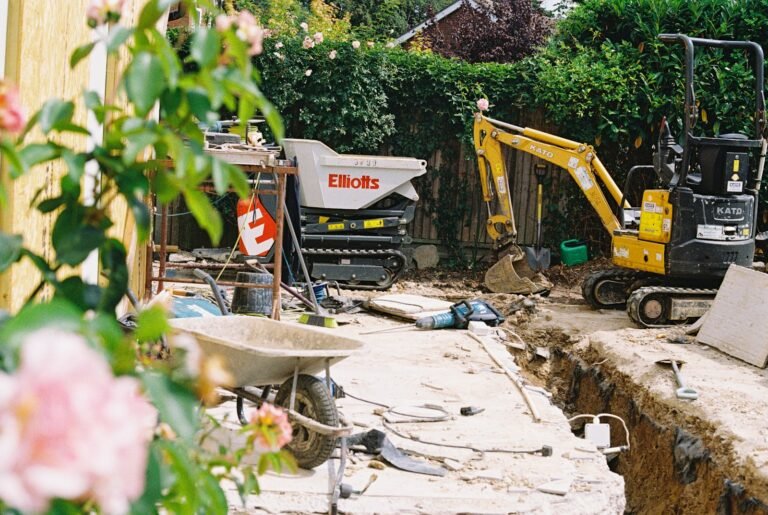
If you only hire one size of digger, make it this one. For 1.8 tonne digger hire, our machine is the Sunward SWE 18UF, a zero-tail excavator that is small enough for most domestic access and big enough for extension footings, drainage runs and driveway dig-outs. This guide covers what it does well, a step-by-step for a typical driveway job, how to tow it on a small plant trailer, and who it suits best.

In this guide
Why 1.8 tonnes is the sweet spot
Below this size, machines get noticeably slower and less stable when digging deep or lifting. Above it, they get harder to fit through gates and usually need lorry delivery. The 1.8 tonne class sits in between: light enough to tow behind a suitable vehicle on a compact plant trailer, but heavy enough to dig steadily all day.
The SWE 18UF adds zero tail swing, so the counterweight stays inside the track width as it slews. On a plot squeezed between a house wall and a boundary fence, that one feature saves a lot of damage and stress. More detail on the machine is in our Sunward SWE 18UF guide.
Jobs a 1.8 tonne digger handles well
Extension footings
Strip footings for single and two-storey extensions are the bread and butter of this machine. It digs a clean, consistent trench, and with a narrow bucket you save on concrete. Have trench support on site before you dig, as HSE advises that no ground can be relied on to stand unsupported, and keep the machine and spoil back from the edge.
Drainage and soakaways
Foul and surface water runs, inspection chamber holes and soakaways for new roofs and driveways all suit the 1.8 tonne. For long runs on open ground with plenty of room, the conventional-tail SWE 20F is an alternative.
Driveways and patios
Digging out old surfaces, reducing levels and grading sub-base are quick work. A 1.8 tonne digger can also spread and level stone with the bucket before compaction.
Landscaping
Ponds, raised beds, tree pit planting, grading lawns and removing old shrubs are all well within its range.
Step by step: digging out a driveway with a 1.8 tonne digger hire
- Check services. Driveways often hide gas, water and electricity supplies running to the house. Use utility plans and a cable locator before digging.
- Plan the spoil. Decide where the skip or grab lorry goes and keep a clear route. A Hyundai 500kg tracked dumper or HG 1000 electric dumper speeds things up.
- Break out and remove the old surface. Tarmac and concrete can often be lifted with the bucket once an edge is opened. For heavy concrete, ask us about breaking options.
- Dig to formation level. Work to the depth your design needs for sub-base and surfacing, keeping falls away from the house.
- Lay and compact the sub-base in layers. A Weber MT CF 3-II Hd forward plate or CR 3-III reversible plate compacts properly. Do not try to compact a thick layer in one pass.
- Finish. For block paving, the Weber MT VPR 450 paving roller beds the blocks evenly.
All of these machines are on our construction equipment page, and we can deliver them together.
Towing a 1.8 tonne digger on a plant trailer
Many builders prefer to move the digger themselves. We hire compact plant trailers, including the Brian James 9ft (2,700kg GVW, 9ft × 4ft 4in bed) and the Indespension 10ft with loading ramps. See the options on our trailers page. Before you hitch up, check these points:
| Check | What to confirm |
|---|---|
| Trailer GVW | Machine operating weight, buckets and trailer’s own weight together must not exceed the trailer’s gross weight |
| Vehicle towing limit | Your vehicle’s maximum towing weight, from the handbook or VIN plate |
| Licence | Entitlement to tow that weight (see below) |
| Securing the load | Machine tied down at its lashing points with chains or rated straps, bucket lowered |
| Lights and tyres | Trailer lights working, tyres in good condition and correctly inflated |
On licences, GOV.UK says drivers who passed their car test from 1 January 1997 can now tow trailers up to 3,500kg MAM, and those who passed before then usually have wider entitlement. Your vehicle’s own towing limit still applies, so check the current guidance and your vehicle documents. If in doubt, we will deliver the machine for you.
Getting the most from a week on site
Weekly hire is the most popular period for this machine, and a little preparation makes the week far more productive. Have the skip, stone and pipes delivered before the digger arrives, so it is not waiting on materials. Mark out trenches and levels the day before. Do a walk-round check every morning: track tension, oil and coolant levels, hoses, pins and the condition of the bucket teeth. Grease the pins as the operator’s manual sets out.
At the end of each day, park on firm level ground, lower the bucket, remove the key and keep it secure. Diggers are a theft target, so a locked compound or a spot out of sight of the road helps. If anything goes wrong mid-hire, stop using the machine and call or WhatsApp us. We will assess it and arrange a repair or replacement quickly. Return it clean, with fuel topped up as agreed, to avoid extra charges.
Who the 1.8 tonne digger suits
- Builders and groundworkers doing extensions, garages and small new builds
- Landscapers who need one machine for patios, ponds and planting
- Drainage contractors on domestic jobs with restricted access
- Self-builders and homeowners who are trained and competent, as hire is self-drive
- Farms and smallholdings for water pipes, fence post holes and small ditches
If you need a 1.8 tonne machine most weeks of the year, see the hire options below, including Flex Hire.
SWE 18UF, SWE 20F or SWE 25UF?
The 1.8 tonne machine sits in the middle of a cluster of similar sizes, and choosing between them is mostly about the site rather than the hole.
| SWE 18UF (1.8t) | SWE 20F (2.0t) | SWE 25UF (2.5t) | |
|---|---|---|---|
| Tail | Zero tail | Conventional | Zero tail |
| Best on | Tight domestic plots, against walls and fences | Open ground with room behind the machine | Bigger domestic and small commercial plots |
| Typical jobs | Extension footings, drives, drainage, landscaping | Drainage and utility runs along open ground | Deeper footings, heavier ground, ponds |
| Towing | Often possible on a suitable plant trailer | Check combined weight carefully | Usually our delivery |
| Choose it when | Access and space are the limits | You have room and a long trench | Ground or depth is the limit |
For exact dig depth, reach and transport width on the configuration we send, ask us for the spec sheet. If you are torn between the 18UF and the 25UF, tell us the narrowest access point and the ground type. Hard, stony ground or deep footings usually tip the decision towards the heavier machine; a tight side access tips it the other way.
Worked example: rear extension footings with a 1.8 tonne digger hire
An illustrative scenario, not a real job. A builder is putting a single-storey rear extension on a 1960s semi in Exeter. Access is down a driveway beside the house, the garden is mostly lawn, and the footings run along a boundary fence on one side.
- Before the machine arrives. Locate the drains, the water supply and any cables to the garden. Confirm the footing width and depth with the engineer’s drawings and building control. Book the skip so it sits close to the dig but does not block the route.
- Day one: set out and strip. Set out the trenches with pins, lines and paint. Strip turf and topsoil from the footprint and stockpile it separately for reuse.
- Dig the footings. The SWE 18UF digs along the fence line without the counterweight swinging over the boundary. A narrow bucket keeps the trench to the design width, which saves concrete. Spoil goes straight into a Hyundai 500kg tracked dumper and out to the skip.
- Protect the trench. Trench support is ready on site before digging starts, and spoil and the machine are kept back from the edges.
- Inspection and concrete. Clean out the trench bottom, get the building control inspection and pour without delay, especially if rain is forecast.
- Drainage. With the footings in, the same machine digs the new drainage runs and inspection chamber holes.
- Backfill and compact. Backfill around new drains in layers with a Weber MT SRV 300-II SF slim-foot rammer and finish the oversite with a plate.
A job like this often fits into a week’s hire, with the machine off-hired once drainage and oversite are done.
Compare that with a landscaping job in a similar garden: removing an old patio, reducing levels for a new one and digging a soakaway. The same 1.8 tonne digger does the lot, but the order changes.
Break out and remove the old surface first, dig the soakaway while the skip is empty, then reduce levels and grade the formation with falls away from the house. Compact the sub-base in layers with a forward plate, and the machine can go home before the paving starts. Planning the sequence like this is often what turns a two-week job into one week of hire.
Common mistakes on 1.8 tonne digger jobs
- No plan for spoil. A 1.8 tonne excavator digs faster than one person can barrow. Without a dumper or a nearby skip, the machine spends half its time waiting.
- Digging before the services are found. Driveways and back gardens hide water pipes, gas supplies and cables to garden buildings. Hand dig trial holes where plans show a service.
- Over-digging the trench. A bucket that is too wide, or a trench that wanders, means more concrete and more spoil. Choose the bucket to suit the footing width.
- Compacting thick layers. Backfill and sub-base put down in one deep layer will settle later. Compact in thin layers.
- Towing at the limit. Forgetting the weight of buckets, fuel and the trailer itself is how people end up over the trailer’s GVW or their vehicle’s towing limit.
- Leaving off-hire to the driver. Hire charges run until you have an off-hire reference from us. Telling the driver on the day does not count.
Safety checklist for a 1.8 tonne excavator
Hire is self-drive, so the operator and whoever controls the site are responsible for safe use. This is general information; check the current guidance for your job.
- The operator is trained and competent on this class of machine. Commercial sites usually ask for a CPCS or NPORS card.
- A daily walk-round check is done before starting: tracks, hoses, pins, fluid levels and bucket teeth.
- The bucket is properly locked onto the quick hitch after every change, following the manufacturer’s procedure.
- Excavation support is decided before digging and inspected at the start of each shift, as HSE’s excavation guidance sets out.
- Overhead cables are identified before work starts. HSE guidance note GS6 covers planning work near overhead power lines.
- Nobody stands within the slewing area or reach of the arm while the machine is working.
- The seatbelt is worn, and the machine travels with the bucket low, especially on slopes.
- At the end of the day, the machine is parked on firm, level ground, bucket lowered, key removed.
What affects the cost of 1.8 tonne digger hire
We do not publish rates online. WhatsApp us for a current quote, and these are the factors that shape it:
- Hire period. Weekly rates are better value per day than daily hire, and monthly better again.
- Delivery or self-tow. Delivery and collection are quoted separately, by distance from our depot near Okehampton. Towing it yourself on one of our plant trailers swaps the delivery charge for a trailer hire and your own time.
- Extras. A dumper, compactor or mixer added to the same delivery costs less to transport than a separate trip.
- Weekends. Charges run continuously from delivery to off-hire. Weekly rates are based on a five-day week, so mention Saturday working when you book.
- Return condition. Machines go out full of fuel and should come back full, clean and undamaged, with fair wear and tear accepted.
- Insurance. Cover for hired plant is not included. Many contractors’ policies include hired-in plant, but check the wording with your insurer.
Delivery, collection and off-hire
Same-day delivery is possible across most of Devon and Cornwall if you contact us early in the day, and we cover Somerset and Dorset with a little more notice. For a specific date, book at least 24 to 48 hours ahead. On delivery day, have a firm, level unloading spot, a clear route to the work area and someone on site to sign and check the machine over with the driver.
When the job is done, off-hire with us directly and get an off-hire reference, because charges run until it is confirmed. Leave the digger clean, fuelled and parked where the lorry can load it. If you collected it yourself, bring it back to the depot during opening hours, Monday to Friday 7:30am to 5:30pm, and allow time for a quick check-in.
Hire options: daily, weekly, monthly or Flex
Minimum hire is usually one day, and the 1.8 tonne digger is most often hired by the week. For longer jobs, monthly rates work out better per week, and for a fixed project running around four months or more, our long-term rental gives agreed rates, servicing and a named contact.
If you need a compact digger most weeks but the job changes constantly, Flex Hire may suit better. You pay one flat monthly fee for one machine at a time from your tier, swap whenever you need a different machine, and get servicing, collection and redelivery included, plus a 10% rebate. Tier 1 covers compact kit and everyday tools at £795 +VAT and delivery a month. Tier 2 adds crushers and excavators at £895 +VAT and delivery a month. Flex accounts run on a rolling monthly basis after a minimum initial term of three months.
Frequently asked questions
Will a 1.8 tonne digger fit through a garden gate?
Through a wide gate or driveway, usually. For a narrow side gate, the 0.8 tonne SWE 08B is more likely to fit. Measure first and tell us the width.
How deep can a 1.8 tonne digger dig?
Deep enough for typical domestic footings and drainage. Exact depth depends on the arm and bucket, so ask us for the spec sheet.
What buckets come with 1.8 tonne digger hire?
Tell us the job when you book and we will confirm which buckets are available with the machine.
Can I collect the digger from Okehampton?
Yes, with a suitable vehicle and trailer, or we can hire you one of our plant trailers.
Is a 1.8 tonne digger hire enough for a pond?
For most garden ponds, yes. For a large wildlife or farm pond, a 3.5 tonne machine moves more material and reaches further from soft edges.
Can a 1.8 tonne digger lift kerbs and pipes?
Lifting with an excavator has its own requirements for the machine, the lifting accessories and the operator. Tell us when you book if you plan to lift, and we will confirm what applies.
What compactor should I hire with it?
A slim-foot rammer such as the Weber MT SRV 300-II SF for trenches, and a forward plate such as the CF 2-II Hd or CF 3-II Hd for driveway sub-base. A reversible plate suits deeper backfill.
Book a 1.8 tonne digger
WhatsApp or call 07841 036064 (Mon to Fri, 7:30am to 5:30pm) with your postcode, dates, access width and whether you need delivery or a trailer. For larger enquiries, use our contact page.