Most plant hire delivery problems come down to one thing: the driver arrives and the machine can’t safely get from the vehicle to where it needs to work. A few minutes spent measuring gateways, checking the ground and looking up for overhead lines before you book saves an abortive trip, a wasted morning and extra cost. This guide covers what we need to know, what to have ready on the day and the particular challenges of delivering into Devon and Cornish lanes.

In this guide
What to tell us when you book
When you WhatsApp or call, send the machine, site postcode, dates and access details. The access details are the part people skip, and they are what decide whether delivery goes smoothly. Useful information includes:
- The exact drop-off point, ideally with a pin or a photo, not just the postcode. Rural postcodes in Devon and Cornwall can cover a wide area.
- The width of the narrowest point the machine must pass through: gateway, side passage, between a house and a wall.
- Any height restrictions, such as low branches, carports, arches or a low bridge on the approach.
- Whether there is a weight-restricted bridge or a soft verge on the route.
- The surface where the vehicle will stop and the surface the machine will track across.
- Where a vehicle can turn, or whether the driver will need to reverse in or out.
- Who will be on site to receive the machine, with a mobile number.
We can then match the delivery vehicle and machine to your site, or warn you early if something won’t fit. Good information at booking is the single biggest factor in a smooth plant hire delivery, and it costs you nothing but a few minutes.
Measuring your access properly
Guesses cause more failed deliveries than anything else. Ten minutes with a tape measure and a phone camera gives us what we need.
- Find the narrowest point on the whole route from the road to the work area. It is often not the gate but a downpipe, a utility cabinet, a wall pier or a parked trailer halfway down the side of the house.
- Measure the clear width between solid objects at ground level and again at about waist height, because walls lean and hedges bulge.
- Check the height under arches, carports, porches, low branches and overhead cables along the route.
- Look at the levels. Steps, steep ramps, raised kerbs, retaining walls and soft banks all affect whether a tracked machine can get through safely.
- Spot the hazards underfoot: manhole covers, inspection chambers, septic tank lids, cesspits and soakaways.
- Photograph it with the tape in shot and send the photos on WhatsApp with your booking.
If the narrowest point is close to the width of the machine you had in mind, tell us. A smaller excavator, a narrower dumper or a Tracspider Elektro Joe tracked carrier may do the job without any demolition of your garden wall.
Access for the delivery vehicle
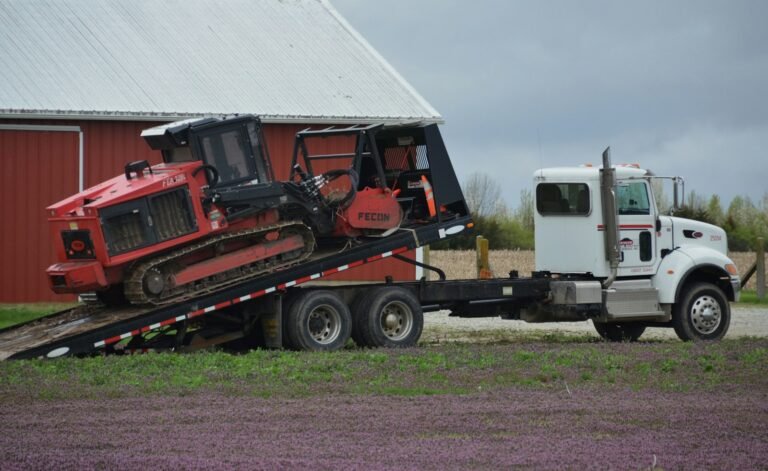
Depending on the machine and the site, plant usually arrives on a lorry or a towed trailer. Whatever brings it needs somewhere safe to stop, enough level ground to unload, and a way out afterwards.
Space to stop and unload
The vehicle needs to park close to the drop-off point on firm, reasonably level ground. Ramps need room behind the vehicle to come down, and the machine needs space to track off and turn. On a narrow street in Barnstaple or Bideford, that may mean asking neighbours to keep a stretch of road clear for half an hour, or arranging delivery early before cars fill the street.
Turning space
Lorries do not reverse long distances down single-track lanes easily or safely. If there is nowhere to turn at your end, tell us. It may change the vehicle we send or the time we arrive.
Weight limits, bridges and private drives
A lorry carrying a midi excavator is far heavier than a car. Look out for weight limit signs on the approach, old stone bridges over streams and long private drives with soft edges or culverts underneath. If you know of a restriction, tell us. If the last stretch is a shared private track, check with the other users that a delivery vehicle can use it and that nobody will be blocked in while the machine is unloaded.
Gradients matter too. A steep, wet concrete drive can be hard for a loaded vehicle to climb and dangerous to unload on, so mention any steep sections when you book.
Plant hire delivery to rural Devon and Cornwall
Much of our work from Okehampton is down lanes that were never designed for lorries. Single-track lanes with high hedge banks, tight bends and few passing places are normal across Devon and North Cornwall. A few practical points:
- Sat-nav can mislead. It often picks the shortest route, not the one a lorry can use. If you know the best approach, tell us, and mention lanes to avoid.
- Farm gateways are often narrow. Many field gates are tighter than modern machinery. Measure the clear width between posts, not the gate itself.
- Soft verges. After rain, verges and field entrances can be too soft for a loaded vehicle. Say if the vehicle will need to pull onto grass.
- Moorland roads. Some Dartmoor and Exmoor roads have cattle grids, livestock and narrow sections. Allow time and tell us about any restrictions you know of.
Where a site is genuinely awkward, a smaller machine on a plant trailer may be the answer. Our trailer range includes 9ft and 10ft plant trailers that suit compact machines.
Machine size and what each one needs
Different kit makes different demands on your site. Ask us for exact transport dimensions and weights for the machine you are booking, as figures vary with buckets and attachments.
| Equipment | What to plan for |
|---|---|
| Micro and mini excavators (Sunward SWE 08B, SWE 18UF) | Narrow side passages and garden gates; a level spot to unload from a trailer or lorry |
| Midi excavators (SWE 25UF to SWE 60UF) | Wider access, firm ground to track across, and turning space for a larger delivery vehicle |
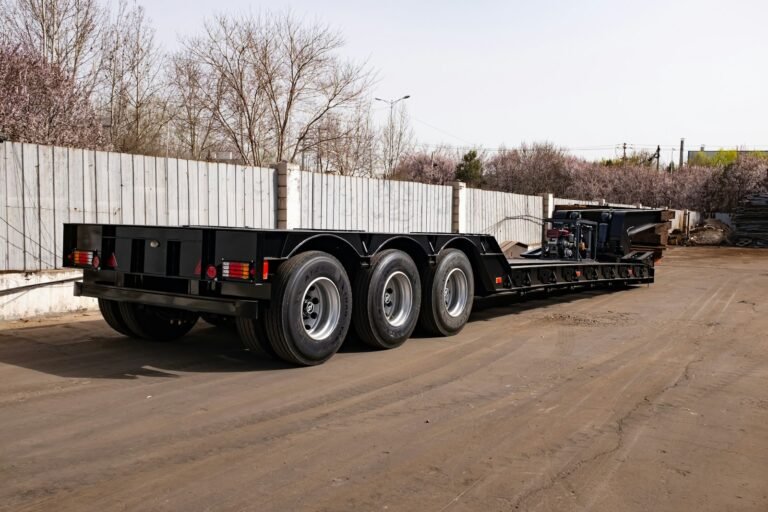
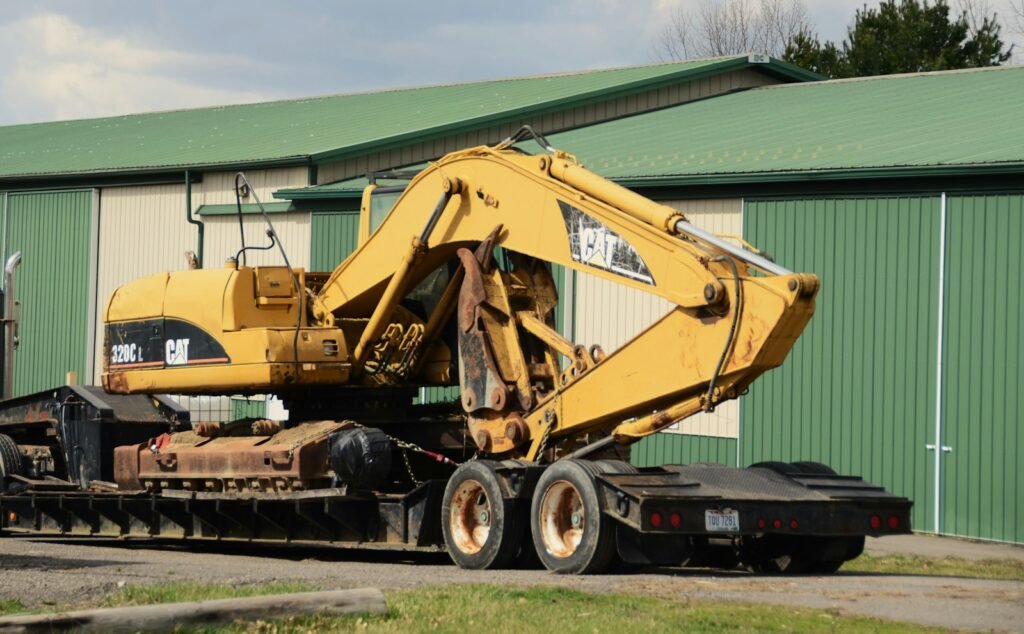
| 9 tonne excavator (SWE 90UF) | Low loader access, a wide gateway and solid ground from the road to the work area |
| Dragon tracked jaw crushers | Firm, level working area with room for the material pile and the crushed output |
| Tracked dumpers and carriers | Usually the easiest to get in; check slopes and steps on the route |
| Hiway Storage BV126 (12ft × 6ft × 7ft) | A level space on your drive with room to open the rear ramp |
| Ifor Williams 18ft flat bed or tilt bed | Space to manoeuvre a long trailer on site and in the lane |
Browse our trailer range and construction equipment for the full line-up, then send us the details so we can match the delivery vehicle to your site.
Ground conditions and hardstanding
Under our terms, ground preparation, hardstanding and site access are the hirer’s responsibility. That covers the route from the vehicle to the work area as well as where the machine will work.
- Check block paving, tarmac drives and patios. Tracked machines are usually fine on sound surfaces, but thin paving over poor sub-base can crack under a loaded lorry.
- Protect lawns if you care about them. Boards or ground protection mats spread the load; ask us if you need help finding some.
- Avoid tracking over manhole covers, septic tanks and soakaways where you can.
- On clay sites after heavy rain, a temporary stone track may be needed for access.
Overhead power lines and underground services
Look up before you choose the drop-off point. Overhead lines cross many farm gateways and back gardens, and unloading involves tipping trailers, raising ramps and machines with booms or dippers moving near the vehicle. Keep the unloading point well away from any overhead line, and if lines cross your access, tell us in advance.
If work has to take place near a line, speak to the local electricity network operator first; calling 105 puts you through to your network operator. A tipping trailer or a raised boom does not need to touch a high-voltage line for electricity to jump the gap, so distance matters. HSE has guidance on working near overhead power lines.
Underground services matter too. Identify and mark cables, pipes and drains before delivery, especially where the machine will be working. We can’t be held responsible for damage to buried services during delivery or operation.
Protecting your property on delivery day
A tracked machine on a well-built drive is rarely a problem. A loaded lorry on thin block paving or a soft lawn is a different story. A few precautions save arguments later.
- Use ground protection. Mats or heavy boards spread the load across lawns and soft areas. Lay them before the machine arrives, overlapping in the direction of travel.
- Protect kerbs and edges. A timber ramp or a few sandbags help a machine step up a kerb without chipping it.
- Tell us about weak surfaces. Thin paving, decorative gravel over membrane and old concrete with voids underneath may not take a delivery vehicle.
- Move vulnerable items. Pots, garden furniture, bikes and cars parked close to the route.
- Warn the neighbours. A short note about the delivery time and any brief road blockage goes a long way on a terraced street.
Remember that under our hire terms, ground preparation and protecting your surfaces are the hirer’s responsibility. Taking photos of drives and lawns before delivery is a sensible record for everyone.
Farms, estates and event sites
Plant hire delivery to a working farm or an event field has its own checklist.
Farmyards
Tell us where livestock will be on the day and which gates must be kept shut. Keep a clear, firm route through the yard, away from slurry stores and soft areas around feed barriers. If the machine is going to a field, say which gateway to use and whether the field is likely to be wet.
Estates and golf courses
Long drives, cattle grids and fine turf all need planning. Agree a drop-off point on hard standing where possible, and use low ground pressure kit, such as the Tracspider carriers, for moving across sensitive grass.
Events and marquees
Generators, Airrex heaters and UTVs often need to be placed before the marquee goes up or the site fills with people. Plan delivery for the quiet set-up days, mark the drop-off points, and make sure there is a firm route if the field has been rained on.
On the day: who needs to be there
A responsible person needs to be on site to receive the machine and sign the delivery note. Signing confirms you accept the equipment’s stated condition, so:
- Walk round the machine with the driver and point out any existing damage.
- Check attachments, buckets and keys match what you ordered.
- Note the fuel level and the engine hours reading.
- Take a few photos.
- Ask the driver anything you are unsure of about controls or daily checks.
If you find damage later that was not visible at delivery, report it to us in writing straight away. Payment, or a confirmed credit account, needs to be in place before delivery.
Common reasons a delivery fails
| Problem | How to avoid it |
|---|---|
| Machine too wide for gateway or side passage | Measure the narrowest point and tell us when booking |
| Lorry can’t get down the lane | Describe the route and any tight bends or weak bridges |
| Nobody on site to sign | Name a contact and keep your phone on |
| Road blocked by parked cars | Arrange space with neighbours or book an early slot |
| Ground too soft to unload | Prepare hardstanding or choose a firmer drop-off |
Abortive delivery costs caused by inadequate access fall to the hirer, so it pays to get this right. Almost every failed plant hire delivery we see could have been avoided with a tape measure, a photo and an honest description of the lane.
A plant hire delivery timeline, from booking to collection
- When you book: send the machine, site postcode, dates, a pin for the drop-off point and your access photos. Booking 24 to 48 hours ahead gives the best chance of the slot you want.
- Before delivery: confirm payment or your credit account, mark underground services and arrange insurance for the hired kit.
- The day before: clear the route, lay ground protection, move cars and let neighbours know.
- Delivery morning: have a responsible person on site with their phone on, ready to sign the delivery note.
- During the hire: keep the machine fuelled, check fluids daily and report any fault straight away.
- Ready for collection: clean the machine, refuel it, gather buckets and keys, and park it where the vehicle can reach it.
- Off-hire: call or WhatsApp for your off-hire reference. Charges stop from that point, not when the driver turns up.
The same access that worked for delivery needs to work for collection, so don’t fill the drive with skips or materials before the machine has gone.
Collecting from the depot instead of delivery
If your access is awkward for a lorry but fine for a car and trailer, collecting the machine yourself can be the answer. You can collect from our depot near Okehampton during business hours, provided you have a suitable vehicle and trailer.
- Check your towing limits. Your licence, your vehicle’s towing capacity and the trailer’s gross weight all need to cover the machine plus its buckets.
- Bring proper restraints or check what the trailer has, and secure the machine at its tie-down points.
- Know the hire terms. The hire period starts when the machine leaves the depot, and the same rules on insurance and transit apply.
- Plan the unload. You still need a firm, level spot at your end to track the machine off safely.
Our hire FAQs cover collection, payment and off-hire in more detail. If in doubt, a delivery quote is often worth it for the peace of mind.
Frequently asked questions
How much notice do you need for plant hire delivery?
Booking 24 to 48 hours ahead is best, especially for excavators and telehandlers. Same-day delivery is often possible across much of Devon and Cornwall, subject to availability.
Can I collect the machine myself instead?
Yes, from our Okehampton depot during business hours, as long as you have a suitable vehicle and trailer. We can advise on what you need.
Is delivery included in the hire price?
No, delivery and collection are quoted separately, based on distance from Okehampton. We give you the delivery cost before you confirm.
Do you deliver at weekends?
Out-of-hours and weekend deliveries may carry an extra charge. Ask when booking and we will confirm it upfront.
Can the machine be unloaded in the road?
Sometimes, for a short time, if it is safe and the driver is happy with the spot. If unloading would block a busy road or take a long time, talk to us first, as some locations need extra planning or a different drop-off point.
What if nobody can be on site?
A responsible person needs to be there to sign the delivery note and confirm the equipment’s condition. If you can’t be there yourself, name someone you trust and give us their number.
Will the driver put the machine exactly where I want it?
Where it is safe to do so, the machine can usually be tracked to an agreed point close to the work. The driver will not take risks on unsafe ground, steep slopes or near overhead lines, which is why good access information matters.
Book your delivery
Send us the machine, site postcode, dates and your access details and we will plan the delivery around your site. WhatsApp or call 07841 036064, Monday to Friday 7:30am to 5:30pm, or use our contact page. You can browse what we deliver on our construction hire page.