If you have never hired a digger, dumper or compactor before, the process is simpler than it looks. Here is how to hire plant from us in short: message us with the machine, site postcode, dates and access details; we confirm availability and a quote; you pay or set up an account and arrange insurance; we deliver; and you call us to off-hire when you are finished. The checklist below covers each step so nothing catches you out.
In this guide
How to hire plant in five steps
- Tell us the job: WhatsApp or call 07841 036064. If you don’t know which machine you need, describe the work and we’ll recommend one.
- Get a quote: we confirm the machine, hire period, delivery and collection. For a written quote, email info@conagri.co.uk.
- Sort payment and insurance: pay before delivery or use an approved credit account, and arrange cover for the hired machine.
- Take delivery: we deliver to site, or you collect from our depot near Okehampton with a suitable vehicle and trailer.
- Off-hire: contact us when you are finished and get an off-hire reference. Hire charges run until that is confirmed.
There is no online booking. We prefer a quick conversation so you end up with the right machine first time.
Hiring for a business or several machines
If you are a contractor or business hiring more than one machine, or running a longer project, use our contact form rather than WhatsApp. Tell us the machines, the site and the rough duration, and we will put together a tailored proposal with an account manager as your point of contact.
If we don’t have what you need
Our fleet covers construction, agriculture, landscaping, warehouse, events and trailers, but not everything. If your job needs something we don’t list, such as scaffolding or pumps, ask anyway. We’ll tell you what’s available or point you in the right direction.
What to send us on WhatsApp
The more of this you include in your first message, the faster we can quote. We aim to reply within the hour during business hours.
- The machine or the job: for example, “1.8 tonne digger” or “digging a soakaway in a back garden”.
- Site postcode, plus directions if it is a farm, field or new build without a proper address.
- Dates: start date and how long you think you need it.
- Access: gate or passage width, steps, slopes, soft ground, overhead cables, low branches.
- Delivery point: where the lorry can stop and unload safely.
- Who is operating: whether they are trained or certificated on this type of machine.
- Extras: buckets, a trailer, or other machines you might need alongside.
A photo of the access route and the work area saves a lot of back and forth.
An example first message
Something like this gives us nearly everything we need: “Hi, I need a small digger to dig a 10m trench for a drain in my back garden. Postcode EX20. Start Monday for a week. Side gate is 1.1m wide, level path, lawn at the end. Lorry can park on the drive. I haven’t used a digger before. Also need something to move the soil to a skip at the front.” From that we can suggest a machine that fits the gate, a dumper for the spoil and a sensible hire period, and flag anything worth checking.
Which machine? A beginner’s guide
Part of learning how to hire plant is knowing roughly what to ask for. You don’t need the model number; a description of the job is enough. This table gives a feel for the common first hires.
| Job | Typical machine | From our fleet |
|---|---|---|
| Small garden dig, narrow access | Micro or mini excavator | Sunward SWE 08B (0.8t) |
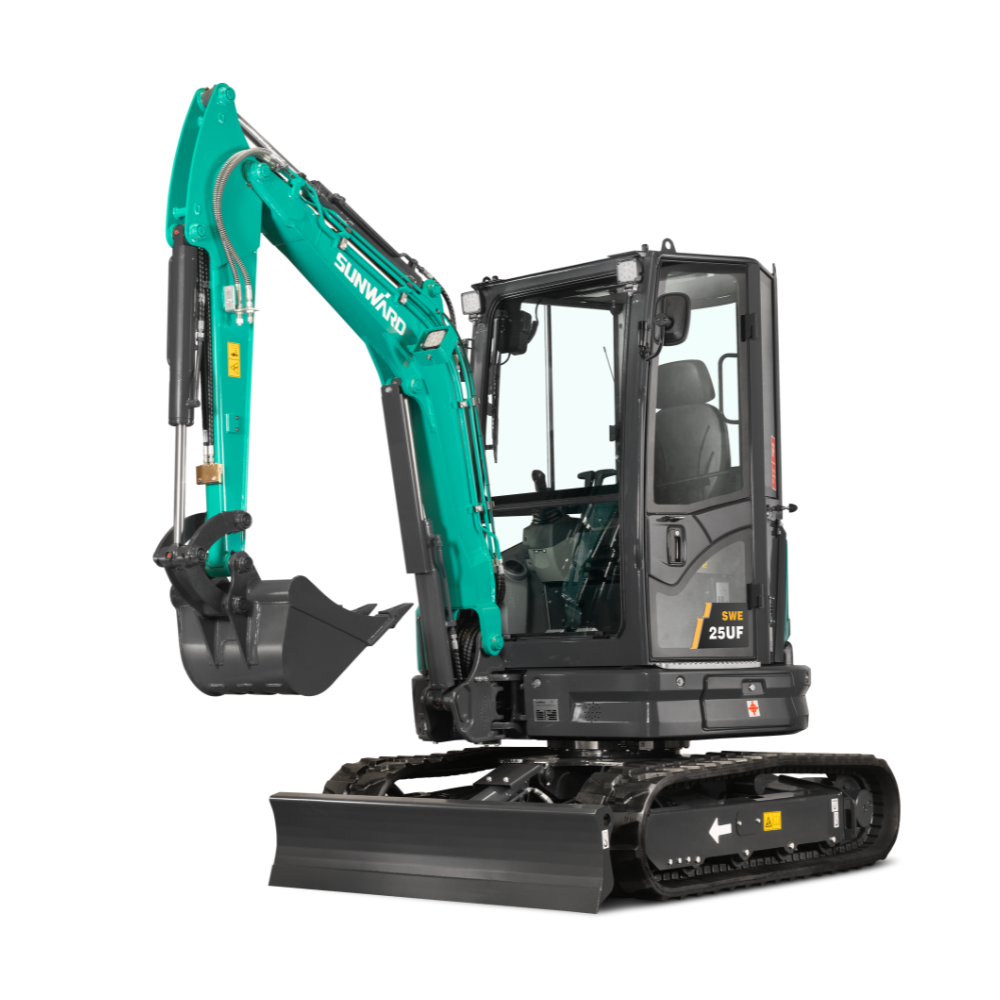
| Footings, drainage, soakaways | Mini excavator, 1.8 to 2.5 tonnes | Sunward SWE 18UF, SWE 20F, SWE 25UF |
| Moving spoil through a garden | Tracked dumper | Hyundai 500kg tracked dumper, Mechbadger |
| Compacting a path or patio base | Forward plate compactor | Weber MT CF 2-II Hd |
| Compacting trench backfill | Rammer or trench roller | Weber MT SRV 300-II SF, MC 85 |
| Mixing mortar or small concrete batches | Cement mixer | Altrad Belle Mini Mix 150 |
| Lifting pallets onto scaffold or a roof | Telehandler | Merlo P40.14 (trained operator needed) |
| Moving a machine yourself | Plant trailer | Brian James 9ft, Indespension 10ft |
If you are unsure between two sizes, tell us about the access and the amount of material. The bigger machine is not always the right answer if it cannot reach the work.
Choosing the right hire period
The minimum hire is usually one day. Weekly hire is our most popular option and often better value if the job might overrun. Monthly and long-term rental rates suit longer projects, and our Flex Hire account gives businesses one flat monthly fee with swaps between machines.
If rain or a delayed delivery could hold you up, a weekly hire gives you room to work around the weather rather than paying for idle days on a series of daily hires. Hire charges continue while a machine stands unused on site, so off-hire promptly when you have finished.
Book 24 to 48 hours ahead where you can, especially for excavators and telehandlers. Same-day delivery is often possible across Devon and Cornwall, subject to availability. Cancelling with more than 72 hours’ notice is free; shorter notice may carry a charge, as set out in our terms.
Payment, accounts and paperwork
For standard hires, payment is needed in full before delivery or collection. We take bank transfer and card. Regular customers can apply for a credit account. Hire rates are quoted excluding VAT, and some higher-value items may need a refundable deposit. Read the hire agreement before you sign so you know what is expected around fuel, cleaning and damage. Our FAQ page answers most of the common questions.
Setting up a credit account
If you are a business that will hire regularly, a credit account saves paying up front each time. Use the contact form or email info@conagri.co.uk to apply; credit checks may be carried out as part of the application. Approved account invoices are payable within 30 days. For a one-off job, paying before delivery is usually the simplest route.
Understanding the hire agreement
The agreement is short, but a few points catch first-timers out. These summarise how our hire works; the full terms are always the ones that apply.
- When hire starts: the hire period starts when the machine leaves our depot, or when you collect it.
- When it stops: hire runs continuously, including evenings, weekends and bank holidays, until you have formally off-hired and received a reference number.
- Condition on delivery: signing the delivery note accepts the stated condition, which is why you should check the machine first.
- Damage and theft: report damage to us straight away and within 24 hours of finding it. Report theft to the police and to us, with a crime reference number.
- Fuel: diesel machines must use white diesel, not red diesel.
- Repairs: don’t attempt repairs yourself. Faults from normal wear are ours to put right; damage from misuse is the hirer’s cost.
Insurance and training
Insurance is not automatically included in our hire. You are responsible for insuring the machine against damage and theft and for third-party liability while it is with you. Some contractors’ policies already cover hired-in plant; check the wording. Cover should normally protect the machine for its full replacement value against damage, theft and fire, and include third-party liability, because you remain responsible for any shortfall. If you need cover, our partner insurance4plant.co.uk arranges plant hire insurance.
Our hire is self-drive. Whoever operates the machine must be competent, and on many sites contractors will expect a card such as CPCS or NPORS for excavators and telehandlers. If you are a homeowner using a mini digger for the first time, practise in an open area before working near buildings, fences or services.
Delivery day and handover
Our delivery vehicle needs firm ground, room to unload safely and somewhere to turn. If the driver cannot deliver because the access is blocked or unsafe, an abortive delivery charge can apply, so be honest about soft verges, steep drives and low branches when you book. In wet weather, a hard drive or yard is a far better drop-off point than a lawn or field.
- Clear the access route and the unloading area before the lorry arrives.
- Have someone on site to sign the delivery note.
- Walk round the machine and photograph any existing marks or damage.
- Ask for a run-through of the controls, safety features and daily checks.
- Mark buried services before digging. A free LinesearchbeforeUdig enquiry is a good start.
Collecting and towing it yourself
Collecting from our depot near Okehampton can suit you if you already have a suitable vehicle and trailer, or if you hire one of our plant trailers. Before you do, check three things.
- Your licence: if you passed your car test on or after 1 January 1997, you can generally now tow a trailer up to 3,500kg maximum authorised mass. The GOV.UK towing guidance sets out the current rules, including for older licences.
- Your vehicle: the combined weight of the trailer and machine must be within your vehicle’s towing limit, which is in the handbook or on the vehicle plate.
- The trailer: the Brian James 9ft plant trailer has a 2,700kg gross vehicle weight, so the machine plus the trailer’s own weight must stay within it. Ask us which machines suit which trailer.
Load the machine centrally, lower the bucket or blade, and secure it with proper chains or ratchet straps at the tie-down points. If you are not comfortable towing, delivery is usually the safer and quicker option.
Your first day on a mini digger
If this is your first time operating, a little patience on day one pays off for the rest of the hire. These are general tips, not a substitute for training.
- Practise first: spend time in an open area getting used to the controls, tracking and slewing before you go near anything you could damage.
- Check the control pattern: ask the driver which way the levers work and test them slowly.
- Keep the bucket low when tracking, and track straight up and down slopes, not across them.
- Dig away from the tracks: don’t undercut the ground the machine is standing on.
- Look up: check for overhead cables, branches and gutters before raising the arm.
- Hand dig near services: once you know roughly where a pipe or cable runs, expose it by hand before digging near it with the machine.
- Keep people clear: nobody should be within reach of the arm or the slewing body while it is working.
During the hire and returning the machine
Daily checks
A few minutes each morning prevents most breakdowns and damage charges.
- Fuel level, and engine oil, coolant and hydraulic oil where there are sight glasses or dipsticks
- Leaks under the machine, especially hydraulic hoses and rams
- Tracks or tyres for damage, stones jammed in the running gear, and tension that looks right
- Bucket pins and quick hitch locked in place
- Greasing points, if you have been shown how and asked to do so
- Controls, horn, beacon and any safety lever working correctly
Do your daily checks, keep the machine secure overnight, and remove keys when it is not in use. If something goes wrong, stop, don’t attempt repairs, and call or WhatsApp us. We’ll assess it and arrange a repair or replacement quickly.
Machines go out with a full tank and should come back full, using the fuel specified in your hire agreement. Return the equipment clean, with all attachments and keys, to avoid cleaning or replacement charges. To extend, tell us before the original end date. To finish, contact us for an off-hire reference: telling the delivery driver on site does not count.
Getting ready for collection
Before the collection day, wash off mud and concrete splashes, refuel, and gather every attachment, bucket and key in one place. Park the machine where the lorry can reach it easily, on firm ground and clear of parked cars. If you will not be on site, tell us where the keys are and make sure the gate is open or we have access.
Take a few photos of the machine as you leave it; they are useful if there is ever a question about its condition. Once it is back at the depot and checked, any deposit is returned within the period set out in our terms.
Common first-time mistakes
Learning how to hire plant mostly means avoiding a handful of slips that catch out first-timers. Watch out for these:
- Guessing the access width: measure the narrowest point, including gateposts, bins and downpipes.
- Booking too short: a day hire on a job that takes three days turns into rushed, risky work. Weekly hire gives breathing space.
- Forgetting the spoil: plan where dug material goes before the digger arrives.
- Assuming you’re insured: home insurance rarely covers a hired excavator.
- Leaving the machine dirty: a quick wash down before collection avoids a cleaning charge.
- Skipping the walk-round: if you don’t note existing marks at delivery, it is harder to show they were already there.
- Running it on the wrong fuel: red diesel is not permitted, and contaminated fuel leads to disposal and refuelling charges.
- Not off-hiring properly: charges continue until you have an off-hire reference, even if the machine is parked up.
None of these are difficult to avoid. A short message to us before the hire usually catches them all.
Frequently asked questions
Can I hire plant as a homeowner?
Yes. Many of our customers are homeowners doing their own projects. You’ll need to arrange payment and insurance and be confident operating the machine safely.
Do I need to be on site for delivery?
Someone responsible needs to be there to sign for the machine and check its condition.
What if I’ve picked the wrong machine?
Tell us as soon as you can. We’re always happy to discuss a swap, subject to availability.
How do I know which machine to ask for?
Describe the job. Our construction range is a good place to browse, but we’ll recommend the right size for your site.
Can I collect the machine myself?
Yes, you can collect from our depot near Okehampton during business hours. You’ll need a suitable vehicle and trailer for anything larger than hand tools, and you must be legally able to tow the combination. Tell us what you’re towing with and we’ll advise.
Can you supply an operator with the machine?
Our hire is self-drive unless something else has been agreed. If you are not confident operating, it is worth asking a local groundworker to do the machine work while you hire the kit.
What happens if it rains all week?
Hire charges keep running whatever the weather, so plan around the forecast where you can. If the job has to stop, tell us; you may be able to off-hire and rebook rather than paying for days the machine cannot be used.
Your how to hire plant checklist at a glance
- Job described, or machine chosen
- Site postcode and delivery point confirmed
- Access measured at the narrowest point, with photos
- Dates and hire period agreed
- Payment made or credit account approved
- Insurance for hired-in plant arranged
- Operator trained and competent
- Buried services checked and marked
- Someone on site to sign for delivery
- Off-hire reference obtained at the end
Ready to book your first hire?
Now you know how to hire plant, send us the machine or job, postcode, dates and access details on WhatsApp or call 07841 036064 (Mon to Fri, 7:30am to 5:30pm). For multi-machine or account enquiries, use our contact form.