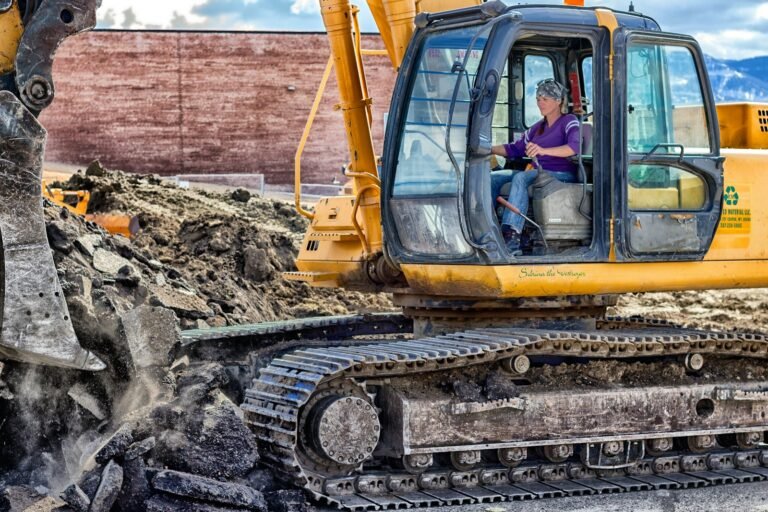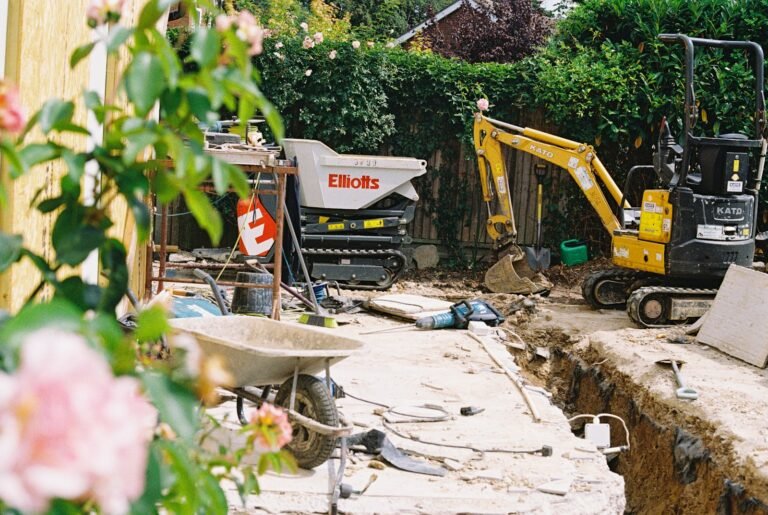

In the UK there is no single government-issued licence for a mini digger that you need simply to operate one on private land. What the law does require is that anyone using work equipment is adequately trained and competent, and many construction sites insist on a recognised operator card such as CPCS or NPORS before you can get on a machine. Driving a tracked digger on a public road, or towing one on a trailer, brings in separate driving licence rules. Here is how each situation works, so you know what applies to your job.
In this guide
This is general information. Rules change, so check the current guidance from HSE and GOV.UK for your situation.
Is there a legal licence for a mini digger?
No DVLA category or government permit exists that works as a licence for a mini digger used off the road. People often say “digger licence” when they mean one of three different things:
- Training and competence, which the law requires in a workplace.
- An operator card (CPCS, NPORS and similar), which is an industry scheme that many sites require.
- A driving licence entitlement, which only matters if the machine goes on a public road or you tow it.
Keeping those separate makes the rest of the picture much clearer. When someone tells you that you need a licence for a mini digger, ask which of the three they mean. A homeowner, a self-employed groundworker and an employee on a housing site will get three different answers, and all of them can be right for that person.
Working on private land
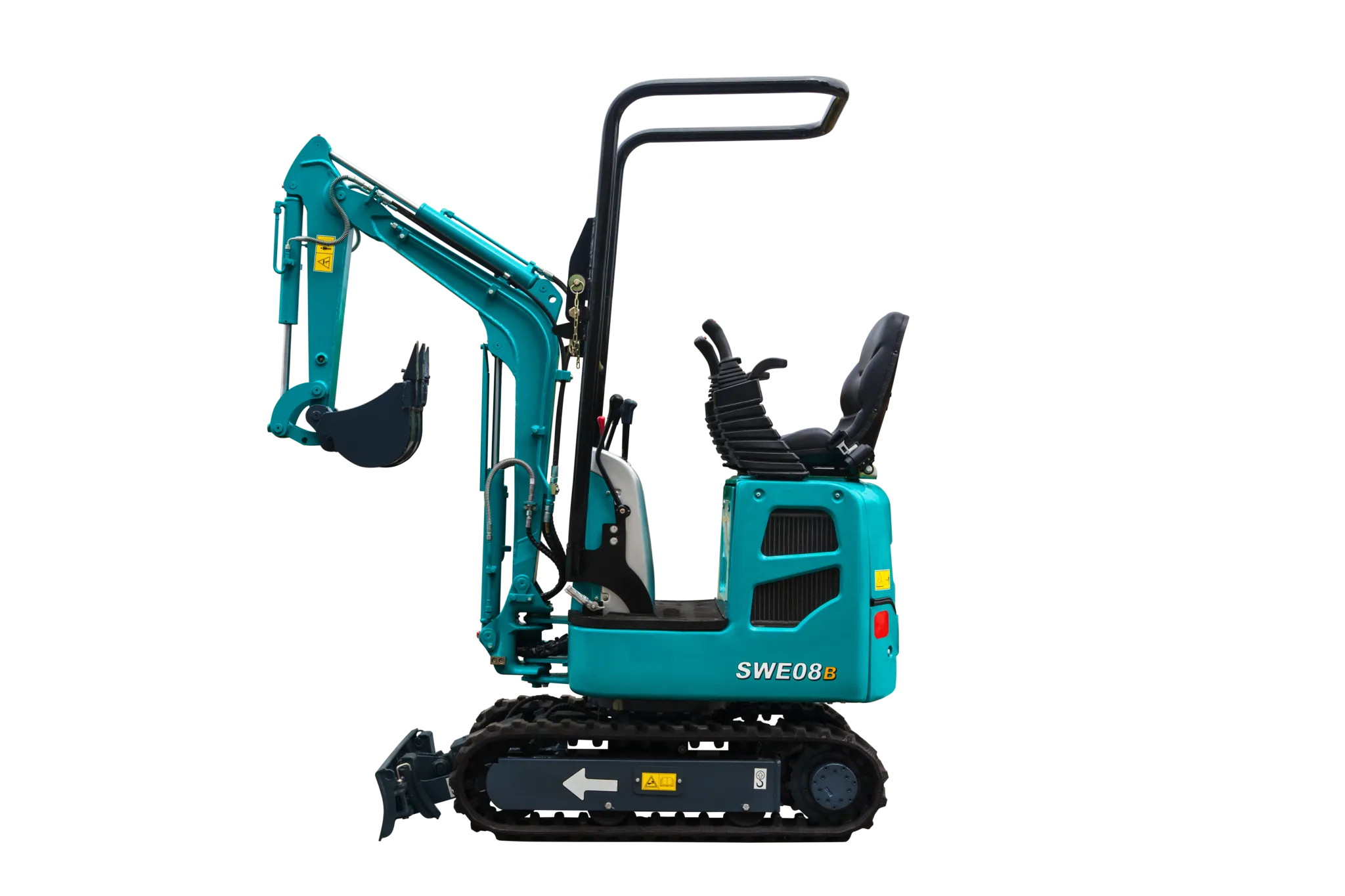
If you are a homeowner digging a soakaway in your own garden in Okehampton or levelling a paddock on your smallholding, no card or licence is legally required to use the machine. That does not mean anyone can safely jump on. A 0.8 tonne Sunward SWE 08B is small, but it still has a slewing upper structure, a heavy bucket and the ability to tip on a slope or undercut a wall.
Under our hire terms, only competent and suitably trained operators may use the equipment, and hire is self-drive unless we agree otherwise. If you have never used an excavator, a short course with an accredited training provider is money well spent before you hire. At the very least, read the operator’s manual, practise somewhere flat and open, and know where every service and boundary is before you put the bucket in the ground.
Private land also includes farms and smallholdings. A farmer using a hired excavator to clear a ditch on their own holding is in a similar position to a homeowner, but once the machine is being used for work by employees or other people, the legal duties around work equipment and training come into play.
Employers and the duty to train
Once work equipment is used at work, the Provision and Use of Work Equipment Regulations 1998 (PUWER) apply. HSE guidance says employers must make sure everyone who uses work equipment has received adequate training for health and safety, and that only workers with appropriate training should operate self-propelled machines. See HSE’s guidance on training and competence for work equipment.
HSE’s workplace transport FAQs make the same point from another angle: there is no government-issued licence for driving plant at work, and no legal requirement for plant operators to hold a road driving licence unless they drive on the public highway. Employers can choose which training scheme to use, but the duty to train adequately remains.
The law does not name a particular card. It asks for adequate training, and what counts as adequate depends on the machine, the task, the person’s experience and the level of supervision. In practice, a recognised qualification is the easiest way for an employer to show they have met that duty.
CPCS, NPORS and site cards
The Construction Plant Competence Scheme (CPCS) and the National Plant Operators Registration Scheme (NPORS) are the two best-known operator card schemes in the UK. Both test operators on specific machine categories, such as 360 excavators, dumpers and telehandlers, with categories that can depend on machine type and size.
These cards are not a legal requirement in themselves, but many principal contractors, housebuilders and civil engineering firms make them a condition of working on their sites. If you are a groundworker picking up work on a development in Exeter or a utilities job in Plymouth, expect to be asked for a card that covers the machine you will be using.
| Situation | Legal requirement | What sites or clients often expect |
|---|---|---|
| Homeowner on own land | No card or licence, but use it safely | Hire terms require competence |
| Employee or self-employed at work | Adequate training under PUWER | Evidence of training |
| Working on a managed construction site | Adequate training under PUWER | CPCS, NPORS or equivalent card |
| Driving a tracked machine on a public road | Appropriate driving licence entitlement | Check with DVLA and your insurer |
| Towing a digger on a trailer | Driving licence that covers the trailer weight | Vehicle rated to tow the load |
How the operator card schemes work
If you are going to work on other people’s sites, it helps to understand how the card schemes are structured before you book a course.
Trained operator and competent operator
Both CPCS and NPORS generally separate a newly trained operator from an experienced, fully qualified one. You usually start with a card showing you have passed training and testing for a category, then move to a higher-level card once you have built up experience and completed an NVQ or equivalent workplace qualification. Card validity periods, renewal rules and category names change from time to time, so check the scheme’s own website for the current position.
Categories by machine type and size
Cards are issued per category. An excavator category may be split by machine weight, so a card for small machines does not automatically cover a 9 tonne excavator. Dumpers, telehandlers, rollers and ride-on rollers each have their own categories. If you move between machine types, you may need several categories on your card.
Site entry cards
Many major sites also expect workers to hold a card that shows health and safety awareness, and some only accept operator cards that carry a recognised logo. Ask the principal contractor exactly what they accept before you spend money on training.
What a good mini digger course covers
Whether you want a full card or just a short familiarisation course before a garden project, a reputable training provider should cover at least the following:
- Pre-use checks: walk round for leaks, damaged hoses, track tension and condition, fluid levels, and the condition of buckets, pins and the quick hitch.
- Controls and travel: the control pattern, travelling with the blade facing the right way, and keeping the bucket low while tracking.
- Stability: working on slopes, why you track up and down rather than across, and how a swinging load changes the balance of a small machine.
- Digging and trenching: using the blade for stability, placing spoil back from the edge, and not undercutting the machine or nearby walls.
- Quick hitches: fitting buckets correctly and checking the locking mechanism every time, because a bucket that drops off can kill someone in the trench.
- People and services: keeping others out of the slew radius and recognising signs of buried services.
- Loading and transport: tracking on and off a plant trailer safely and securing the machine.
- Shutting down: lowering attachments, isolating controls and removing the key.
Driving a digger on the road
GOV.UK states that driving tracked vehicles (category H) requires a full car licence with provisional entitlement for category H, and passing the relevant test. Road use also brings in vehicle registration, lighting and insurance requirements. For compact excavators this is rarely practical, which is why mini diggers are almost always moved between sites on a plant trailer or a low loader. See GOV.UK’s page on learning to drive a tractor or specialist vehicle.
Towing a mini digger yourself
If you collect a machine from our Okehampton depot rather than having it delivered, the towing rules apply. Since 16 December 2021, drivers who passed their car test from 1 January 1997 can tow trailers up to 3,500kg maximum authorised mass without an extra test. Your vehicle must also be rated to tow the combined weight of trailer and digger, and braked trailers need to be correctly coupled with the breakaway cable attached. Our plant trailers include a Brian James 9ft trailer at 2,700kg GVW, suited to the smaller machines.
Who is responsible for what
When people ask whether they need a licence for a mini digger, what they often really want to know is who carries the responsibility if something goes wrong. In broad terms:
- The employer must make sure staff using work equipment are adequately trained and supervised, under PUWER regulation 9.
- The self-employed operator has duties for the equipment they use at work, and needs to be able to show they are competent if a client or site asks.
- The site or principal contractor sets the rules for its site, which often include operator cards, inductions and permits to dig.
- The hirer is responsible under our terms for making sure only competent, suitably trained and, where required, licensed operators use the machine.
- The homeowner working on their own land has no card requirement but is still responsible for the machine and for any damage it causes.
Insurance follows the same logic. Many policies expect operators to be competent, and damage caused by someone who clearly was not may not be covered. If you are not sure what your policy says, ask before the machine arrives.
Your first hour on a hired mini digger
If you are a capable homeowner using a small machine for the first time, the first hour sets the tone for the whole hire. A sensible routine, once you have read the operator’s manual:
- Walk round the machine with the delivery driver, and ask them to show you the controls, the safety lever and the fuel and oil checks.
- Clear the area. Children, pets and helpers should stay well outside the reach of the arm and the slewing body.
- Wear the seat belt. If the machine tips, the operator’s cab or frame only protects you if you stay inside it.
- Practise on flat ground. Track forwards, backwards and turn, then try slewing and moving the arm slowly before you dig.
- Dig a practice hole somewhere it does not matter, with the blade down for stability, placing spoil a safe distance from the edge.
- Only then start the real job, working slowly near walls, fences, trees and anywhere services might run.
Most people find a 0.8 or 1.8 tonne machine becomes comfortable within a few hours. Rushing the first hour is where damaged fences, cracked paving and tipped machines tend to come from.
Matching machine size to your experience
A bigger machine digs faster, but it also has more reach, more weight and more ways to cause damage. Our Sunward excavator range runs from 0.8 to 9 tonnes. As a general guide:
| Machine | Suits | Experience needed |
|---|---|---|
| Sunward SWE 08B (0.8 tonne) | Garden soakaways, narrow access, small trenches | Capable beginners after familiarisation |
| Sunward SWE 18UF (1.8 tonne zero tail) | Patios, drives, footings for garden rooms | Some prior use or a short course |
| Sunward SWE 25UF and 35UF | Extensions, drainage runs, larger groundworks | Regular operators |
| Sunward SWE 60UF and 90UF | Bulk dig, site clearance, heavy groundworks | Experienced, usually carded operators |
Tell us honestly what experience you have when you enquire. It helps us suggest a machine that does the job without putting you out of your depth.
Or let us deliver
If you are not confident towing a loaded plant trailer down narrow lanes, delivery removes the question entirely. We deliver and collect across Devon, Cornwall, Somerset and Dorset from our depot near Okehampton, quoted separately by distance, and the driver can walk you through the machine on arrival.
Before you hire: a quick checklist
- Decide who will operate the machine and what training or card they hold.
- If you are working on someone else’s site, ask what card they require.
- Choose the smallest machine that will do the job safely. Our construction hire range runs from 0.8 to 9 tonnes.
- Locate underground services and overhead lines before digging.
- Arrange insurance for the hired machine, as it is not automatically included.
- Decide on delivery or collection, and check towing limits if collecting.
Choosing a training provider
There are accredited plant training providers across Devon, Cornwall, Somerset and Dorset, and some will train on your own site. Before you book, ask:
- Which scheme is it? CPCS, NPORS or another recognised scheme, and will the card be accepted by the sites you want to work on?
- Which categories and weights? Make sure the excavator category covers the size of machine you will actually use.
- How long is the course? Beginner courses run longer than tests for experienced operators. Ask whether there is an option to test without full training if you already have experience.
- Where does training take place? A training ground is fine for a card, but on-site training can cover your own conditions, such as steep Devon slopes or tight urban gardens.
- What happens if you fail a part? Ask about retest arrangements before you commit.
For a homeowner, a short familiarisation session may be all that is needed to use a small machine safely on a simple job. For anyone planning to earn a living on plant, a recognised card is the practical answer to the question of a licence for a mini digger, even though the law itself does not demand one.
Frequently asked questions
Can I hire a mini digger without a CPCS card?
For work on your own private land, neither a card nor a licence for a mini digger is legally required. You must be competent to use the machine safely, and you should be honest with us about your experience so we can suggest a suitable size.
How long does mini digger training take?
It varies by provider, machine category and your experience, and courses for complete beginners take longer than tests for experienced operators. Ask an accredited provider for their course length and test details.
Is a micro digger treated differently?
No. The same training duty applies to any work equipment, however small. Site rules may specify card categories by machine weight.
Do you check training before hire?
It is the hirer’s responsibility to make sure operators are trained and, where required, licensed. We can advise on what each machine needs; our FAQ page has more detail.
Do I need a licence for a dumper as well?
The same principles apply: no government licence is needed to use one off-road, but training is required at work and many sites ask for a dumper category on an operator card. Dumpers are involved in a large share of site accidents, so do not treat them as the easy machine.
Can I drive a mini digger along the road to the next property?
Not without the right licence entitlement and a machine that is legal for road use. In practice, compact excavators are moved on a plant trailer or delivery vehicle, even for short distances.
Does my insurer care whether I am trained?
Very often, yes. Many policies expect competent operators, and claims involving untrained use can be refused. Check your policy wording before you hire.
Ask us before you book
If you are unsure which machine suits your experience and your site, message us. WhatsApp or call 07841 036064, Monday to Friday 7:30am to 5:30pm, with the job, site postcode and dates, or use our contact page.