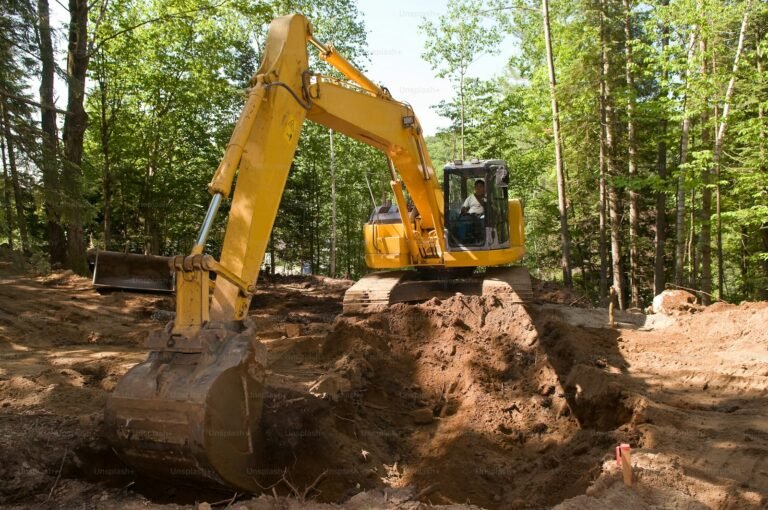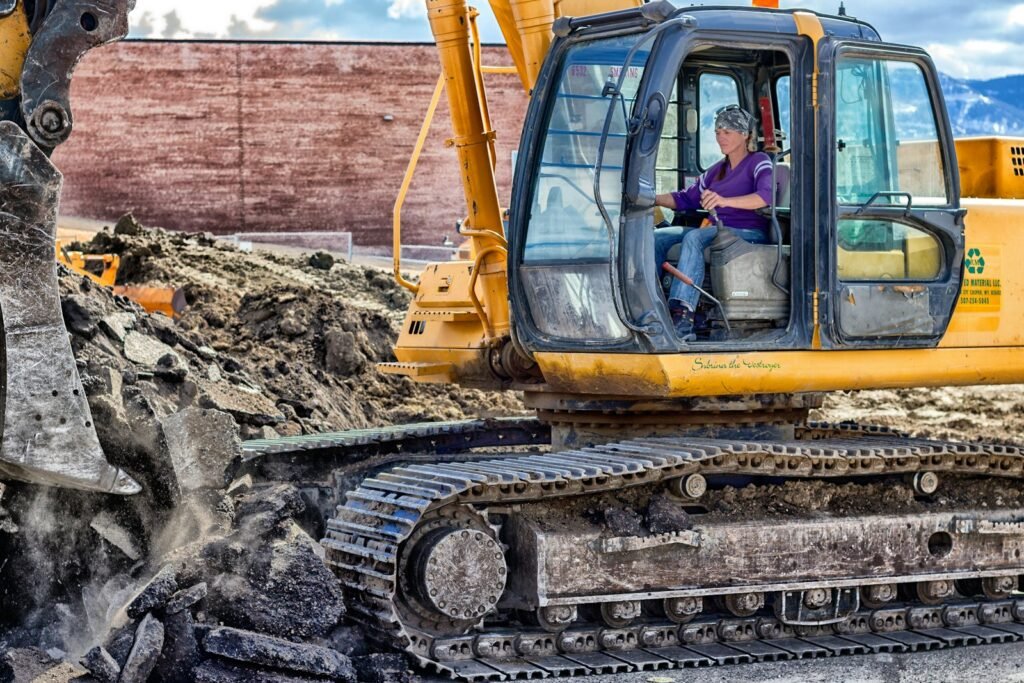
Self drive plant hire means the machine is delivered to your site and you, or someone you choose, operates it. Operated hire means the machine comes with a driver supplied by the hire company. Our hire is self-drive unless we agree something different in writing, which suits contractors with trained operators and capable homeowners on simple jobs. If the work is complex, close to services, structures or water, or nobody on your team has the right experience, an experienced operator will usually save you money and risk.

In this guide
What self drive plant hire means in practice
With self-drive hire, we deliver the machine from Okehampton, check it over with whoever signs the delivery note, and leave it with you. From then until you formally off-hire, the machine is in your care. You decide when it works, who drives it and how it is used.
That control is why self-drive is the most common way to hire compact plant. A groundworker who owns a van full of tools but not a 3.5 tonne excavator can have a Sunward SWE 35UF on site at short notice and run it with his own people. A farmer who uses a loader every day can hire a Venieri 1.63D pivot loader for a busy month and drive it himself.
Your responsibilities on a self-drive hire
Under our hire terms, taking a machine self-drive brings a clear set of responsibilities. In summary:
- Competent operators only. Anyone who uses the machine must be suitably trained and, where required, licensed or carded.
- Daily checks. Fuel, oil, water and hydraulic levels should be checked daily, and consumables are at your expense.
- Fuel. Machines go out full and should come back full, using white diesel only.
- Safe use. Use the machine for its intended purpose and within its limits, following the operator’s manual.
- Security. Store it securely when not in use and protect it from theft, vandalism and bad weather.
- Insurance. Insure it for its full replacement value; insurance is not automatically included.
- Underground services. Identify and mark buried services before digging.
- Return condition. Bring it back clean, with all attachments and keys.
If the machine develops a fault, stop and call or WhatsApp us. Don’t attempt repairs. Genuine mechanical faults are on us; damage from misuse is on the hirer.
What operated hire involves
With operated hire, the hire company supplies a machine and an operator together. The operator handles daily checks and runs the machine, but the hirer usually still directs the work: where to dig, what depth, where to put the spoil. Responsibility for planning the job, providing a safe site and locating services often stays with the hirer, depending on the contract terms. Read the terms carefully, because the split of liability for operated plant is not always what people expect.
Operated hire is common for larger machines, specialist kit and short, high-skill tasks where the hirer has no suitable operator. It is less common for compact plant, where the machine is simple enough for a trained member of your own team and a week of operator time would cost far more than the hire itself.
We are set up mainly for self-drive hire. If you think you need a machine with an operator, ask us. We will tell you what we can arrange or point you in the right direction.
How responsibility works on an operated hire
Many people assume that if the hire company supplies the driver, the hire company carries the risk. In UK plant hire it is often not that simple.
The industry model conditions
Much of the industry works on terms based on the Construction Plant-hire Association (CPA) Model Conditions, and our own terms are read alongside them where they apply. Under the model conditions for operated plant, the operator supplied with a machine is generally treated as working under the hirer’s direction and control. In plain terms, you tell the operator what to do, and responsibility for the consequences of those instructions can sit with you. Always read the specific terms of any operated hire, because they decide where liability falls.
What usually stays with the hirer
- Planning the job, including the method, sequence and any temporary support for excavations.
- Providing a safe site, safe access and suitable ground for the machine.
- Locating and marking underground services and identifying overhead lines.
- Supervising the work and coordinating it with other trades on site.
- Planning any lifting operation properly, with a competent person in charge.
What to check in an operated quote
Ask about the operator’s working hours, travel time, overtime, breaks and who pays for fuel. Ask which cards or qualifications the operator holds and whether they match what your site requires. Ask who carries out daily checks and greasing, and what happens if the machine breaks down mid-job. Clear answers up front avoid arguments at invoice time.
Comparing the two
| Self-drive | Operated | |
|---|---|---|
| Who drives | You or your staff | The hire company’s operator |
| Cost | Machine hire only | Machine plus operator’s time |
| Hours | Work when you like during the hire | Usually set working hours |
| Competence | Your responsibility | Provided by the operator |
| Daily checks and fuel | You | Usually the operator, fuel varies |
| Best for | Simple digs, experienced teams, long hires | Tricky or high-risk work, inexperienced hirers |
When self-drive makes sense
Self drive plant hire is usually the right choice when:
- You or your team hold the relevant training or operator cards and use similar machines regularly.
- The job is straightforward, such as digging out a patio base or loading spoil into a dumper.
- The site is open, flat and well away from buried services, overhead lines and buildings.
- The hire is long, so paying an operator for every day would add up.
- You want to work evenings or weekends around your own schedule.
Some machines are also simpler to pick up than others. A Tracspider electric tracked carrier, an electric pallet truck or a Weber MT plate compactor needs less skill than a 6 tonne excavator working next to a house. Have a look at our construction equipment and ask us which suits your experience.
Which machines suit a less experienced hirer
Not every machine asks the same of the person using it. This is a general guide from the hire desk, not a substitute for training.
| Machine | Self-drive for a capable novice? | Notes |
|---|---|---|
| Tracspider electric tracked carrier | Usually yes | Simple controls, low speed, quiet; still take care on slopes |
| Weber MT plate compactor or rammer | Usually yes | Hearing protection and vibration exposure need managing |
| Altrad Belle or Baron mixer | Usually yes | Keep hands clear of the drum and paddles |
| Sunward SWE 08B micro excavator | With familiarisation | Small but still able to tip or undercut walls |
| Tracked dumper | With care | Overturning on slopes and edges is a known risk |
| Excavators of 3.5 tonnes and over | Experienced operators | More reach, weight and potential for damage |
| Merlo P40.14 telehandler | Trained operators only | Lifting at height needs specific competence and planning |
| Dragon tracked jaw crusher | Trained operators only | Feeding, blockages and moving parts carry serious risks |
If you are unsure where you sit, tell us what you have used before and we will suggest a machine and a hire option that match.
Local factors that change the decision
Ground and access in the South West can turn a simple dig into a job for an expert. Things we see regularly from our depot near Okehampton:
- Steep fields and hedge banks. Devon and Cornish banks look solid but can hide stone, roots and voids. Tracking along a slope or digging into the toe of a bank needs experience.
- Wet clay. Much of mid and north Devon sits on heavy Culm clay that turns greasy in winter, so machines slide more easily and trench sides weaken.
- Granite and boulders. Around Dartmoor and Bodmin Moor, a bucket can meet buried boulders that a novice may try to force rather than dig around.
- Old buildings. Cob, stone and rubble walls with shallow foundations are common in villages and on farms.
- Mining history. Parts of Cornwall and west Devon have old mine workings. Larger groundworks often start with a mining search, which is worth asking your designer or surveyor about.
None of these rule out self drive plant hire, but each one is a reason to be honest about the experience of whoever will be in the seat.
When to bring in an experienced operator
Be honest about the job. An operator is worth considering if any of these apply:
- Digging near live services. Trenching along a pavement in Exeter or a lane in Cornwall where gas, water and cables may be close by.
- Working close to structures. Excavating next to old cob or stone walls, which are common in Devon villages and can be undermined easily.
- Slopes and banks. Steep fields, hedge banks and coastal gardens increase the risk of a machine tipping.
- Deep excavations. Trenches that need support or battering back.
- Lifting. Using an excavator or telehandler to lift loads requires lifting-specific competence and planning.
- Tight deadlines. An experienced operator can often do in a day what a beginner does in three, which changes the cost comparison.
If two or more of these apply, the case for an operator gets much stronger. A common middle route is to hire self-drive and bring in a local operator you know and trust, perhaps only for the riskiest days of the job. That keeps control of the programme with you while putting competent hands on the controls.
Worked examples: which route fits?
These scenarios are illustrations to show how the decision usually plays out, not real customers.
A patio dig-out in a Tavistock back garden
Open, level garden, no services in the dig area after scanning, and a homeowner who has used a small excavator before. A 1.8 tonne Sunward SWE 18UF on self drive plant hire for a week, with a tracked dumper to move spoil to the skip, is the sensible choice. An operator would add cost without reducing much risk.
Ditch clearance on a farm near Hatherleigh
The farmer runs machinery every day and knows the ground, the drains and the banks. Self-drive hire of a 2.5 or 3.5 tonne excavator lets the work fit around livestock and weather, with no operator’s day rate ticking while the farm waits for a dry spell.
A service trench along a pavement in Truro
Multiple utilities run close together, the work is in a public area, and street works rules may apply. This is a job for experienced operators with the right cards and a contractor who handles the permissions, not a first-time self-drive hire.
Footings beside old cob walls on a barn conversion
Cob and rubble stone walls can be undermined by careless digging, and deeper footings may need temporary support. Even if the builder has a capable team, putting an experienced operator in the seat for the critical excavation, under a clear method agreed in advance, is often the cheapest way to avoid a very expensive mistake.
Day one on a self-drive hire
If you go self-drive, a structured start makes a big difference to safety and to how much you get done.
- Handover. Walk round the machine with our driver, note any existing damage on the delivery note, and confirm buckets, keys and attachments.
- Controls briefing. Ask the driver to show you the controls, the safety isolation lever and where to check fuel, oil and hydraulic levels.
- Set an exclusion zone. Mark out the area around the machine and keep people out of the reach of the arm and slewing body.
- Agree signals. If someone is guiding you while reversing or working near people, agree hand signals before you start.
- Daily checks. Do them every morning before the engine starts, not halfway through the day.
- End of day. Lower the bucket to the ground, remove the key, park away from the road and secure the site.
HSE’s PUWER guidance explains the training and competence the law expects of anyone using work equipment.
Questions to ask yourself before booking
Who exactly will be driving, and when did they last use this type of machine? Do they hold a card the site will accept? Has anyone walked the site to check slopes, services and overhead lines? Is there someone else on site to act as a banksman when reversing or working near people? If the answers are vague, sort them out before the machine arrives, not after. Five minutes on the phone with us at booking stage costs nothing, and we would much rather help you change the plan than collect a damaged machine.
The cost question
Self drive plant hire looks cheaper because you are not paying for an operator’s time. That holds when the person driving is competent and productive. It stops holding when an inexperienced operator damages a drain, clips a wall or takes three times longer than planned. Repair bills, damage to the machine and extra hire days can quickly outweigh what an operator would have cost. Weigh up the total cost of the job, not just the hire line.
Counting the full cost
A fair comparison includes more than the hire rate and an operator’s day rate. On the self-drive side, add your own time or your staff’s time, any training needed, the extra days an inexperienced operator might take, and the risk of damage to the machine, the site or buried services. On the operated side, add travel time, overtime and any minimum charge. For simple jobs with a competent team, self-drive almost always wins. For complex or high-risk work, the operator often pays for himself.
Hire length changes the picture too. On a long job, paying an operator for every day adds up, so contractors running a site for months usually go self-drive on long-term rental with their own carded operators, and bring in specialist help only for the tricky stages.
Frequently asked questions
Do you provide operators with your machines?
Our hire is self-drive unless otherwise agreed. If you need an operator, ask us and we will tell you what’s possible.
Can a homeowner hire self-drive?
Yes, as long as the person operating the machine is competent to use it safely. Tell us your experience and we will suggest a sensible machine size.
Who is liable if a self-drive machine damages something?
Under our terms, damage to underground services, structures or third-party property from equipment operation is not the hire company’s responsibility, which is why insurance and careful planning matter. See our FAQs for more.
Can I hire self-drive and bring in my own operator?
Yes, and many customers do. The operator you bring is working for you, so make sure they are competent and carded for the machine if the site requires it, and that your insurance covers them using it.
Is self drive plant hire available on long-term contracts and Flex Hire?
Yes. Both long-term rental and Flex Hire are self-drive, with servicing included. You supply trained operators, and we look after the machine.
What training should a self-drive operator have?
At work, operators must be adequately trained for the machine, and many sites require a CPCS or NPORS card. On your own land no card is legally required, but you must be competent. HSE explains the training duty in its work equipment guidance.
What happens if a self-drive machine breaks down?
Stop using it and call or WhatsApp us. Don’t try to repair it. We assess the problem and arrange a repair or replacement. Genuine mechanical faults are our responsibility, and hire charges are suspended for the downtime; damage from misuse is the hirer’s cost.
Book self drive plant hire
Send us the machine, site postcode, dates and access details and we will confirm availability and a quote. WhatsApp or call 07841 036064, Monday to Friday 7:30am to 5:30pm, or use our contact page for multi-machine or account enquiries.