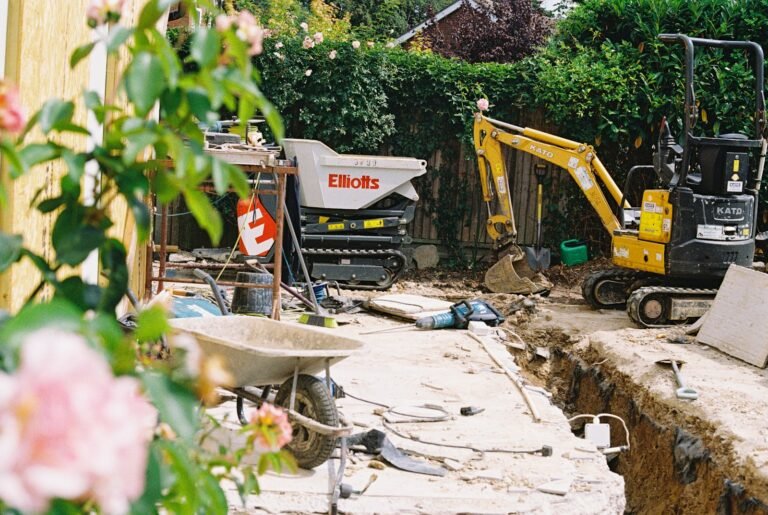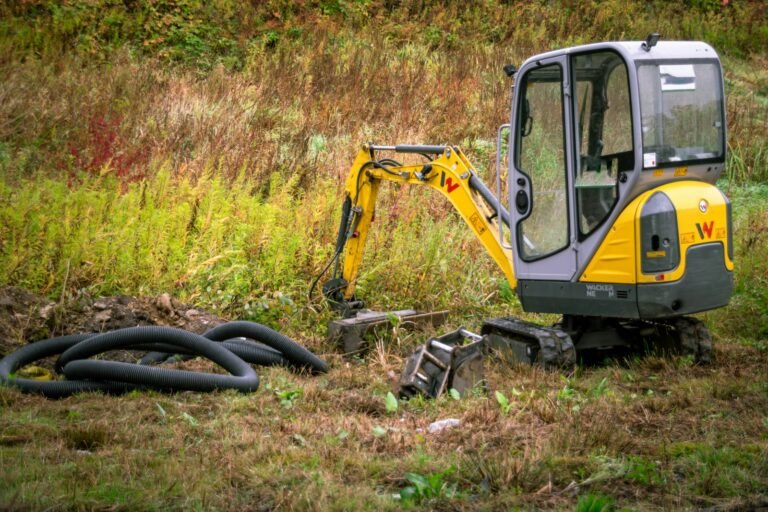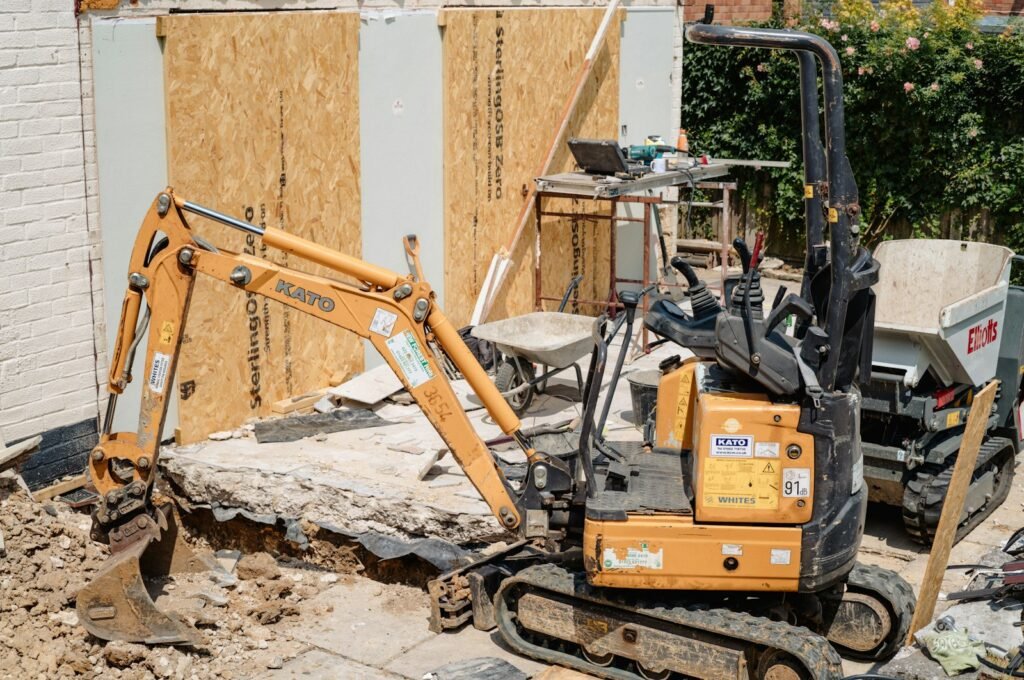
Micro digger hire makes sense when the job is too big for a spade but the access is too tight for anything bigger. Our micro machine is the Sunward SWE 08B, a 0.8 tonne excavator built for back gardens, narrow side passages and work inside buildings. This article explains where it shines, where it reaches its limits, and the small details that make a micro digger hire go smoothly, from protecting the lawn to getting spoil out of a terraced back garden.

In this guide
What a micro digger actually is
A micro digger is the smallest class of tracked excavator, generally around a tonne or under. The SWE 08B sits at 0.8 tonne and is available with a zero tail swing option, which means the back of the machine stays within the width of its tracks as it turns. That matters when you are working with a fence on one side and a house wall on the other.
Because it is small and light, it will often travel through gaps that rule out even a 1.5 tonne machine, and it puts far less weight on paving and lawns. You can read more about the machine in our Sunward SWE 08B guide. For the exact width, dig depth and reach of the configuration we send, ask us for the spec sheet before you book.
Jobs where micro digger hire is the right call
Back gardens with side access only
Terraced and semi-detached houses often have a side gate or passage as the only route into the garden. A micro digger can track through, saving days of barrowing. Typical jobs include levelling for a patio, digging out for a garden room base, removing old paving and digging a pond.
Footings for small structures
Garden walls, small sheds, porches and lean-to extensions need modest footings that a micro digger handles well. It digs neat, narrow trenches with less over-dig than a bigger machine, which means less concrete to fill.
Cable and pipe trenches
Running power to a garden office, laying a water pipe or a land drain across a lawn are natural micro digger jobs. Locate and mark existing services first using utility plans and a cable locator, and check LinesearchbeforeUdig for buried networks.
Inside buildings
Barn conversions, floor dig-outs, underpinning preparation and work in large outbuildings are all possible with a micro machine. The big consideration indoors is exhaust fumes. An engine running in an enclosed space can quickly build up dangerous gases, so you need good ventilation, and you should follow HSE guidance on working with engines indoors. Floor loadings and suspended floors also need checking before you drive any machine inside.
The limits of a 0.8 tonne excavator
A micro digger is not a shrunken version of a big one. It has real limits, and being honest about them saves wasted hire days:
| Situation | Micro digger (SWE 08B) | Better choice |
|---|---|---|
| Narrow side passage only | Ideal | None needed |
| Long drainage run on open ground | Slow | SWE 18UF or SWE 20F |
| Deep footings for a two-storey extension | May not reach required depth | SWE 18UF or SWE 25UF |
| Large tree stumps | Struggles | A heavier machine |
| Rock or heavy granite boulders | Not suitable | SWE 35UF or larger; ask us |
| Loading a dumper all day | Possible but slow | 1.8 tonne or above |
Stability is the other limit. A light machine is more easily tipped by working across a slope, lifting at full reach or digging too close to an edge. Keep loads close in, work up and down slopes, and never use the bucket to lift people.
Moving the spoil
A micro digger fills a barrow very quickly. Without a plan for the spoil, the digger ends up sitting idle while someone wheels the soil away. Good options include:
- A Hyundai 500kg tracked dumper, which is narrow and handles soft garden ground
- The Tracspider 1000kg electric carrier for quiet, low-impact moving over lawns
- The Tracspider Elektro Joe, zero emission and very quiet, also suited to indoor work
- Siting the skip as close to the dig as your access allows
Example: digging out a garden room base
A common micro digger hire is preparing the base for a timber garden room at the bottom of a terraced garden. A sensible sequence looks like this. Mark out the base with string lines and paint, adding a margin around the building. Strip the turf and topsoil first and stack it separately, as it is worth keeping for the garden.
Dig down to firm subsoil to the depth your base design calls for, keeping the floor of the dig level with a laser or straight edge and spirit level. Load spoil into the tracked dumper as you go rather than piling it beside the hole. Finally, lay and compact the sub-base in layers with a plate compactor before the concrete or ground screws go in.
Protecting gardens, paths and neighbours
- Lay boards or ground protection mats over lawns and soft areas on the route.
- Cover block paving or decking with boards so tracks do not scuff it.
- Take down the side gate if needed rather than squeezing past the posts.
- Tell the neighbours when you are starting and how long it will last.
- Keep a stiff brush and hose handy to clean the passage at the end of each day.
Tools that pair well with a micro digger
Small jobs need small supporting kit. A Weber MT CF 1-III Hd light plate or the SRV 300-II SF slim-foot rammer compacts trench backfill, and the Altrad Belle Mini Mix 150 mixer is a good size for concrete footings for garden walls and posts. We are adding more hand tools such as breakers and disc cutters, so ask us what hand tools are available when you book. The rest of our groundworks range is on the construction equipment page.
Micro digger hire, hand digging or a 1.8 tonne machine?
Most people looking at micro digger hire are weighing it against two alternatives: a few days with a spade and wheelbarrow, or a bigger mini digger. The honest answer depends on the volume of soil, the access and the ground.
| Factor | Hand digging | Micro digger (0.8t) | 1.8 tonne digger |
|---|---|---|---|
| Access needed | Any | Narrow side passage or gate | Wider gate or driveway |
| Volume of soil | Very small | Small to moderate | Moderate to large |
| Stony or hard ground | Slow and tiring | Manageable, slower in rock | Better breakout force |
| Precision near services and roots | Best | Good with a careful operator | Good, but bigger bucket |
| Damage to lawn and paths | Minimal | Light with boards | More, needs protection |
| Operator skill | None | Training needed | Training needed |
A useful rule of thumb: if you would need more than a day or two of hard digging, or the spoil fills more than a small skip, a micro digger usually pays for itself in time and backache. If your access allows a 1.8 tonne machine and the job is a long trench or a big dig, the larger digger will finish faster. Hand digging still has a place for the last few centimetres around a marked service or tree roots you want to keep.
Getting a micro digger into the garden: step by step
The moment of truth on most micro digger jobs is the trip from the road to the back garden. A little preparation makes it uneventful.
- Measure the route. Measure the narrowest point between walls, posts, bins and downpipes, and check it against the spec sheet for the machine, not a figure you have seen elsewhere. Remember handrails, utility boxes and gas pipes that stick out from walls.
- Clear the way. Move bins, pots, bikes and anything else from the passage. Take the gate off its hinges if it narrows the gap.
- Protect surfaces. Lay boards or ground protection mats over lawns, paving and any manhole covers on the route. Thin covers can break under a tracked machine.
- Check levels and steps. Flights of steps and steep ramps are the most common stoppers. Ask us before assuming a machine can manage them. Often there is a better route through a fence panel or a neighbour’s side.
- Plan the unloading spot. The lorry needs somewhere safe to unload, ideally off the pavement. If it has to come off on the road, choose a quiet time and have someone keep pedestrians clear.
- Drive slowly with the arm tucked in and someone guiding from the front. Most scrapes happen in the last metre of a narrow passage.
If the best route runs through a neighbour’s garden or a shared passage, get their agreement before the delivery day, explain how long the machine will be crossing and how you will protect their surfaces, and photograph the route before and after. If you need to remove a fence panel, agree who will put it back. It costs nothing to arrange and avoids the kind of dispute that outlasts the job by years.
Towing a micro digger yourself
A 0.8 tonne excavator is one of the few machines many customers can move themselves, which saves a delivery charge and lets you work to your own timetable. We hire compact plant trailers, including the Brian James 9ft plant trailer (2,700kg GVW, 9ft by 4ft 4in bed) and the Indespension 10ft plant trailer with loading ramps. The options are on our trailers page.
Before you hitch up, three limits all have to be met at once:
- The trailer’s gross weight. The machine, its buckets and the trailer’s own weight together must not exceed the trailer’s GVW.
- Your vehicle’s towing limit. This is in the handbook and usually on the vehicle’s plate.
- Your licence. GOV.UK says drivers who got their licence from 1 January 1997 can tow a trailer up to 3,500kg MAM, and those who got it before then can usually drive a vehicle and trailer with a combined MAM of up to 8,250kg. Check your own entitlement and the current guidance.
When loading, line the machine up squarely with the ramps and drive on slowly with the bucket low. Position it so the weight sits slightly ahead of the trailer axle, lower the bucket onto the bed, and chain or strap it down at the lashing points shown in the manual. Check the straps again after the first few miles. If any of this is unfamiliar, let us deliver it.
What affects the cost of a micro digger job
We do not publish prices, so WhatsApp us for a current quote. The main factors are the hire period (weekly works out better per day than daily), delivery distance from our depot near Okehampton or whether you tow it yourself, and the extras you add, such as a tracked dumper, plate compactor or mixer.
Hire charges run continuously from delivery to off-hire, including weekends, so plan Saturday work in advance. Fuel, cleaning and damage beyond fair wear and tear can all add to the bill, and cover for hired plant is not included. The biggest hidden cost is usually idle time: a digger waiting for a skip, for materials or for someone to move spoil.
Planning a two-day garden hire
Minimum hire is usually one day, and many garden jobs fit into two. A simple plan keeps the machine working rather than waiting.
The week before
Order the skip or arrange a grab lorry, and get any permit you need if it will sit on the road. Mark out the job with paint and string lines. Check for buried services using utility plans and a CAT, and tell the neighbours your dates.
Day one
Take delivery, walk the machine round with the driver and get it into the garden. Strip turf and topsoil first and stack them separately. Start the main dig, loading spoil straight into a tracked dumper or the Tracspider carrier rather than piling it up beside the hole.
Day two
Finish the dig and trim the bottom and sides to the right level. Backfill around any pipes or cables in layers, compacting as you go with a light plate or slim-foot rammer. Spread the stored topsoil where it is needed. If the dig is taking longer than planned, message us before the end of the day to extend rather than rushing the last part of the job.
Off-hire
Clean the machine, brush the passage and track it back to the collection point on firm ground. Then off-hire with us and get an off-hire reference, because hire charges run until that reference is confirmed. Telling the driver does not count.
Safety for occasional micro digger operators
Micro diggers are popular with homeowners and small builders who do not use a digger every week, so a few basics are worth repeating. Hire is self-drive, so the responsibility sits with you. This is general information; check the current guidance.
- Get trained. You should be trained and competent before operating any excavator. If you are not, consider hiring a trained operator.
- Services first. Garden digs regularly hit water pipes, electric cables to garden buildings and old drains. Locate them first and hand dig near them.
- Do not trust the trench sides. HSE’s excavation guidance says support should be decided before digging, and spoil and plant kept back from the edge. Do not get into a deep, unsupported trench.
- Watch the balance. Light machines tip more easily. Keep loads close in, travel with the bucket low and avoid working across slopes.
- Keep the area clear. Children, pets and helpers should stay well outside the reach of the arm. A barrier tape around the working area helps.
- Mind the fumes. Never run a diesel engine indoors or in a pit without proper ventilation. HSE warns against running petrol or diesel engines in excavations unless fumes are ducted away or forced ventilation is provided.
- Secure it overnight. Lower the bucket, remove the key and keep it safe.
Frequently asked questions
Can a micro digger fit through a house?
Sometimes, through wide double doors or a garage, but it is rarely a good idea because of floor damage and fumes. A side passage or removed fence panel is usually better.
Can I tow a 0.8 tonne digger myself?
Often, on a suitable plant trailer such as our Brian James 9ft, as long as your vehicle, licence and the trailer’s limits all allow for the combined weight.
How long does micro digger hire usually run?
Garden jobs are often one to three days, with a week common for small extensions. Minimum hire is usually one day.
Do I need experience to use a micro digger?
Hire is self-drive, and you should be trained and competent before operating it. If you are unsure, consider bringing in a trained operator.
Is micro digger hire worth it for a small pond?
Usually, yes, if the pond is more than a day or two of hand digging and you have the access. Plan where the spoil will go before the machine arrives, as that is often the slowest part.
Will a micro digger damage my lawn?
Any tracked machine marks grass, but a 0.8 tonne digger does much less harm than a bigger one. Use boards or mats on the route, turn gently and avoid working when the lawn is waterlogged.
Can I use a micro digger to break up concrete?
It can lift thin slabs once an edge is opened, but heavy concrete needs a breaker. Ask us what is available or we will point you in the right direction.
Book micro digger hire
WhatsApp or call 07841 036064 (Mon to Fri, 7:30am to 5:30pm) with a photo of the access, the narrowest width, your postcode and dates. For anything more involved, use our contact page.