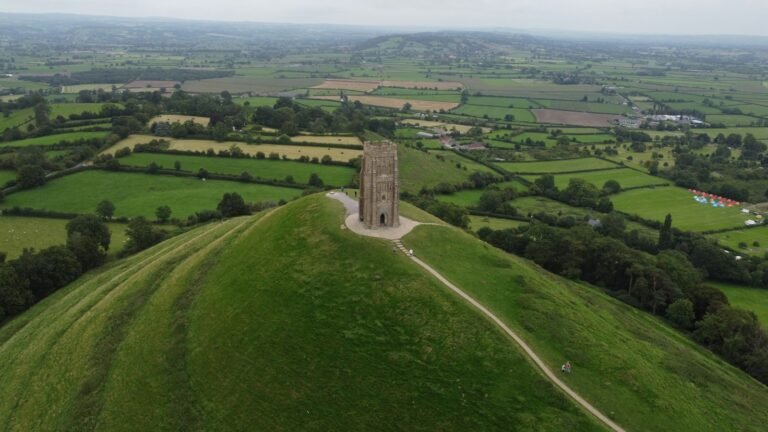
Our depot is in Okehampton, right on the northern edge of the moor, so plant hire Dartmoor jobs are part of everyday life for us. Working on Dartmoor or Exmoor is different from working in town, though. National Park planning, common land, cattle grids, narrow walled lanes, peat, granite and fast-changing weather all affect which machine you hire and how you get it on site. This guide covers the rules to be aware of, the practical access problems, and the low ground pressure kit that does the least damage.

In this guide
Plant hire Dartmoor: start with permissions
Before any machine is booked, make sure the work itself is allowed. This is general information rather than legal advice, so check the current guidance for your site.
National Park planning
Within the National Parks, the National Park Authority is the local planning authority. That means the Dartmoor National Park Authority or the Exmoor National Park Authority deals with planning applications, not the district council. If your project needs permission, get it before the digger arrives.
Common land
Much of open Dartmoor is registered common land. Works that restrict access over common land, such as fencing, buildings, trenches, ditches or new hard surfaces, generally need consent under section 38 of the Commons Act 2006, on top of any planning permission and the landowner’s agreement.
Wildlife and heritage designations
Large areas of both moors are Sites of Special Scientific Interest, where owners and occupiers need Natural England’s consent for operations that could damage the special features. Dartmoor is also covered in prehistoric remains such as hut circles and stone rows, many of which are scheduled monuments needing consent from Historic England before any work that could affect them.
Getting plant onto the moor
Even with permissions in place, access is often the hardest part of a moorland job.
- Narrow lanes and hedge banks. Many lanes are single track between high Devon banks or granite walls, with few passing places. Tell us the route you would use and the width of the narrowest point.
- Cattle grids. Low loaders and plant trailers can ground on the humps either side of a grid, and some grids have narrow approaches. Mention any grids on your route.
- Livestock on the road. Ponies, sheep and cattle graze unfenced moorland and often stand in the road. Allow time and keep speeds right down.
- Steep hills. On Exmoor, the A39 climbs at Porlock and Countisbury are notoriously steep. On Dartmoor, routes like the B3212 and B3357 cross open moor with sharp bends and dips.
- Weather. Fog can come down in minutes, and the high moor gets far more rain than the towns around it. Build slack into your programme.
Leaving the road is another matter. You should only take machines onto open moorland with the landowner’s agreement and any consents required, and keep to agreed routes.
Peat, granite and moorland ground
Dartmoor is a granite upland. Expect boulders, solid rock at varying depths and weathered granite, known as growan, which digs like coarse gravel. On the high ground, blanket bog and peat can be very deep and saturated. Exmoor is mostly slates and sandstones rather than granite, with peat on the high moor around the Chains and shallow stony soils elsewhere.
| Ground | Problem | How to handle it |
|---|---|---|
| Peat and bog | Very low bearing capacity, easily scarred | Avoid where possible; use the lightest tracked kit and ground mats |
| Granite and boulders | Slow digging, damage to buckets | Heavier excavator; ask us about rock options |
| Growan | Collapses in trenches when wet | Plan trench support; batter sides |
| Slate and shale (Exmoor) | Hard breakout, slippery when wet | Sharp teeth, steady 2.5 to 3.5 tonne machine |
Low ground pressure kit for moorland work
The less weight you put on each square centimetre of ground, the less damage you leave behind. These machines work well on the moors:
Tracspider Elektro Joe
The Tracspider Elektro Joe electric tracked transporter has rubber tracks, a tipping body, zero emissions and very little noise. It moves stone, tools and materials across soft or sensitive ground where a wheeled dumper would leave ruts. It is ideal for footpath repair, garden work at moorland properties and anywhere near livestock.
Tracked dumpers and carriers
The Tracspider 1000kg electric bed carrier, the Mechbadger tracked dumper and the Hyundai 500kg tracked dumper all spread their load over tracks and fit narrow paths and gateways.
Compact zero-tail excavators
The Sunward SWE 18UF and SWE 25UF are light enough to move without heavy transport on many jobs, and their zero-tail design means less chance of the counterweight hitting a granite wall. Our full construction equipment range has the rest of the line-up.
Farm and estate work on the moors
Hill farms around Widecombe, Postbridge, Exford and Simonsbath tend to hire AODES quads and UTVs for stock work, the Venieri 1.63D pivot loader for older, tight yards and the Zenessis 25kVA genset or a PTO genset for buildings far from mains power. Larger tractors and implements are on our agricultural equipment page, but measure moorland gateways carefully before booking anything wide.
Leaving the ground as you found it
On the moors, how you finish a job matters as much as how you start it. Strip and set aside turf and topsoil before digging so they can go back on top. Keep tracking to the same route rather than spreading ruts across a wide area. Backfill and reinstate trenches as you go instead of leaving long open runs, which also keeps livestock safe. Take all spoil, offcuts and packaging away with you, and leave gates as you found them.
Moorland job checklist
- Planning permission from the National Park Authority, if needed
- Landowner and commoners’ agreement, plus section 38 consent on common land
- SSSI and scheduled monument checks
- Route survey: lane widths, cattle grids, bridges and hills
- Ground mats or protection for soft areas
- Trained operators and insurance for hired plant, which is not included in the hire
Driving plant off the road: the legal position
Once a machine is unloaded, where it travels matters as much as what it digs. Under section 34 of the Road Traffic Act 1988, driving a mechanically propelled vehicle onto common land, moorland or other land that is not a road, or along a footpath, bridleway or restricted byway, without lawful authority is an offence. On private land, the landowner’s permission normally provides that authority. On common land, you will usually also need the agreements and consents described above.
In practice, that means:
- Agree the route in writing. Before the machine arrives, agree with the landowner exactly where it will travel and where it will be parked.
- Do not use rights of way as haul roads without authority. If the job needs a path closed or diverted temporarily, the highway authority deals with that, and it takes time.
- Mark the route on the ground. Stakes or tape stop the operator wandering across untouched ground or close to archaeology.
- Brief everyone. Operators, labourers and delivery drivers should all know the agreed route and the no-go areas.
This is general information, not legal advice. If you are unsure whether your access is lawful, ask the landowner or the National Park Authority before the machine leaves our yard.
Seasons on the moor
The moors have their own calendar, and fitting a plant hire Dartmoor job around it can save days of standing time.
Winter
The high moor is wet for months on end, fog rolls in quickly, and snow and ice can close moorland roads at short notice. Peat and boggy ground are at their weakest. Winter is the season for small, well-planned jobs close to firm tracks, not big earthworks on open ground. If the weather makes a delivery unsafe, we will talk to you about moving it rather than risk a lorry on an icy hill.
Spring
Ground starts to firm up, but this is also the bird nesting season, which generally runs from 1 March to 31 August. Open moorland supports ground-nesting birds, so clearing scrub, gorse or vegetation, or tracking across rough grass, needs particular care, and on designated sites may need specific consent. Lambing also means more stock moving about and farmers who are understandably busy. If you are not sure whether your site carries a designation, ask the National Park Authority. It is far better to find out before the machine is booked than after it has started work.
Summer
Usually the firmest ground and the longest days, which makes it the best window for trenching and track work. It is also the busiest time for visitors, so moorland roads around Postbridge, Widecombe, Dunster and Porlock can be slow. Early starts help.
Autumn
A good working window until the rain returns. Plan to finish reinstatement before the ground softens, as turf laid in late autumn on a wet slope can struggle to take.
Worked example: a water pipe to a moorland farmhouse
This is an illustrative scenario, not a real customer. A farmhouse on the edge of open moor needs a new water supply pipe, about 150 metres, from a spring chamber up the slope to the house. The route crosses an in-bye field, then a short stretch beside a granite wall.
- Check permissions. The land is in-bye, not common, but the owner checks with the National Park Authority whether anything in the plan needs consent, and confirms that no scheduled monument or SSSI is affected.
- Choose light kit. A Sunward SWE 18UF zero-tail excavator works along the wall without the counterweight hitting the stone, and the Tracspider Elektro Joe carries bedding sand and pipe along the route with little damage to the grass.
- Strip turf first. The operator lifts and stacks turf along the trench line before digging, keeping topsoil and subsoil separate.
- Deal with granite. Boulders are lifted out and set aside rather than dragged. If solid rock appears, the route is adjusted rather than forced.
- Lay and backfill in short lengths. Open trench is kept short so stock cannot fall in, and backfill is compacted around the pipe with a Weber MT SRV 300-II SF slim-foot rammer.
- Reinstate. Subsoil, then topsoil, then turf go back in order, and the machines leave by the same route they came in.
A job like this suits a week’s hire with a little slack for weather. Because our depot is on the edge of Dartmoor, delivery and collection are relatively short trips, which makes adjusting dates easier than on a distant site.
Safety on remote plant hire Dartmoor sites
A remote moorland site turns small problems into big ones, because help is further away and phones may not work. Hire is self-drive unless agreed otherwise, so plan for these before the first day.
- Communication. Mobile signal is patchy or absent across large parts of both moors. Agree check-in times, tell someone where you are working and when you expect to finish, and avoid lone working with machines where you can.
- Slopes. Overturning is the biggest risk on steep moorland ground. Travel straight up and down slopes rather than across them, keep the bucket low when tracking, and always wear the seatbelt.
- Hidden ground. Bracken, heather and tussocks hide boulders, holes and soft spots. Walk the route before driving it.
- Water. Moorland streams feed rivers and reservoirs. Refuel well away from watercourses, use a drip tray and keep a spill kit on site.
- Excavations. Growan and peat trenches can collapse without warning. Decide on support before you dig and inspect it at the start of each shift, as HSE’s excavation guidance explains.
- People and animals. Walkers, riders and grazing stock can appear at any time. Fence or tape off the working area and never leave a trench open and unguarded overnight.
If a machine breaks down on a remote site, stop using it and call or WhatsApp us with your location and a description of the fault. We will assess it and arrange a repair or replacement as quickly as the access allows.
Planning a moorland job: timeline and what to send us
Moorland work rewards early planning. A simple timeline looks like this:
| When | Task |
|---|---|
| Months ahead | Planning, common land consent, SSSI and scheduled monument checks where needed |
| Two to four weeks ahead | Agree the route with the landowner and commoners; check lane widths, grids and bridges |
| One week ahead | Confirm machines, operators, ground mats and insurance for hired plant |
| 48 hours ahead | Check the forecast, confirm the delivery slot and who will meet the driver |
| On completion | Reinstate the ground, then off-hire with us and get an off-hire reference |
When you contact us, these details let us plan the right vehicle and machine first time:
- A grid reference, what3words or map pin for the drop-off point, not just the postcode, which on the moor can cover a large area
- Photos of the lane, the gateway and the ground where the machine will be unloaded
- The width of the narrowest gate or gap on the route, and any cattle grids, weak bridges or steep hills
- What the job involves and how far the machine needs to travel off the road
- Your dates, and how flexible they are if the weather turns
For Exmoor sites, the route from our depot usually joins the A361 North Devon Link Road, and the last few miles on narrow moorland lanes are often the slowest part of the journey. Give us a little more notice than for a Dartmoor job.
Exmoor jobs also have a different character. Much of the park is enclosed farmland with steep combes and high beech hedges rather than open granite moor, and the coastal strip between Porlock and Lynmouth combines steep gradients with salt air. Measure hedged gateways carefully, check the approach for steep hairpins, and rinse machines down after any work near the coast. As on Dartmoor, the National Park Authority is the planning authority, so confirm what your project needs before booking plant.
Local guides for the area: Plant Hire Okehampton: Equipment From Our Home Depot · Plant Hire Tavistock and West Dartmoor · Plant Hire Launceston: Equipment on the Devon–Cornwall Border
Frequently asked questions
Can you deliver plant hire Dartmoor jobs from Okehampton the same day?
Often, yes. We are on the edge of the moor, so same-day delivery is frequently possible. Remote sites with difficult access need more planning.
Can a low loader get over a cattle grid?
Usually, but it depends on the grid and its approaches. Tell us about any grids and we will plan the right vehicle.
What machine does the least damage on peat?
A light tracked carrier such as the Tracspider Elektro Joe, used with ground mats and kept to agreed routes.
Do you cover Exmoor too?
Yes. Exmoor straddles Devon and Somerset, both within our area. It is a longer run than Dartmoor, so give us a little more notice.
Do I need permission to drive a dumper across open moor?
Yes, you need lawful authority. Driving a vehicle onto common land or moorland without it is an offence under section 34 of the Road Traffic Act 1988. Get the landowner’s agreement and any consents needed first.
What happens if the weather makes delivery unsafe?
We will contact you to agree a new slot. Moorland roads can be closed by snow, ice or flooding, so build some flexibility into your dates for winter jobs.
Is plant hire Dartmoor work possible near archaeology?
Often, with care. Scheduled monuments need consent from Historic England before any work that could affect them. Mark no-go areas on the ground and use light, tracked kit kept to agreed routes.
Plan your moorland hire with us
WhatsApp or call 07841 036064 (Mon to Fri, 7:30am to 5:30pm) with the machine, site postcode or grid reference, dates and a description of the access. For larger projects, use our contact page.