
Plant hire Cornwall jobs start, for us, at the Tamar. Our depot in Okehampton is about 20 miles from the Cornish border on the A30, which means we can offer same-day delivery across most of Cornwall for excavators, dumpers, compaction, tractors and trailers. This county-wide guide covers how delivery works down the spine of the Duchy, the ground you are likely to meet from Bude to Penzance, what the salt air does to machines, and which kit to book early in the season.
In this guide
Plant hire Cornwall delivery: working down the A30
The A30 is the backbone of every Cornish delivery we make. Rough road distances from Okehampton give you a feel for timings:
| Area | Approx. distance | Typical route |
|---|---|---|
| Launceston and the Tamar valley | About 20 miles | A30 west |
| Bude and the north coast | About 30 miles | A3072 / A39 |
| Bodmin and Wadebridge | About 45 to 50 miles | A30 over Bodmin Moor |
| Newquay, St Austell, Truro | About 60 to 70 miles | A30 then A39 / A390 |
| Camborne, Redruth, Hayle | About 75 to 85 miles | A30 west |
| Penzance and West Penwith | About 95 miles | A30 to the end |
Same-day delivery is often possible for most of the county if you get in touch early in the day. The far west and the Lizard take longer, and summer holiday traffic on the A30 can add a lot of time on Fridays and Saturdays, so we plan those runs carefully. For south-east Cornwall around Saltash, Liskeard and Looe, the route depends on where the site is, so just send the postcode.
Collections follow the same logic. Let us know as soon as you know your finish date, and have the machine cleaned, parked on firm ground and accessible for the lorry. On a long run to the far west, a missed collection because the machine is boxed in by deliveries or parked on soft ground costs everyone time, so a quick photo of where it is waiting helps our driver.
Cornish ground: granite, killas and sand
Cornwall’s geology changes quickly, and it makes a real difference to which machine you need and how long the dig takes.
Granite areas
Bodmin Moor, the St Austell area, Carnmenellis around Redruth and West Penwith all sit on granite. You may find weathered granite, known locally as growan, that digs like coarse sand, then hit solid rock a short way down. Big boulders are common. Heavier machines such as the Sunward SWE 35UF or SWE 60UF will move boulders that a small digger cannot. We do not promise breaker attachments, so if you expect solid rock, ask us and we will tell you what is available or point you in the right direction.
Killas
Most of the rest of the county is killas, the local name for slates and shales. It breaks out in plates, can be hard going when fresh, and gets slippery when wet. Teeth wear quickly. A 2.5 to 3.5 tonne excavator suits most domestic jobs in killas.
Dune sand
Around Perranporth, Hayle, Bude and other dune coasts, sand gives easy digging but trenches collapse readily and wheeled machines bog down. Tracked dumpers, the Tracspider 1000kg carrier and low ground pressure kit work far better here.
China clay country
North of St Austell, much of the granite has rotted to china clay, and the landscape is shaped by pits and old tips. Kaolinised ground can be soft and sticky when wet, and made ground on former workings can contain anything from sand to large blocks. Expect variable digging, keep machines away from the edges of pits and spoil heaps, and allow time for cleaning white clay out of tracks before the machine comes back.
Old mine workings
Historic mining has left shafts and voids across large parts of the county. If you uncover an unexpected hole, timbers or a sudden soft spot, stop work, keep people and plant back and get professional advice before carrying on. Check for buried services as well, using LinesearchbeforeUdig and a CAT scan before digging.
Salt, sand and coastal sites
Many Cornish jobs are within sight of the sea, and salt spray gets into everything. A few habits keep machines working and keep you on the right side of the return condition terms:
- Rinse tracks, rams and undercarriage with fresh water at the end of each week on coastal sites.
- Keep sand out of the cab, engine bay and pins. It acts like grinding paste.
- Park away from the exposed edge of a cliff-top plot overnight and drop the bucket to the ground.
- Tell us if the machine has worked on a beach or in salt water so we can check it on return.
A Brendon 35KPE mobile power washer is worth adding to a longer coastal hire for exactly this reason.
Seasonal timing: when to book ahead
Cornwall’s building year has a definite rhythm. Holiday lets, campsites and hospitality businesses tend to want groundworks, drainage and landscaping done in late winter and spring, before Easter visitors arrive. Farm work peaks at different points: hedging, topping and reseeding around the grass seasons, and drainage and tracks when the ground allows.
That means these items are worth booking early from February to May:
- Mini excavators in the 1.8 to 3.5 tonne range
- Tracked dumpers and the Tracspider carriers
- Weber MT plate compactors and the VPR 450 paving roller for patios and car parks
- Captain compact tractors and turf kit for campsite and garden work
Over the summer, some sites restrict noisy work, so quiet electric kit such as the Tracspider Elektro Joe or HG 1000 electric dumper can make a busy holiday park job possible. Our full construction equipment range lists everything available.
Plant hire Cornwall for farms and estates
Cornish farms often have small, steep fields, stone-faced hedges and narrow gateways. Measure gateways before booking the John Deere 6155R with a wide implement, and consider the Venieri 1.63D pivot loader for tight older yards. For stony fields, the Valentini 2.3 Leon PTO stone crusher is popular, and the Nardi FAST 3m ripper helps where ground has been compacted. AODES quads and UTVs suit checking stock across rough grazing. The agricultural equipment page has the full list.
Cornish hedges, lanes and gateways
The traditional Cornish hedge is a stone-faced earth bank, often topped with shrubs and trees, and it lines most of the lanes in the county. It is beautiful, and it is also the reason so many deliveries need a little planning.
- Lane width. Many lanes are barely wider than a car between hedges, with passing places far apart. A low loader can usually manage them, but it cannot reverse half a mile to let a tractor through. Tell us the route you would recommend.
- Gateways. Older field gateways are often narrow and set at an angle to the lane. Measure the opening and note whether the approach is steep or soft.
- Overhanging branches. Trees growing out of hedges can catch the top of a telehandler or a tractor cab. Mention anything low on the approach.
- Widening a gateway. It is tempting to take a bucket to the hedge, but many Cornish hedges count as countryside hedgerows. GOV.UK guidance on countryside hedgerows explains that removing a protected hedgerow needs written notice to the local planning authority first, and that work which harms nesting birds should be avoided, generally between 1 March and 31 August.
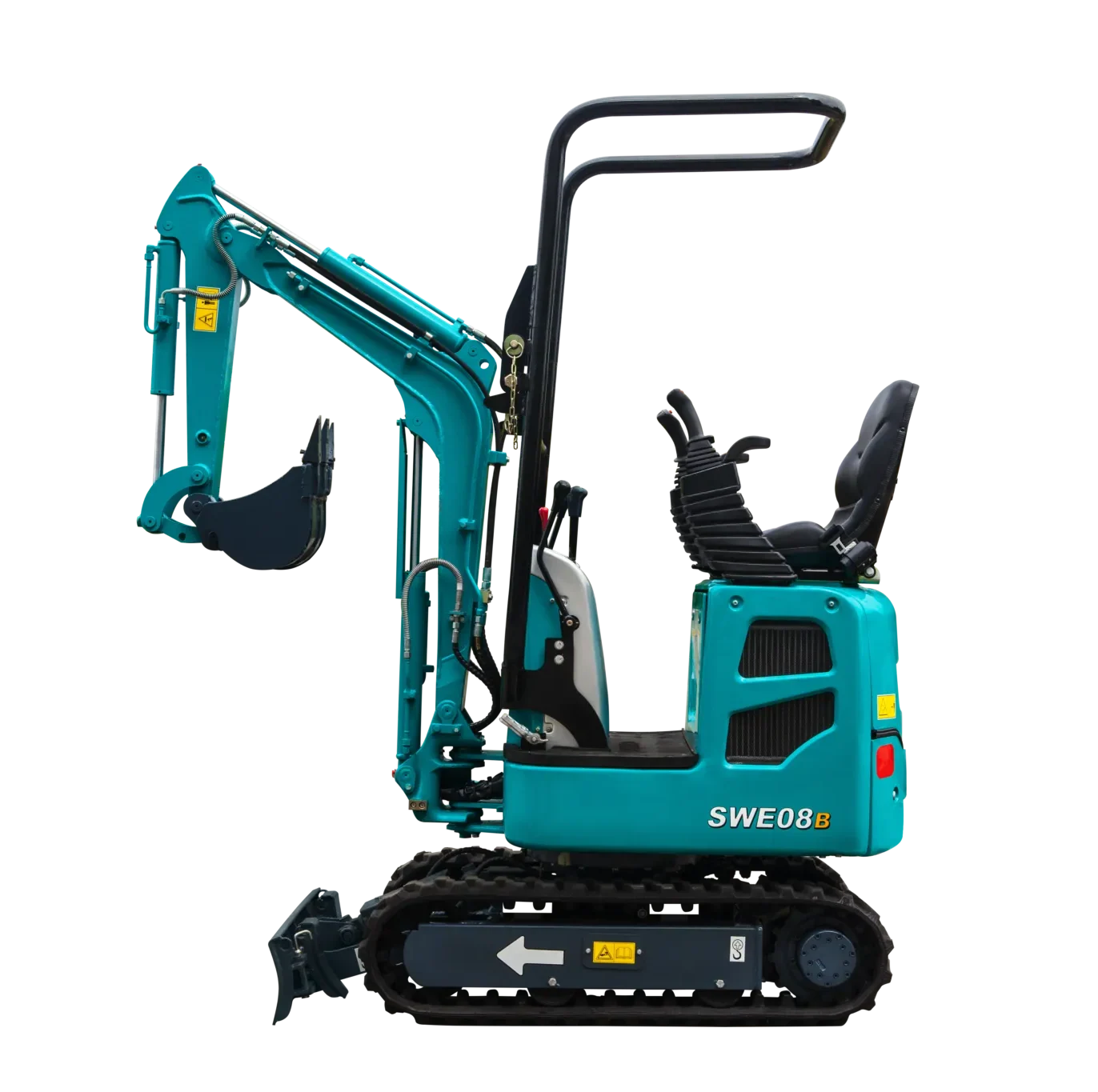
If access is genuinely tight, the smaller machines come into their own. A Sunward SWE 18UF on a compact plant trailer, a Hyundai 500kg tracked dumper or the Tracspider Elektro Joe will reach places a big machine cannot.
Before you dig in mining country
Old workings are the one Cornish hazard that is easy to forget until it is too late. Large parts of the county, especially around Camborne, Redruth, St Day, St Agnes, the St Just area and the Tamar valley, were mined for centuries, and not every shaft is recorded or capped. This is general information, so take professional advice on any specific site.
- Look at what you already have. Property purchases in Cornwall commonly include a mining search. If there is one for your site, read it before planning any groundworks.
- Ask your engineer or building control. For new foundations in a mining area, they may want a site investigation before you dig.
- Read the ground. Depressions in a field, rings of stone, old waste tips and unusual changes in vegetation can all point to a shaft.
- Keep plant off suspect areas. Do not track a machine across a suspected shaft or a sudden soft patch. The weight of an excavator is exactly what can trigger a collapse.
- Stop if something appears. If you uncover timbers, a void or brickwork lining a hole, move people and plant back, fence it off and get expert advice before going any further.
Worked examples across the Duchy
These are illustrative scenarios to show how ground and access shape a plant hire Cornwall order. They are not real customers.
Drainage for a holiday let near the north coast dunes
A cottage on sandy ground needs a new soakaway and a drainage run before the season. Sand digs fast but trenches collapse readily, so the job needs trench support on site from the first bucket. A 1.8 tonne zero-tail excavator handles the dig, a tracked dumper copes with soft sand where a wheeled one would bog down, and a Weber MT CR 2 reversible plate compacts the backfill in layers. Booking in February or early March keeps it clear of Easter visitors.
A farm track on killas near Launceston
A stock farm wants to rebuild a muddy track to a far field. Killas breaks out in plates and wears teeth quickly, so a 3.5 or 6 tonne machine keeps progress steady. If there is old concrete or stone on the farm, a Dragon tracked crusher can turn it into hardcore, after checking the waste exemption position with the council. A Weber MT CR 7 compacts the finished stone, and the John Deere 6155R with the Bailey low loader moves kit around the holding. Launceston is about 20 miles from our depot, so this is an easy same-day delivery.
A granite garden near Penzance
A homeowner wants to level a sloping garden for a patio. Growan near the surface digs easily, but boulders and solid granite lie beneath. A heavier machine helps move large stones, and the spoil plan matters because skips in narrow town streets need a permit from the highway authority. Penzance is about 95 miles away, so we plan this run in advance and avoid summer Saturdays.
What affects the cost of plant hire Cornwall jobs
We do not quote prices online, because the right figure depends on the job. WhatsApp us for a current quote. These are the main factors:
| Factor | Why it matters in Cornwall |
|---|---|
| Distance from Okehampton | Transport is charged by distance. Launceston and Bude cost less to reach than West Penwith or the Lizard. |
| Number of machines | Several items on one lorry spread the transport cost. |
| Hire period | Weekly and monthly rates are better value per day than daily hire. |
| Timing | Weekend or out-of-hours deliveries may carry a surcharge, confirmed before you book. |
| Return condition | Sand, salt and mud left on a machine can mean cleaning charges. |
| Insurance | Cover for hired plant is not included in the hire. |
Contractors working across several Cornish sites who keep changing machines may find Flex Hire simpler. It is one flat monthly fee for one machine at a time from a tier, with swaps, servicing and collection and redelivery included. Tier 1 compact kit and everyday tools is £795 +VAT and delivery a month, Tier 2 adds crushers and excavators at £895 a month, Tier 3 adds large excavators and forklifts at £995 a month, and Tier 4 covers everything including 9 tonne excavators and tractors at £1,495.
A safety checklist for Cornish sites
Hire is self-drive unless we agree otherwise, so the site rules are yours to set. This is general information; check the current guidance for your work.
- Trained operators. Everyone using a machine should be trained and competent on it. Commercial sites usually ask for a CPCS or NPORS card.
- Excavation support. HSE’s excavation guidance says to decide on support before digging, have it on site, and have a competent person inspect the excavation at the start of each shift. Sand and wet growan need particular care.
- Edges. Keep plant and spoil back from trench edges, cliff tops, quarry faces and old mine ground.
- Overhead lines. Rural Cornwall has a lot of low overhead cables crossing fields and yards. Plan where the arm of an excavator or telehandler will go before you start, and contact the line owner if you need to work near them.
- Buried services. Check utility plans and LinesearchbeforeUdig, and scan with a CAT before breaking ground.
- Livestock and the public. Fence off the working area on farms, campsites and coastal paths, and never leave an open trench unguarded overnight.
- Weather. Coastal wind and Atlantic rain arrive quickly. Lower the bucket, stop lifting in strong winds and park on firm ground at the end of the day.
Delivery and collection day in Cornwall
When the lorry arrives, our driver needs firm, level ground to unload, enough room to manoeuvre and no overhead wires above the unloading spot. Have someone on site to sign the delivery note and check the machine over. Look at buckets, attachments, tracks and any existing marks, and make sure you know how to operate it before the driver leaves.
Machines arrive with a full tank and should go back full. Our diesel plant runs on white diesel only. At the end of the hire, off-hire with us directly and get an off-hire reference. Hire charges run until that reference is confirmed, and telling a driver does not count. On a long run to the far west, a confirmed collection time and a machine that is clean, parked on firm ground and not boxed in make the difference between one trip and two.
Local guides for the area: Plant Hire Launceston: Equipment on the Devon–Cornwall Border · Mini Digger Hire Bude and North Cornwall · Plant Hire Truro: Diggers, Forklifts and Site Kit · Plant Hire Bodmin: Machines for Moor, Farm and Forest · Mini Digger Hire Newquay: Coastal and Holiday-Let Jobs · Plant Hire St Austell: Kit for the Clay Country and Coast
Frequently asked questions
Do you deliver to the Isles of Scilly?
Can I collect from Okehampton to save on transport?
Yes, you can collect from our depot if you have a suitable vehicle, trailer and licence. We can also hire you a plant trailer.
Is same-day delivery available to Penzance?
Often, if you get in touch early. The far west takes longer to reach, especially in summer, so the earlier you message the better.
What should I hire for a cliff-top garden in Cornwall?
Usually a zero-tail mini excavator and a tracked dumper, with careful planning of how close you work to any edge. Send photos and we will advise.
Do I need permission to widen a field gateway in a Cornish hedge?
Possibly. Many Cornish hedges count as countryside hedgerows, and removing a protected length needs notice to the local planning authority first. Check with Cornwall Council before you dig, and avoid the bird nesting season.
Can I use plant hire Cornwall machines on a beach?
Only with the landowner’s permission and any consents the site needs. Salt water and sand are hard on machines, so tell us in advance and rinse everything thoroughly before it comes back.
Is electric kit available for quiet sites in Cornwall?
Yes. The Tracspider Elektro Joe, the Tracspider 1000kg carrier and the HG 1000 electric dumper are popular for holiday parks and residential sites where noise and fumes matter.
Arrange plant hire in Cornwall
WhatsApp or call 07841 036064 (Mon to Fri, 7:30am to 5:30pm) with the machine, Cornish postcode, dates and access details. For several machines or an account, use our contact page. Cover for hired plant is not included, and our partner insurance4plant can help with that.