

Somerset is really several counties in one: the flat, wet Levels and Moors, the limestone of the Mendips, the Quantocks and Blackdown Hills, the edge of Exmoor, and busy towns strung along the M5. For plant hire Somerset customers need kit matched to that ground, not just the nearest digger. 4Counties Hire delivers excavators, dumpers, compaction equipment, tractors and implements across the county from our depot near Okehampton, and this guide explains which machines suit which part of Somerset and how we plan the deliveries.
In this guide
How we cover Somerset from Okehampton
We reach Somerset by the A30 to Exeter and then the M5 north. Taunton is roughly 55 miles from our yard, Bridgwater a little further, and the Mendips and the north of the county are a longer run again. South Somerset towns such as Yeovil and Chard are usually reached along the A30 or A303.
Same-day delivery is mainly for Devon and Cornwall, so Somerset jobs work best with a day or two’s notice. Day 1 delivery is sometimes possible, and we group multiple items onto one run where we can. If you are running a site for months, our long-term rental avoids paying for repeated transport.
Plant hire Somerset: matching machines to the landscape
| Area | Typical ground | What tends to work |
|---|---|---|
| Somerset Levels and Moors | Peat and soft clay, high water table | Tracked, low ground pressure kit; lighter excavators; mats or stone for access |
| Mendip Hills | Limestone, thin soils, rock close to surface | Heavier excavators for breakout; ask about rock options |
| Quantocks and Brendon Hills | Sandstones and slates, steep lanes | Compact, zero-tail machines; tracked dumpers on slopes |
| Exmoor fringe | Shallow stony soils, moorland, steep access | Small tracked kit; plan delivery routes carefully |
| M5 corridor towns | Mixed clays and made ground | 1.8 to 6 tonne excavators, compaction, telehandler |
Working on the Levels: water, peat and consents
The Levels between Bridgwater, Glastonbury and Langport are some of the lowest-lying farmland in the country, drained by a network of rhynes and ditches. A few practical points:
- Ground pressure matters. Peat and soft clay will not carry a heavy wheeled machine for long. Tracked dumpers such as the Mechbadger or Hyundai 500kg, and the Tracspider 1000kg electric carrier, spread the load far better.
- Trenches fill with water. Plan for pumping before you dig. We do not list pumps, so ask us and we will tell you what is available or point you in the right direction.
- Edges are soft. Keep machines well back from rhyne banks and excavation edges, which can give way under the weight.
- Consent may be needed. The Internal Drainage Boards require land drainage consent for works that affect a watercourse or fall within 9 metres of one in their district, including temporary works. Main rivers fall to the Environment Agency instead. Check the current guidance before you start.
Timing helps too. The Levels are often waterlogged through the winter, so many farm and drainage jobs are better planned for late spring to early autumn.
Hills and quarry country: Mendips, Quantocks and Exmoor
The Mendips are carboniferous limestone, and in many places rock sits close to the surface. A heavier machine such as the Sunward SWE 60UF or SWE 90UF has the weight to dig into broken ground where a small digger would just skate. If you expect solid rock, tell us at the enquiry stage.
The Quantocks and the Brendon Hills bring steep lanes and slopes. Zero-tail excavators like the SWE 25UF and SWE 35UF are easier to position on a sloping plot, and a tracked dumper is safer than a wheeled one on gradients. Always work up and down slopes rather than across them where you can, and read the machine’s operating limits.
On the Exmoor side of the county, the National Park Authority is the planning authority, so check whether your project needs permission before booking plant.
Towns along the M5 and beyond
Taunton, Bridgwater, Wellington, Burnham-on-Sea and the towns of South Somerset see a steady run of extensions, driveways, new estates and industrial units. Typical hires here include:
- Sunward SWE 18UF or SWE 20F for drainage and utility trenches
- Weber MT CF 3-II Hd or CR 3-III compactors for sub-base and reinstatement
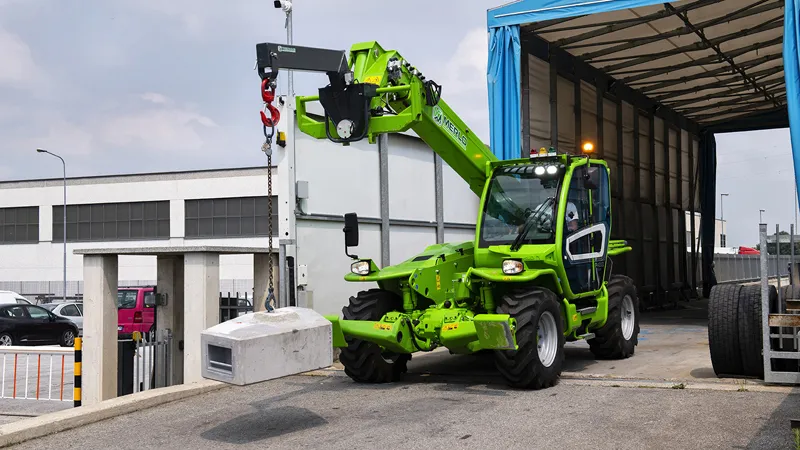
- Merlo P40.14 telehandler for unloading and placing blocks and trusses
- Baron forced action mixer for screeds and resin-bound surfaces
- Dragon 400 or 450 crushers to recycle demolition material on site
On new estates, much of the ground is made ground: imported fill, old foundations and hardcore. It digs unpredictably, so allow for obstructions and keep a reversible plate on site for compacting backfill in layers rather than all at once. Crushing broken concrete and brick on site with a Dragon crusher can cut down on skips and lorry movements, but check whether your site needs an environmental permit or exemption first. The Merlo telehandler needs firm, level ground for its stabilisers, so plan a hardstanding area for it early. The full range is on our construction equipment page.
Farm work across Somerset
From cider orchards and dairy farms to beef on the hills, Somerset farms keep us busy. Popular farm hires include the John Deere 6155R with a Nardi FAST 3m ripper for compacted fields, the SaMASZ Mammut flail topper for rough pasture, the Samba 281 disc mower, and the Venieri 1.63D loader for yards. The Zenessis 25kVA generator and PTO gensets provide power at remote buildings. See our agricultural equipment range.
Orchard work deserves a special mention. Rows between trees are often narrower than a full-size tractor and implement, so measure the gap and consider the Captain 26HP compact tractor or an AODES UTV for carting and spraying support. Old orchard gateways can be tight too.
Plan your Somerset hire: five steps
- Identify the ground: Levels, hill, rock or town plot.
- Check consents: drainage board, planning, or National Park where relevant.
- Measure access and note any weak bridges, low wires or soft verges on the approach.
- Confirm trained operators, as hire is self-drive unless agreed otherwise.
- Arrange insurance for the hired plant, which is not included in the hire.
Main rivers and the Environment Agency
Drainage board consent covers the rhynes and smaller watercourses, but Somerset also has main rivers such as the Parrett, Tone, Brue, Axe and Yeo, and these fall to the Environment Agency. If your work is close to one, check whether you need a flood risk activity permit before booking plant.
According to GOV.UK guidance on flood risk activities, activities within 8 metres of the bank of a main river, or of a flood defence or culvert on one, are regulated, rising to 16 metres for a tidal main river and for sea defences. Quarrying or excavation within 16 metres of any main river, flood defence or culvert is regulated whether or not the river is tidal. For ordinary watercourses, the guidance points you to the local council or internal drainage board instead.
In practical terms, that covers a lot of farm and drainage work on the Levels and around Bridgwater, where the Parrett is tidal. Allow time for the application in your programme, and keep any permit conditions to hand on site so the operator knows exactly where the machine can and cannot work. This is general information, so check the current guidance for your location.
A seasonal calendar for plant hire Somerset jobs
Somerset’s ground changes with the seasons more than most counties, because so much of it is either low and wet or high and exposed. The table is a rule of thumb, not a forecast.
| Season | Levels and Moors | Hills (Mendips, Quantocks, Exmoor fringe) | Towns and building sites |
|---|---|---|---|
| Winter | Often waterlogged or flooded; avoid unless essential | Wet, exposed, short days; slippery slopes | Workable with stone access and tracked dumpers |
| Spring | Drying out; check ground before booking heavy kit | Good working conditions return; nesting season begins | Busy period for extensions and new phases |
| Summer | Best window for drainage, ditching and tracks | Firmest ground; watch for walkers and livestock | Peak for driveways, patios and surfacing |
| Autumn | Window closes as rain returns; finish early | Good until the weather turns | Push to get foundations in before winter |
Two legal points tie in with the calendar. GOV.UK says the bird nesting season is generally 1 March to 31 August, so hedge and scrub clearance should be planned around it, and removing a protected countryside hedgerow needs notice to the planning authority first. Ditch and rhyne work may also have consent conditions about timing, so read them carefully.
Worked example: a water supply to a cattle shed on the Levels
An illustrative scenario rather than a real job. A farmer near Langport wants a new water main from the yard to a cattle shed about 250 metres away across soft pasture, crossing one rhyne.
- Consents first. Crossing the rhyne needs drainage board consent, and the farmer checks whether the route is near the Parrett, which would bring in the Environment Agency.
- Pick the right weight. On peat and soft clay, a Sunward SWE 25UF or SWE 35UF on tracks will do the work without sinking, where a heavier machine would need constant matting.
- Time it. The job is booked for July, when the ground is at its firmest, rather than in February.
- Plan the water. Even in summer, a trench on the Levels can fill quickly below the water table. Pumping is arranged in advance.
- Lay and backfill in sections. Short open lengths reduce the risk of collapse and keep stock safe. Backfill is compacted in layers with a Weber MT CR 2 or a rammer around the pipe.
- Move the kit. A Mechbadger tracked dumper carries bedding sand along the route, and the AODES UTV is handy for running tools and fittings across the field.
At the end, the farmer reinstates the turf over the trench line, leaves the rhyne banks as the consent requires and washes the clay off the machines before collection. A job like this often fits into a week on site, but a wet spell can stretch it, so it pays to ask for a weekly and a two-week quote side by side. If a machine has a fault mid-hire, we assess it and arrange a repair or replacement, and hire is suspended for downtime caused by a mechanical fault.
Recycling hardcore on Somerset sites
Demolition on infill plots, old farm buildings and industrial units around Taunton and Bridgwater often leaves piles of concrete and brick. Crushing it on site with a Dragon 400 or Dragon 450 tracked jaw crusher, or the Dragon CR400 concrete crusher, can turn it into usable fill and cut down on lorries leaving site.
It is regulated, though. GOV.UK guidance makes clear that the T5 screening and blending exemption does not cover crushing bricks, tiles or concrete, and points to the T7 exemption instead, which is registered with the local authority. Check what applies to your site before the crusher arrives, and keep records of what you crush and where it goes. Once crushed, the material still needs compacting properly in layers, ideally with a Weber MT CR 7 reversible plate for larger areas, if it is going to perform as sub-base.
A simple routine works well: sort the rubble first so timber, plastic, metal and soil are kept out of the feed, crush into a stockpile on firm ground, then load and spread with an excavator or the Venieri loader. Keep people well clear of the crusher while it runs, and keep dust down with water in dry weather, especially near neighbours.
Common mistakes on Somerset hires
Most of the problems we hear about on Somerset jobs are predictable, and most are avoidable with a little planning at the enquiry stage.
Sending a heavy machine onto soft ground
On the Levels and in the clay vales, the biggest excavator is rarely the fastest. A heavy machine that keeps sinking spends half the day digging itself out. Size to the job, use tracks and lay matting or stone where the machine will travel most.
Forgetting the approach
Plenty of Somerset farms and villages sit at the end of droves and lanes with weak bridges over rhynes, soft verges or tight bends. A lorry that cannot reach the gate costs everyone a wasted trip. Walk the approach, or send us a pin and photos, before the delivery date.
Digging before the consents arrive
Drainage board consent, an Environment Agency permit, planning permission or a National Park decision can all take weeks. Starting early to save hire days can lead to enforcement and a much longer delay. Book the plant for after the paperwork is in hand.
Under-planning the water
Trenches below the water table fill quickly, and water softens the sides. Plan pumping, keep open lengths short and inspect support at the start of every shift, as HSE’s excavation guidance sets out.
Leaving off-hire to the last minute
Hire charges run until you have an off-hire reference from us, and telling the driver on the day does not count. On a longer Somerset run, confirming the off-hire early also helps us book the collection on a sensible route.
Returning machines caked in clay
Somerset clay sets like concrete in tracks and rollers. Equipment returned dirty may be cleaned at your cost, so budget time at the end of the hire, or add a Brendon power washer to the order.
Hire periods that suit Somerset work
Because most Somerset deliveries are a longer run from our depot near Okehampton than Devon jobs, the hire period you choose has a bigger effect on the total cost of transport.
- Daily hire suits a single job you can finish in a day or two, such as a short drainage repair.
- Weekly hire is the most popular choice for extensions, driveways and small farm jobs.
- Monthly hire works for longer projects where the kit stays put.
- Long-term rental fits contracts of around four months or more, with servicing included and a named contact.
- Flex Hire suits contractors running several Somerset jobs who swap kit often. Tier 2, adding crushers and excavators, is £895 +VAT and delivery a month for one machine at a time.
Local guides for the area: Plant Hire Taunton: Housing Sites, Farms and the Levels · Plant Hire Bridgwater: Low Ground Pressure Kit for the Levels · Plant Hire Yeovil: A Guide for South Somerset Sites
Frequently asked questions
Which excavator is best on soft Levels ground?
Usually the lightest machine that will do the job, with tracks, good access matting and a plan to keep it off the softest areas. We will help you size it.
Do you deliver to Taunton and Bridgwater?
Yes. We cover all of Somerset, including the M5 towns. A day or two’s notice is ideal.
Can you supply plant for a farm drainage scheme?
Yes, from mini excavators to tractors and the Bailey low loader. Check whether drainage board consent is needed first.
Do you offer plant hire Somerset contractors can keep for months?
Yes. Long-term rental typically applies from around four months, with servicing included and a named contact.
Do I need a permit to dig near the River Parrett?
Very possibly. The Parrett is a main river and tidal in its lower reaches, so excavation close to it is regulated by the Environment Agency. Check the GOV.UK flood risk activity guidance before you book plant.
Can I crush demolition rubble on my Somerset site?
Our Dragon crushers can do the work, but crushing brick and concrete normally relies on a waste exemption registered with the local authority. Confirm the position for your site first.
Do you deliver plant hire Somerset orders to the Mendips and Frome?
Yes. The north and east of the county are the longest runs from our depot, so give us as much notice as you can and send the full list of machines so we can plan one trip.
Talk to us about plant hire Somerset
WhatsApp or call 07841 036064, Monday to Friday 7:30am to 5:30pm. Send the machine, site postcode, dates and access details. For multi-machine projects or a credit account, use our contact page or email info@conagri.co.uk.


