Plant hire Bridgwater jobs often come down to one question: will the ground take the machine? Much of the land around the town is peat and soft clay on the Somerset Levels, where a wheeled dumper can sink in minutes. We supply tracked, low ground pressure kit, compact excavators, electric carriers, trenchers, tractors and flood clean-up equipment across Bridgwater, Highbridge, Burnham-on-Sea and the Levels villages. WhatsApp us the job, postcode and dates and we will recommend kit to suit the ground.
In this guide
Reaching Bridgwater and the Levels
Bridgwater is around 65 miles from our depot near Okehampton, almost all of it on the A30 and M5. Junction 24 serves the south of the town and junction 23 the north, towards Puriton and Dunball. The A39 runs west to Cannington and along the coast, the A38 links Bridgwater with Highbridge and Taunton, and the A372 heads east across the moors towards Westonzoyland and Othery.
The roads across the Levels are flat but often narrow, raised above the fields and edged by deep drainage ditches with no verge to pull onto. Give us exact directions to the gateway or yard, and tell us about weight limits on any small bridges. In very wet winters some droves and lanes flood, so we may need to agree an alternative drop-off point.
Plant hire Bridgwater on peat and soft clay
The Levels are some of the softest ground we deliver to. Two main types dominate:
- Peat moors, such as King’s Sedgemoor and the moors around Westonzoyland. Peat is spongy, holds a lot of water and has very little bearing strength. It compresses under load and can trap a heavy machine.
- Estuarine and river clay along the Parrett and towards the coast. Firmer than peat when dry, but slick and sticky when wet, and it rarely dries out fully in winter.
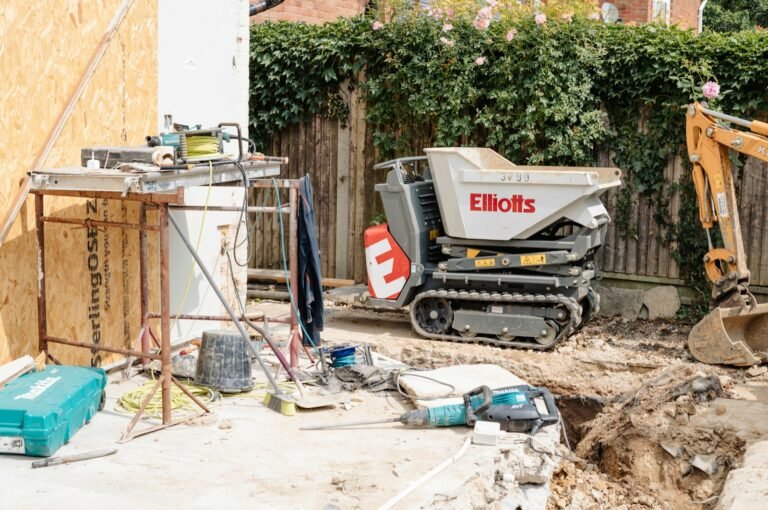
What matters is ground pressure: the machine’s weight spread over the area in contact with the ground. Rubber tracks spread weight much more than wheels, so a tracked machine can work where a wheeled one of the same weight would sink. Lighter machines help too, though you need enough weight and reach to do the job.
| Machine | Running gear | On soft Levels ground |
|---|---|---|
| Tracspider Elektro Joe | Rubber tracks, electric | Very good, designed for low ground damage |
| Tracspider 1000kg bed carrier | Rubber tracks, electric | Very good for moving materials |
| Mechbadger or Hyundai tracked dumper | Rubber tracks | Good, keep loads modest when very wet |
| Sunward SWE 18UF to SWE 35UF | Rubber tracks | Good for ditching and drainage |
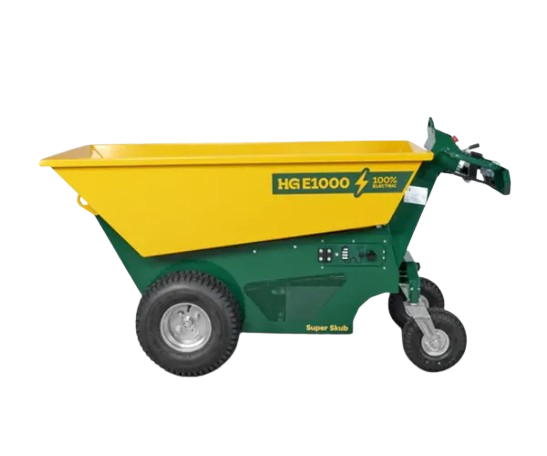
| HG 1000 wheeled dumper | Wheels | Firm surfaces and hardstanding only |
Low ground pressure kit for the Levels
Our go-to recommendation for moving materials on soft Levels sites is the Tracspider Elektro Joe electric tracked transporter. It runs on rubber tracks with even weight distribution and a tipping body, it is quiet and produces no exhaust, and it works as well inside a barn as on a wet field. For heavier loads, the Tracspider 1000kg carrier does a similar job.
Other kit that suits the ground: the Mak Brent MAK 60 tracked trencher for field drains and cable runs, the Mechbadger tracked telehandler for lifting and placing on soft ground, and the Sunward compact excavators for ditch work. All are on our construction plant hire and landscaping pages.
A few habits make soft-ground work much easier:
- Pick one route in and out and stick to it, rather than spreading damage across the field.
- Avoid sharp turns on the spot, which cause tracks to churn and dig in.
- Run half loads when the ground is at its wettest.
- Work the softest areas when they are driest, usually late summer and early autumn.
- If you think you may need ground mats or a pump, ask us and we will tell you what is available or point you in the right direction.
Ditch, rhyne and drainage work
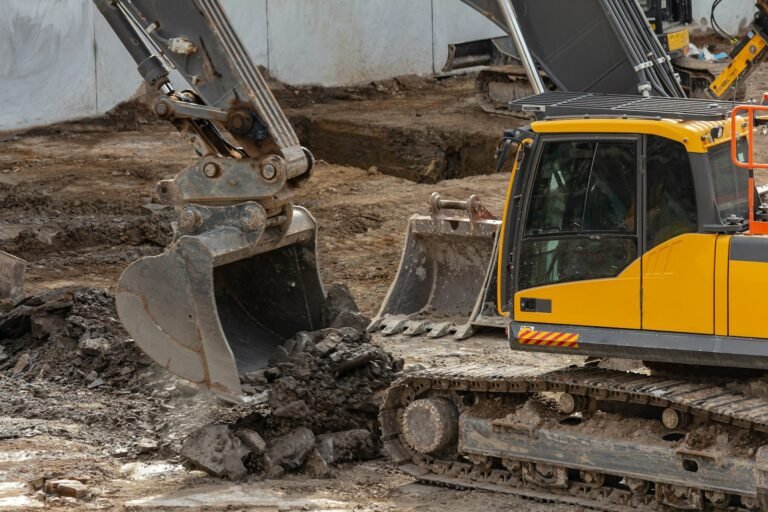
The Levels depend on an intricate network of rhynes (the local name for drainage ditches), drains and rivers. Clearing, reshaping and maintaining them is a constant job for farmers and landowners, and a compact excavator with a ditching bucket is the usual tool.
Before you start, check what consent you need. The Somerset Drainage Boards require land drainage consent for many works in or near watercourses in their districts, including some works within 9 metres of a watercourse. Main rivers such as the Parrett are regulated by the Environment Agency instead. Rules vary by board and type of work, so check the current byelaws before you hire.
Timing matters too. Work around the bird nesting season where hedges or reed beds are involved, and remember that ground beside a freshly cleared ditch can be unstable. Keep machines back from the edge.
Farm work across the moors
Farms on the Levels are mostly grassland, with plenty of topping, mowing and drainage work. From our agricultural equipment hire range, the Del Moriano 1.8m and SaMASZ Mammut 2.8m toppers handle rough grass and rushes, the SaMASZ Samba 281 disc mower cuts grass for silage or hay, and AODES quads and UTVs get you around wet fields without the weight of a tractor. The Venieri 1.63D pivot loader is light and nimble for yard work.
Flood recovery and clean-up
Parts of the Levels and the town have flooded badly in the past, and when water goes down the clean-up starts. Equipment that helps:
- The Brendon 35KPE mobile power washer for yards, buildings and machinery.
- The Big Brute industrial vacuum for wet and dry pick-up of silt and debris.
- Eureka floor scrubbers for commercial floors once the worst is cleared.
- Hiway Storage BV126 mobile storage trailers, sited on your drive, to keep furniture and stock safe while a property dries out.
- The Zenessis 25kVA 3-phase genset for temporary power.
Infrastructure and industry nearby
Bridgwater is close to some of the biggest construction activity in the South West, including the Hinkley Point C power station project on the coast to the west, and the M5 corridor has seen major employment and logistics development. That creates demand from supply-chain contractors, temporary compounds and new warehouses. For longer plant hire Bridgwater contracts, our long-term plant rental and Flex Hire options give you agreed monthly costs and servicing included.
Working near the tidal Parrett and main rivers
The River Parrett is tidal through Bridgwater and out to the coast, and the Environment Agency treats it and other main rivers on the Levels differently from ordinary rhynes. GOV.UK guidance on flood risk activity permits explains that you may need a permit for most activities within 8 metres of the bank of a main river, rising to 16 metres for a tidal main river, and within 16 metres of a sea defence. Excavation and quarrying within 16 metres of any main river, flood defence or culvert are also covered.
In practice that means a lot of land around Bridgwater, Dunball, Combwich and the riverside villages falls within the permit zone. If your job is close to the Parrett, the Tone, the King’s Sedgemoor Drain or any flood bank, check the Environment Agency’s main river map and the current guidance before you book a machine. Away from main rivers, the Somerset drainage boards or Somerset Council handle consent for ordinary watercourses, as described above.
Plan the paperwork first. A machine waiting on site for a permit still costs money, and work started without one can be stopped.
There are practical points too. Flood banks are often the only firm route along a river, but tracking heavy machines along them can damage the bank, and access may be restricted.
On tidal stretches, the water level and the state of the mud change through the day, so plan any work near the channel around the tides and never leave a machine parked where a high tide or a surge could reach it. For plant hire Bridgwater jobs near the river, tell us exactly where the machine will work so we can recommend the lightest kit that will do the job.
Worked example: clearing a silted rhyne
This is an illustrative scenario, not a real job. Picture 300 metres of rhyne along a field boundary on the moors east of Bridgwater, half full of silt and reed, with water backing up onto the field in winter.
- Check consent and timing. Confirm with the drainage board whether consent is needed, and plan around nesting birds and any protected species in the reed. Late summer and early autumn, when the ground is driest, usually works best.
- Choose the machine. A Sunward SWE 25UF or SWE 35UF with a ditching bucket has the reach for most field rhynes while keeping ground pressure manageable. Bigger drains may need a larger excavator; tell us the width and depth.
- Work from one bank. Track along the bank on a single line, keeping the machine well back from the edge, which can be undercut and soft.
- Place the spoil sensibly. Spread silt thinly along the bank where the drainage board’s rules allow, rather than building a bund that stops water reaching the rhyne.
- Move material only where needed. If spoil has to go elsewhere, a tracked dumper or the Tracspider carrier moves it on soft ground without rutting the field.
A job of this size is typically a week or so of excavator hire, depending on how much reed and silt has built up and how easy the bank is to travel along.
How to judge whether the ground will carry a machine
On the Levels, the ground can look firm and still give way under a loaded machine. Before plant hire Bridgwater deliveries onto soft land, a few simple checks help:
- Walk it. If your boots sink or water rises around them, a heavy wheeled machine will struggle. Note where the ground changes, often at old field boundaries or filled-in ditches.
- Probe it. A steel bar pushed into the ground gives a rough idea of how deep the soft layer goes. Peat can be soft for a long way down.
- Look at the vegetation. Rushes, reeds and very lush grass usually mean wet ground beneath.
- Check after rain. Land that carried a tractor in August may not carry a dumper in November.
- Plan the route and turning areas. Turning on the spot is where tracks dig in. Pick wide, gentle turns or a firm turning point.
- Send us photos. We would rather recommend a lighter tracked machine than deliver something that sinks on day one.
Trenchers or excavators for field drains and cables
For long, narrow runs such as field drains, water pipes to troughs or cable ducts across a field, the Mak Brent MAK 60 tracked trencher (60cm depth) is often a better choice than an excavator on soft ground. It cuts a neat, narrow slot, moves steadily along one line and disturbs far less of the surrounding field. Use a compact excavator where you also need chambers, wider sections or deeper outfalls, and plan to backfill quickly, because trenches in Levels clay and peat soon fill with water.
Seasons on the Levels
Timing is everything on Levels ground. As a rough guide for planning plant hire Bridgwater jobs around the year:
| Season | Ground | Work that suits |
|---|---|---|
| Winter | Often saturated, moors may flood | Yard, building and hardstanding work; flood clean-up; planning drainage |
| Spring | Slowly drying, bird nesting season starting | Light work with tracked carriers; avoid hedges and reed beds with nesting birds |
| Summer | Firmest ground, though peat can shrink and crack | Ditching, drainage, trenching, gateways and tracks |
| Autumn | Workable until the rain returns | Finish drainage and rhyne clearance; hedge cutting from September; topping |
Under the hedgerow management rules, hedges on or next to agricultural land in England cannot be cut or trimmed between 1 March and 31 August, apart from listed exemptions. Check the current guidance before planning any boundary work.
Warehouse and logistics kit along the M5
Not all of Bridgwater’s work is in the fields. The industrial estates and new logistics buildings along the M5 corridor near junctions 23 and 24 need handling and cleaning equipment for fit-outs, stocktakes and seasonal peaks. From our warehouse and cleaning equipment range:
- EP F4 electric pump truck (2,000kg) for moving pallets across the floor.
- EP ESL 122 electric pallet stacker (1,200kg, racking to 5m) for smaller stores.
- EP EFL 253 (2,500kg) and CESAB B420 (2,000kg, side-shift) electric forklifts for indoor handling.
- Sunward 0807DC electric scissor lift (8m platform height) for racking, lighting and maintenance.
- Eureka E50 ride-on and E36 walk-behind scrubbers and the Picobello 151 sweeper for new floors and handovers.
All are battery powered, so there are no exhaust fumes indoors. Operators need appropriate training for forklifts, stackers and powered access, and lifting and work at height need planning.
What affects the cost of plant hire in Bridgwater
We do not publish prices; WhatsApp us for a current quote. Bridgwater is around 65 miles from our depot, mostly on fast roads, so transport is straightforward but still priced by distance. Machine size, hire length, how many items share a delivery, weekend use and the condition of the kit on return all affect the total. Machines coming back caked in peat or Levels clay may need cleaning. Insurance for hired-in plant is not included, and we can refer you to insurance4plant.co.uk.
Before the machine arrives: a Levels checklist
- Confirm any drainage board consent or Environment Agency permit is in place for work near watercourses.
- Agree a firm drop-off point the lorry can reach on a raised road or hard yard, and tell us about weight limits on small bridges over the rhynes.
- Walk and mark the route from the drop-off to the job, avoiding the softest ground and ditch edges.
- Check for buried services and overhead lines, which often cross open moorland fields.
- Make sure operators are suitably trained. Hire is self-drive unless we agree otherwise.
- Arrange insurance for hired plant before delivery.
- Keep an eye on the forecast and river levels, and talk to us early if the ground is likely to be underwater on the planned date.
Frequently asked questions
Which dumper is best on peat?
A tracked one. The Tracspider electric carriers and the Mechbadger tracked dumper spread their weight far better than any wheeled dumper.
Do I need permission to clear a rhyne?
Often, yes, depending on the drainage board and the work involved. Check with the relevant board or the Environment Agency first.
Can you deliver when the Levels are flooded?
We will deliver wherever it is safe. In flood conditions we may agree a drop-off point on higher ground.
Do I need a permit to work near the River Parrett?
Often, yes. The Parrett is a tidal main river, and many activities within 16 metres of its bank need a flood risk activity permit from the Environment Agency. Check the current guidance before you start.
Can I hire warehouse equipment for a short stocktake?
Yes. Pump trucks, stackers, forklifts and scrubbers can be hired by the day or week, subject to availability. Tell us about the floor, door widths and any loading bay when you book.
What is the lightest machine for moving materials on peat?
The Tracspider Elektro Joe and the Tracspider 1000kg carrier are the best choices in our fleet for soft ground. Both run on rubber tracks and spread their weight widely.
Can you deliver to Burnham-on-Sea and Highbridge?
Yes. Both are a short run north of Bridgwater along the A38 and M5. Tell us about parking and access near the seafront, where space to unload can be limited.
Book plant hire in Bridgwater
WhatsApp or call 07841 036064 (Mon–Fri 7:30am–5:30pm) with the job, postcode and dates, or use our contact page for multi-machine and long-term enquiries.