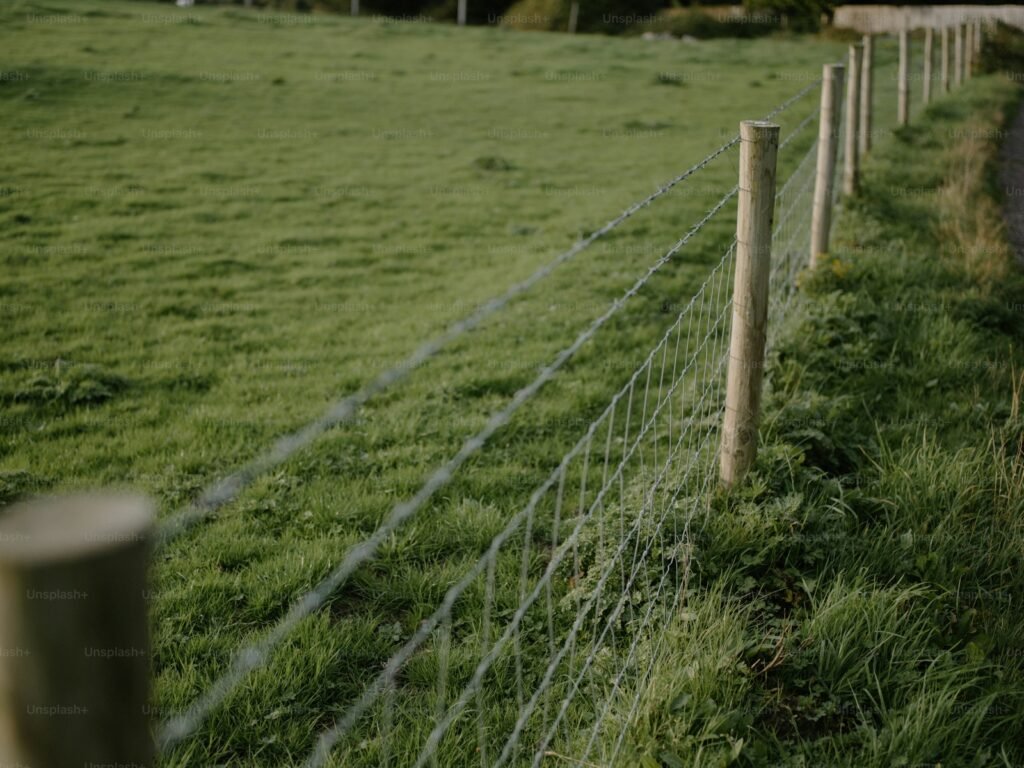
Most of the time on a fencing job goes on three things: getting posts and wire to the line, making holes, and setting posts firm. The right fencing equipment hire cuts all three, whether you are running a few hundred metres of stock fence across a Devon hillside or replacing a close-board fence in a back garden. Below we split the job into farm and garden work and match the kit to each stage.

In this guide
Farm or garden: what changes
A garden fence is short runs, tight access and concrete or post mix around each post. Farm and paddock fencing is long runs, rough ground and posts driven or rammed rather than concreted. The kit overlaps but the priorities are different.
| Task | Garden fencing | Farm and paddock fencing |
|---|---|---|
| Clearing the line | CRAMER battery strimmer | Flail topper, GL&D chipper for scrub |
| Making holes | Hyundai post hole borer | Post driver or digger (ask us) |
| Moving materials | Tracked carrier or barrow | Quad, UTV or tractor and trailer |
| Strainers and gateposts | Post mix or concrete | Mini digger, rammed backfill |
Clearing the fence line
Old fence lines are usually buried in brambles, bracken or blackthorn. On farms, a pass with a tractor-mounted topper clears grass and light scrub; the SaMASZ Mammut 2.8m flail topper on our agriculture page is built for rough vegetation. Heavier growth and cut branches go through a GL&D chipper. In gardens, the CRAMER battery strimmer and disc cutter deal with undergrowth and old wire without noise complaints.
If the line runs along a hedge or Devon bank, remember that hedgerows on or next to agricultural land in England are covered by cutting restrictions from 1 March to 31 August, and nesting birds are protected all year. Plan the clearance for autumn or winter where you can.
Making the holes: borer, digger or driver
The Hyundai pedestrian post hole borer is a petrol auger for garden fences, pergolas and small paddock runs. It is quickest in reasonable soil. On stony ground, which covers a lot of Dartmoor’s fringes and the shillet soils around Okehampton and into Cornwall, the auger can snag on stone; expect to finish some holes by hand or with a digger.
A mini digger is the answer for strainer posts, gateposts and anywhere the ground is too stony for an auger. A Sunward SWE 18UF or SWE 20F from our construction range digs a clean pit for a strainer in minutes and can lift heavy timber into place. If you want an auger attachment for one of our excavators, ask us what is available rather than assuming it.
For long runs of stock fencing, tractor-mounted post drivers are the norm. We do not list a post driver, so WhatsApp us and we will tell you what is available or point you in the right direction. Our John Deere 6155R and Captain 26HP compact tractor can power a range of farm and estate work.
Whatever makes the hole, get utility records through LinesearchbeforeUdig first. Buried water pipes to troughs and power cables to outbuildings often run along field boundaries. Check overhead too: lifting long posts or working a digger under power lines needs planning, and the HSE guidance on overhead power lines explains safe distances.
Moving posts and wire along the line
A bundle of half-round posts and a few rolls of stock netting weigh far more than people expect, and carrying them a field length by hand wrecks a day. Match the vehicle to the ground:
- AODES 525 or 650 quad bike: 4WD and nimble on steep or wet ground; the 650 has more towing capability for a small trailer.
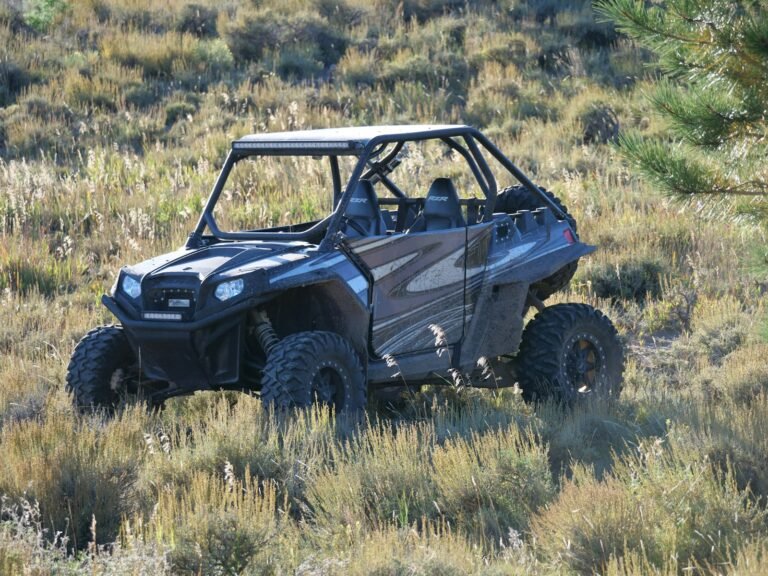
- AODES UTV or CORVUS UTV: a load bed for posts, rails and tools, plus seats for a second person.
- Captain 26HP compact tractor with the Conagri MEGA 1.5T tipping trailer: for estates and sports grounds moving larger loads with low ground disturbance.
- Tracspider carrier: for garden jobs where materials need to go through a side gate and across lawn.
The quads and UTVs are on our agriculture page, and the compact tractor and trailer on our sports and landscaping page. Hire is self-drive, so whoever drives needs suitable training and a helmet on a quad; ask us if you are unsure what is appropriate.
Setting posts that stay put
Depth is the most common shortcut. For a typical 1.8m garden fence, a common rule is to have around a quarter to a third of the post below ground, so around 600mm for a 2.4m post. Strainers and gateposts on farm fences carry the tension of the whole run and need to go deeper and be properly braced.
- Set out the line with pegs and a string, marking strainer and gate positions first.
- Dig or bore strainer holes, set the strainers and brace them.
- Run a line wire between strainers to set intermediate posts in a straight line.
- Bore or drive intermediates at even spacings.
- Backfill garden posts with concrete or post mix; ram farm post backfill in thin layers with a bar.
- Hang netting or panels, tension wire and fix.
For mixing concrete for a garden run, a small electric mixer saves a lot of bucket mixing; the Altrad Belle Mini Mix 150 is a useful companion to the borer.
Fencing alongside Devon banks and Cornish hedges
Many boundaries in the South West are earth-and-stone banks with a hedge on top rather than a simple hedge. Fencing on top of a bank is awkward and the posts rarely hold, so stock fences are usually set a short distance off the foot of the bank on the field side. That also keeps machinery away from the bank face and leaves room to trim the hedge later. Avoid digging into the bank itself, which can destabilise the stone facing.
Fencing equipment hire periods
A garden fence of a few panels is often a one or two-day job for the borer. A farm boundary or paddock subdivision is better on a weekly hire, so a wet day or a delayed timber delivery does not leave you rushing. Estates and contractors fencing over several weeks can look at Flex Hire, which lets you swap kit as the job moves from clearance to post setting.
Match the fence type to the kit
The fence you are building decides how many holes you make, how deep they go and what has to be carried along the line. Settle the specification before you book any fencing equipment hire.
| Fence type | Typical posts | Holes made by | Kit worth hiring |
|---|---|---|---|
| Garden panel or close-board | Timber or concrete posts at panel spacing | Post hole borer or spade, concrete backfill | Hyundai borer, Mini Mix 150, tracked carrier |
| Stock netting with line wires | Strainers plus intermediate stakes | Driven, or dug for strainers | Mini digger for strainers, quad or UTV, post driver (ask us) |
| Post and rail for horses | Heavier posts at rail spacing | Driven or bored | Borer or digger, UTV, compact tractor and trailer for rails |
| Deer or rabbit fencing | Taller posts, netting buried or turned out at the foot | Driven or dug, plus a narrow trench for the netting | Mini digger, trencher on suitable ground |
| Electric fencing | Light posts or reels | Pushed in by hand | Quad or UTV to carry reels and posts |
On rabbit netting, the bottom of the mesh is usually buried or turned outwards along the ground. On longer runs in workable soil, a narrow trencher such as the Mak Brent MAK 40 can cut that slot faster than a spade, though stony ground may need the digger instead.
Planning materials and quantities
Count everything before the hire starts so machines are never waiting for timber. Walk the line with a measuring wheel and mark every strainer position: ends, corners, gateways and sharp changes in direction or level. Long straight runs often have intermediate strainers as well, so the wire can be tensioned in manageable sections.
As an illustration, a 300m stock fence with intermediate stakes at around 3m spacing needs roughly 100 stakes, plus strainers and struts at each end, at the gateway and at two corners. Add rolls of netting and line wire to match the length, staples, and a few spares for posts that split or hit rock. That is several tonnes of material, and it explains why a quad, UTV or tractor and trailer is such an important part of farm fencing equipment hire.
Have materials dropped at the point on the farm closest to the line that a delivery lorry can safely reach. Splitting them into bundles along the line before the hole-making starts keeps the work moving.
Machines work the same way. We deliver to the nearest point our vehicle can safely reach, usually the yard or a field gate on firm ground. Tell us about lanes, gate widths and ground conditions when you book. Tracked and 4WD machines such as the quads, UTVs and mini diggers can then travel to the line under their own power, and our driver will run through the controls before leaving.
A worked example: subdividing a paddock
An illustrative job: a smallholding near Launceston wants to split a five-acre field into two paddocks with a 200m stock fence and a new gateway. The ground is typical shillet with patches of stone. This is a typical layout, not a real customer project.
- Before the hire: line pegged out, utility and drainage records checked, and materials delivered to the field gate.
- Day 1: AODES 650 quad with a small trailer runs stakes and netting out along the line. A strimmer clears the existing field boundary where the new fence will join it.
- Day 2: Sunward SWE 18UF digs the strainer and gatepost holes and lifts the heavy posts into place. Struts are set and backfill rammed in layers.
- Days 3 and 4: intermediates driven along the line wire using whatever post driver the owner has arranged, with the borer used for pilot holes in stony patches.
- Day 5: netting run out, tensioned and stapled, gate hung.
In this example the digger is needed for one day, and the quad for the week. Matching each machine to the days it is actually used, rather than booking everything for the whole job, keeps the fencing equipment hire efficient. If weather is uncertain, a weekly hire on the quad and a short hire on the digger is a sensible split.
Ground conditions across the four counties
- Shillet and slatey ground around Okehampton, north Cornwall and much of west Devon: firm and good for holding posts once in, but stone stops augers and splits stakes. Pilot holes and a digger for strainers help.
- Granite on Dartmoor, Bodmin Moor and west Cornwall: boulders and gritty growan. Expect to move some posts slightly to miss rock.
- Culm clay in mid and north Devon: easy to drive in dry weather, but posts can work loose when the clay is saturated. Ram backfill thoroughly and avoid fencing in waterlogged conditions.
- Somerset Levels: soft clay and peat. Longer posts are often needed to reach firm ground, and heavy machinery can bog down in wet months.
- Chalk and clay in Dorset: chalk generally drives well; flints can deflect posts.
On Dartmoor, Exmoor and other designated land, and alongside public rights of way, check with the national park authority or the highway authority before changing boundaries. Fences across commons can need consent.
Fencing safety checklist
- Check for buried services and land drains before making holes, and look up for overhead lines.
- Post hole borers can kick if the auger snags on stone or a root. Keep a firm stance, both hands on the handles and the engine speed under control.
- Wear a suitable helmet on a quad bike; HSE says helmets would have prevented most quad deaths caused by head injuries. Its guidance on ATVs and farm vehicles covers training and safe use.
- Lift posts and rolls of netting with good technique, or use the digger or a tractor loader for heavy strainers.
- Wear eye protection when stapling and when cutting or tensioning wire, which can whip back if it breaks.
- Keep livestock out of the working area until the fence is finished and gates are hung.
Garden fencing: method and height limits
A garden fence is a shorter job but less forgiving, because everyone sees the line and the neighbours live next to it. A sensible order of work:
- Agree the line with your neighbour and check your deeds if ownership is unclear.
- Take down the old fence and pull or break out old concrete footings, which a mini digger makes quick work of if they are large.
- Set out the new line with a string and mark post centres to suit your panel width.
- Bore holes with the Hyundai post hole borer, finishing awkward holes by hand.
- Set the end posts first, plumb them, and run a string between their tops to line up the intermediates.
- Concrete or post-mix each post, fit gravel boards to keep panels off the soil, then fit panels once the concrete has set enough to take the load.
Check height before you buy materials. In England, the Planning Portal guidance on fences, gates and garden walls says a fence next to a highway used by vehicles (or its footpath) should not be more than 1m high without planning permission, and 2m elsewhere. Listed buildings and their boundaries have stricter rules, and local restrictions can apply, so check with your council if in doubt.
What affects the cost of fencing equipment hire
We quote every job individually. The factors that matter most are which machines you need, for how many days, how far the site is from our depot near Okehampton and how many separate deliveries are involved. Combining the borer, quad and digger into one delivery, and planning the job so each is used in a block, usually gives the best value. Insurance is not included automatically, so allow for cover in your budget.
Frequently asked questions
Will a post hole borer work in stony Devon soil?
In moderate stone, usually yes with patience. In heavy shillet or granite rubble, a mini digger is often quicker for the difficult holes.
Do you hire tractor post drivers?
A post driver is not in our listed fleet. Ask us and we will tell you what is available or point you in the right direction.
Can I use a quad to tow fencing materials?
The AODES 650 has towing capability. Keep loads within the manufacturer’s limits and take extra care on slopes.
Who is responsible for a boundary fence?
That depends on your deeds and any agreement with your neighbour. Check before you start, as we cannot advise on ownership.
How far apart should fence posts be?
It depends on the fence. Garden panels set the spacing for you. Stock fences commonly use intermediates at around 3m on straight, level runs, closer on undulating ground. Follow the netting manufacturer’s guidance.
Can I hire a mini digger just for strainers and gateposts?
Yes, and it is a common way to do it. A day with a mini digger sets the heavy posts properly, while the lighter stakes go in by other means.
When is the best time of year for farm fencing?
Autumn and early winter often suit: ground is soft enough to drive posts, crops are off, and hedge work is outside the closed period. Avoid saturated clay, where posts will not hold.
Talk to us about your fence
Tell us the length of fence, the ground, the site postcode and your dates, and we will put together the fencing equipment hire and a current quote. WhatsApp or call 07841 036064, or use our contact page.