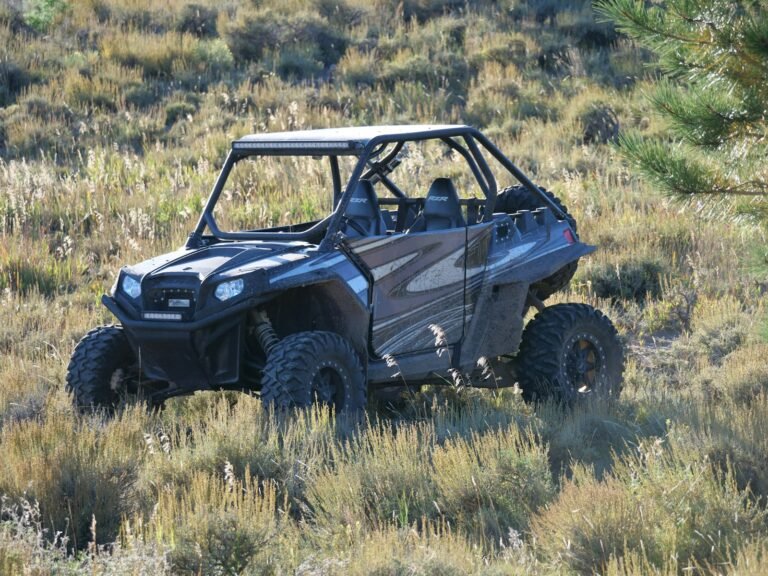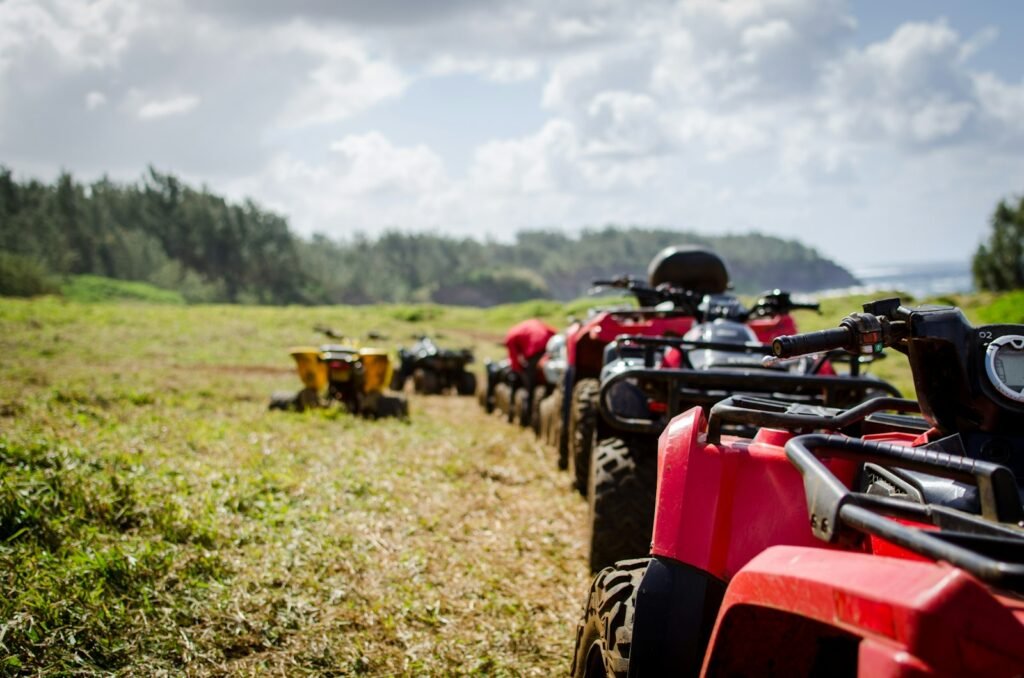
Quad bike hire covers the busy weeks when one farm bike is not enough: lambing, calving, a big fencing job, or an estate that needs an extra vehicle for a shooting season or a contract. We hire two 4WD sit-astride quads from Okehampton, the AODES 525 and the AODES 650, delivered across Devon, Cornwall, Somerset and Dorset. This guide covers which one suits which job, what you can sensibly tow and carry, and the HSE safety basics every rider on your holding should know.

In this guide
AODES 525 or 650: which quad suits your work?
Both are 4WD farm quads built for all-terrain work. The difference is engine size and the work you put them to.
| AODES 525 | AODES 650 | |
|---|---|---|
| Engine | 525cc | 650cc, higher output |
| Drive | 4WD | 4WD |
| Best for | Stock checks, feeding rounds, carrying tools and light loads on racks | Regular towing, hilly ground, heavier trailed kit |
| Typical user | Smallholdings, lambing help, estates needing a runabout | Larger farms, steep West Country ground, groundscare towing |
If most of your day is checking ewes on reasonably even ground, the 525 does the job. If you will be pulling a trailer up steep Dartmoor-edge fields or towing groundscare kit, the extra output of the 650 is worth having. Both are listed on our agriculture equipment page.
If several people of different builds and experience will ride the bike, the 525 is often easier for less experienced riders to handle, while the 650 suits an experienced rider who tows regularly. Tell us who will be riding when you book and we will help you choose. If anything goes wrong with the bike during the hire, call or WhatsApp us and we will assess it and arrange a repair or replacement.
Common farm and estate jobs for a hired quad
- Lambing and calving checks: getting round fields quickly at all hours with a bag of kit on the rack.
- Fencing runs: carrying posts, wire, a post knocker and tools to the line rather than walking them.
- Feeding and water checks: buckets, feed blocks and troughs on outlying ground.
- Light towing: small trailers, sprayers and towed groundscare kit, within the limits below.
- Estate and shoot work: moving feed to hoppers, checking boundaries, getting to remote corners.
- Golf and sports turf: our Selvatici drainage aerator and Stoneless rock collector are both ATV/UTV towed, so a quad can pair with them.
Quad bike hire and HSE safety: what riders must know
Quad bikes are useful, but they are also involved in a significant number of serious farm accidents, many from overturns on slopes. The Health and Safety Executive’s guidance, Safe use of all-terrain vehicles in agriculture and forestry (AIS33), sets out the basics. In summary, at the time of writing:
- Training: employers must provide adequate training for employees who use ATVs, including with towed equipment. The self-employed have the same responsibility for themselves.
- Helmets: HSE says you should always wear a helmet when riding an ATV, meeting a current standard with a chinstrap. Forestry helmets and hard hats are not suitable.
- No passengers on sit-astride quads: the long seat is for shifting your weight, not for a second person. Passengers should not ride in a trailer behind a quad either.
- Children: carrying a child as a passenger is illegal, and children under 13 are prohibited from using ATVs at work.
Hire with us is self-drive, and it is the hirer’s responsibility to make sure every rider is trained and competent. Read the full HSE leaflet and check the current guidance before the bike goes out.
Towing and carrying: stay within the limits
Most quad overturns involve slopes combined with a load. HSE’s rules of thumb in AIS33 are a sensible starting point, alongside the manufacturer’s stated capacities.
- Tow only from the hitch point. Never tie loads to racks or other parts of the frame.
- Respect the towing limits. HSE suggests, as a rough guide on level ground, that braked trailed equipment should not exceed four times the quad’s unladen weight and unbraked equipment should not exceed twice that weight. Reduce this on slopes or poor ground.
- Get the noseweight right. Roughly 10% of the loaded trailer’s weight should sit on the drawbar, without exceeding the manufacturer’s limit.
- Secure rack loads with ratchet straps and keep them balanced front to rear. Never exceed the maximum rack weight.
- Plan your route. Walk unfamiliar fields first and avoid slopes you would not tackle with that load.
Planning quad bike hire around lambing and calving
Lambing is when most farms feel short of a bike. Indoor lambing still means trips to ewes and lambs turned out, and outdoor lambing on Devon and Cornish hill ground can mean checking fields several times a day and through the night. A second quad lets one person stay on top of the shed while another does the field rounds.
Book before the season starts. Tell us your expected start date and roughly how many weeks you need, and we will suggest the most sensible arrangement. A weekly hire suits a tight lambing block. A monthly hire, or Flex Hire if you also want to swap in other kit later in the year, suits a long spread of lambing and calving. Because hire charges run continuously from delivery to off-hire, let us know as soon as you are finished so we can collect.
Getting the most from quad bike hire
Hired quads tend to be needed in the worst weather of the year, so a few habits help. Check tyre pressures before each day, because uneven pressures affect handling on slopes. Wash mud off at the end of a lambing week so you can see damage before it is returned. Keep the bike locked away overnight, as quads are a common target for theft in rural areas.
Insurance for hired equipment is not included automatically. We refer customers to insurance4plant for plant hire cover, and you should confirm theft cover in particular.
Quad or UTV?
If you need to carry a second person or a bigger load, a side-by-side UTV with seats and a load bed is often the better choice. We hire the AODES UTV and CORVUS UTV for farms, and diesel and petrol UTVs for crew transport on our events equipment page. Tell us what you need to carry and how many people, and we will point you to the right vehicle.
Daily checks before every ride
A hired quad will arrive serviced and checked, but conditions on a farm change fast. Two minutes of checks at the start of each day catches most problems before they cause an accident or a breakdown in the far corner of a field. HSE recommends routine pre-use checks in its ATV guidance, and the manufacturer’s handbook sets out the detail.
- Tyres: check pressures with a low-pressure gauge, not by eye. Quad tyres run at low pressures, and a small difference between left and right can make the bike pull or tip on a slope.
- Brakes: test the front and rear brakes and the parking brake before you leave the yard.
- Throttle and controls: the throttle should spring back when released. Check the steering moves freely and the kill switch stops the engine.
- Lights: essential for early-morning and night checks at lambing and calving.
- Racks and hitch: look for cracks, loose bolts and worn pins.
- Fuel and oil: top up before you head out, not when you are a mile from the yard.
- Your kit: helmet on and fastened, gloves, boots and a charged phone.
If anything is wrong, do not ride it. Call or WhatsApp us and we will assess the problem and arrange a repair or replacement.
Riding safely on steep West Country ground
Devon and Cornwall are full of fields that look gentle from the gate and turn out to be steep, wet and rutted halfway down. Most serious quad accidents involve overturns, and slopes are where they happen. These habits, drawn from HSE’s ATV guidance and common sense, keep riders safer.
- Use your body weight. Sit-astride quads are designed for active riding. Lean uphill on side slopes and forward when climbing, and keep your feet on the footrests.
- Climb and descend straight. Go straight up or down a slope where possible, rather than across it. Traversing steep ground is where many rollovers start.
- Descend in a low gear. Let engine braking control your speed and use the brakes gently. Avoid sudden braking downhill, especially when towing.
- Never turn sharply on a slope. If you need to turn round, find flatter ground first.
- Watch for hazards. Hidden ditches, holes, stones, wet grass on clay and the edges of banks are all common on hill farms.
- Walk it first. If you are not sure about a slope, get off and walk it. If you would not tackle it with the load you are carrying, do not ride it.
- Tell someone where you are. Lone rounds in the dark at lambing are common, so agree check-in times and carry a phone.
Speed is the other big factor. Hired bikes are often ridden by people who are not used to them, so take the first few days steadily and get a feel for how the bike handles loaded and unloaded.
Protective kit for every rider
A helmet is the single most important item, and HSE is clear that riders should always wear one. Beyond that, sturdy boots with ankle support, gloves that grip in the wet and eye protection make a real difference on a farm, where brambles, branches and flying mud are part of the job. Waterproofs should be close-fitting, with no long cords or flapping hems that could catch on controls or racks. If you have several riders sharing one hired bike, make sure each has a helmet that fits them, rather than one size passed around the yard.
A worked example: an outdoor lambing block
This is an illustrative scenario, not a real customer. A sheep farm on the edge of Dartmoor lambs 400 ewes outdoors across six fields over about four weeks in April. The farm’s own quad is shared between the farmer and a family member, and they want a student helper to cover the night rounds.
- Bike choice: the fields are steep in places and the round includes towing a small trailer with feed and hurdles, so the AODES 650 is the better fit.
- Training: the student is trained on the hired bike before lambing starts, including towing and riding the steepest field with a load.
- Helmet: a suitable helmet that fits the student is sorted before the bike is used.
- Hire period: a monthly hire covers the block with a week either side, which is simpler than extending weekly hires.
- End of hire: the farm WhatsApps us when the last ewes are turned out, so the bike can be collected and charges stop.
The planning that matters here is not the hire itself but the training and the helmet. Both need doing before the first night round, not after.
What affects the cost of quad bike hire
We do not publish hire prices. WhatsApp us for a current quote. These are the factors that shape it:
- Model: the AODES 525 and 650 are priced differently.
- Hire period: daily, weekly, monthly or longer. Weekly and monthly rates offer better value for a lambing or calving block.
- Delivery: quoted separately and based on distance from our depot near Okehampton. Collection from the depot is also possible if you have suitable transport.
- Season: spring is busy, so booking early protects availability rather than price.
- Extras: trailers, towed implements and a second vehicle all add to the hire.
- Insurance: not included automatically, so budget for plant hire cover.
If you need a quad for most of the year and want to swap in other kit, compare the cost with a Flex Hire tier. For most farms, though, quad bike hire is a seasonal top-up: a few weeks at lambing, a month of fencing, or cover while the farm’s own bike is in for repair. Telling us the job, not just the dates, helps us suggest the most sensible period.
Security: keeping a hired quad safe
Quads are light, valuable and easy to load into a van, which makes them a target on rural holdings. As the hirer, you are responsible for the machine during the hire period, so treat security as part of the job.
- Take the key out every time you get off, even for a minute at a gate.
- Store the bike in a locked building overnight, out of sight of the road.
- Use a ground anchor, wheel clamp or heavy chain where you can.
- Do not leave it parked by the roadside or in a field gateway.
- Report any theft to the police straight away, get a crime reference number and tell us within 24 hours.
It also helps to keep a simple record of who has the bike and when. On a busy farm with family, staff and lambing helpers all using vehicles, a whiteboard in the workshop or a shared message group showing who has the hired quad, where it is going and when it is back makes it obvious if something is missing. Photograph the bike, including any marks noted at delivery, so you have a clear record if anything happens during the hire. Check with your insurer that theft from farm buildings and fields is covered for hired-in equipment.
Delivery, handover and return
We deliver to your farm or estate, so tell us the postcode, the best access route and where you want the bike left. On delivery, someone should sign the delivery note and walk round the quad with the driver to note its condition. Ask for a run through the controls if the model is new to you.
When you have finished, wash off the worst of the mud, refuel it, and leave it somewhere easy to reach. Then call or WhatsApp us to off-hire. Hire charges run until the off-hire is confirmed with the office, not when you tell a driver. Our hire FAQs cover the details of payment, delivery and returns.
Frequently asked questions
How long can I hire a quad bike for?
Daily, weekly, monthly or longer. Weekly hire is the most popular for lambing and calving, and monthly or Flex Hire suits longer seasonal work.
Can I ride a hired quad on the road?
Our quads are hired for use on farms, estates and private land. If you need to use public roads, talk to us first, because road use brings its own legal requirements.
Do you supply helmets?
Ask us when you book. Either way, make sure every rider has a suitable, well-fitting helmet before they start.
Is a quad bike suitable for towing a golf course aerator?
Our Selvatici drainage aerator and Stoneless rock collector are designed to be towed by an ATV or UTV. See our sports and landscaping equipment and ask us which vehicle suits your course.
Can a teenager ride the hired quad?
Children under 13 are prohibited from using ATVs at work. Older young people need training on a machine of suitable size and power. Read HSE’s guidance and check the current rules before anyone young rides.
What should I do if the quad overturns?
Make sure the rider is safe and get help if anyone is hurt. Do not ride the bike again until it has been checked. Call or WhatsApp us so we can assess it.
Can I book quad bike hire at short notice during lambing?
Often, yes. Same-day delivery is possible across most of Devon and Cornwall, subject to availability. Spring is our busiest time for quads, though, so booking a few weeks ahead is the safer option.
Hire a farm quad from Okehampton
WhatsApp or call 07841 036064 (Monday to Friday, 7:30am to 5:30pm) with the model you want, your postcode, dates and what you plan to tow. We will come back with availability and a current quote. For accounts and written quotes, use our contact page.