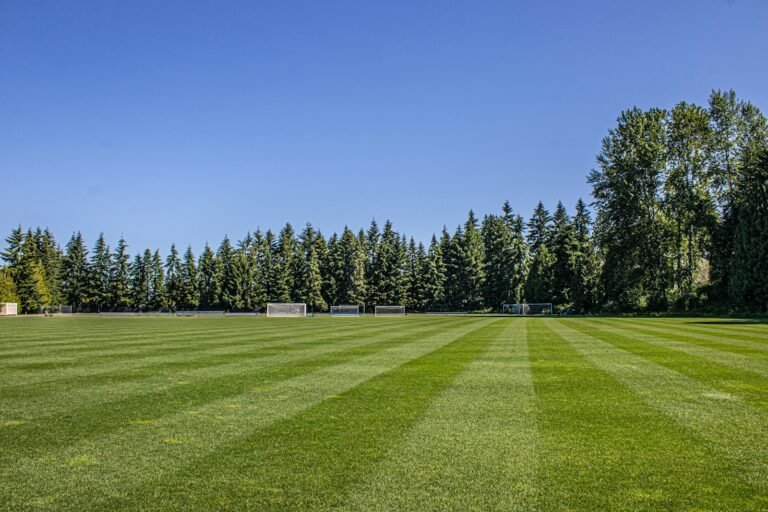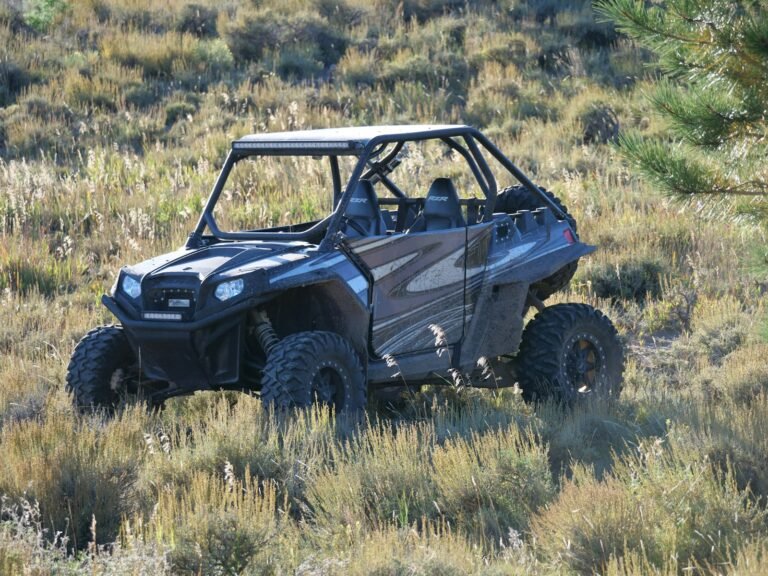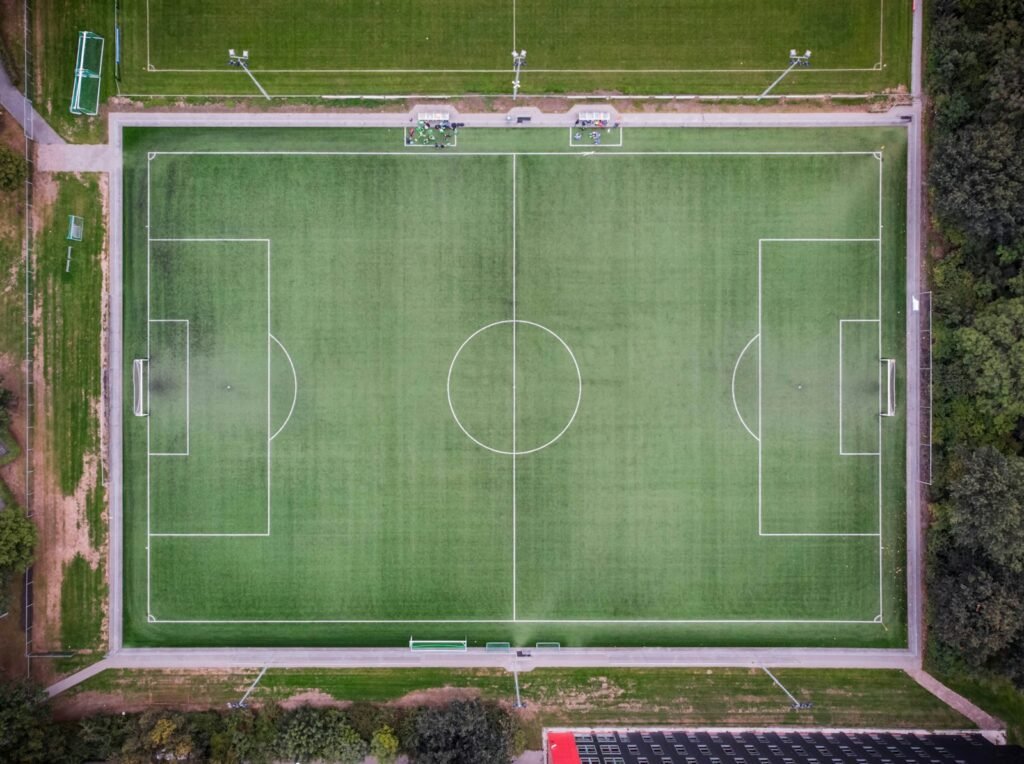
If your greens hold water after rain, your goalmouths go bare by November or your fairways feel hard underfoot in summer, compaction is usually the cause. Aerator hire from our Okehampton depot gives you two options: the Selvatici 1.2m vertical drainage aerator, towed behind an ATV or UTV for fairways, outfields and pitches, and the Negri pedestrian aerator for greens, tees and tight areas. Below we explain which suits your turf, when to aerate in the South West, and how to get the most from a hire day.

In this guide
Why turf in Devon and Cornwall compacts so quickly
A lot of mid and north Devon sits on heavy, slow-draining clay soils, and much of Cornwall and Dartmoor’s fringes have thin soils over slate or granite. Add the region’s wet winters and you get surfaces that seal over: water sits on top, roots stay shallow and moss moves in.
Traffic makes it worse. Mowers, buggies, rollers and players all press the top few centimetres together. Once the air spaces in the soil close, grass struggles to take up water and nutrients even when there is plenty of both. Aeration opens those channels again so water drains down and roots follow it.
Our two aerators compared
Both machines relieve compaction, but they are built for different areas. Many clubs hire both for a renovation week.
| Selvatici 1.2m vertical drainage aerator | Negri pedestrian aerator | |
|---|---|---|
| Working width | 1.2m | Compact walk-behind |
| Power | Towed by ATV or UTV | Self-contained, pedestrian operated |
| Best for | Fairways, approaches, outfields, football and rugby pitches | Greens, tees, bowling-type fine turf, banks and corners |
| Main job | Deep drainage slitting to move surface water down | Fine turf aeration with minimal disturbance |
| Typical pairing | AODES Workcross 650 UTV from our fleet | Follow-up topdressing and overseeding |
If you do not have a suitable towing vehicle, we can supply the AODES Workcross 650 UTV alongside the Selvatici. Tell us what you already run and we will confirm the match before delivery.
When to book aerator hire in the South West
Timing matters more than the machine. The aim is to work the soil when it is moist enough for the tines to penetrate cleanly but not so wet that you smear the sides of the holes or rut the surface.
- Early to mid autumn is the main window for most golf courses and sports grounds. Soils are still warm, grass is growing, and the holes recover before winter.
- Spring, once growth has started, suits a lighter pass to freshen surfaces before the season.
- Winter slitting on drainage-prone areas can help between storms, but only on days when the ground carries a vehicle without rutting.
- Avoid frozen ground, saturated ground and drought-hard summer soil. Each one gives poor penetration or damages the surface.
On the Atlantic side of Cornwall and north Devon, dry windows in autumn can be short. Book early, keep the dates flexible by a day or two, and message us if the forecast changes. We will move the delivery where we can.
How to run an aeration day
A little preparation stops the commonest problems, especially damaged irrigation.
- Mark everything below the surface you know about. Sprinkler heads, valve boxes, shallow irrigation lines, drainage outfalls and any cables to lighting or pumps.
- Mow first. A shorter sward lets you see the tine pattern and check depth.
- Test a strip. Run 10 metres, stop, and check the holes or slits. Adjust before you commit to the whole area.
- Plan your passes. Work in straight lines with a small overlap. Turn gently on fine turf, lifting tines on headlands where the machine allows.
- Change direction on a second pass if you are treating badly compacted areas such as goalmouths or walk-off points from greens.
- Follow up. Aeration is the ideal moment to topdress, overseed or apply a granular feed while the surface is open.
Aerator hire for golf courses: Hole in One Rentals
We are the home of Hole in One Rentals, our specialist line for golf clubs and greenkeepers. In practice that means we can put together a short renovation package rather than a single machine. A typical autumn week might combine the Selvatici on fairways, the Negri on greens and tees, the Conagri MEGA 1m tine overseeder and a 500kg fertiliser spreader, with a UTV to move between holes.
Clubs that renovate in stages across the year often find Flex Hire useful. It is one flat monthly fee, you can swap kit whenever you need to, servicing is included and there is no long-term contract. Tier 1 starts at £795 +VAT and delivery per month. See the full sports and landscaping range for everything that can go into a package.
If you manage a sports ground rather than a course, the same approach works on a smaller scale. A football or rugby club might book the Selvatici and a UTV for two or three days at the end of the season, slit the whole pitch, then go back over goalmouths and centre spots with extra passes before overseeding. Schools and councils often do the same in the summer holidays, though dry ground in July and August can limit penetration, so check the soil first.
Mistakes that waste a hire
- Aerating the day after heavy rain and smearing clay soils, which seals the holes.
- Skipping the test strip, then finding the depth was too shallow to reach the compacted layer.
- Driving the UTV and aerator on the same wheel lines every pass, which re-compacts the ground you just opened.
- Not telling members or players, so the surface gets heavy traffic before it recovers.
- Leaving the follow-up seed or dressing until the following week, when the holes have already closed.
Signs your turf needs aerating
Before you book anything, spend half an hour walking the areas you are worried about. Compaction shows itself in fairly predictable ways, and knowing which symptoms you have tells you which machine, and how many passes, you need.
- Standing water that lingers for hours after rain on areas that should drain, especially on walk-off points from greens, goalmouths and gateways.
- Moss and algae creeping into the sward, which usually means the surface stays wet and the grass is struggling.
- Hard ground in summer that a garden fork or screwdriver will barely enter, even though the soil is not bone dry.
- Shallow roots. Cut a small plug with a knife or soil probe. If the roots stop a few centimetres down, there is usually a compacted layer below.
- A dark, sour-smelling layer in the plug, a sign that the soil is short of air.
- Thinning grass along traffic routes, such as buggy paths, the line from the clubhouse to the first tee, or the warm-up strip on a pitch.
Make a rough sketch of the worst areas and note how big they are. When you message us for aerator hire, that sketch helps us suggest whether you need the towed Selvatici, the Negri, or both, and for how long.
Solid tines, hollow tines and vertical drainage
Aeration is a broad term. Greenkeepers and groundsmen use several different methods, and it helps to know what you are trying to achieve before you choose.
| Method | What it does | When it suits |
|---|---|---|
| Solid tining or slitting | Pushes or cuts channels into the soil without removing material | Regular compaction relief and drainage through the season, with little surface disruption |
| Hollow tining (coring) | Removes small cores of soil and thatch, which you then sweep up | Renovation, usually in autumn, to reduce thatch and change the rootzone with topdressing |
| Vertical drainage aeration | Works deeper channels to move surface water down through the profile | Wet fairways, outfields and pitches where water sits on top through winter |
Our Selvatici is a vertical drainage aerator built for the last of these: getting water off the surface on larger areas. The Negri is a compact pedestrian aerator for fine turf. Tine types and settings vary with the job, so tell us what you want to achieve and we will confirm how the machine is set up before it leaves the depot.
Terms you will hear from greenkeepers
- Thatch: the spongy layer of dead and living stems and roots between the grass and the soil. A little is useful; too much holds water and disease.
- Rootzone: the soil, or sand and soil mix, that roots grow in. On many greens it is a sand-based mix; on pitches it is often the native soil.
- Pan: a hard, compacted layer below the surface, often at the depth of repeated mowing or rolling, that stops water and roots moving down.
- Heave: the slight lifting of the surface some aerators cause as tines fracture the soil. A little is the point; too much on fine turf needs setting changes.
- Topdressing: a thin layer of sand or a sand and soil mix brushed into the surface after aeration to fill holes and true the surface.
A sample autumn renovation week
Many clubs fit aeration into a planned renovation week, usually in September or early October. The table below is an illustrative plan for a small course or a multi-pitch sports ground, built around one week of aerator hire. Your own order will depend on weather, fixtures and staff numbers.
| Day | Work | Kit |
|---|---|---|
| Monday | Delivery, handover, mark irrigation heads and valve boxes, mow all areas | Your mowers, marker paint or flags |
| Tuesday | Aerate greens and tees, test strips first | Negri pedestrian aerator |
| Wednesday | Aerate approaches and fairways, worst areas first | Selvatici 1.2m with UTV |
| Thursday | Second pass across badly compacted areas; overseed thin patches | Selvatici, MEGA 1m tine overseeder |
| Friday | Feed and topdress, tidy up, clean kit ready for collection | MEGA 500kg spreader, blowers |
Leave one day free if you can. In the South West a wet day mid-week is more likely than not in autumn, and a spare day stops the whole plan slipping into the following week.
Worked examples: how long will it take?
Aerating is mostly a matter of distance travelled. A rough calculation before you book tells you whether a day or a week of aerator hire is realistic. These are illustrative examples, not customer jobs.
A full-size football pitch
A pitch of about 100m × 64m is around 6,400 square metres. With a 1.2m working width, one full pass means travelling a little over 5km, before allowing for overlaps and turns. Add a second pass on goalmouths, the centre circle and the warm-up strip down one touchline, and most groundsmen allow a full day with the Selvatici and a UTV, plus time for the follow-up.
A village cricket outfield
Outfields are larger but more open, so long straight runs are possible. The square itself is fine turf and is normally treated separately with pedestrian equipment, and many clubs leave it to their own specialist routine. The towed aerator then covers the outfield over one or two days, depending on its size.
Nine greens on a parkland course
Greens are small but fiddly, and every one has irrigation heads, collars and banks to work around. With the Negri, a realistic plan is several greens a day for one operator, leaving time to check each one and move between holes. Hiring a UTV to carry the operator, fuel and tools makes a real difference on a hilly Devon course.
What affects the cost of aerator hire
We do not publish hire rates because the total depends on your job. These are the factors that change a quote:
- Hire length. Weekly hire usually works out better value per day than several separate days, and gives you weather cover.
- Delivery distance. Transport is quoted separately, based on distance from our depot near Okehampton.
- Towing vehicle. If you need a UTV with the Selvatici, it is a second item on the hire.
- Package size. Combining aerators, an overseeder and a spreader on one delivery saves on transport compared with three separate trips.
- Weekend use. Weekly rates are based on a five-day working week, so tell us if you plan to work Saturday or Sunday.
- Insurance. Cover is not automatically included; many clubs already have hired-in plant cover, and we refer others to insurance4plant.
Clubs with a full programme of renovation across the year should compare a series of weekly hires against Flex Hire; we can tell you which tier covers the kit you need.
Safety checklist for aeration work
Aerators are simple machines, but tines, towing vehicles and slopes all carry risk. Run through this before you start:
- Make sure operators are trained on the towing vehicle and the aerator. Hire is self-drive, so competence is the hirer’s responsibility.
- Check the towing vehicle. The HSE’s guidance on quad bikes and ATVs covers training, helmets for quad riders and protective structures; check the current guidance for your vehicle.
- Treat slopes with respect. Towed equipment changes how a UTV behaves on banks. Work across or up and down as the operator’s manual advises, and leave steep banks to pedestrian kit.
- Keep people clear of moving tines, and never reach in to clear debris with the machine running.
- Close the area or use signs, so golfers, players or the public do not walk into the work.
- Wear suitable boots and hearing protection where petrol engines are running for long periods.
Delivery, handover and return
On delivery day, someone needs to be on site to meet our driver, check the equipment and sign the delivery note. Have a firm spot ready for unloading, such as the maintenance yard or car park, rather than asking the lorry to cross wet turf. We will run through the controls and settings at handover, and you can message us on WhatsApp during the hire if anything is unclear.
At the end of the hire, clean mud and grass from the tines and frame, and make sure all parts and keys are present. Hire charges run until you have formally off-hired with our hire desk and received an off-hire reference; mentioning it to a driver does not count. Our hire FAQ page covers delivery, payment and off-hire in more detail.
The Grounds Management Association publishes guidance and training on sports turf care.
Frequently asked questions
Can I tow the Selvatici aerator with a compact tractor?
It is designed to be towed by an ATV or UTV. If you want to use another vehicle, tell us the make and model and we will advise. We can also supply a UTV with the hire.
Is the Negri aerator safe to use on golf greens?
Yes, it is a compact walk-behind machine suited to fine turf and greens. As with any aerator, check for irrigation heads first and test a small area before doing the whole green.
How long should I hire an aerator for?
Small sports grounds often manage in a day or two. Golf courses usually book a week so they can work around weather and play. Weekly hire is our most popular option.
Do you deliver aerators to Cornwall, Somerset and Dorset?
Yes. We deliver across all four counties from Okehampton, with same-day delivery possible across most of Devon and Cornwall. Delivery is quoted separately based on distance.
Can I aerate in summer?
You can, but dry, hard soils resist the tines and can be damaged by forcing them in. If the ground is very hard, wait for rain or irrigate first, then aerate when the soil is moist but not wet.
Should I topdress straight after aerating?
On fine turf, many greenkeepers topdress immediately so the material fills the holes while they are open. On pitches and fairways it depends on your budget and soil. Either way, do it within a day or two rather than the following week.
Is aerator hire worth it for a large private lawn?
For a big lawn, paddock or estate grounds with drainage problems, yes. For a small garden, a hand-held hollow tiner or garden fork may be enough.
Book your aerator hire
WhatsApp or call 07841 036064 (Mon–Fri, 7:30am–5:30pm) with the area you are treating, your site postcode, your preferred dates and whether you need a towing vehicle. For written quotes or account set-up, use our contact page or email info@conagri.co.uk.