UTV hire gives you a vehicle that carries people and kit together across ground a van cannot reach: a show field in the rain, a golf course you do not want rutted, or outlying land on a farm. We hire side-by-side utility vehicles from our Okehampton depot, including the CORVUS diesel UTV, the AODES UTV 650 and the AODES Workcross 650, with delivery across the four counties. Here is how to choose, how they are used in different settings, and what to plan for.

In this guide
What a UTV does that a quad cannot
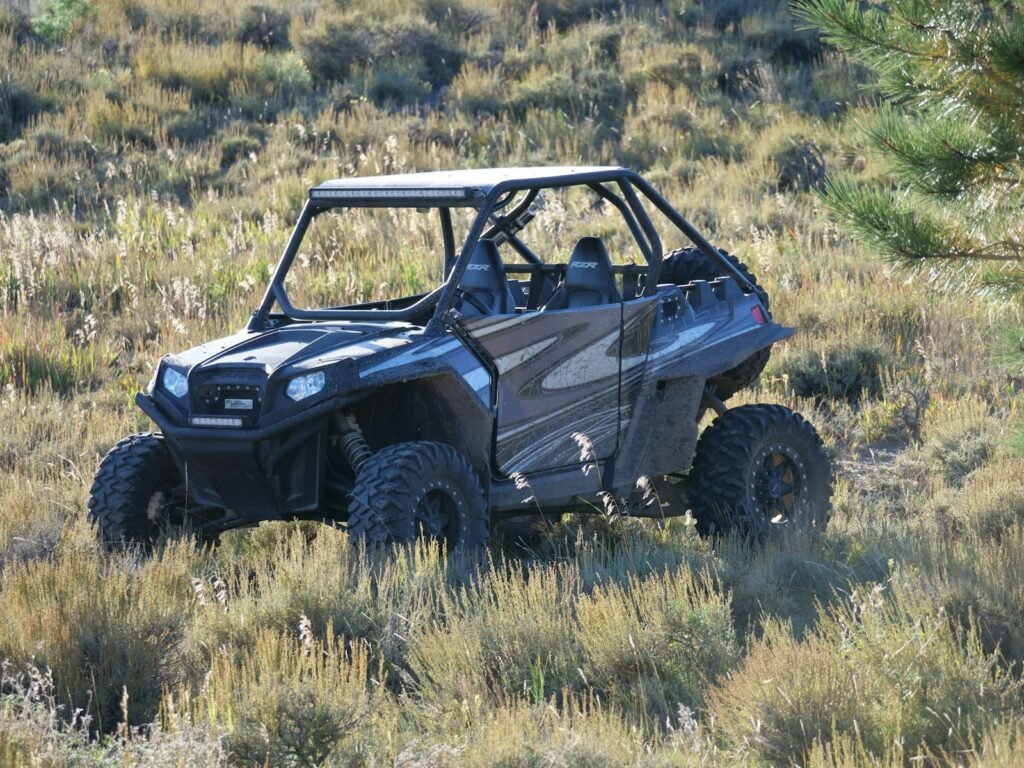
A UTV, or side-by-side, seats the driver and passengers next to each other, with a steering wheel, pedals and a tipping or fixed load bed behind. That layout changes what you can do with it.
- Passengers: sit-astride quads are not designed for passengers. A side-by-side is.
- Load: a load bed carries tools, cones, fuel cans, feed or radios far better than racks.
- Ease of driving: car-style controls are easier for a mixed crew to pick up, although training is still needed.
- Protection: HSE advises choosing side-by-sides with a roll-over protective structure (ROPS) and using lap belts or seat restraints.
Which UTV to hire
| Model | Fuel | Strengths | Where we list it |
|---|---|---|---|
| CORVUS diesel UTV | Diesel | Heavy-duty, passenger seats and load bed, suited to long days and heavier logistics | Events and agriculture |
| AODES UTV 650 | 650cc petrol | Fast and manoeuvrable for crew runs and equipment drops | Events and agriculture |
| AODES Workcross 650 | 650cc petrol | Side-by-side with load bed for all-terrain course and grounds transport | Sports and landscaping |
As a rule of thumb, choose the diesel CORVUS for heavier, all-day work and the petrol AODES models where speed around a site and nimble handling matter more. Diesel hire kit runs on white diesel (DERV) under our fuel policy.
UTV hire for events and shows
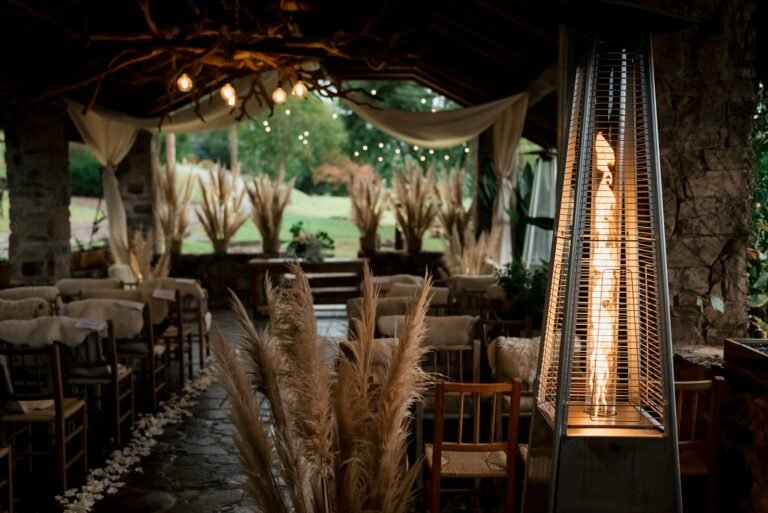
A county show, festival or wedding on farmland can cover a lot of ground, and crews spend hours walking between gates, car parks, the stage and catering. A couple of UTVs keep stewards, technicians and site managers moving and carry everything from cable to cash tins.
They are also kinder to the ground than vans and pickups. Show fields in Devon and Cornwall are often grassland that has to go back to grazing afterwards, and a lighter vehicle on suitable tyres does far less damage in a wet week. Plan routes around the site, keep speeds low in public areas, and agree who is authorised to drive. Our events page also covers marquee heaters and 3-phase generators if you are building the site from scratch.
UTVs on golf courses and sports grounds
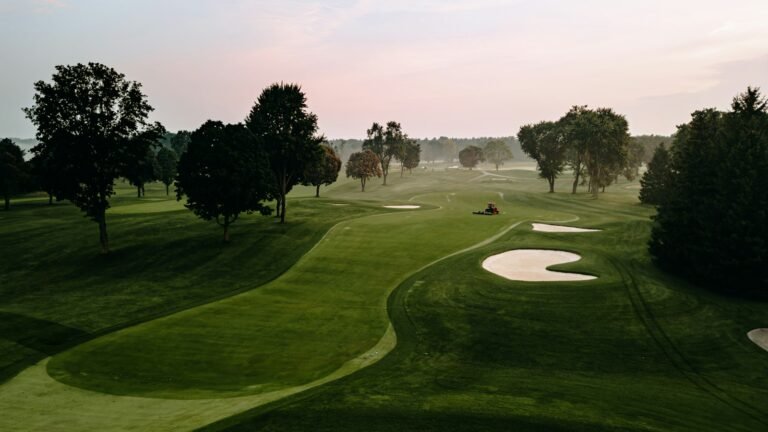
As the home of Hole in One Rentals, we hire a lot of groundscare equipment to golf clubs and sports grounds. A UTV is the workhorse of that kit: taking greenkeepers and hand tools out on course, carrying top dressing and seed, and towing ATV/UTV implements such as the Selvatici 1.2m vertical drainage aerator and the Stoneless rock collector.
On fine turf, stick to paths where you can, vary your routes so you do not wear lines, and keep off greens and wet areas. A course renovation in autumn is a typical time to add a second vehicle for a few weeks.
Golf clubs often find a single course vehicle is tied up by one greenkeeper for most of the day. A second, hired side-by-side during renovation, a drainage project or a busy tournament week lets the team split up and work on different holes at once. Because UTV hire runs by the day, week or month, the extra vehicle only needs to be on site for as long as the work lasts. We deliver across Devon, Cornwall, Somerset and Dorset, with same-day delivery often possible across most of Devon and Cornwall.
UTVs on farms and estates
On a farm, a side-by-side earns its keep on fencing jobs, feeding rounds, moving a working dog and two people, or carrying spraying and hedge-laying tools to the far end of the holding. It is also a sensible way to get a second person to outlying stock in bad weather, where a quad would mean making two trips. The AODES UTV and CORVUS UTV are on our agriculture equipment page.
Seasonal work is where short-term UTV hire makes most sense. A farm might take one on for a summer of fencing and hedge work, during a reseed, or while its own vehicle is off the road for repair. Estates often add one for a shooting season to carry beaters, dogs and kit between drives. Monthly hire or Flex Hire can work out better than repeated weekly hires if the need stretches over several months.
Planning UTVs for a multi-day event
For a show or festival, the vehicles are usually needed from the first day of the build to the last day of the break, not just the public days. Work out who needs one and when:
- Build and break: site managers and riggers moving cable, stakes, barriers and tools.
- Show days: stewards, first aid, traffic marshals and the event manager.
- Overnight: security patrols, if you have them.
Agree a secure, level parking spot where the vehicles are left at night with keys held centrally, and decide where they will be refuelled away from the public. Sending us a rough site plan with your enquiry helps us plan delivery to the right gate.
Before you take a UTV out
- Train every driver. HSE applies the same training expectations to side-by-sides as to quads. Hire is self-drive, and the hirer is responsible for driver competence.
- Belts on, every trip. Driver and passengers should wear the lap belts, and keep arms and legs inside the cab.
- Load the bed sensibly. Keep heavy items low and forward, secure loose kit and stay within the stated payload.
- Know your slopes. Approach steep banks with care, especially loaded or towing. Many Devon fields are steeper than they look from the gate.
- Arrange insurance. It is not included automatically. We refer customers to insurance4plant for plant hire cover.
The HSE page on ATVs and side-by-side vehicles is worth reading before the hire starts. Check the current guidance, as it is updated from time to time.
UTV, quad or pickup: which vehicle for the job?
Many hirers ask whether they really need a side-by-side or whether a quad or the farm pickup would do. The answer depends on who and what you are moving, and what ground you are crossing.
| UTV (side-by-side) | Sit-astride quad | Pickup or van | |
|---|---|---|---|
| Passengers | Yes, in seats with belts | No, rider only | Yes |
| Load | Load bed, often tipping | Front and rear racks, small trailer | Large load space |
| Ground impact | Light compared with road vehicles | Lightest | Heavy, ruts wet grass quickly |
| Narrow tracks and gateways | Good | Best | Limited |
| Driving style | Car-type controls, seated | Active riding, body weight matters | Car-type controls |
| Best for | Crew and kit together, event logistics, groundscare | Single rider stock checks, narrow routes | Road journeys and heavy loads on hard ground |
On a show field, golf course or wet farm, UTV hire often fills the gap between a quad that cannot carry a passenger and a pickup that would churn the ground. For single-rider work on narrow hill tracks, a quad may still be the better tool.
Diesel or petrol?
The choice between our diesel CORVUS and the 650cc petrol AODES models comes down to the working day. Diesel suits long shifts, heavier loads and towing, where steady pulling power and fewer refuelling stops matter. Petrol suits lighter, quicker work: stewards hopping between gates, greenkeepers running hand tools out to the course or a farmer doing a fast feeding round. If you are refuelling on site, remember that our hired diesel kit runs on white diesel (DERV) only, and petrol must be stored and handled in suitable containers well away from the public and ignition sources.
Loading and towing with a side-by-side
A load bed makes it tempting to pile everything on. Weight carried high or at the back changes how a UTV handles, especially on slopes and in tight turns, so load with care.
- Stay within the stated payload for the bed and the overall vehicle, counting passengers as part of the load.
- Keep heavy items low and forward in the bed, and spread the weight evenly side to side.
- Strap everything down. Loose fence posts, drums or tool boxes can slide and shift the balance on a bank.
- Do not carry people in the load bed. Passengers ride in the seats with belts on.
- Tow only from the hitch and within the manufacturer’s towing limits, reducing loads on slopes and wet ground.
- Allow longer stopping distances when loaded or towing, particularly downhill.
- Tip the bed only on level ground and with nobody standing behind it.
Tell us what you plan to carry or tow when you ask about UTV hire, and we will match the vehicle to the job.
Protecting the ground in wet weather
West Country events and groundscare work rarely get a dry week. A side-by-side is far lighter than a road vehicle, but repeated trips over the same line of wet grass will still leave a mark. These habits keep damage down:
- Set routes and stick to them. Use existing tracks, hard standing and the firmest ground, and mark the routes with stakes or flags at an event.
- Vary lines on turf. On golf courses and sports grounds, change your route day to day so wear is spread.
- Avoid sharp turns and wheel spin. Turning on the spot or spinning up a wet bank tears grass.
- Keep off the wettest areas. Low corners, gateways and spring lines are where ruts start.
- Cut unnecessary trips. Plan loads so one trip does the work of three.
If a site needs temporary trackway or ground protection mats, ask us and we will tell you what is available or point you in the right direction.
Seasonal notes for the South West
Spring shows and autumn events tend to get the wettest ground, and Devon and Cornwall can see heavy rain at any point in the summer too. Build a wet-weather plan into any event: fewer vehicle movements, firmer routes and somewhere to park off the grass. On golf courses, autumn renovation and winter work are when vehicles do most damage to soft turf, so keep to paths wherever you can. Farms needing a UTV for winter feeding should expect gateways to cut up and plan routes around them.
A worked example: a two-day show on farmland
This is an illustrative scenario, not a real event. An agricultural show in Somerset runs over two public days on grazing land, with three days of build and one of break. The organisers want crew vehicles for site management, stewards and first aid.
- Build days: one CORVUS diesel UTV for the site manager and riggers moving stakes, cable and barriers. Diesel suits long, heavy days.
- Show days: two AODES UTV 650s added for stewards and the first aid team, chosen for quick runs between the car parks, rings and the main gate.
- Routes: a marked crew route round the edge of the showground keeps vehicles out of public areas, with a 5mph speed rule near crowds set by the organisers.
- Night: vehicles parked in a fenced compound with keys held in the site office.
- Break: the CORVUS stays an extra day to clear the site, and the two petrol UTVs are off-hired after the last public day.
The organisers send one enquiry through our contact form with a rough site plan, dates and the number of vehicles, and we put together a single proposal covering vehicles, a generator and heaters for the hospitality marquee.
Two things make this kind of plan work. First, the vehicles are matched to the jobs, not just counted, so the heavy diesel goes to the riggers and the quicker petrol models go to the people who need speed. Second, the hire dates reflect the build and break, which is where most of the vehicle work happens on any show site.
What affects the cost of UTV hire
We do not publish prices. WhatsApp us for a current quote. These factors shape it:
- Model: the diesel CORVUS and petrol AODES models are priced differently.
- Number of vehicles and whether they are all needed for the whole hire.
- Hire period: daily, weekly, monthly or longer, with build and break days counted.
- Delivery: quoted separately, based on distance from our depot near Okehampton. Weekend or out-of-hours delivery may cost more.
- Extras: towed implements, trailers, generators or heaters as part of a package.
- Insurance and fuel: cover is not included automatically, and fuel is the hirer’s cost.
The simplest way to keep UTV hire costs sensible is to be precise about dates. For an event, list which vehicles are needed on which days rather than booking everything for the whole period. For a farm or golf course, think about whether the need is a fortnight of intensive work or a steady requirement over several months, as that changes which hire period gives the best value. Returning vehicles clean and full also avoids cleaning and refuelling charges at the end.
Driver briefing checklist for crews
When several people share hired vehicles, a five-minute briefing at the start of each day prevents most problems. Cover these points with every driver:
- Who is authorised to drive, and confirmation they have been trained.
- Belts on for everyone, every trip, with arms and legs inside the cab.
- Site speed limits, routes and areas that are off limits.
- Where vehicles are parked, refuelled and left overnight, and who holds the keys.
- What to do if a vehicle is damaged or breaks down: stop, report it and call or WhatsApp us.
- Daily checks: tyres, brakes, lights, steering and fuel.
Our hire FAQs cover delivery, payment and off-hire. Remember that hire charges run until the off-hire is confirmed with our office.
Frequently asked questions
How many people does a UTV carry?
Seating varies by model. Tell us how many people need to travel together and we will match the right vehicle.
Can I hire several UTVs for an event?
Yes. For multiple vehicles or a package with generators and heaters, use our contact form and we will put together a tailored proposal.
Is a UTV better than a quad for towing?
For many jobs, yes, because the driver sits in a protected cab and can carry a second person to help. For narrow tracks and single riders a quad can still be handier.
Can a UTV tow a trailer or turf implement?
Yes, within the manufacturer’s towing limits. UTVs are often used with ATV/UTV towed kit such as aerators and rock collectors. Tell us what you want to tow and we will check it suits.
Can I drive a hired UTV on the road?
Our UTVs are hired for use on farms, estates, courses and event sites. Road use brings its own legal requirements, so talk to us before planning any road journey.
Is UTV hire available for a full season?
Yes. Monthly hire, long-term rental and Flex Hire all suit a season of groundscare, a shooting season or a summer of events.
Do I need a driving licence to use a UTV off road?
On private land the law does not usually require a road licence, but drivers must still be trained and competent, and employers have legal duties under health and safety law. A road driving licence is a useful sign of general driving experience, but it is not a substitute for training on the vehicle itself. Check the current HSE guidance for your situation.
Book UTV hire across the four counties
WhatsApp or call 07841 036064, Monday to Friday 7:30am to 5:30pm, with the site postcode, dates, number of vehicles and what they will carry. For event packages and written quotes, use our contact page.