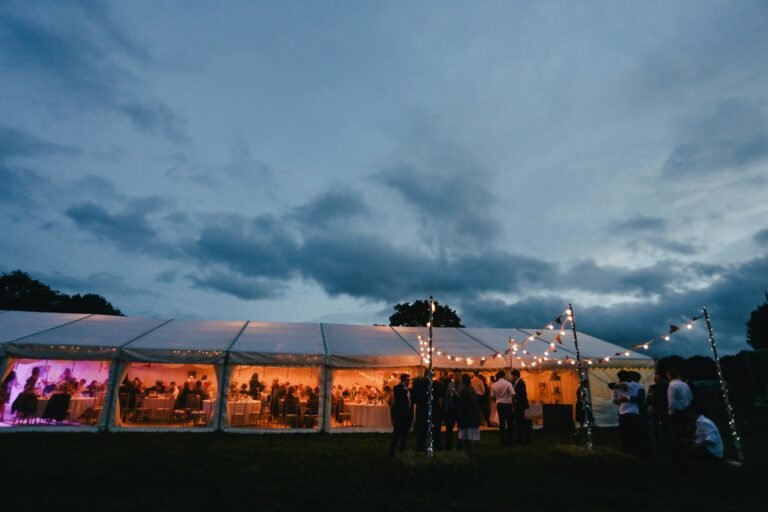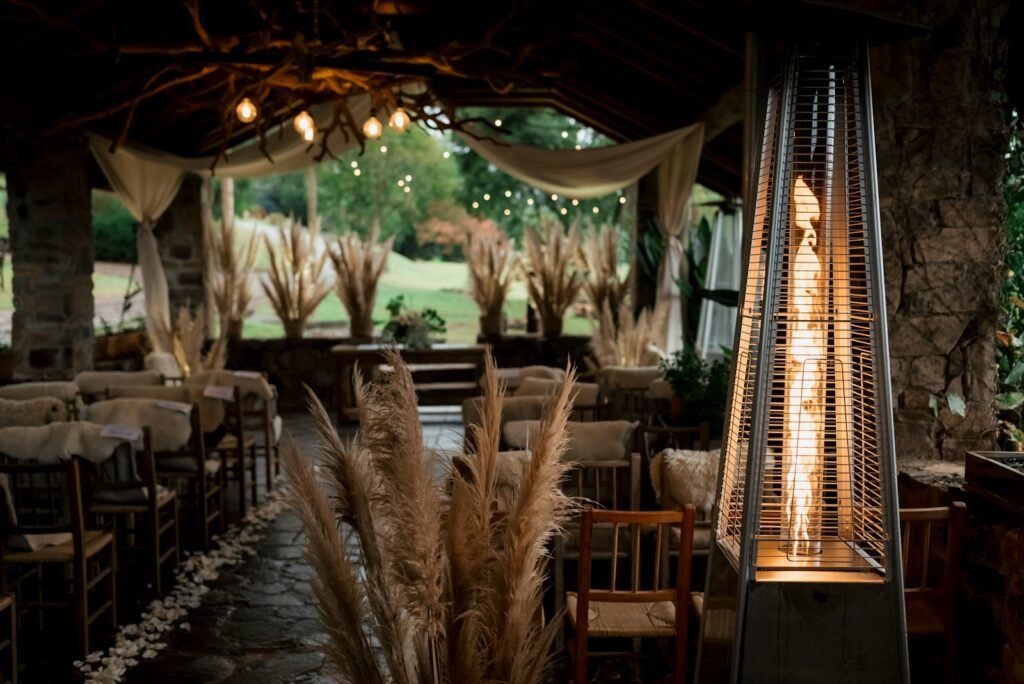
Power and heat are the two things guests notice only when they fail. Planning them properly for an outdoor event in Devon means listing every load, sizing the generator with headroom, matching heaters to the marquee, and sorting fuel and site transport before the week of the event. This guide walks through each step and the kit we supply from Okehampton for event equipment hire Devon-wide, from farm weddings to county shows.

In this guide
Step 1: build a load list
Start with everything that will plug in. Take ratings from the nameplate or manual of each item rather than guessing, and note whether it runs constantly or in bursts. The figures below are only an illustration of the layout; replace them with your own.
| Item | Rating (kW, example) | Runs |
|---|---|---|
| LED festoon and marquee lighting | 1.5 | All evening |
| PA and band | 3.0 | Evening |
| Catering urns and hot cupboard | 6.0 | Service times |
| Fridges and bar chillers | 1.0 | Constantly, with start-up surges |
| Heater fans and controls | Check with us | When heating |
| Total | 11.5 plus heaters |
Ask every supplier (caterer, band, bar, photo booth) for their power requirement in writing. Caterers in particular often bring more kit than you expect.
Step 2: size the generator
Generators are rated in kVA, while appliances are usually listed in kW. A common rule of thumb is kVA ≈ kW ÷ 0.8, so 11.5kW of load is roughly 14.4kVA. Motors, compressors and some catering equipment draw a surge when they start, so leave plenty of headroom rather than running a generator near its limit all night.
The Zenessis 25kVA 3-phase towable genset on our events equipment page covers lighting, catering and AV for many weddings, parties and small shows, and other sizes are available. With three-phase power, spread loads evenly across the phases rather than putting all the catering on one. Tell us your total load in kVA and we will match the unit and advise on fuel use and runtime for your event.
A competent electrician should plan distribution, earthing and cable routes. The HSE event electrical safety guidance points organisers to BS 7909, the code of practice for temporary electrical systems at events, and covers siting generators away from the public, protecting kit from rain and routing cables to avoid trip hazards. We do not list distribution boards or event cabling, so ask us and we will point you in the right direction.
Step 3: heat the marquee
Heating is the part of event equipment hire Devon organisers most often underestimate. An evening in May or September can drop sharply once the sun goes, and winter events need serious heat. The Airrex i-series indirect diesel heaters burn fuel outside the tent and blow clean warm air in, so there are no combustion fumes inside the marquee and they run quietly. As a guide from our events page:
- Airrex 200i: smaller tents up to around 200m².
- Airrex 300i: medium marquees up to around 500m², with ducted output.
- Airrex 800i: large event structures and festival tents.
Work out the floor area: a 9m by 12m marquee is 108m², which sits comfortably with a 200i; a 12m by 30m marquee is 360m², which points to a 300i. Very open structures, side walls rolled up, high ceilings and cold, windy sites all need more heat than the floor area alone suggests. WhatsApp us your marquee dimensions and the expected temperature and we will recommend a unit. Allow for the heater‘s own power supply in your load list.
Site heaters and generators on firm, level ground with the exhausts pointing away from the tent, guests and air intakes, and keep children and the public out of the area.
Step 4: fuel and runtime
Running out of diesel at 10pm ends the party. For each generator and heater, find out the tank size and consumption at the load you expect, then calculate how many hours each tank lasts. Plan who refuels, when, and where the spare fuel is stored, in proper containers away from heat and guests. Use drip trays when refuelling on grass, particularly on farmland near watercourses. Refuel only with the engine off and cool.
Plan for something going wrong
Decide in advance which loads matter most. If everything runs from one generator, a tripped circuit or an empty tank takes out lighting, catering and music together. On larger events, organisers often split supplies, for example one generator for catering and another for stage and lighting, so a fault in one area does not stop the whole event. Keep battery torches or emergency lighting along exit routes and in the generator area.
Have a named person who knows where the generator controls, fuel and fire extinguishers are, and our number saved. If a machine breaks down, call or WhatsApp us and we will assess it and arrange a repair or replacement as fast as we can. Our lines are open Monday to Friday, 7:30am to 5:30pm, so for weekend events ask about arrangements when you book.
Step 5: moving people and kit around the site
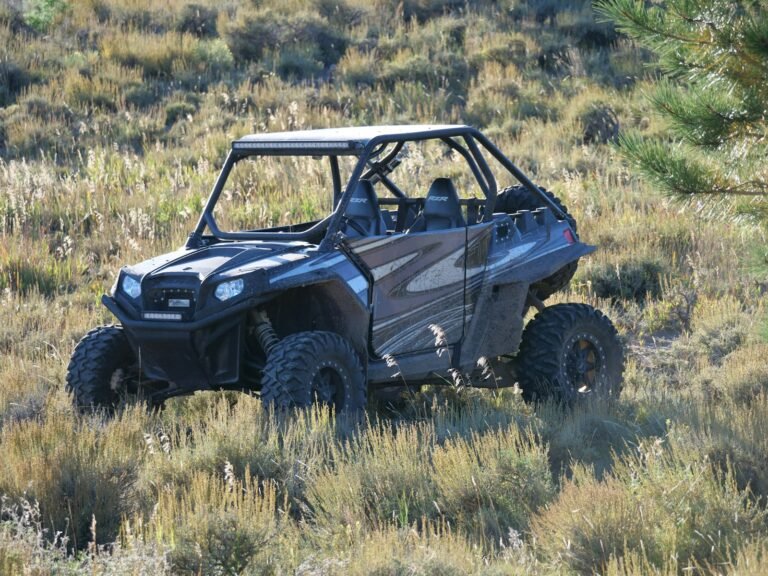
Larger sites need vehicles that will not churn up grass. The CORVUS diesel UTV has passenger seats and a load bed for crew and kit, and the AODES UTV 650 is quick for equipment runs across show and festival sites. For moving heavy cases, bar stock or staging across a lawn, the Tracspider Elektro Joe is electric, quiet and leaves virtually no track marks. For farm venues, our agriculture fleet includes PTO gensets and quads if the host farm has its own tractor.
Event equipment hire Devon timeline
- Eight weeks out: confirm marquee size, supplier list and power requirements; send us an enquiry.
- Six weeks out: fix generator size, heater units and vehicles; agree access for delivery lorries.
- Two weeks out: confirm delivery and collection times, site plan with generator and heater positions, and refuelling plan.
- Delivery day: walk the site with the electrician, test everything under load, and brief whoever will refuel.
- After the event: leave kit accessible and safe for collection.
Devon venues bring their own challenges: narrow lanes for delivery trucks, soft fields after rain, and coastal sites exposed to wind. Mention access, ground conditions and gate widths when you enquire.
Single-phase or three-phase power?
Most domestic-style equipment, such as lighting, PA amplifiers, urns and fridges, runs on ordinary single-phase 230V supplies. Larger catering kit, some stage lighting and certain heaters may want three-phase. A three-phase generator like the Zenessis 25kVA can supply both, as long as the electrician splits the single-phase loads across the three phases.
Balancing matters. If all the catering sits on one phase and the lighting on another, one phase can overload while the others are barely used, and the generator’s protection may trip even though the total load is within its rating. Give your electrician the full load list early so they can plan which circuits go on which phase, and ask suppliers whether any of their kit needs a three-phase connection or a particular plug type.
Quick kW to kVA reference
Using the common 0.8 rule of thumb, here is how running loads translate into generator size. These are approximate figures for planning; your electrician should confirm the final choice.
| Total running load | Approximate kVA | Comment |
|---|---|---|
| 8kW | 10kVA | Lighting, PA and a small bar |
| 12kW | 15kVA | Typical small wedding with light catering |
| 16kW | 20kVA | Larger catering set-up; 25kVA gives sensible headroom |
| 20kW | 25kVA | At the limit of a 25kVA unit; consider a larger set or splitting loads |
Running a generator flat out for hours is hard on the machine and leaves nothing for surges, so plan to keep the steady load comfortably below its rating.
A worked example: a farm wedding on the edge of Dartmoor
An illustrative plan for a 150-guest September wedding in a 12m by 24m marquee in a field near Okehampton. The figures are typical, not a real event, and every item should be checked against real nameplate ratings.
- Floor area: 288m², so the Airrex 300i (up to around 500m²) is the starting point. The site is exposed to westerly wind off the moor, which pushes towards the 300i rather than trying to stretch a smaller unit.
- Load list: festoon and uplighters, a band with PA, a caterer with urns and a hot cupboard, two bar fridges and the heater’s own supply. Total running load estimated at around 13kW, which is roughly 16kVA, before allowing for start-up surges.
- Generator: Zenessis 25kVA, giving comfortable headroom and room for a late addition such as a coffee van.
- Fuel: runtime calculated from the generator’s and heater’s consumption over a 14-hour day, plus a margin. A named person refuels both at a set time in the late afternoon, before the evening load peaks.
- Site vehicles: AODES UTV 650 for the set-up crew carrying tables, chairs and bar stock from the farmyard; Tracspider for heavy cases across the lawn by the marquee.
The planning here took one evening with a spreadsheet and a few phone calls to suppliers. It is the difference between a quiet, warm evening and a generator tripping during the first dance.
Fuel storage and pollution rules
Diesel spills on grass and near watercourses are a real risk at outdoor events, and there are rules about storing it. In England, the oil storage regulations apply to businesses storing oil in a container of 201 litres or more, and mobile bowsers count as storage containers.
Single containers such as bowsers and fixed tanks need secondary containment, such as a bund, that holds 110% of the container’s capacity. A generator is also covered where its connected fuel tank holds 201 litres or more in certain circumstances. The GOV.UK guidance on storing oil at a home or business sets out the detail, so check it against your plans.
Whatever the volumes, good practice is simple: store spare fuel in suitable containers on a drip tray or in a bund, away from drains, ditches and watercourses; keep a spill kit by the generator and heaters; refuel only with engines off and cool; and never leave fuel where guests or children can reach it.
Noise, neighbours and where to put the kit
Generators and heaters make some noise even when they run quietly, and the generator area is the one part of the site guests should never wander into. Site them:
- On firm, level ground that a delivery vehicle can reach without crossing the guest area.
- Away from the marquee entrance, sleeping areas, neighbouring houses and livestock.
- With exhausts pointing away from the marquee, air intakes and people.
- Fenced or barriered off, with cable runs protected or flown overhead so no one trips.
If your event runs under a premises licence or a temporary event notice, check any conditions about noise or finishing times. Rural sound carries further than people expect, and a generator droning past midnight can cause more complaints than the band.
Common power and heating mistakes
- Guessing loads: estimating instead of reading nameplates, then finding the caterer’s ovens alone use half the generator.
- No headroom: sizing a generator to the exact total, so start-up surges from fridges or compressors trip it.
- Late additions: a coffee van, hot tub or extra lighting rig arriving on the day without anyone checking the power.
- Unbalanced phases: putting all the heavy loads on one phase of a three-phase set.
- Heating for the daytime: sizing heaters for a mild afternoon rather than a cold, windy night with the doors open.
- Fuel left to chance: no named person responsible for refuelling, and no spare diesel on site.
- Cables across walkways: leads running across paths and through wet grass without protection.
Almost all of these are solved by the same thing: a written load list, agreed with every supplier and your electrician a few weeks before the event, and a short brief on the day for whoever is looking after the kit.
Devon weather and ground conditions
Devon events have to plan for weather that changes quickly. Exposed sites on Dartmoor, Exmoor and the coast can be windy and much colder in the evening than the daytime forecast suggests, so size heating for the worst likely evening, not the average. Inland valleys can be mild but damp.
Summer events still need a plan for heat. Long June evenings can turn cool after sunset, and a marquee with the walls rolled up for a hot afternoon loses warmth quickly once they are dropped. Booking a heater for a summer event and not needing it is a small cost compared with a cold evening reception.
Ground is the other variable. Fields that are firm in August can be soft by October, and heavy clay across mid and north Devon will not carry a delivery lorry after a wet week. Agree a hard-standing drop point with the venue, and use tracked or 4WD site vehicles to move kit from there. Where gateways are narrow or lanes are single-track with high banks, tell us when you enquire so we send the right vehicle.
What affects the cost of event equipment hire Devon-wide
We do not publish hire prices because each event is different. The main factors are the size and number of generators and heaters, the length of hire (most events need delivery the day before and collection the day after), site vehicles, how far the venue is from our depot near Okehampton and how easy it is to access.
Combining all your power, heating and vehicles into one delivery is usually the simplest and most efficient option. Insurance is not included automatically, so check your event insurance covers hired equipment. If you need to move staging, furniture or kit between sites yourself, our trailer range includes flat-bed trailers.
Delivery, set-up and collection
We will agree a delivery window with you and need someone on site who knows where each item goes. Our driver will position the generator and heaters on your marked spots where access allows, run through starting, stopping and refuelling, and leave you with our number. Your electrician then makes the connections. At the end, switch everything off, let it cool, and leave it accessible for collection at the agreed time.
Frequently asked questions
What size generator do I need for a wedding marquee?
Add up your loads in kW, divide by 0.8 for kVA and leave headroom. Many weddings fit a 25kVA unit, but large catering setups or bands can need more.
Are diesel marquee heaters safe inside a tent?
Indirect heaters like the Airrex i-series keep combustion outside the tent and blow clean air in. Position the heater and exhaust correctly and keep the area clear.
Do you deliver event equipment to Cornwall, Somerset and Dorset?
Yes, we cover all four counties from Okehampton. Tell us your venue postcode and dates.
Can you supply an electrician?
No, use your own competent electrician for distribution and connections. We can advise on generator sizing and runtime.
Do we need a generator if the venue has mains power?
Not always. If the venue has a suitable supply close to the marquee with enough capacity, your electrician may be able to use it. Many field and farm venues do not, which is when a generator makes sense.
How much diesel will an event use?
It depends on the generator and heater sizes, the load and the hours they run. Tell us your load list and event timings and we will advise on consumption and runtime.
Do marquee heaters need electricity?
Yes. Indirect diesel heaters need a small electrical supply for their fan and controls, so include them in your load list when sizing the generator.
Tell us about your event
Send your venue postcode, dates, marquee size and load list, and we will put together your event equipment hire Devon package with a current quote. WhatsApp or call 07841 036064, or use our contact page.