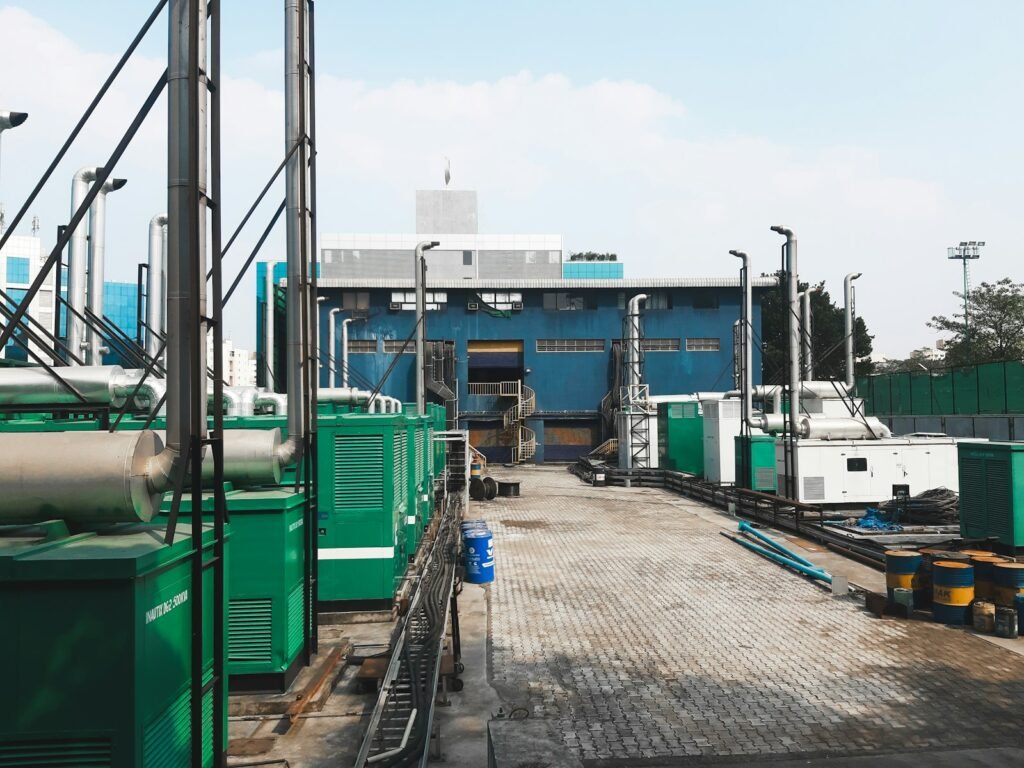
Getting generator hire Devon-wide right comes down to one number: the size of your load, in kVA. Too small and breakers trip or motors will not start. Too big and you pay to haul and fuel a machine that runs half-asleep. From our Okehampton depot we hire the Zenessis 25kVA 3-phase towable diesel genset, PTO-driven generators for farms, and can advise on other sizes. This guide walks through how to size a genset, when you need 3-phase, and how to plan fuel and siting for building sites, farms and events.

In this guide
kVA and kW: the two numbers that matter
Generators are rated in kVA (apparent power). Most appliances and tools are labelled in kW or watts (real power). The two are linked by the power factor of the load. For general sizing, many generators are specified at a power factor of 0.8, so a 25kVA set delivers roughly 20kW of real power. Check the plate on the specific machine, but that conversion is a useful starting point.
The other figure to watch is starting current. Electric motors, compressors, pumps, welders and some lighting draw several times their running current for a moment when they start. A generator has to cope with that surge, not just the steady load.
Generator hire Devon guide: sizing step by step
- List everything that will run. Lights, heaters, tools, catering equipment, pumps, chargers, PA, welfare units.
- Find the rating of each item from its plate or manual, in kW or amps. Note whether it is single-phase or 3-phase.
- Mark the motor loads and anything with a big starting surge.
- Decide what runs at the same time. A site rarely runs every tool at once, but an event kitchen at service time might.
- Add up the simultaneous load and convert to kVA (divide kW by the power factor, typically 0.8).
- Allow headroom for motor starting and anything added on the day. Running a set comfortably below its maximum is kinder to it and to your equipment.
- Send us the list. We will sense-check it and recommend a unit.
If you are not sure what draws what, an electrician can measure the load on an existing supply or advise from the equipment list. For anything feeding a temporary installation, involve a competent electrician anyway.
A simple worked example
Say a barn conversion site will run a cabin heater and lights, a few power tools and a small pump, and your electrician estimates around 12kW in use at the busiest moment. Divide by 0.8 and you get 15kVA. Add headroom for the pump starting and for the extra kit that always appears, and a 25kVA set gives comfortable margin without being oversized. These figures are only an illustration: use the real ratings from your own equipment.
Single-phase or 3-phase?
Most domestic tools and lighting run on single-phase 230V. Bigger motors, some site equipment, farm machinery such as grain dryers and milking plant, and larger catering and stage equipment often need 3-phase 400V. A 3-phase generator like the Zenessis 25kVA can usually supply both, but the single-phase loads must be spread across the three phases.
Balance matters. If all your single-phase kit hangs off one phase, that phase can overload while the other two sit idle, even though the total is well within the generator’s rating. Your electrician should plan the distribution so the phases carry roughly equal load.
Typical uses for generator hire Devon-wide
| Setting | Typical loads | What to think about |
|---|---|---|
| Building sites and barn conversions | Site cabin, lighting, power tools, mixers, pumps | Motor starting, cable runs to work areas, security overnight |
| Farms and remote land | 3-phase motors, workshops, lighting, standby for power cuts | Whether a PTO genset from your tractor is a better fit |
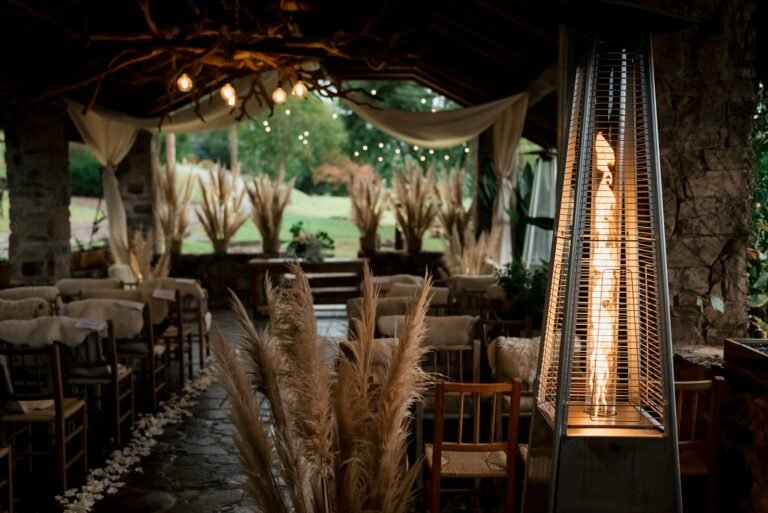
| Weddings and private events | Lighting, catering, band or DJ, heater fans | Noise near guests, run time through the night |
| Shows and festivals | Traders, stage, PA, lighting rigs, welfare | Distribution, public segregation, refuelling plan |
Rural Devon has many sites a long way from a usable mains supply: barns on Dartmoor’s edge, coastal fields used for summer events, and new builds waiting weeks for a connection. A towable set fills the gap. Our events equipment page covers the Zenessis and the marquee heaters that often run alongside it.
PTO generators for farms
If you already have a tractor, a PTO-driven generator can be a practical alternative for farm standby power or occasional use in a remote shed. Outputs vary to suit the tractor’s PTO, so we match the unit to your setup. Details are on our agriculture equipment page. Bear in mind the tractor is tied up while it runs, which matters at busy times of year.
Fuel and run time
Fuel use depends on load, not just the size of the set. A generator running at a light load uses less fuel per hour than one running hard, but a badly oversized set can run inefficiently. Give us your expected load and the hours it needs to run, and we will advise on likely consumption and how often it will need refuelling.
- Our hire kit is delivered full and should be returned full.
- Diesel equipment must run on white diesel (DERV) under our fuel policy.
- Refuel with the engine off and cool, away from ignition sources and the public.
- Store spare fuel in suitable, labelled containers with spill kit to hand.
Keep a simple log of run hours and refuels, especially on a long hire. It shows you the real consumption at your load, so you can plan deliveries of fuel and avoid running dry overnight or in the middle of an event. On a building site, check fuel at the end of each day and refill before the morning start, rather than waiting for the set to run low while the site is busy.
Siting the generator safely
Put the generator on firm, level ground, with plenty of space around it for cooling and exhaust, and never inside a tent, marquee or enclosed building. At events, HSE guidance on electrical safety at events advises siting generators where they can be reached for operation and emergencies, segregated from public areas and with warning signs. Route cables to avoid trip hazards and vehicle damage. Earthing and protection of the temporary installation should be set up by a competent electrician. Check the current guidance for your type of event.
Know your load types, not just the total
Two loads with the same kW rating can behave very differently on a generator. Grouping your equipment by type helps you, and us, judge how much headroom you really need.
| Load type | Examples | How it behaves on a genset |
|---|---|---|
| Resistive | Fan heaters, kettles, urns, hot cupboards, halogen lights | Draws roughly the same current starting as running. Easy to size, but heating loads add up fast. |
| Motor loads | Pumps, compressors, mixers, fans, fridges and freezers, grain and milking equipment | High starting current for a moment. Several motors starting together can trip a set that copes with the running load. |
| Electronic | PA and sound, LED lighting, tills, laptops, chargers | Modest loads, but sensitive to voltage dips. Keep them away from circuits with heavy motor starts where possible. |
| Welders and heavy tools | Arc welders, large saws and grinders | High and fluctuating demand. Check the tool’s requirements with us before hiring. |
A useful habit is to stagger motor starts. Bring the fridges on first, then the pump, then the lighting, rather than switching everything on at once. On a building site, avoid starting a large pump at the same moment as a compressor. Small changes like these let a correctly sized set run comfortably.
Earthing, protection and connecting safely
A generator is only one part of a temporary electrical system. Cables, distribution boards, earthing and protective devices all matter, and they are where many problems start. Under the Electricity at Work Regulations, work on electrical systems must be carried out by people competent to do it.
- Use a competent electrician to design and set up the distribution, earthing and protection for anything beyond plugging in a few tools.
- Never back-feed a building. Plugging a generator into a socket, or wiring it into a house or barn without a properly installed changeover switch, can send power back down the supply line and endanger anyone working on it. Changeover arrangements must be installed by an electrician.
- Use suitable outdoor cable and connectors, rated for the load and the weather, and keep connections off wet ground.
- Protect cables from vehicles and people with cable ramps or by routing them overhead or round the edge of the site.
- Inspect leads daily for damage and take anything faulty out of use.
For events, HSE refers organisers to BS 7909, the British Standard code of practice for temporary electrical systems for entertainment and related purposes. Your electrician will know how it applies to your site. This is general information, so check the current guidance and take professional advice.
Standby power during power cuts
Winter storms regularly bring lines down across rural Devon and Cornwall, and some farms and businesses cannot go long without power. Livestock ventilation, milking, cold storage, water pumps and heating for young stock are the usual worries. A generator on standby, connected through a proper changeover, keeps the essentials running until the supply returns.
- List the essential loads that must keep running, and leave the rest off during an outage.
- Get a changeover switch fitted by an electrician at the point where the generator will connect.
- Decide where the set will stand, outside, on firm ground, with access for refuelling.
- Keep fuel in stock in suitable containers, and know how long the set will run on a tank at your expected load.
- Test it before the storm season, not during the first power cut.
During a cut, switch loads on one at a time once the generator is running, starting with the most important. When mains power returns, follow the changeover procedure your electrician has set up, so the generator and the grid are never connected at the same time. Keep a torch, the changeover instructions and our number somewhere you can find them in the dark, because outages tend to happen at night in the middle of a storm.
A PTO genset can be a good standby option if a tractor is always on the farm. A towable set like the Zenessis 25kVA frees the tractor for other work. If you need standby cover through a whole winter, ask about monthly hire or our long-term rental terms.
Noise, neighbours and guests
Diesel gensets make noise, and on a still evening in a Devon valley it carries. Thinking about placement early saves complaints and keeps guests comfortable.
- Site the generator as far from guests, bedrooms and neighbouring houses as your cable runs sensibly allow.
- Point the exhaust and the noisiest side away from people.
- Use buildings, hedgebanks or vehicles as screening where it is safe to do so, keeping the cooling airflow clear.
- Check any event licence or venue conditions, which may set limits on noise or running hours.
- Avoid running a large set at very light load all night just to power a few lights. Plan the load instead.
A worked example: a farm wedding in a field
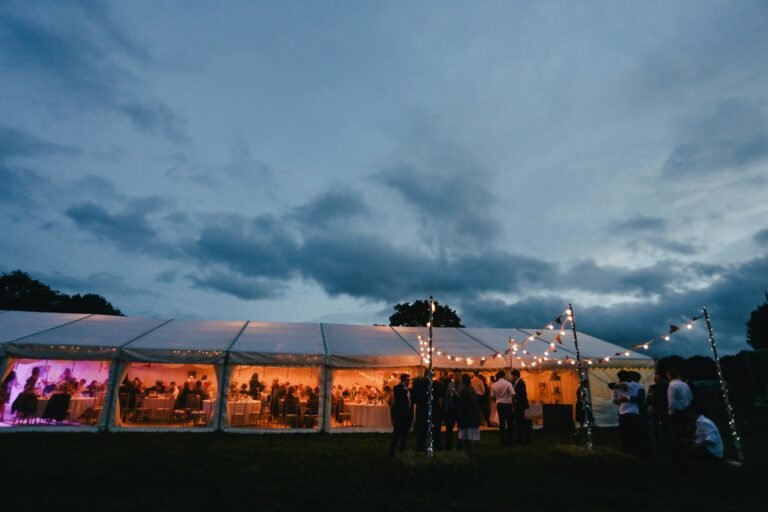
This is an illustrative scenario with example numbers, not a real event. A couple are holding a September wedding in a marquee on a farm near Tavistock, with no mains supply to the field. The caterer, band and lighting supplier each send their requirements.
- Lighting: LED festoon and uplighters, a modest electronic load.
- Band and PA: sensitive electronic load, on its own circuit away from the catering.
- Catering: hot cupboards, an urn and a fridge trailer, with motor and resistive loads.
- Heating: an Airrex indirect heater needs power for its fan and controls.
The electrician adds up the loads likely to run together at the busiest point, during dinner service with the heater on, and arrives at around 14kW. Divided by 0.8, that is 17.5kVA. With headroom for motor starts and the band’s late addition of extra lighting, the Zenessis 25kVA covers it, with the single-phase circuits spread across the three phases. Fuel use is estimated from the run hours and load, and the set is refuelled in the afternoon before guests arrive. Your figures will be different, so always use real equipment ratings.
Remote, moorland and coastal sites
Much of our generator hire Devon work goes to places a long way from a hard road: fields on the edge of Dartmoor, coastal sites in north Devon and Cornwall, and farm buildings down long private tracks. Tell us about the access when you book, including gateway widths, soft ground, steep lanes and where the set needs to stand, because a towable genset needs a route our vehicle can reach.
On exposed coastal and moorland sites, plan for wind-driven rain: keep connections covered and off the ground, and make sure the set sits level and stable on firm ground. Fuel deliveries are harder in remote spots, so size your on-site fuel storage to the run time rather than relying on topping up at short notice.
What affects the cost of generator hire in Devon
We do not publish prices. WhatsApp us for a current quote. The main factors are:
- Size of set: the Zenessis 25kVA, a PTO genset or another size, depending on your load.
- Hire period: a single event, a week on site or a winter of standby cover.
- Delivery: quoted separately, based on distance from our depot near Okehampton. Weekend delivery may cost more.
- Fuel: the set arrives full and should go back full. Fuel used is the hirer’s cost.
- Distribution and cabling: usually arranged through your electrician or event supplier.
- Insurance: not included automatically.
Accurate load information is the best way to keep generator hire Devon costs under control, because it stops you paying to haul and fuel a bigger set than you need. Our hire FAQs cover payment, delivery and off-hire.
Frequently asked questions
Is a 25kVA generator big enough for a wedding marquee?
It often is for lighting, a band and heater fans, but catering can push loads up quickly. Send us the equipment list and the caterer’s power requirements and we will check.
Can a 3-phase generator run single-phase tools?
Generally yes, through suitable distribution, with the single-phase loads balanced across the phases. Ask your electrician to plan it.
Do you have generators bigger than 25kVA?
Other sizes are available. Tell us your total load and we will tell you what we can supply.
How quickly can you deliver a generator in Devon?
Same-day delivery is often possible across most of Devon and Cornwall, depending on availability and where you are.
Can I plug the generator into my house?
Not directly. Connecting to a building needs a changeover switch installed by an electrician, so power cannot feed back into the grid. Never use a socket to back-feed a property.
Is generator hire Devon-wide available at weekends?
Our office hours are Monday to Friday, 7:30am to 5:30pm, and weekend or out-of-hours delivery may carry an extra charge. For a Saturday event, we usually deliver beforehand. Ask when you book.
Can I use a generator on a building site with site cabins and tools?
Yes. A towable set suits site cabins, lighting and tools. Our construction equipment range covers the kit it often powers, such as mixers and pressure washers.
Arrange generator hire in Devon and beyond
WhatsApp or call 07841 036064, Monday to Friday 7:30am to 5:30pm. Send your load list, site postcode, dates and run hours, and we will recommend the right unit and give you a current quote. For written quotes or accounts, use our contact page.