
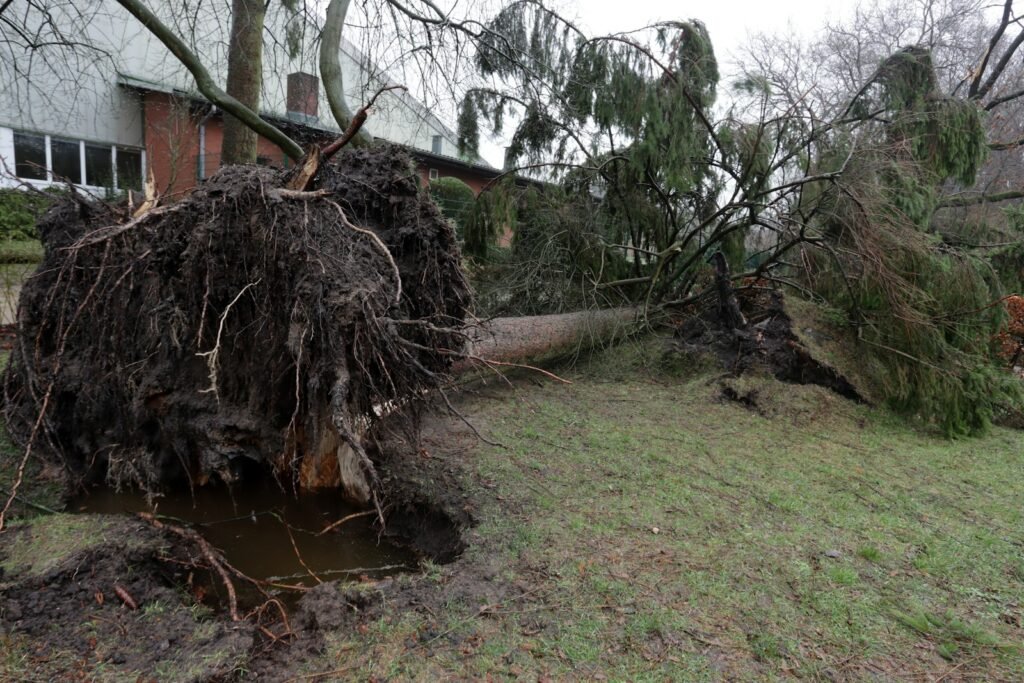
When an Atlantic storm comes through Devon and Cornwall, the clean-up usually means fallen trees and branches, blocked drives and tracks, damaged fences and, often, a power cut. Storm damage equipment hire from our depot near Okehampton covers the main jobs: wood chippers for brash, generators for power, telehandlers and tracked carriers for moving debris, and log splitters for the timber you want to keep. Before any of that, though, make the site safe. This guide covers the safety checks, the kit and a sensible order for clearing up.

In this guide
Getting ready before the storm season
The best time to think about storm damage equipment hire is in early autumn, before the first named storm. After a big storm, everyone wants chippers and generators at the same time, and lanes may be blocked. A little preparation means you know exactly what to ask for.
- List your essential loads: milking equipment, water pumps, freezers, chillers, heating, lighting, IT. Note whether each is single or 3-phase.
- Check your changeover: if you want a generator to power a building, have a qualified electrician fit a proper changeover arrangement now, not during a power cut.
- Look at your trees: get any trees that look dead, split or leaning near buildings, drives or roads checked by a qualified arborist before winter.
- Clear drains and ditches: blocked culverts turn storm rain into flooding across tracks and yards.
- Save the numbers: 105 for power cuts, your insurer, a local tree surgeon, and our WhatsApp, 07841 036064.
Safety first: before you touch anything
Storm clean-up injures people every winter, often in the first few hours. Work through these points before any machine starts.
- Fallen or low power lines: treat every line as live. Keep well away, keep others away, and call 105, the free national power cut number, to report it. If there is immediate danger to life, call 999.
- Trees caught up in lines: never try to clear a tree touching or near an overhead line. Leave it to the network operator.
- Windblown and hung-up trees: trunks and roots under tension can spring or roll violently when cut. This is specialist work. The HSE guidance on working with chainsaws explains the training and competence expected of chainsaw users at work.
- Damaged buildings: keep clear of loose roof sheets, cracked walls and leaning structures until they have been checked.
- Wind still blowing: wait until conditions have properly calmed before working under or near trees.
- Insurance evidence: photograph the damage before you start clearing, if your insurer needs it.
Storm damage equipment hire: what each machine does
| Machine | Storm job | Notes |
|---|---|---|
| GL&D 5.5″ tracked chipper | Brash in woodland, slopes, gardens | Self-propelled on tracks, reaches awkward spots |
| GL&D 6.5″ towable chipper | High volumes beside drives and tracks | Towed into position |
| Zenessis 25kVA genset | Temporary 3-phase power | Diesel, towable; other sizes available |
| PTO gensets | Farm power from your own tractor | Matched to your tractor’s PTO |
| Merlo P40.14 telehandler | Lifting and moving heavy debris and timber | 4 tonne lift, 14m reach, stabilised |
| Mechbadger tracked telehandler | Lifting in tight or soft areas | Compact, tracked |
| Tracspider carriers | Moving debris over lawns and wet ground | Electric, low ground pressure |
| Ifor Williams log splitter | Processing trunks into firewood | Trailed, hydraulic |
You’ll find the chippers and log splitter on our sports and landscaping page, and generators on the events and agriculture pages.
Chippers: clearing brash quickly
After a big blow, the volume of branches and twigs is usually the biggest headache. Chipping turns a garden or track full of brash into a neat pile of chip that can be spread as mulch or on paths. Choose the tracked GL&D 5.5″ where you need to get into woodland, steep banks or a back garden. The towable GL&D 6.5″ suits bigger volumes next to a drive or farm track.
Before feeding a chipper, check storm debris for stones, soil, wire and nails, which can damage the blades. Feed butt end first, stand to the side of the infeed, and never reach into the hopper. Chipper operators need eye, ear and face protection, and chainsaw users need the full protective kit.
The 5.5″ and 6.5″ figures refer to the chipper sizes, which broadly reflect the branch thickness each is designed to take. Anything thicker should be cut into logs rather than forced into the infeed. Organise the work so cut brash is stacked with all the butt ends facing the same way near the chipper; it speeds up feeding and keeps people out of the way of the infeed. Position the discharge chute so chip lands where you want it, such as a trailer or a mulch heap, rather than across a lane or a neighbour’s garden.
Generators after a power cut
Rural parts of Devon and Cornwall can be without power for some time after a major storm, and farms with milking parlours, water pumps or chilled stores feel it straight away. Tell us what you need to run so we can match a unit. Our Zenessis 25kVA 3-phase genset suits many farm and business loads, other sizes are available, and PTO gensets let you use your own tractor as the power source.
- Never run a generator indoors or in a barn, garage or enclosed space. Exhaust contains carbon monoxide, which can kill.
- Don’t plug a generator into your building’s wiring unless a proper changeover arrangement has been installed by a qualified electrician. Back-feeding is a serious danger to you and to engineers working on the lines.
- Plan fuel: keep enough diesel on hand for the expected outage and refuel only with the engine stopped.
Sizing a generator for storm power
Getting the size right matters. Too small and it trips or struggles; much too big and it runs inefficiently. When you contact us, list everything you need to run at the same time, with its power rating if you know it. Motors such as water pumps, vacuum pumps, compressors and fans draw much more power for a moment when they start than when running, so include them even if their running load looks small.
Tell us whether the supply needs to be single or 3-phase and how long you expect to run it each day, and we will advise on a unit and fuel use. Site the generator outdoors on level ground, well away from doors, windows and air intakes, and keep it out of reach of children and livestock.
Lifting and moving heavy debris
A telehandler with the right attachment makes moving cut sections of trunk, stacks of timber and damaged materials much safer than doing it by hand. The Merlo P40.14 from our construction range suits open yards and fields. The Mechbadger tracked telehandler works in tighter or softer areas. Lifts must be planned, with the load within the machine’s rating, and operators must be trained. For moving loose debris across saturated lawns or sports turf, a Tracspider electric carrier such as the Tracspider Elektro Joe spreads its weight and avoids the rutting a wheeled machine would leave.
If you have flooding as well, ask us about pumps. They are not in our listed fleet, but we’ll tell you what is available or point you in the right direction. For indoor clean-up after water gets into a workshop or barn, the Big Brute industrial vacuum handles wet and dry debris.
Illustrative scenario: a track blocked by a fallen tree
This is a made-up example to show how the kit fits together. After an overnight gale, a large tree has come down across the only track to a farmhouse and yard on high ground near Launceston, taking a fence line with it. The power is off.
- Make safe: the owner checks there are no lines in the crown and calls 105 about the power cut. The tree is not resting on anything, but the root plate has lifted, so a trained chainsaw operator is brought in to cut it, because the stem is under tension.
- Power: a Zenessis 25kVA genset is delivered to the yard, connected through the existing changeover switch to keep water pumps and freezers going.
- Clear the track: once the timber is cut into sections, the Merlo P40.14 lifts and stacks them beside the track.
- Brash: the GL&D 6.5″ towable chipper turns the crown into chip, which is spread on a muddy gateway.
- Timber: the Ifor Williams log splitter works through the rounds over the following week.
- Repairs: a Hyundai post hole borer helps put the fence line back.
Booking the generator, telehandler and chipper together means fewer delivery trips on a road that may still be partly blocked.
A sensible order for storm clean-up
- Make safe: report lines, fence off hazards and get dangerous trees assessed.
- Record the damage for insurance.
- Open up access: clear drives, gateways and farm tracks so vehicles can move.
- Restore essentials: power, water and stock access.
- Cut and stack timber in manageable lengths.
- Chip the brash and split the logs worth keeping.
- Repair fences, drains and track surfaces, then clean up yards and paths with a Brendon pressure washer and CRAMER battery blowers.
Common storm clean-up mistakes
- Starting too soon. Working under trees while gusts are still strong is how many storm injuries happen. Wait for conditions to settle.
- Underestimating tension. Wind-thrown trees store huge forces in the stem and roots. A cut in the wrong place can release them violently.
- Running a generator in a shed. Even with the door open, exhaust fumes can build up to dangerous levels.
- Back-feeding a building. Plugging a generator into a socket to power the house can energise the network and endanger engineers.
- Feeding dirty brash into a chipper. Soil, stones and wire wreck blades and can be thrown back out of the infeed.
- Ignoring the ground. Wheeled machines on saturated grass leave deep ruts that take months to recover.
- Clearing before recording. Insurers may want photographs of the damage before anything is moved.
What to do with the timber and brash
Storm damage equipment hire is often about turning a problem into something useful. Sound hardwood can be cut, split and stacked for firewood, although freshly fallen wood needs time to season before it burns well. Chip from the GL&D chippers makes a good mulch for borders and a surface for muddy paths and gateways.
Before removing trees, check whether any are protected. Trees covered by a Tree Preservation Order or growing in a conservation area may need the council’s agreement before work beyond what is needed to make them safe, so speak to your local planning authority if you are unsure. On farms, contract tree work should go to a competent contractor; HSE has guidance on choosing competent contractors. Chipping the brash usually avoids the need to burn it, which has its own rules.
Local conditions to plan for
Exposed coasts in north Cornwall and north Devon and the high ground of Dartmoor and Bodmin Moor tend to take the worst of the wind. After prolonged rain the ground is often saturated, so tracked machines are usually the better choice over wheeled ones. Lanes can be blocked for a while, so tell us about any road closures or fallen trees on your route when you book, and we’ll plan the delivery around them.
Low-lying areas, including parts of the Somerset Levels and river valleys across Devon, can flood after a storm as well as suffering wind damage. Don’t take machines into floodwater, as you cannot see what is under it, and wait for water to drop before assessing tracks and culverts. On the coast, salt spray and wind-blown sand get into everything, so wash machines down before they come back to us.
Larger clean-ups: estates, golf courses and businesses
On a country estate, golf course or large site, a big storm can bring down dozens of trees and leave weeks of work. That changes how you should approach storm damage equipment hire. Rather than hiring machines one at a time, plan a clean-up programme: chippers and a telehandler for the first phase, then log splitters, trenchers for damaged drainage and irrigation, and turf repair kit later on.
Golf clubs and sports grounds can lean on our Hole in One Rentals range on the sports and landscaping page, including the Stoneless rock collector, the Selvatici drainage aerator and the Conagri MEGA overseeder for repairing damaged turf once the debris has gone. Estates often need UTVs to move teams and tools across wet ground, and the AODES and CORVUS UTVs suit that work.
For multi-machine clean-ups, use our contact form to send the site, the scale of damage and the timescale. We’ll put together one proposal with an account manager. If the work runs for months, our Flex Hire account lets you swap between machines in your tier for one flat monthly fee.
Hire periods, delivery and collection
Most storm jobs suit a weekly hire. The first day or two often go on making things safe and waiting for a tree surgeon, and the machines are then needed for several days of steady work. A weekly hire avoids the pressure of rushing dangerous work to beat a daily deadline.
When you book, tell us exactly where the machines can be unloaded and whether the access is clear. If your drive is still blocked, a lay-by, yard or neighbour’s hardstanding may be a better drop-off point. Have someone on site to sign for the kit and check it over. When you have finished, clean off mud and sap, refuel and contact us for an off-hire reference, as hire charges run until it is issued.
Frequently asked questions
Can I chip storm-damaged wood with soil or stones on it?
Knock off as much soil as possible and remove stones, wire and nails first. Root plates and branches that have been dragged along the ground are the worst offenders, so cut those parts off and deal with them separately. Dirty material blunts and damages the blades.
What size generator do I need for a farm?
It depends on what you need to run and whether you need single or 3-phase power. Milking equipment, water pumps and chillers each have different demands, and motors draw extra power at start-up. Send us a list of the equipment and we’ll suggest a unit.
Do you deliver outside normal hours after a storm?
Our office hours are Monday to Friday, 7:30am to 5:30pm. Out-of-hours and weekend deliveries may be possible at an extra charge, so ask when you call.
Should I cut up a fallen tree myself?
Only if you are trained and the tree is not under tension, near lines or resting on a building. Otherwise use a qualified tree surgeon.
How quickly can you deliver after a storm?
Same-day delivery is often possible across Devon and Cornwall, subject to availability and road access. Demand rises sharply after a big storm, so contact us early and tell us about any blocked roads on your route.
Can I hire a chipper if I’ve never used one?
Our hire is self-drive, and you are responsible for making sure the operator is competent. Chippers are dangerous if misused, so get proper instruction, read the handbook and wear the right protective equipment before you start.
Do I need permission to remove a fallen tree?
Making a fallen or dangerous tree safe is usually allowed, but protected trees and those in conservation areas can carry extra requirements. Check with your local planning authority before doing more than is needed to make it safe.
Book your storm damage equipment hire
Tell us what has come down, the site postcode and how the access looks, and we’ll get the right kit moving. WhatsApp or call 07841 036064, or use our contact form for larger clean-ups needing several machines.


