

The first question with wood chipper hire Devon customers face is not how big, but how you will get the chipper to the work. Devon is full of steep fields, narrow lanes, high hedgebanks and woodland with no hard track, and the right machine depends on access as much as branch size.
In this guide
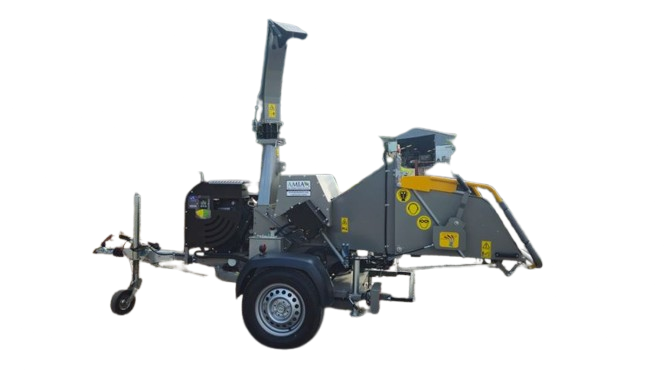
We hire two chippers from our Okehampton depot: the GL&D 5.5″ tracked chipper, which drives itself to the brash, and the GL&D 6.5″ towable chipper, which takes larger material where you can tow it in. This guide compares them and covers safe working and the bird nesting season.
Tracked vs towable: the quick comparison
| GL&D 5.5″ tracked | GL&D 6.5″ towable | |
|---|---|---|
| Capacity class | 5.5 inch | 6.5 inch, higher output |
| Moves by | Self-propelled on tracks | Towed behind a vehicle |
| Best for | Steep or soft ground, gardens behind houses, woodland, golf course rough | Roadside hedges, yards, estate drives, large volumes of brash |
| Access | Narrow gateways and paths, away from tracks | Needs a route a towing vehicle can reach |
Both are listed on our sports and landscaping equipment page.
When the tracked chipper is the right call
Dragging brash 100 metres uphill to a chipper is the slowest part of most clearance jobs. A tracked machine drives to the cut instead. It suits:
- Back gardens reached through a side passage or across a lawn.
- Woodland rides and coppice where there is no stone track.
- Sloping fields and banks where a towed unit and vehicle could not safely go.
- Golf courses and parkland, where you want to work in the rough without ruts from a pickup.
- Wet winter ground, where tracks spread the weight better than wheels.
On golf courses in particular, the tracked chipper is usually the better fit. Greenkeepers can drive it along the edge of the rough to where trees have been thinned or storm damage has come down, chip in place and move on, without bringing a towing vehicle onto soft fairways. It is also a good choice for back gardens, where the only access is a side path or a lawn.
Plan your route before it arrives. Note gateway widths, steps, soft spots and any steep cross-slopes, and track the machine with care on side slopes.
When to tow the 6.5 inch chipper instead
If you can park beside the work, the towable chipper’s larger capacity and higher output get through volume faster. Typical jobs include roadside and lane hedges, clearing storm-damaged trees from a yard or drive, estate maintenance along tracks, and site clearance before building work. It also makes sense where you are moving between several locations in a day, such as a contractor working a run of hedges.
You need a vehicle with a suitable towbar and towing capacity, and the driver must hold the right licence for the combination. If you are unsure, check the current GOV.UK towing rules before the hire.
Wood chipper hire Devon: hedges, banks and estates
Devon hedgebanks, an earth and stone bank topped with hedge shrubs, are a big part of the landscape and a big source of brash when they are cut or laid. Laying a hedge produces a lot of thin, whippy material that a chipper turns into useful mulch for paths or a biomass pile. On estates, chipping storm debris and thinnings in situ saves bonfires and haulage.
Mixing up the waste causes the most problems. Keep stones, wire, nails, soil and old fence staples out of the brash. Hedgebanks hide all of these, and they damage blades quickly. Brambles and ivy chip, but tangle, so feed them in with stiffer material.
The nesting season and hedgerow rules
Wild birds, their nests and eggs are protected by law, and it is an offence to damage or destroy an active nest. Most birds nest between March and August, so plan hedge and scrub clearance for autumn and winter wherever you can. Natural England and Defra publish guidance on wild bird protection.
For farmland in England, the Management of Hedgerows (England) Regulations 2024 include a ban on cutting hedgerows from 1 March to 31 August inclusive, with some exceptions set out in the regulations. Hedges that mark the boundary of a dwelling house are treated differently. If in doubt, check the current guidance before you cut, and look for nests even outside the main season.
Safe chipping: PPE and working practice
Chippers are among the most dangerous machines we hire, because they are designed to pull material in. HSE’s information sheet on power-fed mobile wood chippers (AIS38) covers infeed protection and safe feeding, and is worth reading before you start.
- Only trained, competent people should operate the chipper. Hire is self-drive, so this is the hirer’s responsibility.
- Wear suitable PPE: a helmet with face visor or eye protection, hearing protection, close-fitting gloves, safety boots and close-fitting clothing with no loose cuffs, cords or scarves.
- Feed butt end first from the side of the chute, and let go as the rollers take it. Never reach into the chute.
- Push short pieces in with the next branch or a stick, never your hand or foot.
- Know where the stop controls are and test them before work.
- Keep the discharge pointed away from people, roads and paths, and keep onlookers well back.
- Stop the engine and wait for the rotor to stop before clearing a blockage.
Planning a clearance day
Chipping goes fastest with two people: one cutting and dragging, one feeding. It is also safer, because someone is on hand to hit the stop control or call for help, and nobody should chip alone without someone knowing where they are. Before the machine arrives, cut material into manageable lengths and stack it in loose piles with the butt ends all facing the same way, so the feeder can pick up and push in without untangling. Pile beside the route the chipper will take, not across it.
Decide where the chip will go. Blow it straight into a trailer, a builder’s bag or a heap where it will be used, rather than chipping onto the ground and shovelling it twice. For a big job, a weekly hire takes the pressure off, and we can add a tipping trailer or UTV if you need to move chip around the site. Tell us about the whole job when you ask about wood chipper hire Devon-wide and we will suggest the right combination.
What can and cannot go through a chipper
Most breakdowns and blunt blades on hired chippers come from what was fed into them. Sorting material before you start protects the machine and keeps the job moving.
| Material | Verdict | Tips |
|---|---|---|
| Fresh branches and brash | Ideal | Green wood chips cleanly. Trim side shoots that will snag the chute. |
| Conifer and leylandii | Good | Bulky but chips well. Feed in steadily so the chute does not bridge. |
| Hedge laying waste and thin whips | Good | Bundle thin stems together with a stiffer branch so they feed evenly. |
| Brambles, ivy and climbers | With care | They wrap and tangle. Mix with stiffer material and keep hands well back. |
| Dry, seasoned or dead wood | With care | Harder on blades and dustier. Wear eye and respiratory protection as needed. |
| Roots, stumps and soil-covered wood | No | Grit and stones blunt blades quickly. |
| Timber with nails, wire or staples | Never | Old fencing and hedgebank wood often hides metal. Keep it out. |
| Leaves and grass on their own | No | They clog the machine. Compost them instead. |
Anything thicker than the machine’s capacity should be cut into firewood rather than forced in. Tell us what you are clearing and we will confirm which chipper suits.
Towing the 6.5 inch chipper: licence and road checks
If you collect the towable chipper or move it between sites yourself, you are responsible for towing it legally and safely. GOV.UK guidance on towing with a car explains the licence rules. In summary, at the time of writing, drivers who passed their car test from 1 January 1997 can tow a trailer up to 3,500kg maximum authorised mass, and those who passed before then generally have wider entitlement. Check your own licence and the current guidance.
- Check your vehicle’s towing limit in the handbook and on the plate, and stay within it and the towbar’s rating.
- Couple up properly. Make sure the hitch locks onto the ball, attach the breakaway cable or secondary coupling and raise the jockey wheel fully.
- Check the lights and number plate. The trailer board must work and show the towing vehicle’s registration.
- Look at the tyres for damage and correct pressure before each journey.
- Allow for the length. Narrow Devon lanes, tight gateways and passing places need extra care with a trailer behind you.
- Never carry anything in the hopper or on the chipper when towing.
If you would rather not tow, we deliver and collect. Tell us where you want it dropped and whether it will need moving during the hire.
Storm clear-up: chipping after winter gales
South West gales regularly bring down trees and limbs across drives, hedges and fairways. Chippers are among the first machines people ask for afterwards, but storm timber is more dangerous than routine clearance work.
- Stay away from power lines. If a tree is touching or near an overhead line, keep well clear and call 105 to report it to the electricity network operator. Do not try to clear it yourself.
- Leave tensioned timber to professionals. Wind-blown trees and hung-up limbs can hold huge stored tension. Chainsaw work on them needs trained, experienced operators.
- Chip what has been made safe. Once the timber is cut down to manageable lengths, the chipper handles the brash while the larger wood is set aside for logs.
- Check for hidden metal. Fallen trees often take fences, wire and gates down with them.
Timber from a storm clear-up often feeds straight into firewood. The Ifor Williams trailed log splitter on our sports and landscaping page handles the cordwood the chipper cannot take.
When demand for wood chipper hire in Devon peaks
Two periods are busiest. Late autumn and winter is the main hedge and scrub clearance season, because it falls outside bird nesting, and it is also when storms bring trees down. Late February is a second rush, as landowners try to finish cutting before the farmland hedgerow restrictions start on 1 March. If your wood chipper hire Devon job falls in either window, book early and get the cutting and stacking done before the machine arrives.
A worked example: an overgrown boundary on a smallholding
This is an illustrative scenario, not a real customer. A smallholding near Crediton has 150m of overgrown hedge and scrub along a boundary, with the far end reached only across a sloping paddock. The owners plan to cut back in November, outside the nesting season.
- Machine choice: the paddock is too soft and steep to tow into in November, so the GL&D 5.5″ tracked chipper is chosen to drive along the boundary.
- Preparation: the week before, the hedge is cut and material is stacked in loose piles every 20m, butt ends facing the paddock, with old fence wire pulled out.
- Chipping: two people work together, one feeding and one dragging, with the chute blowing into heaps that will mulch new hedge planting.
- Thicker wood: anything beyond the chipper’s capacity is cut into logs and stacked to season.
- Hire period: with the preparation done in advance, a daily hire covers the chipping, rather than a week.
What affects the cost of wood chipper hire in Devon
We do not publish hire prices. WhatsApp us for a current quote. The main factors are:
- Machine: the 5.5″ tracked and 6.5″ towable chippers are priced differently.
- Hire period: daily for a prepared job, weekly for a big clearance where cutting and chipping run together.
- Delivery: quoted separately, based on distance from our depot near Okehampton. Collecting the towable yourself is an option if you have a suitable vehicle and licence.
- Preparation: the more cutting and stacking you do before the chipper arrives, the shorter the hire.
- Fuel and cleaning: the machine arrives full and should go back full and clean.
- Insurance: not included automatically.
Landscapers and grounds teams who need a chipper most weeks may find a Flex Hire tier worth comparing against repeated wood chipper hire Devon bookings, as it lets you swap kit within one monthly fee.
Delivery, daily checks and return
We deliver to your site, so tell us the postcode, access details and where you want the chipper left. Someone should be there to sign for it and look it over with the driver. Ask for a run through the controls, including the emergency stop and the feed control.
Each day before you start, check the fuel and oil levels, look over the guards and the infeed chute, and test the stop controls. Clear any build-up of chip and sap from around the discharge. If anything is damaged or not working, stop and call or WhatsApp us. Do not attempt repairs yourself.
Noise and neighbours
Chippers are loud, and in a quiet village or a residential street the noise carries a long way. Start at a reasonable hour, warn neighbours if you are working close to houses, and position the machine so the discharge and the noisiest side face away from homes and gardens. Everyone working near the chipper should wear hearing protection, not just the person feeding it. On golf courses and parkland, plan chipping around play and public paths, and keep the discharge pointed away from anyone passing.
At the end of the hire, clear out the hopper and chute, leave the machine where our vehicle can reach it, and call or WhatsApp us to off-hire. Charges run until the off-hire is confirmed. Our hire FAQs cover payment, delivery and returns.
Frequently asked questions
What size branches can the chippers take?
The 5.5″ and 6.5″ figures refer to each machine’s capacity class. Tell us what you are clearing and we will confirm which is more suitable.
Can I chip conifer hedges and leylandii?
Yes, conifer chips well. The brash is bulky, so the higher output of the towable can help on long runs if you can get it close.
What can I do with the wood chip?
Use it as mulch, on woodland paths and play areas, or for composting. Keep it away from fresh planting where it may draw nitrogen from the soil as it breaks down.
Is insurance included with chipper hire?
No. Insurance is not included automatically. We refer customers to insurance4plant for plant hire cover.
Can I use the chipper during the bird nesting season?
Chipping itself is not banned, but cutting hedges and scrub where birds are nesting can be an offence, and farmland hedgerow rules restrict cutting from 1 March to 31 August. Check carefully for nests and check the current guidance before any spring or summer work.
How quickly can I get wood chipper hire in Devon after a storm?
Same-day delivery is often possible across most of Devon and Cornwall, subject to availability. After a big storm demand rises quickly, so WhatsApp us early with photos of the job, your postcode and access details. Make sure any trees near power lines or under tension have been dealt with by professionals before the chipper arrives.
Can the chipper blow straight into a trailer?
Yes, in most set-ups the discharge chute can be turned to fill a trailer or a heap. Park the trailer close and level, and check that the chip lands where you want it before feeding a full load.
Book wood chipper hire in Devon
WhatsApp or call 07841 036064 (Monday to Friday, 7:30am to 5:30pm) with photos of the job, your postcode, access details and dates. We will recommend tracked or towable and give you a current quote. Clearing a larger estate or farm? Our agriculture equipment may also help. For written quotes, use our contact page.


