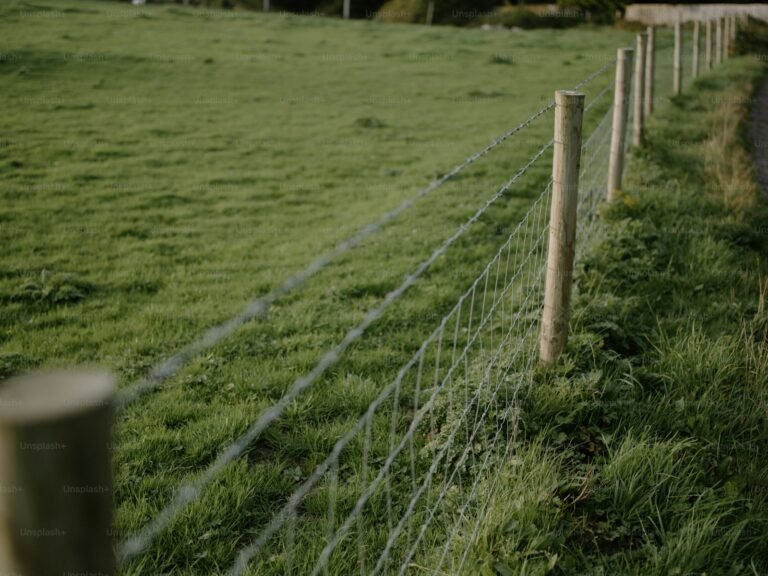
Post hole borer hire turns a day of digging fence post holes with a spade and graft into a morning’s work. We hire the Hyundai pedestrian post hole borer, a petrol-powered auger for fencing, gate posts, decking footings and tree planting, from our Okehampton depot. In the right ground it bores neat, vertical holes in seconds. In stony West Country ground it needs the right technique. This guide covers how to use one well, how to handle stones and slate, and the checks to make before you drill.

In this guide
What a pedestrian post hole borer does
A post hole borer is an engine driving a spiral auger. You stand the auger on the mark, open the throttle and let it screw down, lifting it every so often so the flights bring the soil up and out. The result is a clean, round hole with the spoil piled neatly at the edge.
“Pedestrian” means it is operated on foot and carried to each hole, so it goes where a tractor-mounted auger cannot: back gardens, narrow paddocks, woodland edges, steep banks and boundaries behind buildings.
Good jobs for post hole borer hire
- Post and rail or stock fencing on paddocks and smallholdings.
- Garden fence replacement, where the old concrete is out and new posts are going in.
- Footings for decking, pergolas, play equipment and small timber structures.
- Planting holes for hedging whips, trees and shrubs.
- Holes for signage and marker posts on golf courses and estates.
Ask us when you book which auger diameters are currently available, and match them to your posts. A hole that is slightly larger than the post leaves room for compacted backfill, postcrete or concrete.
Devon and Cornwall ground: what to expect
West Country soils vary a lot over short distances, and that shapes how a borer performs.
| Ground | Where you find it | What to expect |
|---|---|---|
| Shaley, slatey stone (shillet, killas) | Much of mid and west Devon and Cornwall | Bores, but slowly. Flat stones can jam the auger or make it jump. |
| Granite and moorstone | Dartmoor and Bodmin Moor fringes | Large stones may stop the auger completely. Move the hole or dig out. |
| Heavy clay | Culm country of mid and north Devon, Somerset vales | Bores well when moist, sticks to the flights when wet, sets hard in drought. |
| Red sandy loams | Around Exeter, Crediton and east Devon | Usually easy boring with few stones. |
A quick way to judge your ground is to dig one test hole by hand at each end of the run and one in the middle before the borer arrives. If all three go down cleanly, boring will be quick. If one end hits rock, plan for a bar, a spade and some extra time there, or ask us about a micro digger for that section.
If a test hole hits solid stone after a few centimetres across a whole fence line, a borer may not be the right tool. See the alternatives further down.
Best time of year for boring
Ground conditions change through the year as much as from place to place. Late autumn and spring are often easiest in the South West, when clay is moist enough to bore cleanly but not saturated. In a wet winter, clay sticks to the auger and holes fill with water. In a dry summer, Culm clay can set almost as hard as rock, and boring becomes slow, rough work. If you can choose your timing, avoid both extremes, and on farms fit fencing around lambing, silage and harvest.
Post hole borer hire: technique for stony ground
- Mark every hole first with a stake or spray paint, using a string line for straight runs.
- Start slowly. Let the auger bite before opening the throttle, so it does not walk off the mark.
- Lift and clear often. Raise the auger every few inches to bring spoil up. A clogged auger works harder and is more likely to snag.
- Do not force it. If the auger stops dead or starts to buck, ease off the throttle and lift out. Use a bar to break or lever out the stone, then carry on.
- Keep it vertical. Check by eye from two directions. A leaning hole means a leaning post.
- Brace yourself properly. Keep a firm stance with both hands on the handles. If the auger snags, the machine can twist sharply, so do not wrap the handles around your body.
Wear safety boots, gloves, eye protection and hearing protection, and keep loose clothing well away from the turning auger. Keep others back while you work. Hire is self-drive, so the operator should be competent and have read the instructions.
Check for services before you bore
Fence lines and garden boundaries are exactly where cables, gas pipes and water supplies tend to run. A post hole is narrow, but an auger will still go through a cable or pipe. Before boring, get plans of underground services, check for meter boxes, covers and marker posts, and scan the line with a cable avoidance tool. LinesearchbeforeUdig is a free starting point for many networks, and HSE guidance HSG47 covers safe digging near services. On farms, think about private water pipes to troughs and old field drains too.
Setting posts once the holes are bored
On stock fencing, think about the finished line before boring. Strainers at each end and at changes of direction take the tension of the wire, so set and brace them first and let any concrete cure before you strain the netting. Intermediate posts can then be bored and set along a tight string line.
Bore a few holes ahead, but not the whole line if rain is forecast, because open holes in clay fill with water and their sides soften. Set the end and corner posts first, then run a string line between them to keep the intermediate posts straight and at a consistent height. Backfill in layers, ramming each one firm with a tamping bar, rather than tipping everything in at once. If you are using concrete, slope the top away from the post so rainwater runs off rather than collecting at the base, where timber rots first.
Mixing concrete on site
For a run of concreted posts, mixing on site in batches is often cheaper and easier than bagged postcrete. The Altrad Belle Mini Mix 150, a 150 litre electric mixer, is listed on our hand tools page and suits small pours like fence and gate posts. Mix only what you can place before it starts to stiffen, and set and brace a few posts at a time, checking each with a spirit level from two sides before the concrete goes off. Leave concreted posts to cure before hanging gates or fixing heavy panels.
When a borer is not the answer
Some jobs need more than a hand-held auger:
- Big strainer and gate posts: these need deeper, wider holes. A micro or mini digger such as the Sunward SWE 08B digs them quickly and copes with stone.
- Solid rock or big boulders: a digger, or relocating the line, is quicker than fighting the ground.
- Removing old concrete footings: break and dig these out before boring new holes. Ask us what is available for breaking.
- Long-distance stock fencing: on open farmland, a tractor-mounted post driver is often used instead of boring. Ask us and we will point you in the right direction.
Our construction equipment range has the diggers and compaction kit for bigger fencing jobs, and our hand tools range is growing, so ask about mixers and other small tools for setting posts.
Hole sizes and depths for common posts
Matching the auger to the post saves time and concrete. Too narrow, and there is no room to pack backfill around the post. Too wide, and you spend longer boring and more on postcrete. The figures below are common rules of thumb only, so follow your fence or post supplier’s guidance for your materials.
| Job | Typical post | Depth guide | Hole width guide |
|---|---|---|---|
| 1.8m garden panel fence | 2.4m long timber or concrete post | About 600mm in the ground | Roughly two to three times the post width where it will be concreted |
| Post and rail paddock fence | Round or half-round timber posts | About a quarter to a third of the post length | Snug enough to ram firm if backfilling with stone and soil |
| Gate posts and strainers | Larger section posts | Deeper than line posts, often a third or more of the length | Often wider than a hand-held auger can bore, so consider a micro digger |
| Decking and pergola footings | As specified in the design | To the designer’s or supplier’s specification | Usually concreted, so allow room around the post |
| Hedging whips and young trees | Plants with small root balls | Just deeper than the root ball | Slightly wider than the roots, with loosened sides |
Tell us the post sizes when you ask about post hole borer hire, and we will confirm which auger diameters are available.
Vibration, torque and looking after the operator
Hand-held augers transmit vibration through the handles, and boring stony ground all day adds up. Under the Control of Vibration at Work Regulations, HSE sets a daily exposure action value of 2.5 m/s² A(8) and an exposure limit value of 5 m/s² A(8) for hand-arm vibration. Employers must assess and control exposure, and HSE’s guidance on hand-arm vibration explains what that means in practice.
- Share the work. Rotate operators on a long fence line rather than one person boring all day.
- Take breaks. Short, regular breaks from the machine are better than one long one.
- Keep warm. Cold, wet hands are more vulnerable. Gloves and warm clothing help in a West Country winter.
- Let the machine work. Gripping too hard and forcing the auger increases the vibration reaching your hands.
- Expect torque. When the auger snags on a stone or root, the handles can twist hard. Keep a firm, balanced stance and never wrap the handles around your body.
- Report symptoms. Tingling, numbness or white fingers after using vibrating tools should be taken seriously.
A worked example: 60m of post and rail on a smallholding
This is an illustrative scenario, not a real customer. A smallholding near Holsworthy needs 60m of post and rail fencing to split a paddock, on clay with some shaley stone. The owners are doing the work themselves over a weekend.
- Planning: posts are spaced along a string line, giving around 30 holes including two strainers at the ends. The owners scan the line and confirm the water pipe to the trough runs well to one side.
- Machine choice: the Hyundai pedestrian borer handles the line posts. The two strainers need bigger, deeper holes, so they are dug by hand with a bar and spade.
- Technique: where the auger hits flat shale, the operator eases off, lifts out and levers the stone free with a bar before carrying on.
- Weather: rain is forecast for Sunday, so only Saturday’s holes are bored ahead, and posts are set the same day to stop holes filling with water.
- Hire: a two-day hire covers the job, with the borer collected on Monday after the off-hire is confirmed.
The lesson from a job like this is to split the work by tool. The borer is fastest on the many identical line-post holes, while the few big strainer and gate holes are better dug by hand or with a micro digger. Trying to force a hand-held auger to do everything is where time and effort are lost.
Boundaries, neighbours and permissions
Most fencing does not need planning permission, but it is worth checking before you bore the first hole. The Planning Portal’s guidance on fences, gates and garden walls says that, generally, a fence up to 1 metre high next to a road used by vehicles, or up to 2 metres elsewhere, does not need permission. Different rules can apply to listed buildings, conservation areas and where permitted development rights have been removed.
- Agree the boundary line with your neighbour before you start, especially when replacing an old fence.
- Check deeds and plans if you are unsure who owns the boundary.
- Talk to your planning authority if the property is listed, in a conservation area or in a national park such as Dartmoor or Exmoor.
- Do not remove a countryside hedgerow to make way for a fence without checking the hedgerow rules with your council first.
This is general information, so check the current guidance for your property.
What affects the cost of post hole borer hire
We do not publish hire prices. WhatsApp us for a current quote. The main factors are:
- Hire period: a single day for a garden fence, or a weekly hire for a long paddock or estate fence line.
- Delivery: quoted separately, based on distance from our depot near Okehampton. You can also collect from the depot.
- Ground: stony ground slows progress and can add days to the hire.
- Preparation: holes marked and services checked before delivery means boring from the first hour.
- Extras: a mixer for concrete, a micro digger for strainers and gate posts, or a UTV to carry posts along the line.
- Fuel and insurance: fuel used is the hirer’s cost, and insurance is not included automatically.
For golf courses, estates and sports grounds with ongoing fencing, signage and planting, the borer sits alongside our other groundscare kit on the sports and landscaping page.
Delivery, daily checks and return
Tell us your postcode, where the borer should be left and the best access. On delivery, someone should sign the delivery note and look over the machine with the driver, and we can explain the controls if you ask.
Each day, check the fuel and oil, look over the auger for bent flights or damage, and make sure the handles and throttle work properly. If anything is wrong, stop and call or WhatsApp us. When you have finished, clean soil off the auger, leave the borer somewhere dry and easy to reach and call or WhatsApp us to off-hire. Charges run until the off-hire is confirmed. Our hire FAQs cover payment, delivery and returns.
Frequently asked questions
How deep should a fence post hole be?
A common rule of thumb is to bury around a quarter to a third of the post’s length, deeper for gate posts and in exposed spots. Follow the fence supplier’s guidance for your posts.
Can one person use the borer?
The Hyundai borer is designed for pedestrian use. Even so, it helps to have a second person to mark holes, clear stones and set posts.
Should I concrete posts or backfill with soil?
Both work. Compacted stone and soil backfill drains well and suits stock fencing, while concrete or postcrete is common for garden fences and gate posts.
How quickly can you deliver a borer?
Same-day delivery is often possible across most of Devon and Cornwall. WhatsApp us early in the day for the best chance.
Can the borer go through tree roots?
It will cut small roots, but larger roots can stop it or make it snatch. Move the hole slightly, or cut the root with a spade or saw. Avoid boring close to trees you want to keep.
Is post hole borer hire worth it for a short garden fence?
For a handful of holes in soft ground, a spade may be enough. Once you have more than a few holes, or stony ground, the borer usually saves a lot of time and effort.
What size auger do I need?
That depends on your posts and whether you are concreting them. Tell us the post sizes and we will confirm what is available.
Book post hole borer hire
WhatsApp or call 07841 036064 (Monday to Friday, 7:30am to 5:30pm) with your postcode, dates, post sizes and the number of holes. We will confirm what is available and a current quote. For written quotes or accounts, use our contact page.