The secret to house extension equipment hire is timing: you need a mini digger and dumper for a week or two at the start, compaction and mixing kit through the groundworks, and lifting equipment later for blocks and roof timbers. Hiring everything at once wastes money, while leaving it too late holds up your builder. This guide walks through a typical single-storey or two-storey extension stage by stage, with the machines we would suggest at each point and the things we don’t supply.

In this guide
Before any kit arrives
Get the paperwork and site checks done first. Your extension will need either planning permission or confirmation that it falls under permitted development, and it will need building regulations approval. If you are building on or near a boundary or a shared wall, the Party Wall etc. Act 1996 may require you to notify your neighbours.
In broad terms, that includes digging foundations within 3 metres of a neighbour’s building and deeper than its foundations, and in some cases within 6 metres. Notice usually has to be served well before work starts, so build it into your programme. Check the current guidance for your property.
Before digging, find out where drains, water pipes, gas and cables run. Utility plans, a cable avoidance tool and a free search through LinesearchbeforeUdig are all sensible steps. Then measure your access: gate and side passage widths, steps, slopes and overhead cables. Send us those measurements and we’ll match machines that actually fit.
Phase your hire around the build programme
Ask your builder for a rough programme before you book anything. Extensions rarely run in a straight line: there are waits for building control inspections, concrete deliveries, the bricklayer and the weather. Hiring a digger for a fixed week that happens to include two days of rain and an inspection delay is money spent on a machine standing still.
A weekly hire with the option to extend usually works better than a series of daily hires, and off-hiring between stages stops charges running while nothing is happening. If you are a builder running several extensions at once, it may be cheaper to keep kit moving between sites on one account.
A booking timeline that works
Most hold-ups on extensions come from things that were never booked, not from the machines themselves. Use this as a rough order of events once your approvals are in place.
- Six to eight weeks out: confirm the builder’s start date, serve any party wall notices, and book a scaffold contractor and skip or grab lorry.
- Two to four weeks out: send us your access measurements, site postcode and dates for the groundworks. Confirm hired-in plant insurance.
- One week out: agree where the digger and dumper will be unloaded and parked overnight, clear the access route, and move cars off the drive.
- Day one: mark out the footprint, scan for services, and dig trial holes by hand near known pipes and cables before the digger goes in.
- During groundworks: book the building control inspection as soon as the trenches are open, and order concrete for the day after.
- After the slab: off-hire the digger and dumper. Bring in mixers, lifting kit and compaction as each stage needs them.
We recommend booking at least 24 to 48 hours ahead for most machines, and earlier for larger kit such as a telehandler, especially in spring and summer when building work peaks.
House extension equipment hire, stage by stage
| Stage | Typical kit | Usual hire length |
|---|---|---|
| Strip and clear | Mini digger, tracked dumper | A few days |
| Footings and drainage | Mini digger, dumper, trench rammer | About a week, depending on size |
| Oversite and slab | Plate compactor, mixer | A few days |
| Walls and roof | Mortar mixer, telehandler for lifts | Weekly, or as needed |
| Finishing outside | Plate compactor, paving roller, pressure washer | A few days |
Stage 1: Strip the site and dig the footings
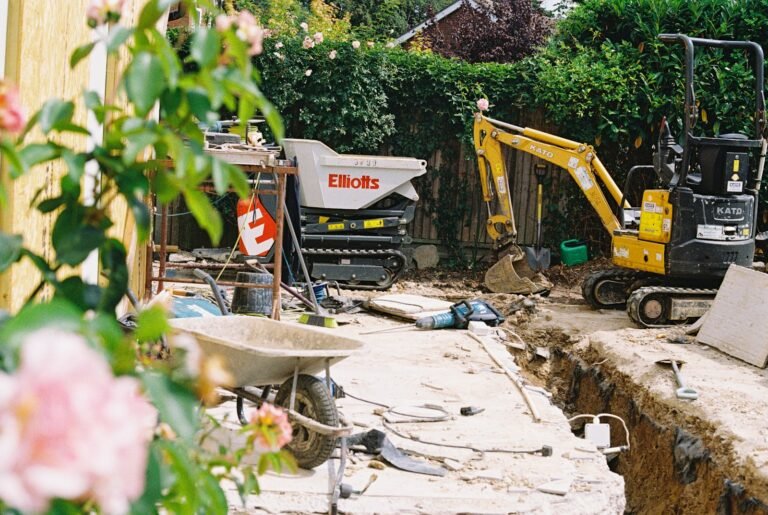
The digger is the centrepiece of house extension equipment hire. For most domestic extensions, a 1.8 to 2.5 tonne excavator is the sweet spot. The Sunward SWE 18UF and SWE 25UF are zero tail swing, so the back of the machine stays within its tracks as it slews. That matters when you are digging footings right up against the existing house wall. Where access is very tight, the 0.8 tonne SWE 08B can get through narrower gaps, at the cost of slower digging.
The depth and width of your footings are set by your engineer or building control, and soil type plays a big part. On clay ground, common in much of mid and north Devon, footings near trees may need to go deeper. Building control will normally want to inspect the trenches before concrete goes in, so book that visit around your digger hire.
Ground varies a great deal across the four counties. Around Plymouth and much of Cornwall you may hit broken slate and shale, often called shillet, which digs well but can need a toothed bucket. Near granite areas you can meet large boulders, and older town gardens often hide made ground, old foundations and buried rubble that slow progress.
If your builder has trial-hole information, share it with us, because it can change which machine and buckets make sense. A slightly larger digger with more breakout force can save days on hard or rocky ground, as long as it still fits the access.
Spoil has to go somewhere. A Hyundai 500kg tracked dumper fits through narrow side access, while the Mechbadger tracked dumper handles rougher ground. If the spoil is going into a skip on the drive, a dumper saves hours of barrowing.
Stage 2: Drainage and services
Extensions often mean moving or extending drains. The Sunward SWE 20F is well suited to drainage trenches, and the same digger can usually stay on for this stage if you plan it into the footings hire. For compacting backfill in narrow trenches, the Weber MT SRV 300-II SF slim-foot rammer fits where a plate cannot, and the Weber MT MC 85 trench roller deals with longer runs.
Stage 3: Oversite, slab and floor
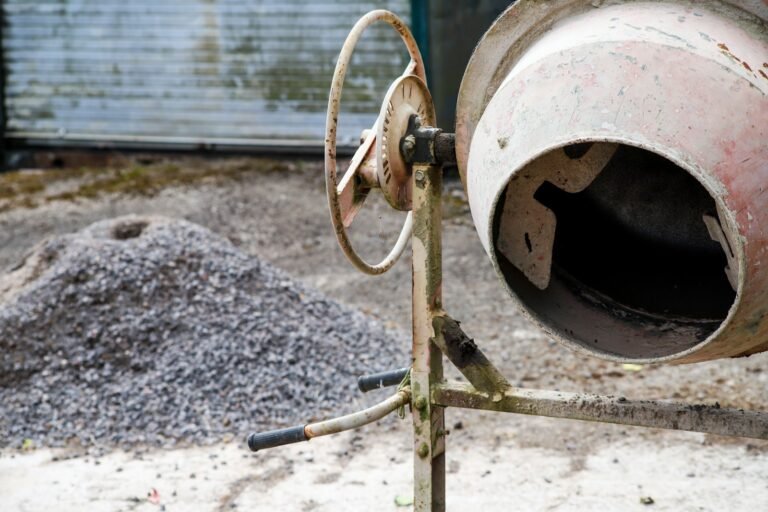
Hardcore under the slab must be compacted in layers. A Weber MT CF 3-II Hd forward plate is built for sub-base, and a CR 3-III reversible plate gives you more compaction force and lets you work back and forth in a confined footprint. Most footings and slabs are poured from ready-mix, but for smaller pours, screeds and mortar, a mixer on site is useful. The Baron forced action mixer handles semi-dry screed well; the Altrad Belle Mini Mix 150 suits mortar and small batches. Both are on our hand tools and construction pages.
Stage 4: Walls, scaffolding and the roof
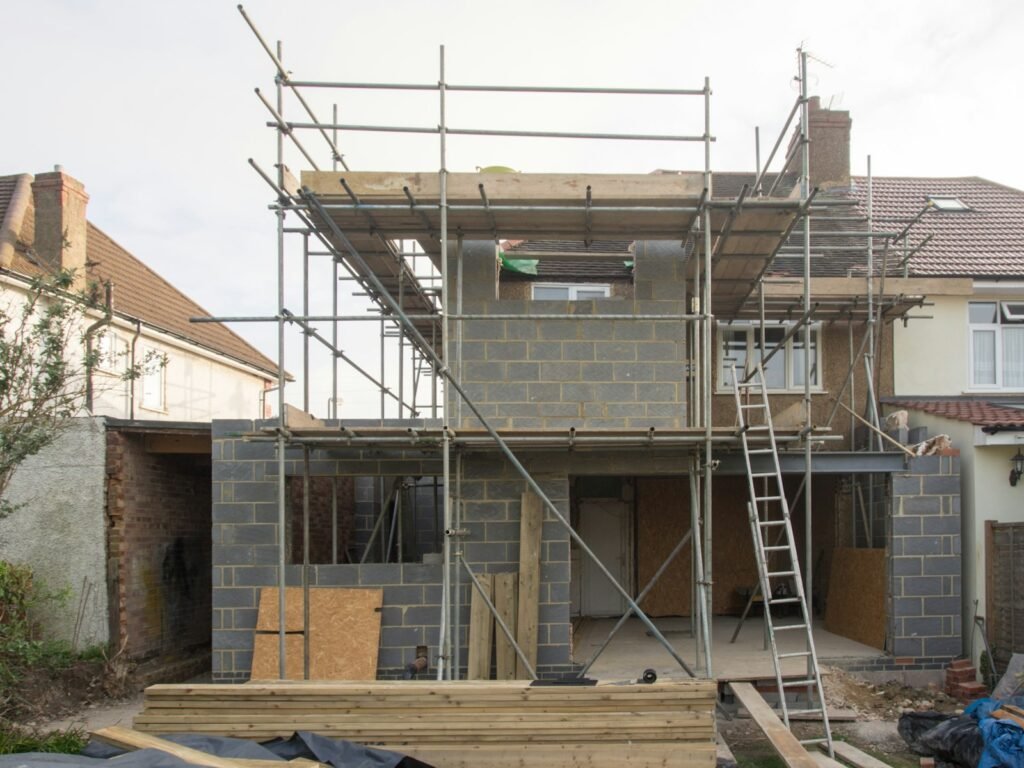
Once the walls rise, you’ll need scaffolding. We don’t hire scaffolding; use a specialist scaffold contractor who will design, erect, inspect and alter it as the build goes up.
For getting pallets of block onto the scaffold or lifting roof trusses, the Merlo P40.14 telehandler (4 tonne lift, 14m reach, stabilised) is a strong option on sites with room to set it up. Lifting operations need planning and a trained, competent operator, so talk through the lifts with your builder before you book. On tight plots, the compact Mechbadger tracked telehandler or a Dragon LT1000 dumpy bag lifter may be more practical for moving materials around at ground level.
Stage 5: Finishing the outside
After the build, there is usually a patio, path or driveway to reinstate. A Weber MT CF 2-II Hd plate is ideal for paths and patios, and the Weber MT VPR 450 paving roller beds in block paving. The Brendon 35KPE mobile power washer cleans up render splashes, mud and concrete from drives and paving before handover.
Illustrative example: a rear extension with tight access
Picture a terraced house in Exeter with a 4m by 3m single-storey rear extension planned and only a 900mm side passage to reach the garden. This is an illustration, not a real job, but it shows how the choices fit together.
- Digging: the Sunward SWE 08B fits through narrow gaps that larger machines cannot, so it is the realistic option for footings here, accepting that it digs more slowly than a 1.8 tonne machine.
- Spoil: the Hyundai 500kg tracked dumper runs the spoil out to a skip at the front. If the skip has to sit on the road, the householder or skip company needs a permit from the highway authority.
- Trenches: the Weber MT SRV 300-II SF rammer compacts backfill around the new drain run.
- Slab: a Weber MT CF 3-II Hd plate compacts the hardcore in layers before the concrete is barrowed or pumped in.
- Blockwork: the Altrad Belle Mini Mix 150 handles mortar through the side passage, where a larger mixer would not fit.
On a detached house with open front access, the same extension might use a 1.8 tonne zero tail swing digger and a larger dumper, finish the groundworks faster and justify a telehandler for the roof. The building is the same; the access changes the kit list.
What affects the cost of extension equipment hire
We don’t publish hire prices because the right figure depends on the job, but these are the factors that move it.
- Hire length: weekly hire is better value per day than daily hire, and longer periods better again.
- Delivery distance: delivery and collection are quoted separately and based on distance from our depot near Okehampton.
- Number of deliveries: grouping machines into one drop costs less than several separate trips.
- Idle time: machines standing during inspection waits or bad weather still cost money, so off-hire when you can.
- Weekend use: hire charges run continuously, and weekend use on a weekly hire may affect the rate.
- Fuel and cleaning: machines go out full and should come back full and clean to avoid extra charges.
Common mistakes to avoid
- Hiring the digger before building control and the concrete delivery are booked.
- Ordering a machine without measuring the narrowest point of the access route.
- Forgetting where the spoil goes, then running out of space on the drive.
- Leaving furniture in rooms next to the knock-through; mobile storage on your drive keeps it safe and dry.
- Assuming insurance is included. It is not; arrange hired-in plant cover before the hire starts.
Delivery and collection day
A smooth delivery keeps the first morning of the build on track. Our driver needs a clear route from the road to the unloading point, firm ground for the delivery vehicle, and someone over 18 on site to sign the delivery note and check the machine. Move cars, bins and garden furniture out of the way the night before.
When the machine arrives, walk round it with the driver and note any existing marks. Check the bucket or attachments you asked for are there, the fuel is full, and you know how to secure it overnight. Any damage not visible at delivery should be reported to us promptly in writing.
At the end of the stage, clean the machine, refuel it and call or WhatsApp us for an off-hire reference number. Hire charges run until that reference is issued; telling the driver on collection day does not count as off-hire.
What we don’t supply, and who to ask
House extension equipment hire covers a lot of the build, but not all of it. Being clear early stops gaps in the programme.
| Item | Do we hire it? | Where to look |
|---|---|---|
| Scaffolding | No | A specialist scaffold contractor who erects and inspects it |
| Skips and grab lorries | No | A licensed waste carrier |
| Ready-mix concrete and pumps | No | A local concrete supplier |
| Breakers and power tools | Ask us | Our hand tools range is growing; we’ll tell you what’s available |
| Diggers, dumpers, compaction, mixers, telehandler | Yes | Our construction range |
Safety on a domestic building site
An extension is a construction site inside a family home, which brings risks a commercial site does not have. The basics below are general guidance; your builder will have their own risk assessments.
- Trenches: footing trenches can collapse without warning, particularly in wet or sandy ground and alongside existing foundations. Nobody should enter an unsupported trench where there is any risk of collapse. HSE sets out the principles in its guidance on excavations.
- Existing foundations: digging close to the house can undermine its footings. Follow the engineer’s design and dig in short sections where it specifies.
- Children and pets: fence off the work area, and remove keys and secure machines at the end of every day.
- Overhead cables: check for telephone and power lines above the garden before using a digger arm or telehandler boom.
- Operators: our hire is self-drive, and whoever operates the digger, dumper or telehandler must be trained and competent.
Protecting your home during the build
Knocking through into an existing kitchen or living room creates dust that gets everywhere. Many households move furniture out of the affected rooms altogether. A Hiway Storage BV126 trailer from our trailers and mobile storage range sits on your drive, is lockable and weatherproof, and we move it for you, so you don’t need a towbar.
Outside, put down boards or ground protection where machines track across lawns, and keep the dumper route the same each day so damage is confined to one strip. At the end of the job, a power washer and a few days with a plate compactor and paving roller put the drive and patio back in order.
Check your home insurance too. Building work can affect your cover, and hired plant is not covered by us. Plant hire cover is available through our partner insurance4plant.
Frequently asked questions
What size digger do I need for extension footings?
For most single-storey and two-storey domestic extensions, a 1.8 to 2.5 tonne mini digger with a narrow trenching bucket does the job. Larger plots with lots of spoil may justify a 3.5 tonne machine.
Will a mini digger fit through my side gate?
Measure the narrowest point between the road and the dig, including gateposts and downpipes, and send it to us. We’ll tell you which machines fit.
Should I keep the digger for the whole build?
Usually not. Hire it for the groundworks, off-hire it, and bring kit back for the landscaping at the end. If you run back-to-back projects, Flex Hire lets you swap machines on one monthly fee.
Do you supply scaffolding or towers?
No. Ask us and we’ll point you in the right direction, but scaffolding should come from a specialist contractor.
Can I dig the footings myself to save money?
Some homeowners do, but footings must match the approved design and pass a building control inspection. If you are not confident on a digger, it is usually better to leave groundworks to the builder and hire for simpler stages such as landscaping.
How do I get a digger into a back garden with no side access?
Sometimes the 0.8 tonne SWE 08B fits where nothing else will. If there is truly no route, a specialist may lift machines over the house, which is outside what we arrange. Send us photos and measurements and we’ll give you an honest view.
Is house extension equipment hire cheaper on a monthly basis?
For a single extension, weekly hire around each stage is usually best. Builders with several extensions running back to back often find our Flex Hire account better value, as it covers delivery, collection and swaps for one monthly fee.
Plan your extension hire with us
Send us your plans or a quick description, the site postcode, access measurements and rough dates for each stage, and we’ll put together a sensible house extension equipment hire schedule. WhatsApp or call 07841 036064, or use our contact form for a written quote.