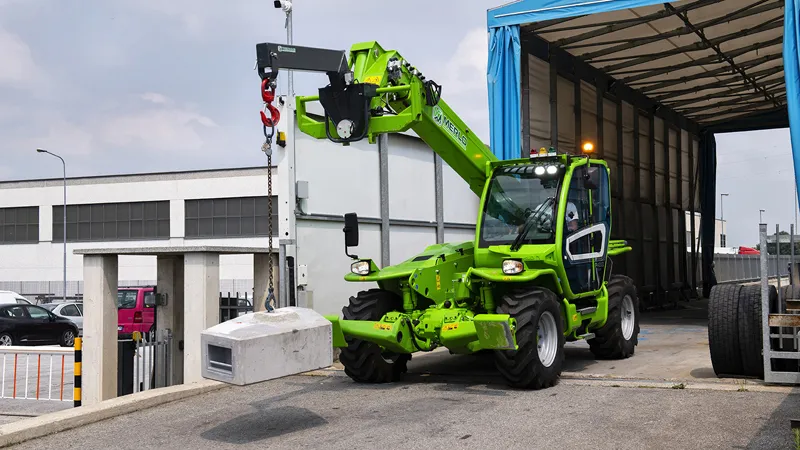
We offer telehandler hire Devon-wide from our depot near Okehampton, and our machine is the Merlo P40.14: a stabilised telescopic handler with up to 14 metres of reach and a 4-tonne maximum lift capacity. It is equally at home stacking bales in a Dartmoor-edge barn as it is lifting pallets of blocks onto a scaffold on a house build in Exeter. We also deliver into Cornwall, Somerset and Dorset. Below is what the P40.14 can do, how to read its limits, the legal checks that apply to lifting equipment, and what you need in place before it arrives.
In this guide
The Merlo P40.14 in plain terms
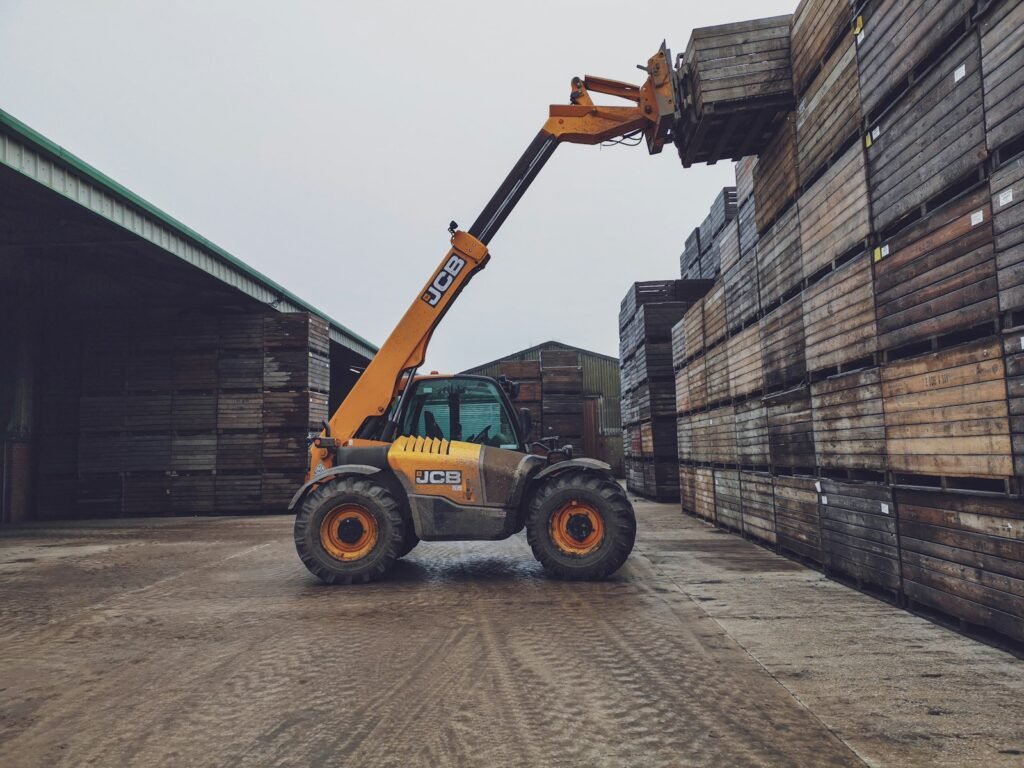
The name tells you the headline numbers. “40” refers to the 4,000kg (4-tonne) maximum lift capacity, and “14” to the roughly 14 metres of lift height and reach. Front stabilisers can be lowered to give a wider, steadier base when lifting at height or reach.
The key point to understand is that the 4-tonne figure is the maximum, achieved with the boom retracted and low. As the boom extends and rises, the safe working load falls. Every telehandler carries a load chart in the cab showing what it can lift at each combination of height and reach, with and without stabilisers. Read it before every unfamiliar lift.
| Feature | What it means on site |
|---|---|
| 4-tonne maximum lift | Heavy pallets, bulk bags and bales close to the machine |
| 14m reach | Roof level on two-storey buildings, high barn stacks, over obstacles |
| Stabilisers | Greater stability and capacity when working at height or full reach |
| Four-wheel drive, rough terrain tyres | Working across yards, fields and unmade sites |
How to read a telehandler load chart
The load chart is the most important document on the machine, and it is less intimidating than it looks. It is a side view of the boom’s working area, divided into zones, with lines showing the maximum load for each zone. To use it:
- Know the weight. Check the delivery note, the bag label or the manufacturer’s figure. Don’t guess. A pallet of blocks or a bulk bag of wet sand is often heavier than people expect.
- Know where it has to go. Measure or estimate the height and the horizontal distance from the front of the machine to the placing point, such as a scaffold loading bay or the top of a stack.
- Pick the right chart. There are usually separate charts for working on stabilisers and on tyres, and for different attachments. Use the one that matches how you are set up.
- Find the point on the chart. Trace across from the height and up from the reach. The zone you land in gives the maximum load.
- Leave a margin. If the load is close to the limit, move the machine closer to cut the reach, or split the load.
The machine’s load indicator and safety systems are there to warn and protect, not to be tested. If the warning sounds, retract the boom and rethink the lift.
Telehandler hire Devon-wide for farms
Devon is a livestock and grassland county, so most farm telehandler work involves feed, bedding and handling materials around buildings. Typical jobs include:
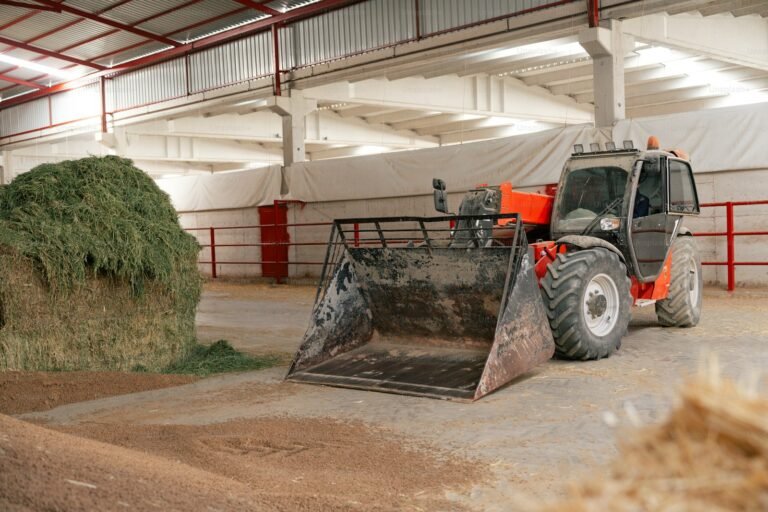
- Stacking and unstacking round and square bales in barns and outside stacks.
- Loading feed, muck or aggregates with a suitable bucket attachment.
- Lifting bulk bags of fertiliser, seed or minerals.
- Moving gates, troughs, timber and fencing materials.
- Helping with barn maintenance, such as lifting roof sheets or guttering to a working platform.
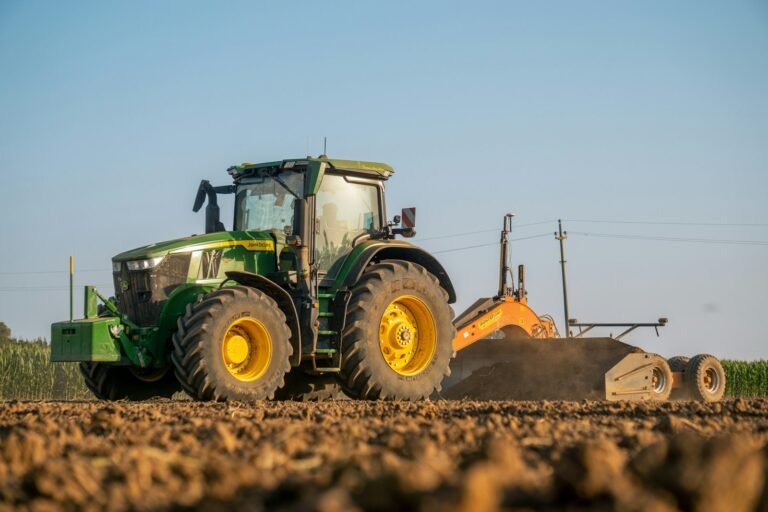
Many farms hire a telehandler for a few weeks around silage, haymaking or housing time when their own machine is busy or broken down. If you also need a tractor for that period, our agricultural hire range includes the John Deere 6155R and a Venieri pivot loader for smaller yard work.
A word on bale stacks: build them on firm, level ground, keep stacks to a stable height and shape, and never let anyone climb a stack while the telehandler is working nearby. Wet bales are much heavier than dry ones, so allow for that when you check the load chart.
A typical farm year
Demand for telehandlers on Devon and Cornwall farms follows the grass. First-cut silage in late spring and haymaking through summer bring bale handling. Maize and later cuts follow into early autumn. Then housing in autumn means bedding, feed and muck. If you know you’ll be short of a machine at one of these points, tell us early, as the busy weeks are busy for everyone.
Construction and building uses
On building sites the P40.14 earns its keep lifting materials to height and moving them across ground a forklift couldn’t handle:
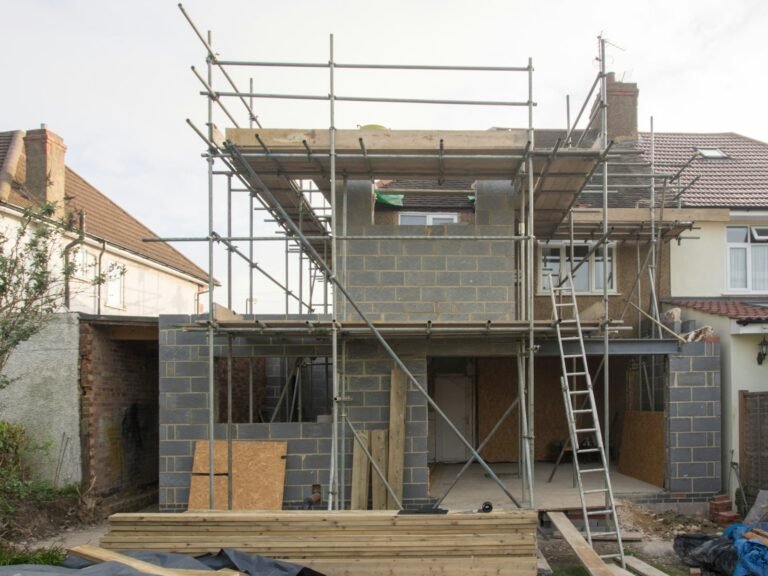
- Placing pallets of blocks, bricks and tiles on scaffold loading bays.
- Unloading deliveries from lorries on rough sites.
- Moving bulk bags of sand and aggregate around the plot.
- Assisting with steel, timber and roof components, subject to a proper lift plan.
Pair it with an excavator and dumper from our construction fleet and you have most of a small groundworks and build package from one supplier.
Unloading lorries on site
Rough-terrain telehandlers are often on site mainly to unload deliveries. Agree where lorries will park, make sure the ground there is firm, and keep the driver and others clear of the unloading side while the telehandler works. Lift packs from the lorry bed squarely, travel with the load low, and place it on level ground where it won’t topple.
Working with scaffold loading bays
Agree the loading bay position with the scaffolder before the telehandler arrives, so the machine has a firm, level standing spot at a sensible reach. Place loads gently, lower the forks clear, and never let anyone stand under a raised load or reach out from the scaffold to guide it in. Check the bay’s rated load too: a 4-tonne machine can easily overload a platform designed for much less.
Preparing a building plot for a telehandler
A telehandler is only as stable as the ground under it. On a new plot, that ground is often freshly backfilled foundations, soft topsoil or a sub-base that hasn’t been compacted. Before the machine arrives, agree a standing area for each lift, ideally on compacted stone well away from open trenches and the edges of excavations.
Keep the travel route between the material drop and the building clear of spoil heaps, pallets and cables. If deliveries arrive by lorry, plan where the lorry parks so the telehandler can unload from firm ground without reaching across a ditch or a soft verge. Ten minutes of planning with the site manager saves a lot of shuffling once the machine is working.
Choosing between a telehandler and other loaders
| Machine | Strengths | Choose it when |
|---|---|---|
| Merlo P40.14 telehandler | 14m reach, 4t maximum lift, stabilisers | You need height, reach or heavy lifts |
| Venieri 1.63D pivot loader | Compact, articulated, 1,850kg tip load | Yard loading and tight buildings, low height |
| Mechbadger tracked telehandler | Compact, tracked, tight access | Gardens, sports turf and narrow gateways |
| John Deere 6155R with implements | 155HP, towing and PTO work | Field work and haulage rather than lifting |
The Mechbadger tracked telehandler sits on our sports and landscaping range. If you’re torn, tell us the heaviest load, the highest placing point and the narrowest access, and we’ll point you to the right machine.
Attachments and what to ask for
Pallet forks are the basic telehandler attachment. Buckets, bale handlers and other tools vary by job, so tell us exactly what you intend to lift or load and we’ll confirm what is available with the machine. Only use attachments that are compatible with the machine and covered by its load charts, because the chart for forks doesn’t apply to a heavy bucket.
Don’t use a telehandler to lift people unless it is fitted with a working platform designed and approved for that machine. Improvised cages on forks are not acceptable.
Operator training and legal checks
Telehandlers are hired self-drive unless agreed otherwise, and the operator must be trained and competent on this type of machine. Most construction sites require a recognised card, such as CPCS or NPORS, for telescopic handlers. On farms the same duty to train and supervise operators applies, even if site card schemes aren’t checked. HSE’s lift truck training guidance describes the general approach: basic training, job-specific training and familiarisation on site under supervision, with experience on one type of truck not automatically covering another.
Telehandlers are lifting equipment, so they are covered by the Lifting Operations and Lifting Equipment Regulations (LOLER). That means lifting operations should be properly planned, supervised and carried out by competent people, and the machine needs periodic thorough examination by a competent person with a written report. HSE’s guidance on thorough examination of lifting equipment explains the intervals, which are shorter for equipment used to lift people. You’re entitled to ask for evidence that a hired machine has a current report. Check the current guidance, as this is general information rather than legal advice.
Insurance is not automatically included with our hires. We refer customers to insurance4plant.co.uk for plant hire cover.
Daily checks and safe working
- Walk round before starting: tyres, hydraulic hoses, leaks, lights, mirrors and cab glass. Don’t operate with broken or missing cab glass.
- Check the load chart against the weight of what you’re lifting and where you need to place it.
- Use the stabilisers on firm, level ground whenever the chart requires them. On soft ground, put suitable pads or timbers under the feet.
- Travel with the boom lowered and retracted and the load just clear of the ground.
- Avoid slopes when carrying raised loads, and watch for soft ground near slurry pits, ditches and trenches.
- Keep well clear of overhead power lines, which run across a lot of Devon farmland. HSE’s GS6 guidance on overhead lines covers safe distances and planning.
- Keep pedestrians out of the working area, particularly when reversing.
- At the end of the shift, lower the forks to the ground, apply the parking brake, switch off and take the key.
A worked example: re-sheeting a farm building
To show how the pieces fit together, here is an illustrative plan for replacing the roof sheets on a mid Devon cattle building, using a telehandler to lift packs of new sheets to a scaffold or edge-protected working area. It is a planning aid, not a description of a real job.
- Before hire: the roofing contractor confirms the old sheets have been checked for asbestos, edge protection is designed, and a lift plan sets out where the machine will stand and what each pack weighs.
- Day 1: telehandler delivered and handed over. A firm standing area is prepared with stone on the soft side of the yard so the stabilisers have solid ground.
- Days 2 to 4: packs of sheets lifted to the working area in sensible quantities, checked against the load chart each time the reach changes. Old sheets are lowered in stillages or bags, never thrown.
- Day 5: ridge and gutter components lifted, site cleared, and the machine off-hired.
The key points are the same on any lifting job: know the weights, plan where the machine stands, keep people out from under the load, and never use the telehandler as a working platform unless it is fitted with an approved one.
Delivery, access and the Devon lanes
The P40.14 is a full-size machine, and planning the drop is part of any telehandler hire Devon-wide. It arrives on a transporter, and steep, narrow lanes with tight bends are common around Dartmoor and the Tamar Valley. Send us the postcode and a note of any low bridges, weight limits or awkward gateways, and we’ll plan the drop accordingly. If you need to lift through a narrow gateway, onto a garden or across a sports pitch, the compact Mechbadger tracked telehandler may suit better.
On the day, have a firm, level unloading area and someone on site to sign the delivery note and take the handover: controls, stabilisers, the load chart and daily checks. The machine arrives with a full tank and should go back full. Our hire terms require white diesel (DERV) only, even on farms. When you’ve finished, call to off-hire and get a reference number, because charges run until it is issued.
Common mistakes on telehandler hires
- Assuming 4 tonnes at full reach. The capacity at 14m is a fraction of the maximum. Always use the chart.
- Setting stabilisers on soft ground. A stabiliser foot sinking into a wet yard or fresh backfill is a classic cause of tip-overs. Use pads and check the ground.
- Driving with the boom up. Even an empty raised boom makes the machine much less stable, especially over ruts and slopes.
- Using the wrong attachment chart. A bucket full of wet muck is heavy and sits further forward than a pallet on forks.
- Booking too late. We recommend 24 to 48 hours’ notice for larger machines, and more in the farm busy season.
What affects the cost of telehandler hire Devon-wide
We don’t publish prices, so WhatsApp us for a current quote. The main factors are the length of hire, the delivery distance from our depot, any extra attachments, and whether the machine comes back clean and full of fuel.
Weekly hire usually works out better value per day than repeated day hires, and if you need the machine on and off through the year, long-term rental or Flex Hire can make the monthly cost predictable. Insurance is arranged separately. The best-value telehandler hire Devon-wide is the one booked for the right period with the job properly prepared, so the machine isn’t standing idle while you wait for a delivery or a scaffold.
Hire periods, long-term rental and Flex Hire
A single lift day for a roof delivery may need just one day. Most building and farm jobs suit a weekly hire, which is our most popular period. For months on one site, long-term rental gives monthly rates with on-site servicing included.
If you use a range of kit through the year, look at Flex Hire. The Flex Hire page lists the pivot loader, telescopic handling and the 4WD tractor in Tier 4 (£1,495 +VAT and delivery per month), which also includes every lower tier. Ask us to confirm which tier covers the P40.14 for your account.
Frequently asked questions
Do I need a licence to drive a telehandler?
There’s no single “licence” for off-road use, but operators must be trained and competent, and most sites require a CPCS or NPORS card. If the machine needs to go on a public road, talk to us first.
Can the P40.14 lift 4 tonnes at 14 metres?
No. 4 tonnes is the maximum close in. Capacity reduces as the boom extends, so always use the load chart.
How quickly can you deliver a telehandler?
We recommend booking 24 to 48 hours ahead for larger machines. Same-day is sometimes possible across much of Devon and Cornwall, subject to availability.
Can I hire a telehandler by the month?
Yes. Monthly and long-term rates are available, and Flex Hire is an option if you swap between machines. Ask us which suits your work.
Can I use the telehandler to lift a person to clean gutters?
Only with a working platform designed and approved for that machine, used as the manufacturer intends. Never lift people on forks or in a bucket.
Will it fit in my barn?
Check the door width and height, and the clear height inside with the boom raised. Send us the measurements and we’ll tell you.
Do you deliver outside Devon?
Yes. Telehandler hire Devon-wide is the core of what we do, but we also deliver to Cornwall, Somerset and Dorset. Transport is quoted by distance from our depot.
Book telehandler hire Devon-wide
Send us what you need to lift, the site postcode, dates and access details. WhatsApp or call 07841 036064 (Mon–Fri 7:30am–5:30pm) for a current quote, or use the contact page for accounts and written quotes.