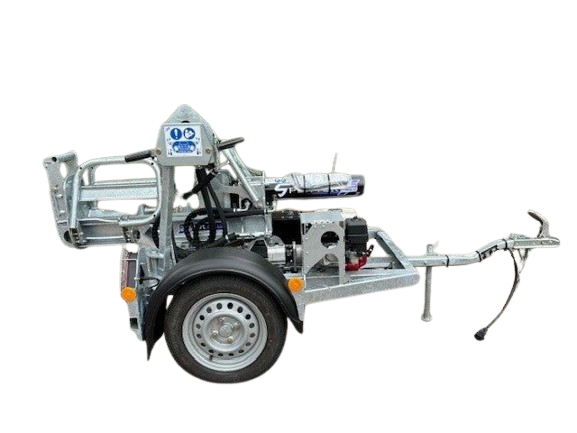
The lorry has crane-dropped six bulk bags of sand and MOT on the drive, and the patio is round the back. You could barrow every tonne, or bring in a telehandler that will not fit through the side gate. Dumpy bag lifter hire is the middle option. Our Dragon LT1000 is a compact lifter with a 1000kg safe working load (SWL), built for moving sand, topsoil and aggregate bags around gardens, golf courses and small sites. We also list the Dragon LF1000 hybrid lifter; ask us which model suits your job.
In this guide
What a dumpy bag lifter is for
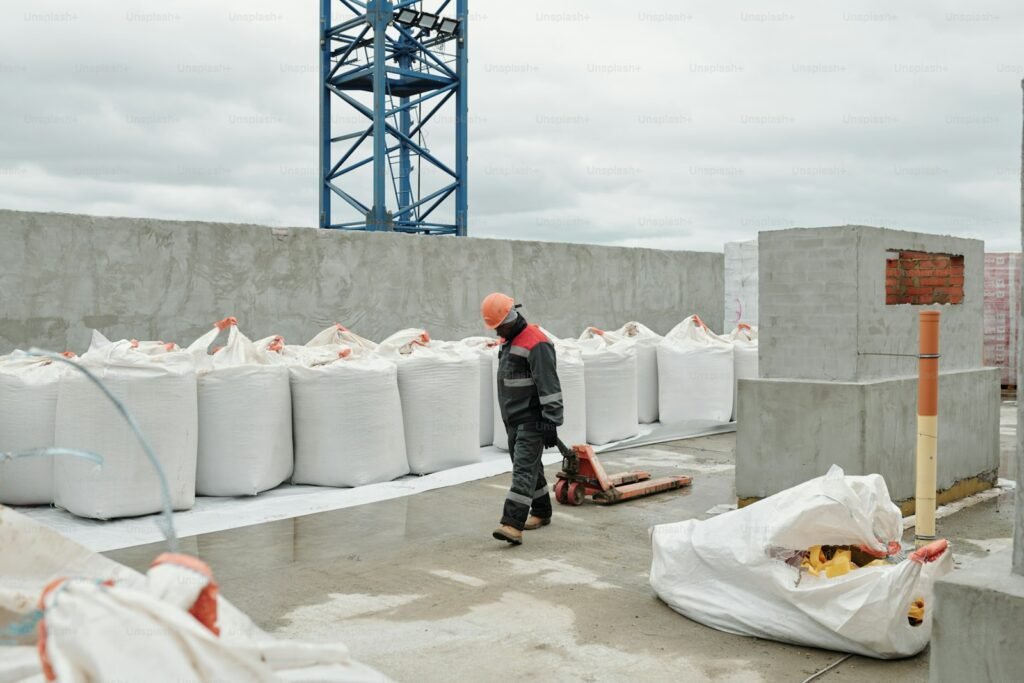
Builders’ merchants and aggregate suppliers deliver loose materials in bulk bags, often called dumpy bags, jumbo bags or FIBCs. Those bags are delivered by lorry-mounted crane to the kerbside or the nearest hardstanding, which is rarely where you need them.
A dumpy bag lifter picks the bag up by its loops and moves it to where the work is happening. That saves hours of shovelling and barrowing, keeps material clean and in one place, and means you can position bags right next to the mixer, the trench or the bunker you are refilling.
Typical jobs for dumpy bag lifter hire
- Garden and landscaping projects: moving topsoil, sharp sand and sub-base round to the back garden for patios, paths and new lawns.
- Golf courses: relocating bunker sand and topdressing to where greenkeepers need it, a regular request through our Hole in One Rentals line.
- Sports grounds: positioning rootzone and dressing material for end-of-season renovation.
- Small building sites: feeding a mixer with ballast or sand without double-handling.
- Farms and estates: moving bagged feed, fertiliser or stone for track repairs.
Lifter, telehandler or dumper?
All three move material, but they suit very different sites.
| Machine | Strength | Limitation |
|---|---|---|
| Dragon LT1000 dumpy bag lifter | Compact, made for bulk bags, 1000kg SWL | Bag handling only; not for high-level placing |
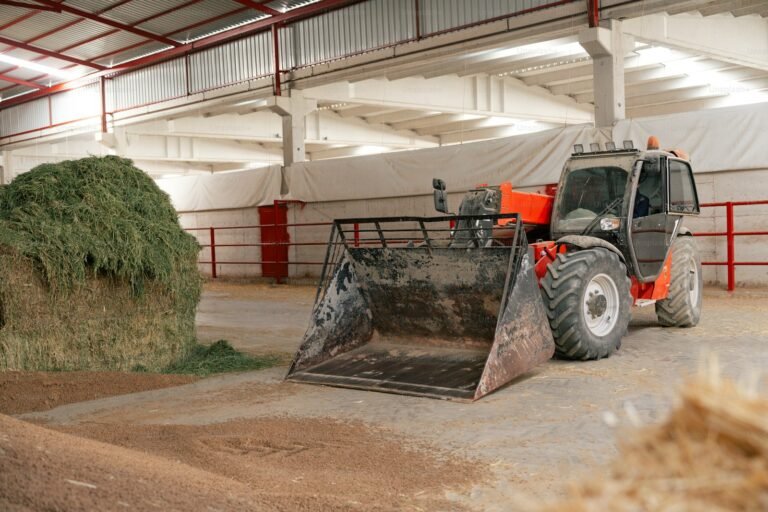
| Mechbadger tracked telehandler | Compact tracked lifting and placing on soft or tight sites | Larger machine, needs a trained operator |
| Merlo P40.14 telehandler | 14m reach, 4t lift, stabilised | Needs space and firm ground; overkill for a garden |
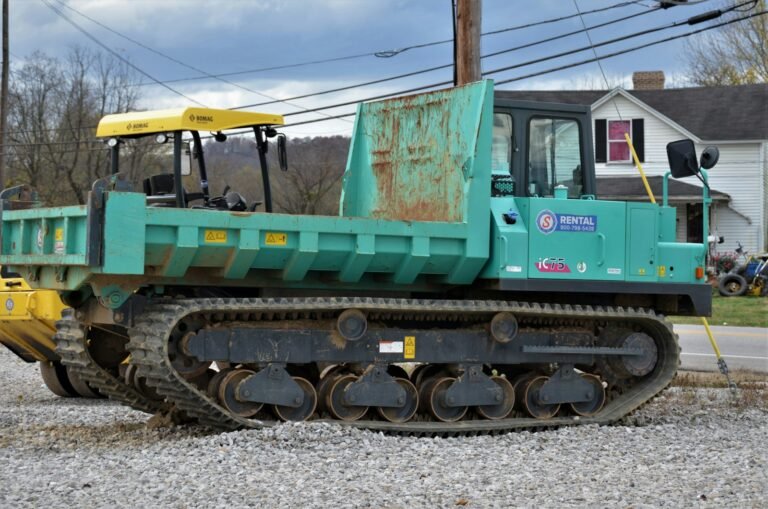
| Tracked dumper or Tracspider carrier | Moves loose material over rough ground | Bag must be emptied and loaded in batches |
If you are only shifting bags at ground level, the lifter is usually the simplest and most cost-effective choice. If bags need to go up onto scaffolding or a roof, ask us about the telehandlers on our construction equipment page.
How heavy is that bag?
This is where most problems start. A bag sold as a “tonne” is often not exactly a tonne, and wet material weighs more than dry. Sand and topsoil left out in a Devon downpour can be noticeably heavier than when they were delivered.
- Check the delivery note or the supplier’s stated bag weight.
- Assume wet bags are heavier and leave a margin below the 1000kg SWL.
- Do not lift a bag with damaged, frayed or cut loops. Decant it instead.
- If in doubt, ask your supplier for smaller bags, or split loads between bags.
Lifting safely on site
Dumpy bag lifters are lifting equipment, so at work the Lifting Operations and Lifting Equipment Regulations 1998 (LOLER) apply. In plain terms, lifts should be planned, carried out by competent people and done with equipment that is suitable and maintained. The HSE’s guidance on LOLER explains the duties; check the current guidance if you are running a commercial site.
- Walk the route first. Look for slopes, soft lawn, drain covers, steps, kerbs and overhead obstructions.
- Measure gates and paths. Check the lifter and a bag will pass through together.
- Keep bags low while travelling. Lift only as high as needed to clear the ground.
- Keep people clear. Nobody should stand under or beside a suspended bag.
- Put bags on firm, level ground so they do not slump or topple when emptied.
- Go slowly on slopes and across lawns, especially after rain.
Hire is self-drive unless agreed otherwise, so the person using the lifter should be competent. We will run through the controls at handover and answer any questions on WhatsApp during the hire.
Soft ground, lawns and golf courses
A loaded lifter puts a lot of weight through a small footprint. On a dry summer lawn that is rarely a problem, but on a wet Devon garden in March or a sodden fairway in November it can leave ruts that take months to recover.
Lay ground protection boards or plywood sheets along the route on soft lawns, and keep to paths and buggy tracks on golf courses where you can. Spread the work over drier days if the forecast allows. On sloping gardens, plan the route so you travel across firm ground rather than straight down a wet bank with a full bag. Where the ground is too soft or steep for any wheeled lifter, a tracked carrier such as the Tracspider moving smaller loads may be the safer choice.
Plan the delivery around the lifter
A bit of coordination makes the day easier. Ask your merchant to drop bags as close to your access route as their crane allows, on hardstanding rather than a soft verge. Arrange our delivery so the lifter arrives before or with the materials. If you are also hiring a mixer, compactor or mini digger, book them together so one delivery covers the lot.
For landscapers and grounds teams with a run of projects, the lifter sits alongside our turf, trenching and chipping kit on the sports and landscaping page.
Which materials are heaviest?
Bulk bags all look much the same on the back of a lorry, but what is inside makes a big difference to how they handle. Use this as a rough guide when planning moves, and always check the supplier’s stated weight on the delivery note.
| Material | Typical use | Handling notes |
|---|---|---|
| Sharp sand and building sand | Patio bedding, mortar, block paving | Holds water; a soaked bag can be much heavier than its delivered weight |
| Bunker sand and topdressing | Golf bunkers, greens, sports turf | Often delivered in large quantities; stage bags close to where they will be used |
| Topsoil | New lawns, raised beds, landscaping | Weight varies a lot with moisture and how much clay it contains |
| Type 1 sub-base (MOT) | Patio and driveway foundations | Dense and heavy for its size; bags can sit close to a tonne |
| Gravel and decorative stone | Paths, drives, drainage | Free-draining, so weight stays fairly constant |
| Ballast | Concrete mixing | Heavy; keep bags near the mixer to avoid extra moves |
If you are ordering, ask the merchant for bag weights before delivery. Where weights are close to the lifter’s 1000kg SWL, ask whether they can supply part-filled or smaller bags, which are easier to handle on soft or sloping ground in any case.
Know your bags
Most bulk bags have four lifting loops, one at each top corner, and are designed to be lifted using all of them. Many are sold as single-trip bags, meant to be filled, delivered and emptied once; reusing them for heavy loads is a gamble. Some have a filling spout at the top or a discharge spout at the bottom, and some are open-topped.
Bags left outside for months degrade in sunlight, and the loops are usually the first part to weaken, so treat an old bag from the back of the yard with suspicion. If a bag has a label, it should give a safe working load: never exceed it, whatever the lifter is rated for.
Step by step: drive to back garden
Here is how a typical move goes when bags have been crane-dropped on the drive and the work is round the back of the house. Adapt it to your site and the operating instructions we go through at handover.
- Plan the route and set-down points before you touch a bag. Decide where each material needs to end up, keeping sand near the patio area and soil near the beds.
- Prepare the route. Open gates fully, move bins and garden furniture, and lay boards over soft lawn, drain covers and anything fragile.
- Inspect the bag. Check the loops for cuts, fraying or UV damage, and look for splits in the fabric. Do not lift a damaged bag.
- Attach all the loops as the lifter is designed to take them, so the load is shared evenly.
- Lift just clear of the ground and pause. If the bag swings, sags unevenly or the machine feels unstable, lower it and reassess.
- Travel slowly with the bag low, with a second person walking ahead to watch for obstructions and keep others away.
- Lower onto firm, level ground, release the loops and move the lifter clear before anyone starts emptying the bag.
Leave bags in a neat row with space to get a barrow or shovel in, rather than crammed into a corner. It makes the rest of the job much easier.
Pre-use checks and thorough examination
Under LOLER, lifting equipment used at work needs regular thorough examination by a competent person. The HSE’s page on thorough examinations says that, unless an examination scheme sets different intervals, this means every 12 months for most lifting equipment and every 6 months for lifting accessories and equipment used to lift people. If your site requires paperwork, ask us for the current examination record when you book.
Between examinations, the user should check the machine before each day’s work:
- Lifting points, hooks or forks free from cracks, bends and excessive wear.
- No hydraulic leaks, damaged hoses or loose fittings, if the machine is hydraulic.
- Wheels or tracks in good condition, with nothing caught in them.
- Controls working smoothly and returning to neutral, and any emergency stop working.
- Safe working load markings clearly visible.
If you find a fault, stop using the lifter and call or WhatsApp us. Do not attempt repairs yourself; our terms require you to contact us first, and we will arrange a repair or replacement.
Worked examples
These scenarios are illustrative, to show how dumpy bag lifter hire fits into different jobs.
A back-garden patio
A homeowner in a terraced house in Tavistock is laying a 25 square metre patio. The merchant drops two bags of Type 1, two of sharp sand and one of topsoil on the street-side drive. Having checked the side passage width with us on WhatsApp first, the lifter moves each bag round the back in turn, sub-base first because it is needed first. The topsoil goes to the far end of the garden for the new bed. Total moving time is a morning, rather than a weekend of barrowing.
Bunker renovation on a golf course
A course is re-sanding several bunkers. The supplier delivers bags to the maintenance yard, the only hardstanding a lorry can reach. The lifter moves bags around the yard and onto a suitable trailer or into position for onward transport, while a UTV or the tracked telehandler handles the longer runs out to the holes. Planning which bunkers get done each day stops bags sitting out on the course in the rain.
Small extension site
A builder working on a single-storey extension has ballast and sand delivered to the front of the property. The lifter keeps the mixer fed from bags placed right beside it, rather than having a labourer barrow loose material all day.
A farm track repair
A smallholder on the edge of Dartmoor is repairing potholes on a farm track with bagged stone. The bags are dropped in the yard, and the lifter moves them to points along the first stretch of the track, so stone can be shovelled straight into the holes and compacted with a plate. Further out, where the track is soft and rutted, loose stone is carried in a tracked dumper instead.
Mistakes to avoid with dumpy bag lifter hire
- Underestimating wet weight. A bag that has sat in the rain for a week is not the bag that was delivered.
- Lifting on two loops instead of the full set, which overloads the fabric and lets the bag tip.
- Travelling with the bag raised high, which raises the centre of gravity and makes the machine less stable on slopes.
- Crossing soft lawn without boards, leaving ruts that are harder to fix than the original job.
- Standing beside or under the load to guide it by hand. Use the controls, not your body.
- Cutting the bag open while it is still suspended. Set it down first.
- Booking the lifter for a day the materials are not arriving. Confirm the merchant’s delivery date before you fix ours.
What affects the cost of dumpy bag lifter hire
We quote each job rather than publishing hire rates. The main factors are:
- Hire length. A single delivery of bags can often be moved in a day; a landscaping project with several deliveries may justify a week.
- Delivery distance from our depot near Okehampton, quoted separately.
- Other kit on the same delivery, such as a mini excavator, plate compactor or mixer.
- Insurance, which is not automatically included in our hire. We refer customers to our partner insurance4plant for cover.
- Weekend use. Weekly rates are based on a five-day working week, so tell us if you plan to move bags on a Saturday.
The cheapest way to run the job is usually to have the merchant deliver everything on one day and book the lifter for the same day or the day after, so the machine is never on site waiting for materials.
Where the route is too long, steep or soft for a bag lifter, our electric Tracspider Elektro Joe tracked transporter can carry loose material in its tipping body instead. Answers on deposits, delivery and off-hire are on our hire FAQ page.
Frequently asked questions
Will the lifter fit through a garden side gate?
Often, yes, as it is a compact machine. Send us your narrowest gate or path width on WhatsApp before booking and we will confirm.
Can a dumpy bag lifter lift a bag onto a trailer or into a skip?
It is designed for moving and placing bags at low level. For loading at height, a telehandler is usually the right tool. Tell us what you need to do and we will advise.
What is the difference between the LT1000 and LF1000?
Both are Dragon lifters rated at 1000kg. The LF1000 is listed as a hybrid model. Ask us which is available and best suited to your ground and power needs.
Do I need insurance for dumpy bag lifter hire?
Insurance is not automatically included in our hire. We refer customers to our partner insurance4plant for plant hire cover.
How many bags can I move in a day?
That depends on the distance, the ground and how much preparation the route needs. On a short, firm route, a whole delivery can be moved in a few hours. Long routes over soft lawn take much longer.
Can I empty a bag through its bottom spout while it is on the lifter?
Some bags have a discharge spout, but nobody should stand under or right beside a suspended load. Follow the operating instructions, keep the bag as low as possible, and if in doubt set it down and empty it from the top.
Can I use the lifter on a sloping garden?
Gentle slopes may be workable with care, keeping the bag low and travelling slowly. Steep or wet slopes are a different matter. Send us photos and we will tell you honestly whether the lifter or another machine is safer.
Book your dumpy bag lifter hire
WhatsApp or call 07841 036064 (Mon–Fri, 7:30am–5:30pm) with how many bags, what is in them, your site postcode, gate width and dates. For written quotes, fleet enquiries or account set-up, use our contact page or email info@conagri.co.uk.