How to level a garden comes down to five steps: measure the slope, decide whether to cut and fill or terrace, strip and store the topsoil, grade and firm the subsoil, then put the topsoil back and seed or turf. A small, gentle slope is a weekend with a spade and a rake. A big or steep garden is a job for a mini digger or compact tractor, a dumper and a plate compactor.

In this guide
This guide explains the method step by step, what machines suit which size of garden, and the mistakes that leave you with a lumpy, waterlogged lawn a year later.
Before you start: is it a level, a fall or a terrace?
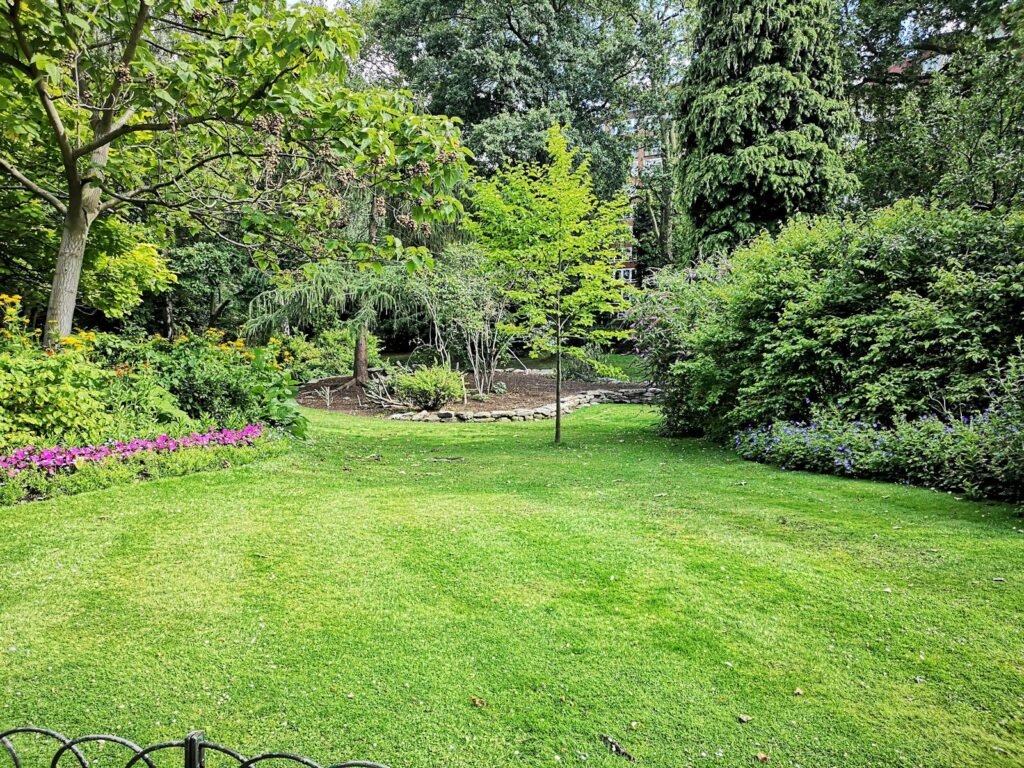
“Level” rarely means perfectly flat. A lawn needs a slight fall so rainwater runs off rather than sitting in puddles, and a patio should fall away from the house. What most people want is a smooth, even surface at a gentle, consistent gradient.
So decide early what you are aiming for:
- A gentle, even lawn. Smooth out bumps and hollows and keep a slight overall fall. Least soil moved.
- A flat area on a slope. A level platform for a lawn, play area, patio or shed base, with the slope taken up by a bank or retaining wall.
- Terraces. A steep garden split into two or more flat levels with steps between. Most work, but often the most usable result.
Also check what is under the ground before any machine digs. Service pipes and cables often cross gardens, especially from the house to the road. Use LinesearchbeforeUdig and any plans you have, and dig by hand around anything uncertain.
How to measure the slope in your garden
The first real step in how to level a garden is measuring it. You need numbers, not guesswork. They tell you how much soil has to move and which machine you need.
String line and spirit level
- Knock a wooden peg in at the highest point of the area and another at the lowest point.
- Tie a string to the high peg at ground level and run it to the low peg.
- Use a line level or long spirit level to get the string level, then tie it off.
- Measure from the string down to the ground at the low peg. That is your total drop.
- Measure the distance between the pegs. Drop divided by distance gives the gradient.
For a bigger area, set out a grid of pegs every 2 to 3 metres and measure the drop at each. That shows you where the humps and hollows really are.
Laser level
On a large garden or paddock a rotating laser level and staff is quicker and more accurate. We do not list laser levels in our fleet, so ask us and we will point you in the right direction.
What the numbers mean
| Drop over 10m | What it means | Usual approach |
|---|---|---|
| Under about 10cm | Bumpy rather than sloping | Top dress hollows and rake, no machine needed |
| About 10–30cm | Noticeable slope | Lift turf, regrade topsoil and subsoil, relay or reseed |
| About 30–100cm | Clear slope | Cut and fill with a mini digger, possibly a low edge or bank |
| Over about 1m | Steep | Terracing with retaining walls, engineering advice likely |
Cut and fill or terracing?
Cut and fill
For most people working out how to level a garden on a moderate slope, cut and fill is the answer. It means digging soil from the high side and moving it to the low side until the surface is level. Done well, very little soil leaves or enters the site, which saves skips and deliveries. The level you end up at is roughly halfway between the highest and lowest points.
The catch is that the high side ends up dug down into subsoil and the low side built up with fill. If you do not strip the topsoil first, the high end ends up with bare clay at the surface and the low end with topsoil buried a metre down. That is why stripping topsoil comes first.
Terracing
On a steep garden, a single level platform would need a huge cut at the top and a tall wall at the bottom. Splitting it into terraces keeps each step manageable. Each terrace is its own small cut-and-fill job, with a retaining edge at the front.
Retaining edges
For low level changes, railway-style sleepers laid on their sides and fixed with posts or steel pins make a neat edge. Higher walls need proper footings and drainage behind them so water pressure does not push them over.
As a rule of thumb, any wall holding back more than a modest height of soil, or close to a building, boundary or path, should be designed by a structural engineer. Soil and water are far heavier than they look.
Do you need planning permission to level a garden?
Gently regrading a lawn usually does not. But significant changes in ground level, such as raising a garden or building a raised platform, can need planning permission, and so can work that affects neighbours or a listed building or conservation area.
The Planning Portal guidance on raising garden levels is a good starting point. If in doubt, ask your local planning authority before you start. This is general information, not planning advice.
Also think about your neighbours in practical terms. Raising the ground against a shared fence or wall puts soil and water pressure on it and can push water onto their land.
How to level a garden step by step
This is the method for a typical cut-and-fill lawn, adapted for anything from a small back garden to a large rural plot.
1. Clear and strip the turf
Mow short, clear plants and debris, then lift the turf. On a small area you can cut and lift it with a spade. If you plan to reuse the turf, lift it in strips, roll it and relay it within a day or two, as it deteriorates quickly when stacked. On larger areas most people strip it off with the digger and start fresh.
2. Strip and stockpile the topsoil
Topsoil is the darker, crumbly upper layer, often 15–30cm deep. Scrape it off the whole working area and stockpile it to one side, away from where the machine will work. Keep it separate from subsoil. It is the most valuable material in your garden.
3. Grade the subsoil
Now cut the high side down and move the subsoil to the low side. Work in shallow passes rather than trying to dig the full depth at once. Set out pegs marked with your finished subsoil level (finished level minus the depth of topsoil you will put back) so you can check as you go.
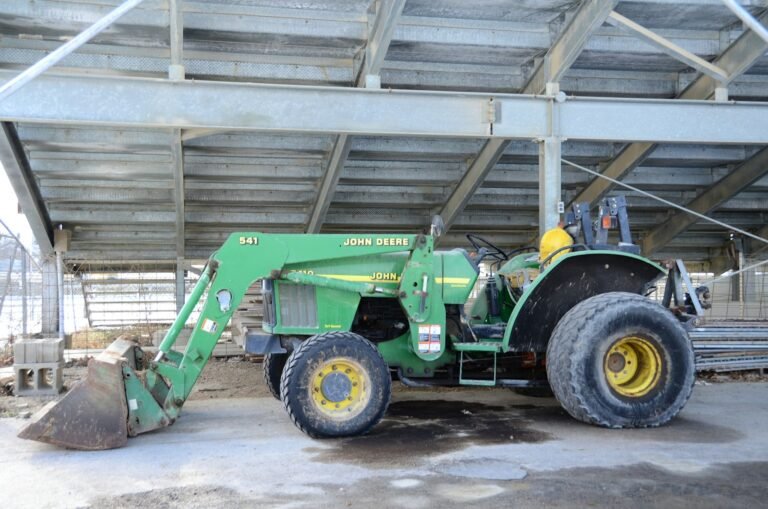
A mini digger is the most versatile tool here. Its front dozer blade is ideal for pushing and spreading soil, and the bucket handles cutting, loading and shaping banks. A compact tractor with a front loader is a good alternative on bigger, gentler sites.
4. Firm the fill in layers
Loose fill settles. If you tip half a metre of soil into the low end and spread topsoil straight over it, you will have a hollow there within a year. Spread fill in layers, roughly 100–150mm at a time, and firm each layer before adding the next.
On a lawn you are firming, not building a road. Tracking over each layer with the digger or dumper, or a few passes with a plate compactor, is usually enough. Avoid compacting heavy clay when it is wet, as you will squeeze the air out and create a waterlogged pan.
5. Deal with drainage
Before you put the topsoil back, think about where water will go. Keep a gentle fall away from buildings. In heavy clay, a land drain in a gravel-filled trench along the low side, leading to a suitable outlet, can stop a new lawn becoming a bog. Never direct water onto a neighbour’s property.
6. Respread the topsoil
Spread the stockpiled topsoil back over the graded subsoil at an even depth. A minimum of around 100–150mm is a sensible target for a lawn. If you are short, buy screened topsoil in rather than skimping.
7. Rake, firm and rake again
Rake to break up lumps and remove stones, then firm the surface by walking it in short, overlapping heel steps, then rake again. Repeat until the surface is even and does not sink underfoot. Check with a long straight edge or your string lines. This step makes the difference between a professional finish and a wavy one.
8. Seed or turf
Sow seed at the rate on the pack, rake it in lightly and keep it moist, or lay turf with staggered joints and water it well. Keep off the new lawn while it establishes.
Which machines suit which garden?
All of these are self-drive hire, so the operator needs to be competent on the machine. Here is how our fleet lines up against typical garden jobs.
| Garden size and job | Digging and grading | Moving soil | Firming and finishing |
|---|---|---|---|
| Small town garden, side access only | Sunward SWE 08B (0.8t micro digger) | Hyundai 500kg tracked dumper | Weber MT CF 1-III Hd forward plate, hand rakes |
| Typical suburban garden | Sunward SWE 18UF (1.8t zero tail) or SWE 20F | Hyundai 500kg tracked dumper or Tracspider electric carrier | Weber MT CF 2-II Hd plate |
| Large garden or rural plot | Sunward SWE 25UF or SWE 35UF | HG 1000 electric dumper or Mechbadger tracked dumper | Weber MT CR 2 reversible plate |
| Paddock, estate lawn or sports area | Captain 26HP compact tractor with loader | Conagri MEGA 1.5T tipping trailer | Conagri MEGA 1.25m stone burier with overseeder |
See our construction plant hire page for the excavators, dumpers and compaction kit, and the sports and landscaping range for the Captain tractor, MEGA implements and turf equipment.
Mini digger
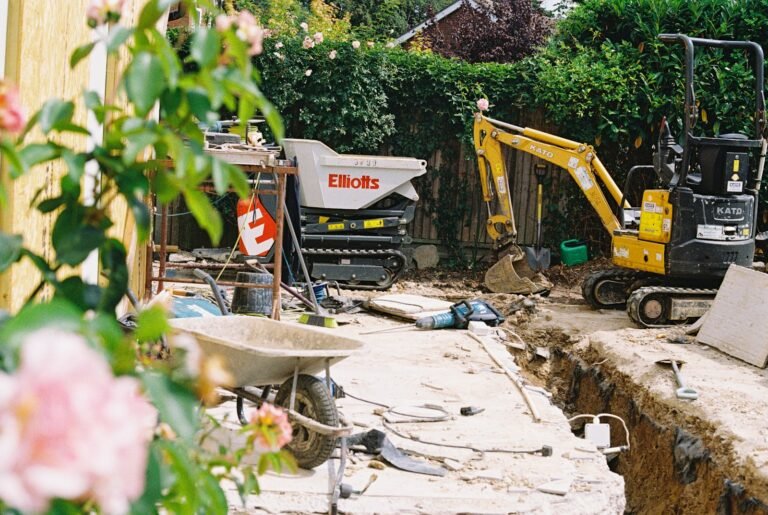
For most gardens a 1.8t machine is the sweet spot. The Sunward SWE 18UF has a zero-tail-swing design, so it works close to fences and walls without the back end clipping them. Where access is through a narrow side passage, the Sunward SWE 08B micro excavator is the one to look at. Measure your narrowest gap before you book.
Compact tractor with loader
On a large, open, gentler slope, the Captain 26HP compact tractor with front loader is quick at shifting and spreading topsoil over a big area. It is less suited to cutting into a steep bank or working in tight corners, where a digger wins.
Dumpers and carriers
Moving soil from the cut side to the fill side is where much of the time goes. A tracked dumper keeps going on soft ground and slopes where a wheelbarrow struggles. The Tracspider is electric and quiet, which suits residential work.
Finishing kit
If your topsoil is full of stones, the Flexiever towable screener separates it into fine topsoil and rejects. On larger areas, the MEGA stone burier with overseeder buries stones and prepares a seedbed in one pass, and the MEGA tine overseeder helps thicken an existing lawn afterwards.
Clay soils, drainage and Devon ground
A lot of Devon, particularly mid and north Devon, has heavy clay soils that hold water through the winter. Parts of Cornwall and Somerset are similar. That changes how to level a garden successfully on heavy ground.
- Work clay only when it is reasonably dry. Wet clay smears, sticks to everything and compacts into a solid layer that water cannot get through.
- Do not bury topsoil under clay. Keep the layers in the right order.
- Keep a fall. A dead-flat lawn on clay will hold water. Aim for a gentle slope towards a drain or soakaway area.
- Break up compaction. After machines have worked on clay, loosen the subsoil surface before respreading topsoil so the layers bond and drain.
- Aerate later. Once the lawn is established, regular aeration helps. We hire the Negri pedestrian aerator and the Selvatici vertical drainage aerator for bigger areas.
Lighter, free-draining soils, such as many over granite on and around Dartmoor, are more forgiving but can be stony. Screening and stone burying help there.
When to level a garden in the South West
Knowing how to level a garden is only half of it. Timing matters as much as technique.
- Early autumn (September to October) is often ideal. The ground is usually workable, soil is still warm, and grass seed or turf establishes well before winter.
- Spring (March to May) is the other good window, once the ground has dried out enough to work without smearing.
- Midsummer is fine for the earthworks, but new seed and turf need lots of watering.
- Winter in the South West is usually too wet for heavy clay. If you must, dig and grade in a dry spell and leave seeding until spring.
Check the forecast before you book a machine. A week of heavy rain on a stripped garden can turn the job into a mud bath, and hire charges run whether you can work or not.
Common mistakes when levelling a garden
- Not stripping topsoil first. The result is clay at one end and buried topsoil at the other.
- Tipping fill without firming it. Settlement leaves hollows within months.
- Making it dead flat. Without a fall, water sits on the lawn.
- Working wet clay. Compaction and smearing ruin drainage for years.
- Undersized retaining edges. Soil pressure pushes weak edges over.
- Hiring too big a machine. A digger that will not fit through the side gate is no use. Measure first.
- Underestimating soil volume. Calculate it before you start so you know whether you need to import or remove soil.
Working out how much soil you are moving
A rough volume tells you how long the job will take and which dumper to hire. For a simple, even slope, cut-and-fill volume is roughly the area multiplied by the average depth of cut.
For example, and purely as an illustration, a 10m × 8m garden falling 60cm from one end to the other levelled to the midpoint has a cut that averages about 15cm across half the area. That is 40m² × 0.15m, or about 6m³ of subsoil moved, before you count the topsoil. Soil also bulks up when dug, often by a quarter or more, so a bucket or dumper load of loose soil holds less than you might think.
If you are importing topsoil, order a little more than your calculation, as it settles after spreading. Bulk bags of soil or aggregate can be moved around with our Dragon dumpy bag lifter.
Booking the right kit for your garden
Hire is booked by WhatsApp or phone. Tell us:
- The size of the garden and the drop you measured.
- The narrowest access point, its width and any steps or slopes on the way in.
- Your soil type if you know it, and whether you are importing or removing soil.
- Your postcode and the dates you want.
We will suggest a sensible package, usually a digger, a dumper and a plate, and give you a current quote. Most garden jobs suit a weekly hire, which also gives you breathing room if the weather turns. Machines are delivered and collected from our depot near Okehampton.
Frequently asked questions
Can I level a garden without a digger?
Yes, if the slope is gentle. For a drop of less than about 10cm over 10m you can lift the turf, rake and top-dress hollows, then relay or reseed. Anything bigger means moving a lot of soil, and a mini digger and dumper save days of hard labour.
What size digger do I need to level a garden?
Most domestic gardens suit a 1.5–2t mini digger such as the Sunward SWE 18UF. If access is through a narrow side gate, look at the SWE 08B micro digger. Larger rural plots may suit a 2.5t or 3.5t machine.
How do I level a sloping garden cheaply?
Use cut and fill, so the soil already on site does the work and you avoid skips and imported material. Do the hand work yourself, and book the machines for a tight, well-planned period with good weather.
How long should I wait before seeding a levelled garden?
Once the topsoil is respread, raked and firmed, you can seed straight away. If you have used a lot of fill, leaving it for a few weeks and some rain lets it settle, so you can top up any dips before seeding.
Should I compact topsoil?
Firm it, do not compact it hard. Firm subsoil fill in layers, but only heel the topsoil in by walking it. Heavy compaction of topsoil stops roots and water getting in.
Do I need a licence to drive a mini digger in my garden?
No specific operator card is needed to use a mini digger in your own garden, but you must be able to operate it safely. Our hire is self-drive, and hirers must hold appropriate training or experience. Ask us if you are unsure.
Hire garden levelling equipment from 4Counties
Now you know how to level a garden, the right machines make it a far quicker job. WhatsApp or call us on 07841 036064 (Mon–Fri 7:30am–5:30pm) with your garden size, access width, postcode and dates, and we will recommend the right digger, dumper and finishing kit. For written quotes, use our contact page.