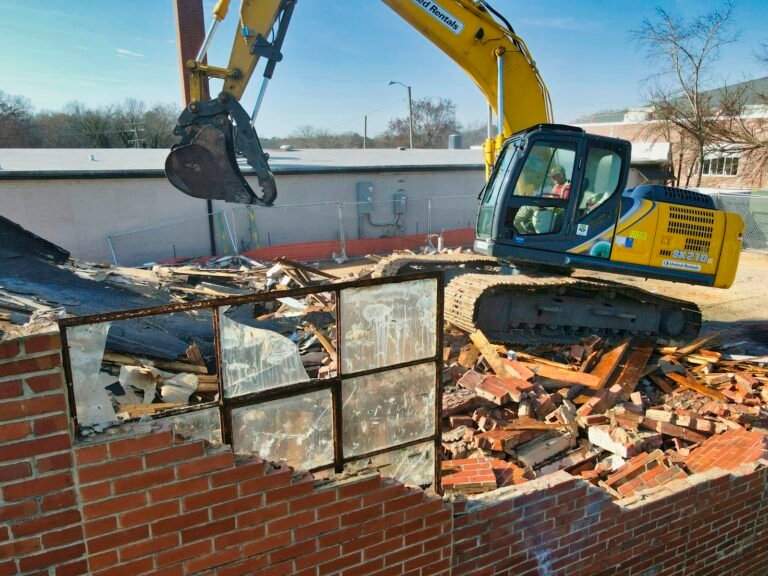
Good site clearance sets up everything that follows. Get it right and the groundworkers arrive to a level, surveyed, stripped plot with the topsoil safely stockpiled and the old concrete already crushed into usable hardcore. Get it wrong and you pay twice: once to clear, and again to fix the delays, the contaminated spoil heaps and the waste bills. This guide is for self-builders, small developers and groundworks contractors in the South West clearing a plot before foundations, roads or drainage go in. It covers the surveys, the timing, the plant, the waste rules and a sensible sequence.

In this guide
What site clearance actually involves
On most plots, clearance is several jobs done in a set order rather than one. A typical scope includes:
- Surveys and checks: services, ecology, asbestos in any old structures, and ground conditions.
- Vegetation clearance: scrub, brambles, hedges, trees and stumps.
- Removal of old structures: sheds, garages, outbuildings, hardstandings and slabs.
- Breaking out and crushing concrete, brick and old foundations.
- Stripping and stockpiling topsoil.
- Rough levelling, forming haul routes and a site compound.
- Sorting and removing waste that cannot be reused.
Each stage needs different machines, and some need permits or notice. Planning the whole sequence before you hire saves you having machines stood idle while you wait for a survey or a waste carrier.
Surveys and checks before any machine arrives
Underground and overhead services
Old plots often have forgotten water pipes, field drains, live cables to outbuildings and abandoned gas supplies. Request utility records through LinesearchbeforeUdig and from any network operators not covered, scan the site with a cable locator, and hand dig trial holes where services are expected. Mark overhead power lines and plan machine movements well clear of them.
Asbestos in old structures
Any building put up before 2000 can contain asbestos, in roof sheets, soffits, floor tiles, pipe lagging and old garage panels. Before demolition or major refurbishment, a refurbishment and demolition asbestos survey is normally needed so that asbestos can be found and dealt with first. HSE explains the requirements in its guidance on arranging an asbestos survey.
Do not knock down a building and then wonder about the roof sheets. Once asbestos is mixed into rubble, the whole pile can become hazardous waste and the clean-up is far more expensive. Some asbestos removal must be done by a licensed contractor, so take specialist advice.
Ecology
Overgrown plots, old barns and hedges are prime habitat for nesting birds, bats, badgers, reptiles and other protected species. Your planning consent may require an ecology survey or set conditions on when and how clearance can happen. Read the conditions carefully, because clearing too early or in the wrong way can breach them.
Invasive plants
Japanese knotweed and other invasive plants spread from tiny fragments of root. Digging them up and moving the soil around the site, or off it, can spread the problem and break the rules on handling it. If you suspect knotweed, get it identified and managed by a specialist before machines go near it.
Ground conditions
Trial pits tell you how deep the topsoil is, what lies beneath, and whether you have soft spots, made ground or old fill. In much of Devon and Cornwall you may hit shillet or rock quickly. In the Somerset Levels and parts of Dorset, clay and high groundwater are more likely. That affects which machines you need and how long the job takes.
Timing vegetation clearance around nesting season
Under the Wildlife and Countryside Act 1981, it is an offence to intentionally damage or destroy an active bird’s nest. The main nesting season runs roughly from March to August, although birds can nest outside that window.
The practical answer is to clear trees, hedges and scrub in autumn and winter where you can. If clearance has to happen in the nesting season, have an ecologist check the vegetation immediately before work and stop if active nests are found. Check your planning conditions too, as some specify clearance windows or require a hedgerow to be retained or replaced.
Winter clearance in the South West brings its own problem: wet ground. Plan haul routes on firm ground or lay stone early so you do not turn the plot into a mud bath before the groundworks even start.
Plant for site clearance and what each machine does
This table matches the main tasks to the machines in our fleet. Full details are on our construction equipment hire page.
| Task | Machine | Notes |
|---|---|---|
| Grubbing out scrub, hedges and stumps | Sunward SWE 35UF (3.5t) or SWE 60UF (6t) | Zero tail swing helps near boundaries |
| Demolishing outbuildings, bulk dig, loading | Sunward SWE 90UF (9t) | The heavy hitter for larger plots and breaking out slabs |
| Scraping, grading, moving loose material | Sunward SWL 2830 tracked skid-steer loader | Quick on open ground, low ground pressure on tracks |
| Moving spoil and rubble around site | Mechbadger tracked dumper, Hyundai 500kg tracked dumper, HG 1000 electric dumper | Tracked for soft ground, wheeled for firm yards |
| Crushing concrete and brick | Dragon 400 or 450 tracked jaw crusher, Dragon CR400 concrete crusher | Turns waste into reusable hardcore |
| Screening soil and crushed material | Flexiever towable screener | Separates fines from stone and debris |
| Chipping brash and branches | GL&D 5.5″ tracked chipper, 6.5″ towable chipper | Cuts the volume of green waste |
| Lifting and placing materials | Merlo P40.14 telehandler | 14m reach, 4t lift, stabilised |
| Moving machines between sites | Bailey 10-ton low loader, Brian James and Indespension plant trailers | For your own transport where you have a suitable towing vehicle |
Choosing excavator size
For a single self-build plot with some scrub and a garage to remove, a 6 tonne excavator is often a good balance of reach, power and access. A 3.5 tonne machine suits tighter plots and lighter scrub. A 9 tonne excavator earns its keep on larger sites with slabs, old foundations and lots of material to load. Many contractors run a big machine for the heavy work alongside a smaller one for tidying edges and boundaries.
Breaking out and recycling concrete on site
Old slabs, footings, block walls and hardstandings are heavy and expensive to take away. Crushing them on site produces hardcore you can use for haul roads, the site compound or sub-base, depending on the specification and the quality of the crushed material.
The Dragon 400 and 450 tracked jaw crushers take broken concrete, brick and stone. The CR400 is suited to concrete crushing. Break slabs into pieces that fit the crusher jaw with the excavator first, and pull out reinforcing steel, timber, plastics and other contaminants before feeding. Clean feed means better product and less wear.
Waste rules: check before you crush
Crushing and reusing waste concrete is a waste activity, so it usually needs either a waste exemption registered with the Environment Agency or an environmental permit, depending on what you are doing and how much. The U1 waste exemption for using waste in construction is one example, and there are separate rules for treating waste. Waste exemption rules in England are also being changed from January 2027, with transition periods for some exemptions.
This is general information, not advice for your site. Check the current GOV.UK guidance or speak to the Environment Agency before you start crushing, keep records of what you processed and where it went, and do not accept waste from other sites without checking you are allowed to.
Topsoil stripping and stockpiling
Topsoil is a valuable resource, and good practice is to look after it rather than bury it under spoil. Strip it before the subsoil is disturbed, ideally in dry conditions, and stockpile it separately.
- Clear vegetation first. Mow or flail the grass and remove brash so it does not end up mixed into the topsoil.
- Strip in dry weather. Handling wet topsoil destroys its structure. In the South West that means watching the forecast closely.
- Strip to the right depth. Use trial pits to find where topsoil ends. Do not strip into subsoil and mix the two.
- Stockpile on undisturbed ground. Keep heaps out of the way of haul routes and future foundations, and away from ditches.
- Keep heaps low and do not track over them. Large, compacted heaps lose soil quality. Grass them over if they will stand for months.
- Keep subsoil and spoil separate. Mixed heaps are harder to reuse and to dispose of.
The Flexiever towable screener is useful when stockpiled topsoil needs stones and roots removing before reuse in gardens or landscaping.
Setting up the site
A small amount of thought about the compound pays off across the whole build.
- Secure storage. The Hiway Storage BV126 is a lockable, weatherproof 12ft × 6ft × 7ft storage trailer with a rear ramp, GPS tracking and tamper-evident seals. We move it into place, so you do not need a towbar. It is handy for small tools and materials on a self-build plot.
- Power. The Zenessis 25kVA 3-phase towable generator covers site power where there is no supply yet. Other sizes may be available, so ask.
- Welfare. Toilets, drying rooms and canteen units are not part of our fleet. Ask us and we will tell you what’s available or point you in the right direction.
- Haul routes. Lay a stone route early, perhaps using crushed material, so dumpers and deliveries do not churn the site.
- Wheel cleaning. Keep mud off the public road. The Brendon 35KPE mobile power washer helps keep machines and vehicles clean.
A typical site clearance sequence
Every plot is different, but this order works for most small and medium sites.
| Stage | What happens | Typical plant |
|---|---|---|
| 1. Surveys | Services, asbestos, ecology, trial pits | Hand tools, cable locator, small excavator for trial pits |
| 2. Set up | Fencing, compound, storage, power, access route | Hiway storage trailer, generator, skid steer |
| 3. Asbestos removal | Specialist removal before any demolition | Specialist contractor |
| 4. Vegetation | Scrub, hedges, trees, stumps, in the right season | 3.5–6t excavator, chipper, dumper |
| 5. Structures | Demolish outbuildings, separate materials | 6–9t excavator, dumpers |
| 6. Hard surfaces | Break out slabs and foundations | 9t excavator |
| 7. Crushing | Crush clean concrete and brick, screen if needed | Dragon crusher, Flexiever screener |
| 8. Topsoil | Strip and stockpile in dry weather | Excavator, skid steer, tracked dumper |
| 9. Reduce level | Rough level, form haul roads and working platform | Excavator, skid steer, compaction |
As an illustration, a self-build plot near Tavistock with an old timber garage, a concrete yard and a tangle of laurel along one boundary might need a 6 tonne excavator and tracked dumper for a week, a crusher for two or three days once the yard is broken out, and a skid steer to level and form the access. A larger brownfield site would run several of those stages in parallel.
Hire periods and keeping costs under control
We do not publish hire prices, because the right package depends on the machines, location and length of hire. WhatsApp us for a current quote. What we can tell you is what drives the cost of clearing a site:
- Idle time. Machines waiting for a survey, a waste carrier or better weather still cost money. Sequence the hires.
- Waste volumes. Every load you crush and reuse is a load you do not pay to take away.
- Machine size. Too small and the job drags; too big and you pay for capacity you do not use.
- Ground conditions. Wet ground slows everything. Early stone haul routes pay for themselves.
- Transport. Fewer, well-planned deliveries and collections cut haulage.
For longer projects, our long-term rental gives monthly rates with on-site servicing included. If you need to swap between machines as the job moves from clearance to groundworks, Flex Hire gives you one flat monthly fee and lets you change kit at any time. Tier 2 (£895 +VAT and delivery per month) adds crushers and excavators, Tier 3 (£995) adds large excavators and forklifts, and Tier 4 (£1,495) covers all tiers including 9 tonne excavators and tractors.
Delivery, breakdowns and collection
Tell us where each machine should be set down, whether the access is suitable for a lorry, and who will meet the driver. Have the ground for the compound firm and clear before delivery day. If a machine breaks down, call or WhatsApp us and we will assess it and arrange a repair or replacement as fast as we can.
When a stage finishes, book the collection straight away rather than letting a machine sit at the edge of the plot. Clean the worst of the mud off and leave it somewhere a lorry can reach.
Safety on a clearance site
Clearance mixes heavy plant, falling materials and people on foot, so keep it organised.
- Fence the site and keep the public out, especially near roads and footpaths.
- Plan exclusion zones round excavators, crushers and demolition work.
- Make sure every operator is trained and competent for the machine. Hire is self-drive, so the hirer is responsible for this.
- Watch for overhead lines, unstable walls and hidden voids such as old cesspits, wells and tanks.
- Control dust from crushing and demolition with water suppression where possible.
- Arrange plant hire insurance before the machines arrive. Insurance is not included automatically, and we refer customers to insurance4plant.co.uk.
Construction work, including clearance and demolition, falls under the Construction (Design and Management) Regulations 2015, which set out duties for clients, designers and contractors. HSE publishes guidance on CDM duties and demolition, and you should check what applies to your project.
Common site clearance mistakes
- Demolishing before the asbestos survey is done.
- Clearing hedges and scrub in nesting season without an ecology check.
- Mixing topsoil, subsoil and rubble into one heap.
- Crushing contaminated material full of timber, plastics and steel.
- Starting crushing without checking the waste exemption or permit position.
- Hiring all the machines on day one and leaving half of them idle.
- Letting the access route turn to mud before the build even starts.
Frequently asked questions
Do I need planning permission for site clearance?
Clearance itself is not always development, but demolition, tree work, hedgerow removal and work affecting protected species can all need consent or notice. If you already have planning permission, its conditions may control when and how you clear. Check with your local planning authority before you start.
Can I crush concrete on my own site?
Often yes, but crushing and reusing waste concrete is a waste activity that usually needs a registered exemption or a permit. Check the current GOV.UK and Environment Agency guidance for your situation before you start.
What is the best machine for clearing a plot?
On most self-build plots, a 6 tonne excavator with a tracked dumper does the bulk of the work. Add a 9 tonne machine for heavy demolition or slabs, a skid-steer loader for grading, and a crusher if there is a lot of concrete.
When is the best time of year to clear a site?
Vegetation is best cleared from autumn to late winter, outside the main nesting season. Topsoil stripping and earthworks are best in dry spells, often late spring to early autumn in the South West. Plan the order to suit both.
Do you supply operators?
Our hire is self-drive unless otherwise agreed, so you or your team need appropriate training. If you need an operated service, ask us and we will tell you what we can arrange or point you in the right direction.
How quickly can you deliver to site?
Same-day delivery is often possible across much of Devon and Cornwall, with day 1 delivery available. For Somerset and Dorset, or for several machines at once, give us a few days’ notice so we can plan the transport.
Can you supply a full package for a larger site?
Yes. For several machines, send us the details through the contact form and we will put together a tailored proposal with an account manager as your single point of contact.
Plan your site clearance with us
From our depot near Okehampton we supply excavators up to 9 tonnes, skid steers, dumpers, crushers, screeners and chippers across Devon, Cornwall, Somerset and Dorset. WhatsApp or call 07841 036064 (Mon–Fri 7:30am–5:30pm) with the site postcode, the scope of work, dates and access details, or send the details through our contact page for a written proposal.