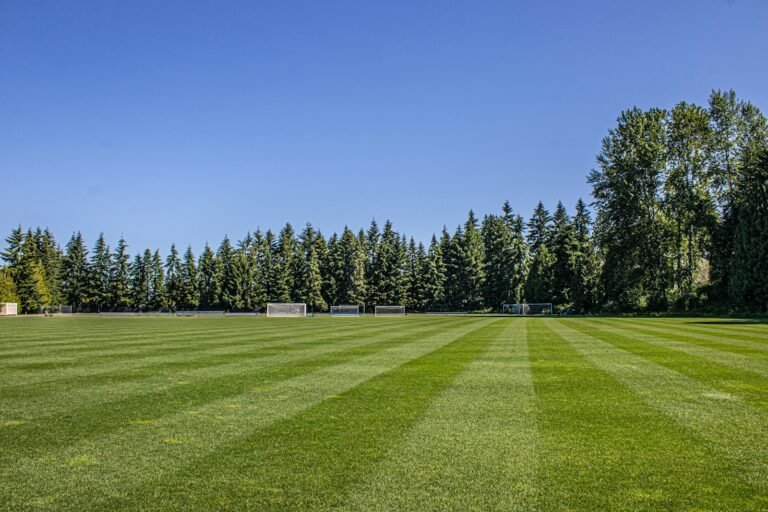
A stone burier turns rough, stony ground into a fine, level seedbed in one pass and, on our machine, sows the seed at the same time. For stone burier hire we supply the Conagri MEGA 1.25m stone burier with overseeder, a tractor-mounted unit for new lawns, paddock reinstatement and tidying plots after groundworks. If you have ever rotavated a Devon field corner and ended up with a surface full of stones and clods, this is the machine that fixes it.

In this guide
How a stone burier works
A rotavator chops soil and leaves stones where they are, often bringing more to the surface. A stone burier works differently. Its rotor turns in the opposite direction to the tractor wheels, lifting the soil and throwing it back against a grid or screen behind the rotor. Stones, clods and surface debris fall to the bottom of the worked layer first, and fine soil settles on top.
A rear roller then firms and levels the surface. On our MEGA unit, the overseeder drops seed onto that prepared surface, so you finish with a sown, rolled seedbed rather than one that needs another two operations. The 1.25m working width suits gardens with reasonable access, sports ground margins, paddocks and small fields.
Where stone burier hire makes sense
- New lawns on new-build plots, where builders’ rubble, compacted subsoil and stones sit under a thin layer of topsoil.
- Reinstating ground after groundworks, such as drainage runs, soakaways, service trenches or a removed hardstanding.
- Paddock renovation where poaching has left the surface lumpy and stony.
- Converting rough ground to grass, for example an old vegetable patch, a cleared scrub area or a former yard.
- Sports and golf construction or repairs, including banks, tee surrounds and practice areas.
- Wildflower or amenity seeding on estates, where a clean, firm seedbed improves establishment.
South West ground: what to expect
Much of Devon and Cornwall has shallow, stony soils, particularly on the moorland edges around Dartmoor and Bodmin Moor and wherever slate is close to the surface. These are exactly the conditions a stone burier is designed for, within limits.
It buries stones and clods; it does not grind rock. Fist-sized stones are fine. Large boulders, lumps of concrete or tree roots need removing first, either by hand, with a mini excavator or with our Stoneless ATV/UTV rock collector. Heavy clay soils, common across mid and north Devon, should be worked when they are dry enough to crumble. Worked wet, clay smears and sets into clods that no rotor will break down.
Stone burier vs rotavator vs power harrow
| Machine | What it leaves | Best use |
|---|---|---|
| Stone burier (with overseeder) | Fine, firm, sown surface with stones buried below | Lawns, paddocks and seedbeds in stony or rough ground |
| Rotavator | Loose, mixed soil with stones still in the top layer | Breaking ground, mixing in compost on beds |
| Power harrow | Crumbly tilth, stones mostly remain on surface | Seedbeds on cultivated land with few stones |
For a lawn or grazing area, where a smooth surface and no stones at mowing height matter, the stone burier usually wins.
Preparing the site after building or groundworks
The machine performs best when the groundwork before it is right. If you are finishing a plot after construction, work through this sequence:
- Clear debris. Pick out rubble, bricks, timber, plastic sheeting and wire. Anything large will jam or damage the rotor.
- Relieve compaction. Ground tracked over by machines is often packed hard below the topsoil. A deeper rip or dig first helps drainage.
- Check topsoil depth. Spread imported topsoil now if needed. A tracked dumper or the Tracspider carrier helps where access is tight.
- Rough level. Remove high spots and fill hollows. The stone burier refines a level; it will not correct big humps.
- Mark services. Know where shallow pipes, cables and new drainage runs are, especially on recently built plots.
- Wait for workable soil. It should crumble in your hand rather than smear.
- Run the stone burier, sowing as you go, then keep traffic off while the grass establishes.
For the digging and levelling before seeding, see our construction equipment, including Sunward mini excavators and dumpers.
Aftercare for a new sward
A stone-buried seedbed is firm and level, but the new grass still needs looking after. Water during dry spells until the seedlings are established, particularly on free-draining stony soils that dry out quickly in a warm spell. Keep children, dogs, vehicles and stock off the area. Make the first cut when the grass is a few centimetres above your intended height, with the mower set high and the blades sharp.
Any stones that do appear in the first few months are usually small ones lifted by frost or rain. Pick them off before mowing to protect your blades. If larger patches fail to strike, they can be overseeded the following autumn.
Tractor and operating tips
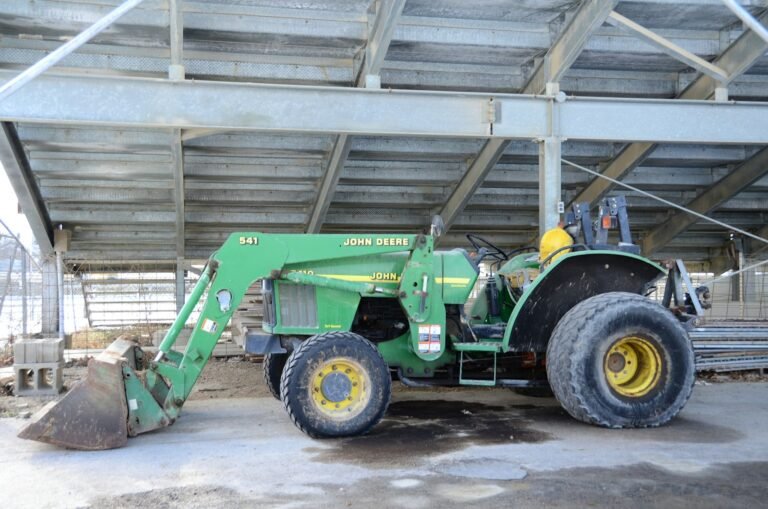
The MEGA stone burier is PTO-driven and mounts on the three-point linkage. It is sized to work with compact tractors, and we can supply it with our Captain 26HP compact tractor. If you plan to use your own, send us the make, model and horsepower so we can confirm it is a sensible match.
- Work slowly. Forward speed that is too high leaves stones near the surface.
- Overlap passes slightly to avoid ridges between runs.
- Do a short test run and dig into the worked layer with a trowel to check stones are going down.
- Stop and check the rotor if you hear knocking; you have probably hit a buried object.
- Choose a seed mix suited to the use, and check the sowing rate with your supplier.
The full range of groundscare implements, from overseeders to fertiliser spreaders, is on our sports and landscaping page.
How much topsoil do you need?
A stone burier can only bury stones into soil that is actually there. On new-build plots, the topsoil is often a thin skim over compacted subsoil and rubble, and no amount of cultivation will turn that into a good lawn. Check the depth by digging a few test holes across the area before you book stone burier hire.
For a hard-wearing lawn, many landscapers aim for somewhere around 100mm to 150mm of decent topsoil. Working out how much to order is simple arithmetic:
- Area × depth = volume. A 200 square metre lawn topped up by 100mm needs about 20 cubic metres of topsoil.
- Allow for settlement. Loose soil settles after spreading and rolling, so order a little extra.
- Check how your supplier sells it. Bulk bags and loose loads vary in volume and weight; ask them to convert your figure.
- Plan where it goes. Tip loads close to the work area, and move it with a dumper, the Tracspider carrier or our Dragon dumpy bag lifter if access is tight.
Quality matters as much as quantity. Imported topsoil should be screened, reasonably free of stones and debris, and free of perennial weed roots such as couch grass and bindweed, which a stone burier will happily bury and which will then come straight back through your new lawn. Ask the supplier where it comes from, and look at a load before it is tipped if you can. If you have your own heap of mixed soil, our Flexiever towable screener can separate out stones and lumps first.
Spread the soil in layers and firm each one lightly rather than dumping it all in one go. That avoids soft spots that sink later and leave hollows in your new lawn.
From bare plot to new lawn: a typical timeline
This illustrative timeline assumes a plot that has just been finished by builders, in Devon, aiming for an early autumn sowing.
| When | Task | Why |
|---|---|---|
| Late July to mid August | Clear rubble, rip or dig compacted ground, sort drainage | Problems below the surface cannot be fixed once the grass is down |
| Mid to late August | Import and spread topsoil, rough level | Gives time for the soil to settle before final cultivation |
| Early September | Stone burier hire: cultivate, bury stones, sow and roll in one pass | Warm soil and autumn rain give quick germination |
| September to October | Water in dry spells, keep traffic off, pick off stray stones | Young grass is fragile for the first few weeks |
| October | First cut, mower set high, blades sharp | Encourages the grass to thicken |
Choosing seed for stone-buried ground
Match the seed to how the area will be used rather than buying the cheapest bag. A family lawn that takes football and dogs needs a hard-wearing ryegrass blend. An ornamental lawn suits finer fescues. Paddocks need a grazing or horse mix, and estates sometimes choose amenity or wildflower mixes for banks and verges. Check with the supplier that the seed suits machine sowing, as some wildflower mixes are very fine and are sown at tiny rates.
Spring works too, from about April once soils are warm and workable. The risk in spring is a dry May, so be ready to water a large area if needed.
Worked examples
These scenarios are illustrative, to show how stone burier hire fits into different jobs.
A new-build rear garden
A plot of about 15m × 10m, left lumpy and stony by the builders, with access down a side path. The first question is whether a compact tractor and the 1.25m unit will fit through the gap; if the path is narrow, the job may need doing by hand or the fence panel by the path temporarily removed. With access sorted, a morning’s clearing, a top-up of topsoil and a couple of hours with the stone burier gives a sown, rolled lawn in a weekend.
A paddock after drainage works
A contractor has dug a field drain across a two-acre paddock, leaving a strip of disturbed ground, subsoil mixed into the surface and plenty of stones. The trench line is back-filled and firmed, large stones are picked off, and the stone burier works a strip a few metres either side of the line, sowing a grazing mix as it goes. The rest of the paddock may only need a harrow and overseed.
A rough corner turned to amenity grass
An estate wants to turn an overgrown corner by the drive into mown grass. Scrub is cleared, roots grubbed out with a mini excavator, and the ground left to dry. The stone burier then turns rough, root-riddled soil into a level seedbed. Any roots it brings up are raked off before a final light roll.
A golf tee surround or sports ground bank
After a tee is rebuilt, the surrounding banks are left as bare, stony soil. The stone burier works the flatter areas around the tee, sowing a mix to match the existing rough, and leaves a firm surface that will carry a mower within weeks. Steeper parts of the bank, where a tractor should not go, are raked and seeded by hand. Clubs often book this alongside other renovation kit through our Hole in One Rentals line.
Common mistakes with stone burier hire
- Working soil that is too wet. On Devon clay, this is the biggest single cause of a poor result. If it smears, wait.
- Driving too fast. The rotor needs time to throw the soil back so stones fall first. A slow, steady speed gives a finer finish.
- Leaving large stones and debris in place. Bricks, boulders, wire and roots should come out before the machine goes in.
- Too little topsoil. Burying stones into subsoil just moves the problem a few centimetres down.
- Skipping the services check. New drainage, cable ducts and irrigation pipes can be shallower than you expect on a fresh plot.
- Sowing at the wrong time, such as November or a hot, dry July, when seed will not strike well.
- Overlooking the headlands. Leave room to turn at the ends and finish them with a final pass across, or the edges stay rough.
PTO safety and working around the machine
A stone burier is driven by the tractor’s power take-off (PTO), and an exposed or damaged PTO shaft is one of the most serious entanglement risks on any farm or estate. The HSE’s guidance on power take-off shafts explains what a proper guard looks like and how to look after it. Our machines leave the depot with their guards fitted; your job is to keep them that way and check them daily.
- Never run the PTO with the guard damaged, missing or not restrained by its chain.
- Disengage the PTO, stop the engine and remove the key before approaching the rotor for any reason.
- Keep people, children and animals well clear while working; the rotor can throw small stones.
- Lift the machine out of work before turning at the headland, so the rotor is not working at an angle.
- Hire is self-drive, so the operator must be competent with a tractor and PTO-driven implements.
What affects the cost of stone burier hire
We do not publish hire rates, because the total depends on your job. These are the factors that make the difference:
- Tractor or no tractor. Hiring the Captain 26HP compact tractor alongside the stone burier adds a second item. Larger farm tractors are on our agricultural equipment page.
- Length of hire. Most gardens and paddocks are a day or two of work, but weekly hire gives you room to wait for the soil to be right.
- Delivery distance from our depot near Okehampton, quoted separately.
- Other kit on the same delivery, such as a mini excavator for levelling, a tracked dumper for topsoil or a rock collector.
- Insurance, which is not automatically included. Check your existing policy covers hired-in equipment, or ask us about partner cover.
Our hire FAQ page explains deposits, payment, delivery and off-hire.
The Grounds Management Association has further guidance on preparing and renovating sports surfaces.
Frequently asked questions
How big a stone can a stone burier handle?
It handles typical field and garden stones well. Boulders, large concrete lumps and roots should be removed first. If in doubt, send us photos of the ground on WhatsApp.
Do I still need to rake after using a stone burier?
Usually very little. The roller leaves a firm, level, sown surface. You may want to hand rake edges and corners the machine cannot reach.
Can I use a stone burier on wet clay?
It is best not to. Wet clay smears and forms clods. Wait until the soil crumbles when squeezed; in Devon that often means late spring or early autumn.
Is stone burier hire suitable for a small garden?
The 1.25m unit and its tractor need reasonable access and space to turn. For very small gardens, manual preparation may be more practical. Tell us your gate width and we will advise.
What is the best time of year for stone burier hire?
Early autumn and spring, when soil is warm enough for seed to strike and dry enough to crumble. In Devon, September is often ideal.
Can I use the stone burier without sowing seed?
Yes. If you plan to lay turf or sow later, the machine still prepares a fine, level, stone-free surface. Ask us to show you at handover how to run it without seed.
Should I seed or turf after stone burying?
Seed is cheaper and the machine sows as it works. Turf gives an instant finish and suits small areas or late-season jobs. Both benefit from the level, stone-free bed a stone burier leaves.
Book your stone burier hire
WhatsApp or call 07841 036064 (Mon–Fri, 7:30am–5:30pm) with the plot size, your site postcode, gate width, dates and whether you need a tractor. For written quotes or account set-up, use our contact page or email info@conagri.co.uk.