Lawn mower hire makes sense when the grass has got ahead of you, when your own mower isn’t up to the job, or when you need a different kind of cut for a season. The right machine depends on three things: how big the area is, how long and rough the grass has become, and the finish you want.
In this guide
A collecting walk-behind gives a striped lawn, a mulching mower feeds the grass back to the soil, and a flail mower takes down rough paddock growth that would choke an ordinary rotary deck. This guide sets out the mowers we hire from our depot near Okehampton and how to choose between them.
Our lawn mower hire range at a glance
We hire pedestrian mowers, battery machines and tractor-mounted cutters. Here’s what each one is for.
| Machine | Type | Cut | Best for |
|---|---|---|---|
| John Deere R43VE | Petrol, collecting | 43cm | Domestic lawns where you want the clippings boxed |
| John Deere JM46 | Petrol, mulching blade | 46cm | Regular cuts with a fine finish and no clippings to dispose of |
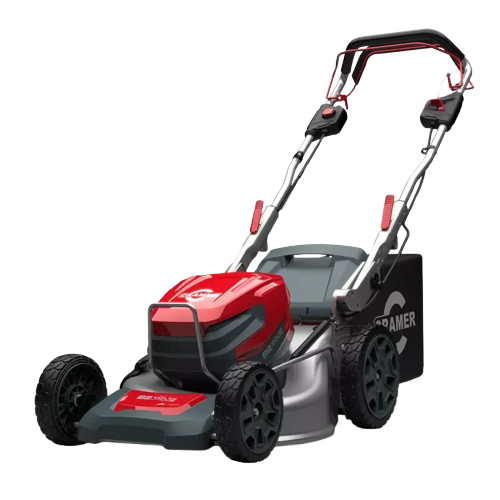
| CRAMER electric walk-behind | Battery | Various widths (ask for current sizes) | Quiet mowing near homes, schools and early starts |
| CRAMER electric zero-turn | Battery ride-on | Ask for spec | Large amenity areas, golf and parkland |
| Conagri MEGA 1.45m flail mower | Tractor mounted | 1.45m | Rough and amenity grass, overgrown areas |
| Del Moriano 1.8m PTO topper | Tractor mounted | 1.8m | Grassland and verge topping |
| SaMASZ Mammut 2.8m flail topper | Tractor mounted, heavy duty | 2.8m | Rough vegetation on fields and estates |
| SaMASZ Samba 281 disc mower | Tractor mounted | 2.8m | Fast, clean cutting of grass crops |
The pedestrian and battery machines are on our sports and landscaping page. The John Deere mowers, toppers and disc mower sit in our agriculture range, alongside the tractors to run them.
Choosing by area, grass length and finish
Start with the area, then the condition of the grass. A neat garden lawn and a paddock that hasn’t been cut since spring need very different machines, even if they are the same size.
Lawns and gardens
For a domestic lawn up to a few hundred square metres, a 43 to 46cm walk-behind is the right tool. It fits through garden gates, turns easily around beds and gives a tidy finish. The R43VE collects clippings, which suits lawns where you want a clean look or where clippings would be tracked indoors. The JM46 mulches, chopping clippings finely and dropping them back into the sward.
Large lawns, parks and grounds
Once you are mowing areas measured in fractions of a hectare, a walk-behind becomes slow. A ride-on such as the CRAMER electric zero-turn covers ground much faster and turns on the spot around trees and obstacles. Our separate guide to electric zero-turns covers that machine in depth.
Paddocks, rough grass and overgrown ground
Long, tough or tussocky grass stalls a rotary mower and leaves a ragged finish. This is flail or topper territory. A tractor-mounted flail chops material finely and copes with thicker growth, while a topper is the usual tool for knocking back grassland after grazing. The 1.45m Conagri MEGA flail suits smaller tractors and tighter spaces; the 2.8m SaMASZ Mammut is for larger fields and serious rough growth.
If the grass is waist-high or full of brambles, tell us when you enquire. It may need cutting with a flail or topper first before any lawn mower will cope.
Collecting, mulching or flail: which cut do you need?
The cutting system decides both the finish and how much work you have afterwards.
| System | How it works | Pros | Watch out for |
|---|---|---|---|
| Collecting rotary | Blade cuts, airflow throws clippings into a box | Clean finish, no clippings left on the lawn | Frequent emptying, clippings to dispose of |
| Mulching rotary | Blade re-cuts clippings and drops them into the turf | Feeds the lawn, nothing to empty | Works best on dry grass cut little and often |
| Flail | Many small knives on a rotor chop the material | Copes with long, rough growth | Coarser finish than a lawn mower |
| Topper | Rotary blades on a tractor-mounted deck | Quick on grassland and verges | Not a fine lawn finish |
| Disc mower | Spinning discs with knives cut and lay a swath | Fast, clean cut on grass crops | For crops and fields, not lawns |
Mulching only works well if you cut regularly and the grass is fairly dry. If you are tackling a lawn that has grown long during a wet spell, collecting is usually the better choice for the first cut.
Electric or petrol?
Our walk-behind range covers both. The John Deere R43VE and JM46 are petrol. The CRAMER range is battery-powered.
- Battery: quiet, no fumes, no fuel to handle and less vibration from an engine. Ideal for early starts on golf courses, care homes, schools and residential streets. Plan your session around battery capacity, and ask us about runtime for your area.
- Petrol: no charging, so you can keep going on a long day away from power. Better suited to remote sites and longer, tougher cuts.
For contractors working in villages or towns, the quieter electric machines can make the difference between starting at 8am and waiting until mid-morning. If you have a mix of jobs, you can hire both and switch between them.
Tractor-mounted mowers: matching the implement
Flail mowers, toppers and disc mowers need a tractor with the right linkage, PTO and horsepower. We hire tractors too: the Captain 26HP compact tractor on our sports and landscaping page, and the John Deere 6155R (155HP, 4WD) for larger implements.
Don’t assume any tractor will run any implement. Width, weight and PTO power all have to match, and a heavy implement on a small tractor can affect stability, especially on slopes. Tell us which tractor you have, or ask us to match a tractor and mower together, and we’ll recommend the right pairing.
Check the PTO shaft guard is in place and in good condition every time you hitch up. Never step over a turning shaft, and stop the PTO and engine before clearing a blockage.
Cutting heights through the South West year
The mild, wet climate in Devon and Cornwall means grass grows earlier and later than in much of the UK. That changes how you mow. A useful rule throughout the year is to take off no more than about a third of the leaf in any one cut.
| Season | What the grass is doing | Approach |
|---|---|---|
| Early spring (March to April) | Growth starting, ground often soft | First cuts high, only when the ground is firm enough not to rut |
| Late spring (May to June) | Fastest growth | Cut little and often, lowering height gradually |
| Summer (July to August) | Growth slows in dry spells | Raise the height in drought to protect the grass |
| Autumn (September to November) | A second flush of growth, then slowing | Raise the height again, collect leaves with clippings |
| Winter | Slow but rarely stops in mild spells | An occasional high topping on a dry, firm day only |
The last cut of the year
In much of the South West, the final lawn cut often comes later than people expect, sometimes into November. Cut on a dry day with the blade set slightly higher than your summer height, and collect clippings and fallen leaves to stop them matting over winter. Don’t mow frosted or waterlogged grass, as it damages the leaf and compacts the soil.
Bringing an overgrown lawn back: a three-cut plan
One of the most common reasons for lawn mower hire is a lawn that has got away, after a holiday, a house move or a wet spring. Trying to get it back to a neat height in one pass is the quickest way to scalp it. A staged approach works far better.
- Cut one, highest setting: take the top off with a collecting mower so the long clippings are removed rather than left smothering the grass. Empty the box often.
- Wait a few days: let the grass recover and stand back up. In growing weather, three to five days is usually enough.
- Cut two, one or two notches lower: again with collection, working in a different direction so you catch flattened areas.
- Cut three, your normal height: from here you can switch to mulching if the lawn is dry and you plan to keep cutting regularly.
If the grass is too tall for even the highest setting, it needs a strimmer or flail first. A week of hire usually covers the full sequence, which is one reason weekly hire is our most popular period.
What to tell us when you book
A few details up front mean we can recommend the right lawn mower hire first time, rather than swapping machines mid-job.
- The rough size of the area, in square metres, acres or “about a tennis court”.
- How long and how rough the grass is, ideally with a photo on WhatsApp.
- Whether you want the clippings collected, mulched or just chopped down.
- Any slopes, banks, ditches or obstacles such as trees and play equipment.
- Noise constraints, such as early starts or neighbours close by.
- Your access: gate widths, steps, and whether a trailer or delivery vehicle can reach.
- If you’re using your own tractor, its make, model and horsepower.
Common mistakes with hired mowers
- Cutting too short in one go: scalps the lawn, weakens the grass and lets moss in.
- Mowing wet grass: clogs the deck, tears the leaf and leaves clumps. On soft ground, it ruts the surface.
- Using a lawn mower on rough ground: stalls, overheats and risks damaging the blade on hidden debris.
- Not walking the area first: stones, branches, toys and dog leads become dangerous projectiles.
- Overfilling the collection box: airflow drops, so clippings are left behind and the deck clogs.
- Running flat batteries to empty: plan charging so the mower is ready the next morning.
Safe mowing: PPE, slopes and stones
Mowers are simple machines, but blades turn fast and throw debris with real force. Before you start:
- Walk the whole area and remove stones, sticks, wire and anything else the blade could catch.
- Wear sturdy boots with good grip, long trousers and eye protection, plus hearing protection for petrol machines.
- Keep children, pets and bystanders well away, particularly from the discharge side.
- Stop the engine or motor and wait for the blade to stop before clearing clippings or adjusting height. On petrol mowers, disconnect the spark plug lead for any work near the blade.
- Read the operator’s manual and check the controls before you begin.
Slopes
Slopes are where most serious incidents with ride-ons and tractors happen. Follow the manufacturer’s limits for the machine. As general good practice, mow across a slope with a walk-behind so you can’t slip under the deck, and keep to the manufacturer’s guidance for ride-ons and tractor-mounted kit. Avoid steep banks altogether if you aren’t sure, and remember wet grass reduces grip dramatically.
For steep verges, banks and rough edges, a battery strimmer is often the safer option. The CRAMER electric strimmer is in the same range as our walk-behind mowers.
Moving mowers by trailer
Pedestrian mowers fit in a van or a large estate. Ride-ons and tractor implements usually need a trailer. Our trailers page lists the Brian James 9ft plant trailer (2,700kg GVW), the Indespension 10ft plant trailer with ramps, and the Ifor Williams 18ft flat bed and tilt bed.
Towing rules depend on when you passed your driving test. GOV.UK explains the current rules for towing with a car, including the maximum authorised mass of trailer you can tow. Check your vehicle’s towing limit too, which is in the handbook.
Strap the mower down at the points the manufacturer recommends, chock the wheels and don’t rely on the parking brake alone. If you’d rather not tow, we can deliver and collect.
Worked examples: choosing the right lawn mower hire
These illustrative scenarios show how the decision usually goes.
- A family lawn in Tavistock left over a summer holiday: the grass is long but not rough. A collecting John Deere R43VE on a high setting first, then a second cut a few days later at a lower setting. A weekend or a few days’ hire covers it.
- A village hall field with houses on three sides: a quiet CRAMER electric mower lets the volunteer team start early without disturbing neighbours. For a large field, the electric zero-turn speeds things up.
- A two-acre pony paddock near Launceston after grazing: a tractor and the Del Moriano 1.8m topper to knock back the stalky grass and weeds. A compact tractor suits the smaller gateways often found on smallholdings.
- A neglected orchard with long, tough grass: the Conagri MEGA 1.45m flail mower on the Captain compact tractor copes with thick growth between trees, then a walk-behind for the tight spots.
Hire periods and what affects the cost
We don’t publish lawn mower hire prices because the right quote depends on the machine, the length of hire and delivery. WhatsApp us for a current quote. The main factors are:
- The machine: a pedestrian mower, a ride-on and a tractor with implement are very different hires.
- The hire period: daily, weekly (the most popular), monthly or long-term.
- Delivery and collection: distance from Okehampton and site access.
- Extras: a tractor or trailer added to the hire.
For grounds maintenance contractors who mow all season, Flex Hire gives one flat monthly fee with servicing included and the freedom to swap kit any time. Tier 1 covers compact kit and everyday tools from £795 +VAT and delivery per month, and Tier 4 covers all tiers including tractors at £1,495. For a fixed set of machines over months, look at long-term rental, which includes on-site servicing.
On delivery and collection
When the mower arrives, check it over before you sign for it, and ask if anything about the controls is unclear. Look at the deck, blade guard, grass box, tyres and controls. Mention anything that doesn’t look right straight away.
Hire is self-drive unless otherwise agreed, and the hirer is responsible for making sure operators are competent. Insurance is not automatically included, and we refer customers to our partner insurance4plant.co.uk for plant hire cover.
Before collection, brush clippings off the deck and out of the box. If something goes wrong during the hire, call or WhatsApp us and we’ll arrange a repair or replacement quickly.
Frequently asked questions
Can I hire a lawn mower for a single day?
Yes. Our minimum hire is usually one day, and weekly hire is the most popular option. If you have a weekend job, tell us when you book, as hire charges run continuously from delivery to off-hire.
What mower should I hire for long grass?
For long but soft lawn grass, a collecting walk-behind on its highest setting, followed by a second, lower cut. For rough, tussocky or paddock grass, a tractor-mounted flail or topper is the better tool.
Is a mulching mower good for my lawn?
Mulching returns finely chopped clippings to the soil, which feeds the lawn and saves emptying a box. It works best when you cut regularly and the grass is dry. It’s less suited to a first cut on overgrown grass.
Are electric mowers powerful enough for commercial use?
Our CRAMER battery range is aimed at golf courses, parks and landscapers, where low noise is a real advantage. Plan battery use for the size of your area and ask us about runtime for your job.
Do you hire a tractor with the flail mower?
Yes. We hire the Captain 26HP compact tractor and the John Deere 6155R, and we can match a tractor to the implement. If you have your own tractor, tell us the make, model and horsepower so we can check compatibility.
When should I do the last mow of the year in Devon?
Often later than in colder parts of the UK, sometimes into November. Cut on a dry, firm day at a slightly higher setting, and avoid frosted or waterlogged grass.
Book lawn mower hire
To arrange lawn mower hire, WhatsApp or call us on 07841 036064 (Monday to Friday, 7:30am to 5:30pm). Tell us the area you’re mowing, how long and rough the grass is, your site postcode, dates and access. We aim to reply to WhatsApp within the hour in business hours.
For written quotes, accounts or several machines for a grounds maintenance contract, use our contact page. We deliver across Devon, Cornwall, Somerset and Dorset, with Day 1 delivery available.