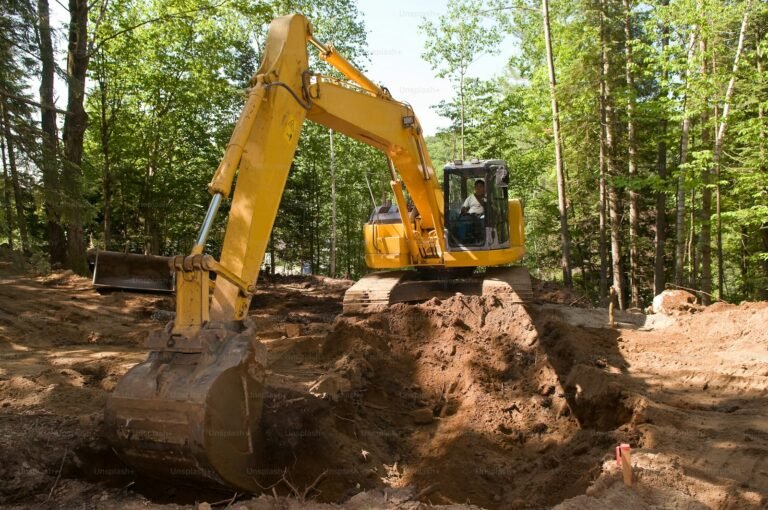
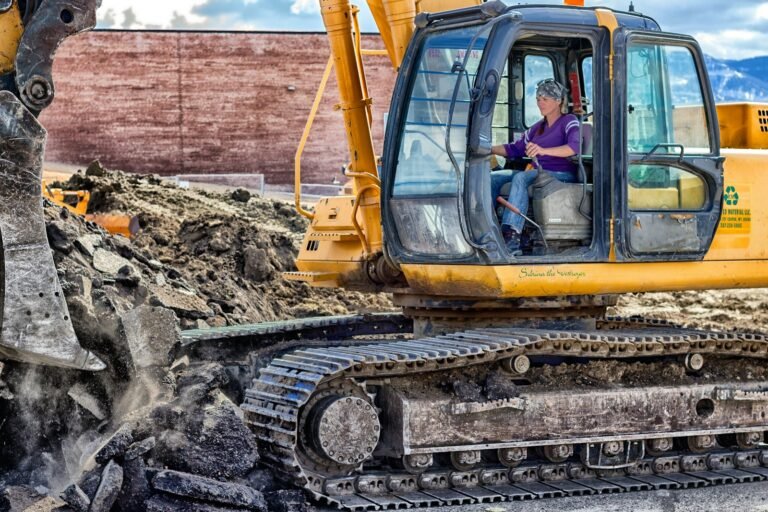
A CPCS card is a plant operator card issued under the Construction Plant Competence Scheme. It shows that the holder has passed tests on a specific category of machine, such as a 360 excavator, a forward tipping dumper or a telehandler. It is not a legal licence, but many construction sites will not let you operate plant without one, or an equivalent such as an NPORS card. This guide explains how the card works, which categories match the machines we hire, how to get one, and what it means when you hire self-drive plant from us.

In this guide
This is general information, not legal advice. Card scheme rules and category codes are updated from time to time, so always check the current guidance with the scheme or an accredited test centre.
What is a CPCS card?
CPCS stands for the Construction Plant Competence Scheme. It was originally run by CITB and is now administered by NOCN, which describes itself as the awarding body for the scheme’s cards. CITB still runs the Health, Safety and Environment (HS&E) test that most operators sit as part of getting a card.
Each card lists the categories the holder is qualified in. A category is a type of machine, and many categories have endorsements that narrow it down, for example tracked or wheeled, or a size band. So the card doesn’t say “can drive plant”; it says “has passed the tests for these particular machines”.
CPCS operator cards carry the CSCS logo. That matters because the Construction Leadership Council directs the industry to accept card schemes that carry the CSCS logo, which is why main contractors and housebuilders ask for them at site induction.
Red card or blue card: the two levels
There are two main levels of card, and the colour tells a site manager a lot.
| Red Trained Operator card | Blue Competent Operator card | |
|---|---|---|
| What it shows | Passed the CPCS theory and practical tests for the category | Passed the tests and achieved a relevant NVQ or SVQ |
| How long it lasts | Two years, not renewable (extensions in certain circumstances) | Five years, renewable |
| What comes next | Complete the NVQ to upgrade to blue | Renew with CPD, HS&E test and evidence of experience |
| Who holds it | Newer operators building experience on site | Experienced operators with assessed workplace competence |
The red card is a starting point. The idea is that you gain real site experience while holding it, then complete an NVQ, most commonly the Level 2 in Plant Operations, which assesses you doing the job in the workplace. Once that’s done, you upgrade to the blue card.
If the red card runs out before you finish the NVQ, you can’t simply renew it. That’s why it’s worth registering for the NVQ early and logging your site experience from the start.
CPCS card categories for the machines we hire
This is where people most often get caught out. A card for one machine doesn’t cover another, and some categories split by size. The table below matches CPCS categories, as listed in NOCN’s category information, to machines in our fleet. Codes are correct at the time of writing; check the current CPCS category list before booking a test.
| Our machine | CPCS category | Notes |
|---|---|---|
| Sunward SWE 08B to SWE 90UF excavators (0.8 to 9 tonnes) | A58 Excavator 360º below 10 tonnes | Tracked endorsement. A59 is the above 10 tonnes category |
| HG 1000 wheeled dumper | A09 Forward Tipping Dumper | A endorsement is wheeled |
| Hyundai 500kg tracked dumper, Mechbadger tracked dumper | A09 Forward Tipping Dumper | B endorsement is tracked |
| Merlo P40.14 telehandler (14m reach) | A17 Telescopic Handler | A17B covers up to 9 metres; larger machines fall under A17C |
| Sunward SWL 2830 tracked skid-steer loader | A23 Skid Steer Loader | Check with your test centre |
| EP EFL 253 and CESAB B420 electric forklifts | A16 Industrial Forklift Truck | Warehouses often use other accredited lift-truck schemes |
| Sunward 0807DC scissor lift | A25 Mobile Elevating Work Platform, Scissor | Other powered access schemes are also widely used |
| Dragon 400 and 450 tracked crushers | A42 Crusher | Check with your test centre |
| John Deere 6155R tractor | A33 Agricultural Tractor | Only relevant where a site asks for a card |
Some compact machines, such as tracked carriers, don’t fit neatly into one category. If a site will ask for a card, check with your training provider which category covers the exact machine you’ll be using.
Why A58 matters for mini diggers
Every excavator in our Sunward range is under 10 tonnes, from the micro SWE 08B to the 9 tonne SWE 90UF, so the 360º excavator below 10 tonnes category is the one most of our hirers will meet. You can see the full range on our construction equipment page. A test taken on a larger machine may also bring the smaller category with it, so ask your test centre what you’ll be awarded.
How to get a CPCS card, step by step
The route to a red card follows a set order, with time limits between each stage. According to the CPCS red trained operator card guidance, you need to:
- Pass the relevant HS&E test. CITB runs the HS&E operatives test, a touch-screen test on site safety.
- Pass the CPCS theory test for your category within two years of the HS&E test.
- Pass the CPCS practical test within six months of the theory test, and within two years of the HS&E test.
- The test centre applies for your card once you’ve passed.
Tests have to be taken at a CPCS accredited test centre. Many people take a training course with the centre first, especially if they’re new to the machine. Experienced operators sometimes go straight to the test.
Upgrading to the blue card
While you hold the red card, you register for and complete the NVQ. That involves an assessor gathering evidence of you doing the job on site, so you need regular work on the machine. Once the NVQ is achieved, you apply for the blue Competent Operator card.
Renewing a blue card
The blue card lasts five years. CPCS says renewal needs the relevant HS&E test, the renewal CPD and, for each category, logbook hours, a practical test or an on-site assessment. It’s worth keeping your logbook up to date from day one, rather than trying to reconstruct five years of hours at the end.
Older cards issued under so-called grandfather rights stopped being renewed at the end of 2024, so anyone still relying on one should check where they stand.
What does a CPCS card cost?
The cost varies a lot, and we don’t quote training prices. It depends on:
- Whether you need a training course or just the test.
- The category, as larger and more complex machines usually need longer courses.
- How many categories you take at once.
- The test centre and its location.
- The NVQ, which is a separate cost when you upgrade.
- Whether your employer pays, or whether grant funding is available. CITB publishes a list of plant training and CPCS tests eligible for its grant for registered employers.
Ask several accredited centres for quotes, and check exactly what is included, such as the HS&E test, the card fee and any retests.
CPCS or NPORS?
NPORS, the National Plant Operators Registration Scheme, is the other major plant operator scheme in the UK. Many sites accept either, as long as the card carries the CSCS logo. The two schemes are similar in structure, with a few differences worth knowing.
| CPCS | NPORS (CSCS card route) | |
|---|---|---|
| Administered by | NOCN | NPORS |
| Entry level card | Red Trained Operator, two years | Trained Operator, two years, with a possible 12-month extension |
| Full card | Blue Competent Operator, five years | Competent Operator, five years |
| Upgrade route | Relevant NVQ or SVQ | Relevant NVQ or SVQ |
| HS&E test | Relevant HS&E test required | NPORS or CITB health, safety and environment test within two years before applying |
| Non-construction option | Not applicable | Traditional card for other sectors, without the CSCS logo, 3 or 5 years |
The NPORS trained operator card page sets out its own rules. The traditional NPORS card is aimed at industries outside construction, so it can be a sensible choice for a farm, estate or quarry operator who never needs to work on a CSCS-led site.
If you’re working for a particular contractor, ask which cards they accept before you book anything. Some clients state a preference.
Do you need a CPCS card to hire plant from us?
We don’t require a particular operator card. Our hire is self-drive unless otherwise agreed, and our terms say that only competent, suitably qualified and, where required, licensed operators may use the equipment. The hirer is responsible for making sure that’s the case, and must comply with health and safety law including PUWER 1998 and LOLER 1998 where applicable.
In practice, when you book we’ll want to know what the job is and who will be operating. If you’re unsure what level of training suits the machine, ask us. Our team can advise on specific requirements for each machine, and our FAQ page covers training and licensing questions too.
What a card is really about is the site you’re working on. If a principal contractor asks for CPCS or NPORS, you’ll need the right category on your card, whoever supplied the machine.
Homeowners, farmers and the competence rule
Most homeowners and many farmers never need a CPCS card. The law doesn’t name a card. Under PUWER, employers must make sure everyone who uses work equipment has had adequate training, and HSE’s guidance on training and competence says self-propelled work equipment should only be driven by workers who have received appropriate training.
A homeowner digging a soakaway on their own land isn’t an employer, but the risks of the machine are just the same. A farmer whose employees use a hired excavator does have PUWER duties. In both cases, proper training is the sensible answer, even if no card is required.
Training routes that aren’t a card
- A short familiarisation or novice course with an accredited training provider, giving you the basics on a mini digger without a full test.
- An NPORS traditional card for operators who work outside construction, for example on farms and estates.
- In-house training by an experienced, competent person for a business, documented and refreshed at intervals.
- A full CPCS or NPORS CSCS card if you expect to work on construction sites in future.
Planning a hire around training
If you’re getting trained for a particular job, think about timing. Book your HS&E test early, as you need it before the CPCS theory test. Then book the course and test with enough time before the job starts, as test centres can be busy in spring and summer when groundworks pick up.
For newer operators, starting on a smaller machine is sensible. Our Sunward SWE 18UF 1.8 tonne excavator is a zero tail swing machine that’s forgiving in tight spaces, and a good size to build experience on before moving up to larger excavators.
Contractors running crews with mixed experience often find Flex Hire useful, as you can swap machine sizes as operators progress. Tier 1 covers compact kit and everyday tools at £795 +VAT and delivery per month, Tier 2 adds crushers and excavators at £895 and Tier 3 adds large excavators and forklifts at £995.
Common misunderstandings about operator cards
- “It’s a legal licence”: it isn’t. It’s an industry card scheme. The legal requirement is adequate training and competence.
- “One card covers all plant”: it covers only the categories and endorsements listed on it.
- “It lets me drive on the road”: road use is covered by driving licence rules, which are separate.
- “A red card can be renewed”: it can’t. You upgrade to blue by completing the NVQ.
- “Card schemes are interchangeable everywhere”: many sites accept CPCS or NPORS with the CSCS logo, but some clients have preferences, so ask.
A quick checklist before you hire
- Is the job on a site that requires an operator card? If so, which schemes are accepted?
- Does the operator’s card cover the exact category and endorsement, such as tracked or wheeled?
- Is the card in date, and is it red or blue?
- If no card is needed, has the operator had adequate training on this type of machine?
- Have you arranged insurance? It isn’t automatically included in our hire, and we refer customers to our partner insurance4plant.co.uk for plant hire cover.
- Have you checked for underground services and planned site access?
Frequently asked questions
Is a CPCS card a legal requirement?
No. It’s an industry scheme. The law requires that operators are adequately trained and competent. Many construction sites make a CPCS operator card, or a CSCS-logo NPORS card, a condition of working there.
What’s the difference between a red and a blue CPCS card?
The red Trained Operator card shows you’ve passed the CPCS theory and practical tests and lasts two years. The blue Competent Operator card shows you’ve also achieved a relevant NVQ, lasts five years and can be renewed.
Which CPCS category do I need for a mini digger?
For a 360 excavator under 10 tonnes, the category is A58, with endorsements such as tracked. All our Sunward excavators, up to the 9 tonne SWE 90UF, fall under 10 tonnes. Check the current category list with your test centre.
Can I hire a digger without a CPCS card?
Yes, from us. We don’t require a specific card, but the hirer must make sure operators are competent and suitably trained. A site you work on may still require a card.
Is NPORS as good as CPCS?
Both are recognised plant operator schemes, and CSCS-logo cards from either are widely accepted. Check with the contractor or client you’ll be working for, as some state a preference.
What happens if my red card expires before I finish the NVQ?
A red Trained Operator card can’t be renewed. Extensions are available in certain circumstances, so contact CPCS as early as possible if you’re running short of time.
Which category covers a telehandler with 14m reach?
Telehandlers come under A17, with endorsements based on size. A17B covers machines up to 9 metres, so a 14m machine such as our Merlo P40.14 needs a higher endorsement. Confirm with your test centre.
Glossary of card scheme terms
- Category: the type of machine a card covers, such as A58 for a 360º excavator below 10 tonnes.
- Endorsement: a letter after the category that narrows it down, for example tracked or wheeled, or a size band.
- HS&E test: the CITB health, safety and environment touch-screen test, needed before the CPCS theory test.
- Theory test: the CPCS knowledge test for a specific category, taken at an accredited test centre.
- Practical test: the CPCS test of operating the machine, taken within six months of the theory test.
- NVQ or SVQ: a workplace qualification assessed on the job, needed to move from the red to the blue card.
- Logbook: a record of hours on each category, used as evidence when renewing a blue card. CPCS offers paper and digital versions.
- CSCS logo: shows that a card scheme meets the criteria the construction industry uses for site cards.
- PUWER: the Provision and Use of Work Equipment Regulations 1998, which set the legal duty to train people who use work equipment.
Worked examples: who needs what
These illustrative examples show how the same machine can bring very different requirements.
- A groundworker starting on a housing site near Exeter: the principal contractor asks for a CSCS-logo plant card. Operating a 3 tonne excavator and a tracked dumper means the card needs A58 with the tracked endorsement and A09 with the tracked endorsement.
- A self-employed landscaper in Cornwall: most work is private gardens, but some jobs come through a main contractor. A red card in A58 opens those jobs, with the NVQ completed over the next two years.
- A farmer near Hatherleigh clearing ditches with a hired 6 tonne excavator: no card is legally required, but if farm staff operate it, the farmer must make sure they’ve had adequate training under PUWER.
- A homeowner digging foundations for a garden room: no card needed, but a short novice course on a mini digger before the hire makes the job safer and quicker.
Talk to us about your hire
If you’re planning a job and want to check what machine suits your operator’s experience, WhatsApp or call us on 07841 036064 (Monday to Friday, 7:30am to 5:30pm). Send the machine, site postcode, dates and access details, and we aim to reply within the hour in business hours.
To find out more about who we are, see our about page. For written quotes, accounts or multi-machine proposals, use our contact page. We deliver from our depot near Okehampton across Devon, Cornwall, Somerset and Dorset.