
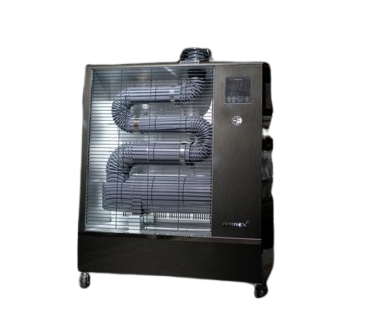
Industrial heater hire gives you clean, dry heat in spaces that were never designed to be heated: workshops, warehouses, barns, lambing sheds, half-built extensions and flood-damaged buildings. At our depot near Okehampton we hire the Airrex 200i, 300i and 800i indirect diesel heaters, the same units we supply for marquees, and they work just as well on farms and sites across Devon, Cornwall, Somerset and Dorset. This guide covers how to choose the right size, where to put it, how to run it safely and how to plan your winter heating before the cold snaps arrive.
In this guide
What industrial heater hire covers at 4Counties
Our heating range is the Airrex i-series of indirect diesel heaters. They sit on our events equipment page because they are popular for marquees, but most of the questions we get from October to March are from farmers, builders and facility managers who need a temporary heat source for a working building.
As a guide to coverage, based on the figures we use for tents:
| Heater | Type | Guide coverage | Typical industrial uses |
|---|---|---|---|
| Airrex 200i | Indirect diesel | Up to about 200m² | Single workshop bays, site cabins and canteens, small lambing sheds, drying a room after a leak |
| Airrex 300i | Indirect diesel, ducted output | Up to about 500m² | Medium barns and stores, warehouse sections, a whole ground floor under refurbishment |
| Airrex 800i | Indirect diesel, high capacity | Large structures | Big agricultural buildings, large warehouses, temporary structures and production spaces |
Those coverage figures assume a reasonably enclosed space. A tall portal-frame barn with open gable ends will need far more heat per square metre than an insulated workshop with the doors shut. WhatsApp us the length, width and eaves height of the building, plus how open it is, and we will tell you which unit, or which combination of units, makes sense.
If you need something we do not list, such as dehumidifiers or electric fan heaters, ask us. We will tell you what is available or point you in the right direction.
Indirect vs direct-fired heaters: why it matters indoors
This is the most important decision in industrial heating, and it is often overlooked when people grab the cheapest heater going.
Direct-fired heaters
A direct-fired heater burns fuel and blows the hot exhaust straight into the space. Every bit of the heat is used, but so are the combustion products: carbon dioxide, carbon monoxide, nitrogen oxides, soot and a lot of water vapour. Burning diesel or paraffin produces roughly as much water by weight as fuel burned, so a direct heater in a closed building can soak the walls and stock with condensation.
Indirect-fired heaters
An indirect heater burns fuel in a sealed combustion chamber. A fan pushes clean air over a heat exchanger and into the building, while the exhaust leaves through a separate flue. The air you breathe and the air you heat are kept apart. That is why the Airrex units are described as producing no fumes inside the space.
For industrial use the practical benefits are:
- Dry heat. No combustion moisture is added, which matters when you are drying a building or curing a screed.
- Cleaner air for people and animals. Exhaust gases go outside rather than building up in the space.
- Less soot and smell. Better for stored goods, fresh plaster, livestock and anyone working inside all day.
- Quieter operation. Useful in workshops, offices and anywhere you need to hear yourself think.
Indirect does not mean risk-free. The flue still carries combustion gases and the unit still needs fresh air to burn. The safety section below covers what to check.
Where industrial heater hire earns its keep
Here are the jobs we see most often in the South West, and what to think about for each.
Workshops, warehouses and stores
Big metal-clad buildings lose heat quickly, and many older units on Devon and Cornwall industrial estates have little or no insulation. A temporary heater keeps staff comfortable during a cold spell, while a heating system is repaired, or while a new unit is fitted out.
HSE guidance on workplace temperature refers to the Approved Code of Practice, which suggests a minimum of 16°C for indoor workplaces, or 13°C where the work involves rigorous physical effort. It is guidance rather than a hard legal limit, and employers are expected to keep temperatures reasonable. See the HSE page on workplace temperature law for the detail.
In a warehouse, aim the ducted output at the areas where people actually work, such as packing benches and goods-in, rather than trying to heat the roof void. Heat rises, and the space above the racking will always be warmer than the floor.
Barns, lambing sheds and calving pens
Lambing on Dartmoor, Exmoor and Bodmin Moor often runs through the coldest, wettest weeks of the year. Heating a whole shed is rarely practical, but a heater ducted into a section of pens, a lambing kitchen area or a sick bay can make a real difference to newborn stock and to the people doing night checks.
Keep the heater itself outside or in a separate, ventilated area, run the warm air in through ducting, and keep ducts and fuel away from straw and bedding. Indirect heat avoids pumping fumes and moisture into the air animals are breathing, but you still need good ventilation for animal health. Your vet or adviser is the right person for stocking and ventilation questions.
For other kit on the farm, such as quads, UTVs and PTO generators, see our agricultural machinery hire range.
Drying out after leaks and floods
The South West gets its share of storm damage, burst pipes and flooded ground floors. Once standing water is gone, warm, dry, moving air is what drives moisture out of plaster, blockwork and timber.
An indirect heater helps because it adds heat without adding water. But heat on its own only moves moisture from the walls into the air. You need to get that damp air out too, either by ventilating (cracking windows on the far side of the building to create a through-flow) or by running dehumidifiers alongside. A sealed, heated room full of wet plaster just becomes a warm, humid room.
Drying a building properly takes time. Your insurer, loss adjuster or drying contractor may set the method and target moisture readings, so speak to them before you start.
Curing concrete and screed in winter
Cold weather slows the chemical reaction that gives concrete and screed their strength, and freezing can damage a fresh pour. Contractors use temporary heat to keep an enclosed area above the temperature the material supplier specifies while it gains strength.
Indirect heat is preferred here. Direct-fired heaters add moisture and carbon dioxide, and carbon dioxide in contact with fresh concrete can cause surface dusting. Follow the manufacturer’s guidance for the screed or concrete you are using, because forcing it to dry too fast with high heat can cause cracking and curling.
Sizing a heater: area, volume and how leaky the building is
Our coverage guide is a starting point. To size properly, think about these factors in order.
- Floor area. Measure length and width. This gives you a first match against the 200i (about 200m²) and 300i (about 500m²) guide figures.
- Height. A 4m eaves workshop has twice the air volume of a 2m-high space of the same footprint. Tall agricultural buildings need more output.
- Insulation. Insulated panels hold heat. Single-skin sheeting, open-sided barns and broken roof lights do not.
- Air leakage. Large doors opening for forklifts or tractors, gaps at the eaves and missing cladding all let heat escape.
- Target temperature. Frost protection for stock or materials needs much less heat than a comfortable working temperature.
- Outside temperature. Plan for the coldest nights you expect, not an average day.
It is often better to heat part of a building well than the whole of it badly. A temporary partition, a heavy tarpaulin curtain or simply closing off a bay can mean a 200i does the job instead of an 800i.
Worked examples
These are illustrations to show the thinking, not quotes or guarantees.
- Vehicle workshop, 15m × 10m, insulated panels, roller door kept shut. About 150m² and well sealed. A 200i is the natural starting point.
- Farm building, 30m × 15m, open on one side, lambing pens at one end. Heating all 450m² of a part-open shed is a losing battle. Curtain off the pen area and duct a 200i or 300i into it.
- Ground floor of a flooded house, about 90m² of rooms. Heat is not the challenge, airflow is. A 200i ducted in, with a planned route for damp air to leave and dehumidification alongside.
- Warehouse, 40m × 20m, racked, with regular door openings. 800m² with heat loss at the doors. Look at an 800i, or two smaller units placed near the busy working zones.
Fuel, running and power
Fuel
The Airrex i-series runs on diesel. Tell us how many hours a day you expect to run it and for how many days, and we will talk you through fuel consumption and how often you will need to fill up. Use clean fuel from a clean container. Water or dirt in the fuel is one of the most common causes of a heater failing to start.
If you are storing extra fuel on site, keep it in a suitable container, away from the heater intake and any ignition source, and check the current rules on oil storage if you are holding large volumes.
Power for fans and controls
Indirect heaters need electricity to run the burner, controls and fan, even though the heat comes from diesel. In a workshop that is usually a normal socket, but plenty of barns, remote sheds and building sites have no reliable supply.
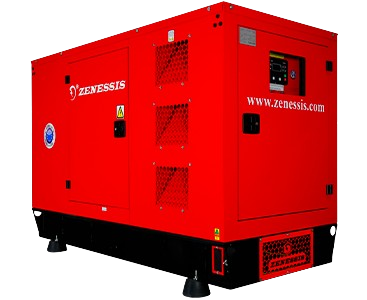
For those, we hire the Zenessis 25kVA 3-phase towable diesel generator, and PTO-driven generators for farms with a suitable tractor. One generator can often run the heater, site lighting and small tools together. Tell us everything you want to power and we will match the right unit. Other generator sizes are available on request.
Use outdoor-rated leads, keep connections off wet ground and route cables where they will not be driven over. For temporary electrical work in commercial settings, use a competent person to set it up.
Ventilation and carbon monoxide safety
Any fuel-burning appliance can produce carbon monoxide, a gas you cannot see, smell or taste. HSE guidance for construction lists fuel-burning equipment used in enclosed or poorly ventilated spaces among the sources of carbon monoxide risk. Read the HSE guidance on carbon monoxide before you plan where the heater goes.
With an indirect heater, the main risks are a blocked, damaged or badly placed flue, and the heater being starved of combustion air. Run through this checklist every time you set up:
- Place the heater on firm, level ground with clear space all round, as set out in the operating instructions.
- Make sure the exhaust flue discharges outside, well away from doors, windows, air intakes and where people stand.
- Never run the heater inside a sealed room with no fresh air supply for combustion.
- Keep fuel, straw, timber, packaging and dust away from the heater and flue.
- Fit carbon monoxide alarms in the heated space and any occupied area nearby.
- Check the flue and ducting daily for damage, blockages and loose joints.
- Do not cover or obstruct the air intake or outlet grilles.
- Switch off and ventilate if anyone reports headaches, dizziness or nausea, and get them into fresh air.
Every hire comes with the operating instructions for that unit. If anything in the manual differs from general advice here, follow the manual and ask us if you are unsure.
Placing the heater and running the ducting
Where you put the heater matters as much as which one you hire.
Outside the building, ducted in
For barns, lambing sheds, sites and flooded houses, the best option is often to stand the heater outside or in an open-sided lean-to and run warm air in through flexible ducting. Fuel, flue and noise stay outside. Only warm, clean air enters the building.
Inside the building
In large workshops and warehouses the heater can stand inside, provided the flue is taken safely to the outside and there is enough air for combustion. Keep it away from fire exits, walkways and forklift routes.
Ducting tips
- Keep duct runs as short and straight as you can. Every bend and extra metre reduces the warm air that arrives.
- Support ducting so it does not sag, kink or lie in water.
- Point the outlet where people or stock are, not straight at a wall or into the roof.
- Do not let ducting touch combustible material near the heater outlet, where it is hottest.
- Keep the ducting out of reach of livestock, which will chew or trample it.
Moving a heater around a site? A tracked or wheeled carrier saves lifting. Our warehouse and cleaning equipment includes electric pallet trucks for flat floors, and we also hire dumpers and the Tracspider electric carrier for rougher ground.
Winter planning for South West sites and farms
Cold snaps in the South West tend to arrive with little warning, and when they do, everyone wants heat at once. A little planning avoids a scramble.
- September and October. Measure buildings, list what needs heating and why, and check you have a power source at each location.
- Before the first frosts. Book heaters for planned jobs such as winter concrete pours, refurbishments that need warm, dry conditions, and lambing.
- Build a contingency. Know which heater and generator you would call for if a heating system fails or a building floods, and have the dimensions ready to send.
- Think about hire period. A single cold weekend suits daily hire. A whole winter of workshop heat or lambing season may be better on a monthly or long-term arrangement.
- Arrange fuel. Make sure you can get diesel to the heater regularly, especially on remote moorland farms.
For contractors who need heaters alongside other plant through the winter, our Flex Hire scheme lets you swap kit within a flat monthly fee. Tier 1 starts at £795 +VAT and delivery per month. Ask us which tier would cover the heating and plant you need.
Common mistakes with temporary heating
- Under-sizing for a tall, leaky building. Floor area alone does not tell the whole story.
- Using a direct-fired heater to dry a building. You add water vapour while trying to remove it.
- Heating without ventilating when drying out. Moisture needs somewhere to go.
- Forgetting the power supply. A diesel heater with no electricity will not run.
- Poor flue placement. Exhaust near a door or air intake can be drawn back inside.
- Long, kinked duct runs. Most of the heat is lost before it arrives.
- Booking late. When the first hard frost arrives, demand peaks across the region.
What happens when you book industrial heater hire
Hire is booked by WhatsApp or phone, not online. Send us:
- What you are heating and why (workshop comfort, drying, curing, livestock, frost protection).
- Building length, width and height, and how open or insulated it is.
- Whether you have power on site, or need a generator.
- Site postcode, access details and dates.
We aim to reply to WhatsApp messages within the hour during business hours. We will recommend a heater, confirm availability and delivery, and give you a current quote. Same-day delivery is possible across much of Devon and Cornwall when the unit is in the yard. Insurance is not automatically included, and we refer customers to insurance4plant.co.uk for hired-in equipment cover.
If a heater develops a fault during the hire, call or WhatsApp us. We will assess the problem and arrange a repair or replacement as quickly as we can.
Frequently asked questions
Can an indirect diesel heater be used inside a building?
Yes, that is what indirect heaters are designed for, provided the exhaust flue is taken safely outside and there is enough fresh air for combustion. Many users prefer to stand the unit outside and duct the warm air in, which keeps fuel and exhaust out of the building altogether.
Which heater do I need for a 300m² workshop?
On our guide figures, a 300m² space sits between the 200i (about 200m²) and the 300i (about 500m²), so the 300i is the likely choice. Ceiling height, insulation and door openings can change that, so send us the details before you book.
Do I need a generator to run the heater?
The heater needs electricity for its burner, controls and fan. If there is a suitable supply in the building you can use it. If not, we hire the Zenessis 25kVA towable generator and PTO generators for farms. Tell us what else you want to power.
Will a heater help dry out a flooded building?
It helps, because warm air holds and moves more moisture and indirect heat adds no water. It works best with good ventilation or dehumidifiers removing the damp air. Check with your insurer or drying contractor on the method they want you to use.
Is it safe to heat a lambing shed with a diesel heater?
Indirect heat is the safer way to do it, with the heater outside or in a separate ventilated area and warm air ducted in. Keep fuel and ducting away from straw and out of reach of stock, fit carbon monoxide alarms where people work, and keep the building ventilated.
How long can I hire a heater for?
Daily, weekly and monthly hire are all available, and long-term hire suits a whole winter or lambing season. If you need other plant alongside the heater, Flex Hire may work out better. WhatsApp us for a current quote.
Book industrial heater hire across the South West
For industrial heater hire in Devon, Cornwall, Somerset and Dorset, WhatsApp or call us on 07841 036064 (Mon–Fri 7:30am–5:30pm) with your building size, power situation, postcode and dates. For written quotes, multiple heaters or account set-up, use our contact page and we will put together a proposal.