Plant hire Plymouth contractors can rely on has to cope with tight city plots, hard ground and sites right on the water. We deliver across Plymouth from our Okehampton depot, roughly 30 miles north via the A386 through Tavistock, and supply everything from micro diggers for back-lane infill to forklifts and scrubbers for commercial unit fit-outs. Here is how to match the kit to a Plymouth site.

In this guide
What makes Plymouth sites different
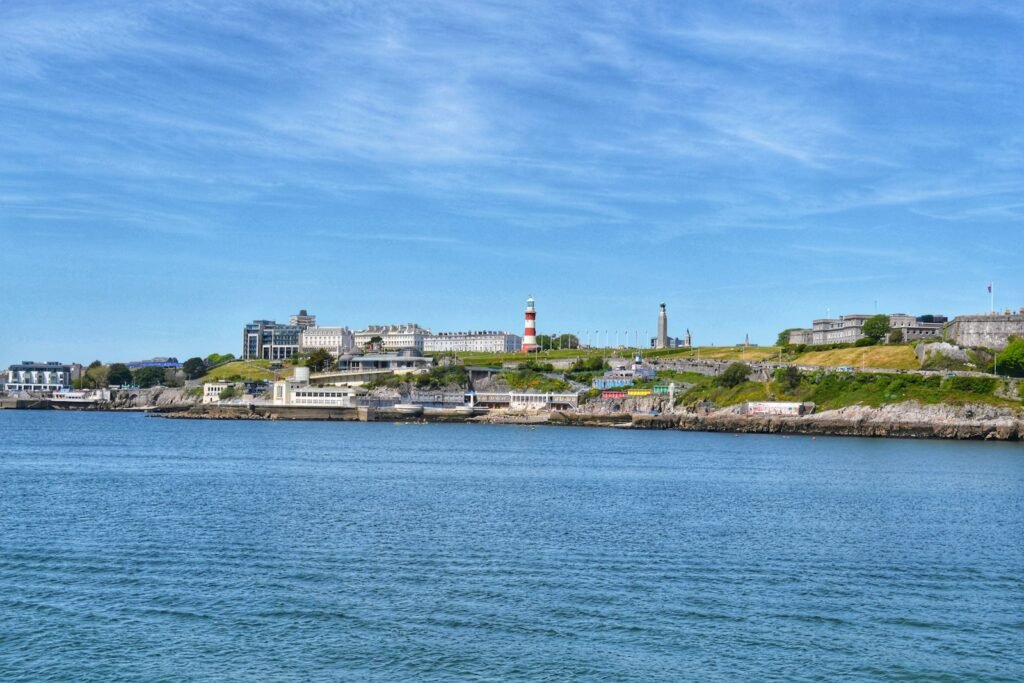
Plymouth packs a lot into a small area. Victorian terraces in Mutley, Stoke and Stonehouse, post-war city centre blocks, Ministry of Defence history around Devonport, and a long waterfront from the Barbican and Sutton Harbour round to Royal William Yard. Each brings its own constraints.
- Tight plots. Infill sites, rear-lane garages and terrace gardens often have no room for a large machine to slew or a lorry to turn.
- Hard ground. Large parts of the city sit on limestone, with slates and shales elsewhere. Rock can be close to the surface, so plan for slower digging and more wear on buckets.
- Salt air and tidal water. Waterfront sites expose machines to spray and wet ground, and some work near the estuaries needs Environment Agency permission (more on that below).
- Traffic and parking. Deliveries need a safe place to unload, and city centre streets have loading restrictions. Tell us about these when you book.
Plant hire Plymouth: matching machines to the job
This table covers the jobs we are most often asked about in the city.
| Job | Suggested kit | Why |
|---|---|---|
| Terrace garden or rear-lane infill | Sunward SWE 08B or SWE 18UF, Hyundai 500kg tracked dumper | Fits narrow access, zero tail swing on the 18UF for digging beside walls |
| Foundations on rocky ground | Sunward SWE 35UF or SWE 60UF | More weight and breakout force for limestone and shale |
| Utility reinstatement and road openings | Weber MT SM 82-3 pavement saw, CR 3-III reversible plate, SRV 300-II SF rammer | Clean cuts and proper compaction in narrow trenches |
| Demolition rubble on regeneration plots | Dragon 400 or 450 tracked jaw crusher | Crush concrete and brick on site for reuse as fill |
| Commercial unit fit-out | Sunward 0807DC scissor lift, EP or CESAB electric forklift | Zero emissions for indoor work |
| Handover clean | Eureka E50 or E36 scrubber, Big Brute vacuum | Large floors cleaned quickly before handover |
Digging in Plymouth’s rock
If you have dug in Plymouth before, you know the ground can switch from soft fill to solid rock within a metre. Old foundations, cellars and buried rubble from earlier buildings are common on brownfield plots too.
- Dig a trial hole first, ideally in the deepest part of the job, so you know what you are dealing with before committing to a machine size.
- If you hit rock early, a heavier excavator usually pays for itself in time saved. Message us and we can swap you up.
- If the job needs a breaker attachment or other specialist kit, ask us and we will tell you what is available or point you in the right direction.
- Locate services before breaking ground. Older streets can have unrecorded cables and pipes, so follow HSE’s HSG47 guidance on underground services.
Made ground, cellars and old foundations
Plymouth was heavily bombed in the Second World War and much of the centre and surrounding streets were rebuilt afterwards, so brownfield plots often sit on made ground: rubble, ash and fill of unknown depth. It can dig easily for a metre and then stop dead on an old slab or cellar wall. Expect the unexpected, keep a bigger machine in mind as a swap, and keep spoil from made ground separate in case it needs testing before disposal.
Old cellars can also leave voids under the surface. If the ground sounds hollow, sags or the bucket breaks into a cavity, stop, keep people and plant back from the edge, and get the void assessed before you carry on.
Waterfront and estuary sites
Plymouth sits between the Tamar and the Plym, and a lot of the more interesting building work happens close to the water. Two practical points.
Check whether you need a permit
Work on or near a main river, flood defence or sea defence may need a flood risk activity permit from the Environment Agency. The GOV.UK guidance on flood risk activities sets out the distances, which are greater for tidal rivers. Check the current guidance well before your start date, as permits take time.
As a rough guide from that page, activities within 8 metres of the bank of a main river, or 16 metres where the river is tidal, are regulated, as is work within 16 metres of a sea defence. Excavation within 16 metres of a main river or flood defence is also covered. Much of Plymouth’s waterfront is tidal, so the larger distances are the ones to think about around Sutton Harbour, the Cattewater, Stonehouse and the Tamar side of the city.
Look after the machine
Salt spray and wet mud are hard on hydraulics, pins and electrics. Wash plant down regularly with fresh water, particularly before it goes back. We hire the Brendon 35KPE mobile power washer if you have no water supply handy.
Commercial and industrial units
Plymouth has a lot of light industrial, marine engineering and warehouse space. For fit-outs, stock moves and maintenance, our warehouse and cleaning equipment is all electric:
- EP F4 electric pump truck (up to 2,000kg) for moving pallets around a unit
- EP ESL 122 pallet stacker (1,200kg, racking to 5m) for compact stores
- EP EFL 253 (2,500kg) and CESAB B420 (2,000kg, side-shift) counterbalance forklifts
- Sunward 0807DC scissor lift with 8m platform height for lighting, signage and racking work
Operators need appropriate training for forklifts and powered access. If you are unsure what your team needs, ask us.
Cleaning a unit before handover
Fit-outs and refurbishments leave a layer of fine dust and debris that a broom just moves around. Start with the Big Brute industrial vacuum to lift loose dust and grit, then scrub. The Eureka E50 ride-on scrubber covers large open floors quickly, while the E36 walk-behind gets into smaller units and between racking.
The Picobello 151 push sweeper is quiet and needs no power, which suits aisles in a unit that is already trading. Outside, the Brendon 35KPE power washer cleans loading bays, yards and the approach to the shutter doors. Booking the cleaning kit for the last few days of the job, rather than the whole hire, keeps the cost down.
Crossing into Cornwall
Many Plymouth contractors also work across the Tamar in Saltash, Torpoint and the Rame peninsula. We cover Cornwall as well, so one hire can move between sites on both sides of the river. Let us know the full plan so we can quote transport properly.
If you are moving your own kit between sites, remember the Tamar Bridge toll is only charged in one direction, eastbound into Plymouth, and that the bridge and the Torpoint Ferry can both queue at peak times. For a plant hire Plymouth job that spans both sides of the river, it often makes sense to keep a machine on each side rather than shuttle one back and forth.
Hire periods for longer city projects
Regeneration and refurbishment work in Plymouth rarely runs to a neat timetable. Ground surprises, deliveries held up in traffic and wet weeks off the water all push dates back. A few ways to keep hire costs predictable:
- Weekly hire is the most popular option and usually the sensible starting point for groundworks.
- Monthly and long-term rental gives monthly rates with on-site servicing included, which suits a machine that will sit on one site for a season. See our long-term rental page for how it works.
- Flex Hire is one flat monthly fee with swaps whenever the job changes, from Tier 1 at £795 +VAT and delivery per month for compact kit, up to Tier 3 at £995 for large excavators and forklifts. There is no long-term contract, servicing is included and there is a 10% rebate.
Flex Hire works well when a project moves from groundworks to fit-out. You might start with a 6 tonne excavator, swap to a dumper for landscaping, then finish with a forklift inside the building, all under one account.
Whichever period you choose, tell us early if the programme slips. Extensions are arranged by WhatsApp or phone before the original end date, subject to availability, and off-hiring the moment a machine is finished stops the charges. On city sites where space is tight, sending a machine back promptly also frees up room for the next trade.
Recycling rubble on Plymouth regeneration sites
Brownfield plots in Plymouth often come with a lot of old concrete, brick and hardcore, from slabs and garages to the foundations of buildings long gone. Hauling it away and buying in new stone costs money and lorry movements on busy city roads. Crushing it on site and reusing it as fill or sub-base can make more sense.
Choosing a crusher
- Dragon 400 tracked jaw crusher: a compact option for concrete, brick and aggregate on tighter plots.
- Dragon 450 tracked jaw crusher: higher output for bigger demolition and recycling jobs.
- Dragon CR400 concrete crusher: another option for concrete-heavy jobs. Ask us which suits your material.
Doing it properly
- Separate the material. Pull out timber, plastics, metal and anything contaminated before it goes near the crusher. Clean hard material makes better fill.
- Check the paperwork. Crushing and reusing construction waste can need a registered waste exemption or an environmental permit, depending on what you are doing and how much. The GOV.UK waste exemption guides set out the options. Check the current guidance before you start, as this is general information only.
- Think about neighbours. Crushing is noisy and dusty. Plan working hours with the people around you in mind, and keep dust down with water where needed.
- Feed it with the right machine. A Sunward SWE 60UF or SWE 90UF loads a crusher comfortably and sorts the stockpile afterwards.
- Compact the result. Crushed material laid as sub-base needs proper compaction in layers. The Weber MT CR 7 reversible plate suits large areas.
Worked example: a rear-lane garage plot in Stoke
This is an illustrative scenario, not a real customer. A small builder is clearing a row of three old lock-up garages off a rear lane in Stoke to build a pair of small houses. The lane is narrow, cars park on one side, and the plot slopes down from the lane with rock close to the surface at the back.
| Phase | Kit | Notes |
|---|---|---|
| Demolition and slab removal | Sunward SWE 35UF | Small enough for the lane, heavy enough to break out old slabs. Ask about breaker options if needed. |
| Recycling the rubble | Dragon 400 crusher | Turns slabs and block walls into fill for the new levels. |
| Foundations in rock | Sunward SWE 60UF, swapped in for a week | More breakout force where the limestone is shallow. |
| Drainage and services | Sunward SWE 18UF, Weber MT SRV 300-II SF rammer | Zero tail swing alongside boundary walls, slim-foot rammer in narrow trenches. |
| Lane reinstatement | Weber MT SM 82-3 saw, CR 3-III plate | Clean cuts and compacted sub-base where services cross the lane. |
Swapping machines as the job moves on is where a nearby depot and a flexible account help. Under Flex Hire, the swap from the 3.5 tonne to the 6 tonne machine and back down to the 1.8 tonne happens under one monthly fee rather than three separate hires.
Planning a city delivery
Plymouth deliveries go wrong for predictable reasons: nowhere to unload, a steep street, cars blocking the entrance or a low arch nobody mentioned. Giving us the full picture up front avoids a wasted trip, and our terms make abortive delivery costs caused by poor access the hirer’s responsibility.
- Where can the lorry stop? Send a photo or a map pin of the unloading spot. Loading bays, side streets and site entrances are all options.
- How steep is it? Tracked machines are unloaded more safely on level ground. If the street is steep, tell us so we can plan the drop.
- What is overhead? Low bridges, archways, overhanging trees and cables affect both the lorry and the machine.
- When is the street quietest? Early morning usually works best in residential areas, and traffic around the city centre and Devonport builds through the day.
- Who will meet the driver? Someone needs to sign for the machine, and on a busy street it helps to have a second person keeping pedestrians clear while it is unloaded.
- Will anything stay on the highway? Leaving plant, skips or materials on the road normally needs permission from Plymouth City Council as the highway authority. Arrange it in advance.
Safety and paperwork checklist for plant hire Plymouth jobs
Busy city sites have more people around them than a farm or rural plot, so the basics matter even more. Use this as a quick check before the machines arrive.
- Operator training. Hire is self-drive unless otherwise agreed. Many commercial sites expect excavator and dumper operators to hold a CPCS or NPORS card. For forklifts, HSE’s guidance on managing lift trucks points to its Approved Code of Practice on operator training, which sets the basic standard.
- Underground services. Follow HSG47, get utility records and scan before breaking ground. Old cellars and unrecorded cables are common in older parts of the city.
- Excavations. Decide on trench support before digging, keep spoil and plant back from the edge and inspect at the start of each shift.
- Public protection. Fence off the work area from pavements and lanes, and use a banksman when tracking machines near people or traffic.
- Insurance. Cover is not automatically included with hire. Check your policy covers hired-in plant, or we can refer you to our partner insurance4plant.co.uk.
- Fuel. Machines arrive full and should go back full, using white diesel (DERV) only, as our hire terms require.
- Security. City sites attract theft. Lock machines, remove keys, and park plant where it is hard to load onto a trailer overnight.
Frequently asked questions
Do you deliver plant to Plymouth city centre?
Yes. Tell us about loading restrictions, access and where the lorry can stop, and we will plan the drop-off. Same-day delivery is often possible, subject to availability.
Can you supply several machines for a Plymouth project?
Yes. For multi-machine or longer projects, send details through our contact form and we will put together a tailored proposal with an account manager.
What is the best digger for Plymouth limestone?
For anything more than shallow work, a 3.5 or 6 tonne excavator copes far better than a micro digger. Dig a trial hole and send us a photo if you are not sure.
Is insurance included?
No. Insurance is not automatically included with hire. Check whether your policy covers hired-in plant, or we can refer you to our partner insurance4plant.co.uk.
Can I use crushed concrete from my site as fill?
Often, yes, once it is clean and properly crushed. Depending on the quantities and how it is used, you may need a waste exemption or permit, so check the GOV.UK waste exemption guides first.
Do you hire forklifts for short jobs at Plymouth units?
Yes. Our electric forklifts, stackers and pump trucks are available daily, weekly or longer, subject to availability. Operators must be trained.
Can one plant hire Plymouth booking cover sites in Cornwall too?
Yes. We cover both sides of the Tamar. Tell us every site on the plan so we can quote transport between them.
Get a quote for plant hire Plymouth sites
WhatsApp or call 07841 036064 (Mon–Fri 7:30am–5:30pm) with the machine, site postcode, dates and access details. We aim to reply within the hour. For bigger projects or written quotes, use our contact form, or browse the full construction fleet.