
A sleeper retaining wall is one of the most practical ways to level a sloping garden, build raised beds or terrace a bank. Timber or concrete sleepers are heavy, straightforward to cut and fix, and look at home in both cottage gardens and modern landscapes. The walls that last are the ones built with proper posts, a solid base and good drainage behind them.
In this guide
This guide covers which sleepers to choose, how high you can sensibly build, how to drain and fix the wall, and the equipment that makes the job faster, from a mini digger for the footing to a post hole borer and a tracked dumper for moving materials. It is general guidance for low garden walls, not a substitute for an engineer’s design where one is needed.
Choosing sleepers for a retaining wall
The sleeper you choose decides how long the wall will last, how much it weighs and how easy it is to cut. These are the main options.
| Sleeper type | Typical traits | Things to watch |
|---|---|---|
| Reclaimed railway sleepers | Very dense hardwood, characterful, heavy | Often treated with creosote or tar; uneven sizes; can contain old metal fixings that ruin saw blades |
| New softwood (pressure treated) | Lighter, cheaper, easy to cut and fix | Shorter life in wet ground; buy timber treated for ground contact and treat cut ends |
| New hardwood (oak and similar) | Long life, strong, attractive weathering | Very heavy; green oak moves and splits as it dries; tannin can stain paving |
| Concrete sleepers | Will not rot, consistent size, often used with steel posts | Heavy and awkward to handle; need accurate post spacing; harder to cut |
A note on creosote
Old railway sleepers are often treated with creosote. Under the Creosote (Prohibition on Use and Marketing) Regulations 2003, wood treated with creosote should not be used in gardens, parks and outdoor leisure areas where there is a risk of frequent skin contact, or in playgrounds and garden furniture. For a retaining wall next to a lawn, path, seating area or children’s play space, new untreated hardwood, ground-contact treated softwood or concrete sleepers are the safer choice. Check the current rules if you are unsure.
How high can a sleeper retaining wall be?
A retaining wall holds back a lot more force than people expect. Wet soil is heavy, and the pressure behind the wall rises quickly with height. That is why the most common failure is a wall that looks fine for a year and then starts leaning outwards after a wet winter.
For a DIY sleeper retaining wall, keep it low. Walls of two or three sleepers high, retaining a gentle change in level, are well within what a careful homeowner can build. Once you go above roughly a metre of retained soil, or if anything heavy sits near the top of the wall, get advice from a structural or civil engineer. Treat that figure as a sensible threshold for seeking advice, not a guarantee that anything lower is always safe.
When to get an engineer involved regardless of height
- A driveway, parking space, shed or building sits close to the top of the wall.
- The wall supports a path or steps that people use every day.
- The ground is very wet, springy or prone to movement.
- The wall is on or close to a boundary, a public footpath or a highway.
- A collapse would affect a neighbour’s property.
If the slope is tall, it is usually better to break it into a series of lower terraces than to build one high wall. Each terrace holds back less soil, and the result is often easier to garden.
Wall designs that work
Horizontal sleepers with vertical posts
This is the most common design. Sleepers are laid on their sides, stacked on top of each other, and fixed to vertical posts set in concrete on the soil side of the wall. The posts do the real work of holding the wall back, so they need to go deep into firm ground. Stagger the joints between courses like brickwork so there is no continuous vertical joint.
Vertical sleepers set in the ground
Here sleepers are stood on end in a trench, with a good proportion of their length buried and concreted in. It gives a striking stepped or uneven top and suits curved walls. It uses more timber and a deeper trench, but it avoids the need for separate posts.
Raised beds and low edging
A single sleeper or two laid flat on a compacted base makes a raised bed or a low step. These retain very little soil and can often be pinned rather than posted, but the base still needs to be level and firm.
Drainage behind the wall
Water is the enemy of every retaining wall. Saturated soil weighs more and pushes harder, and constant damp shortens the life of timber. In the South West, where heavy winter rain is normal, drainage is not optional.
- Line the back of the wall with a permeable geotextile membrane. It keeps soil from washing into the drainage stone while letting water through. Some builders also fit a waterproof liner against the timber itself to protect it from constant wet soil.
- Lay a perforated land drain pipe along the base of the wall on the soil side, with a fall to a suitable outlet such as a soakaway or existing drain. Do not run it onto a neighbour’s land.
- Backfill directly behind the wall with clean gravel or drainage stone, typically a band a few hundred millimetres wide, up to near the top.
- Fold the membrane over the top of the gravel and finish with topsoil so you can plant right up to the wall.
- Leave small gaps or weep points at the base of tall walls so water can escape rather than build up.
A gravel backfill also reduces frost heave. Clay soils hold water and expand, which can push a timber wall out of line over a few winters.
Equipment for building a sleeper retaining wall
A short wall can be dug by hand, but any wall of real length, or one in heavy clay or stony ground, goes much faster with the right machines. Everything below is available from our depot near Okehampton.
- Mini digger for cutting back the bank, digging the footing trench and handling backfill. The 0.8 tonne Sunward SWE 08B micro excavator fits through narrow garden access, while the 1.8 tonne SWE 18UF zero tail swing digger suits bigger terraces. See the full range on our construction hire page.
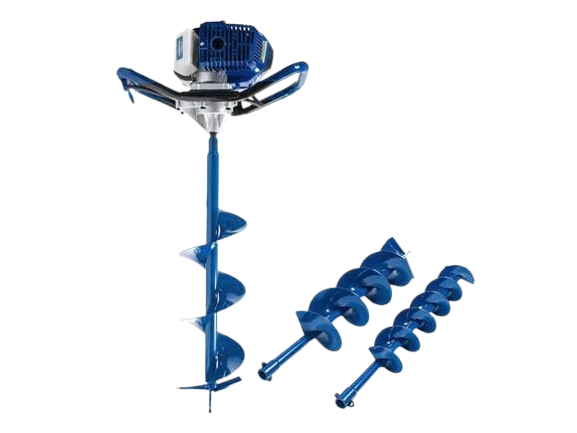
- Hyundai pedestrian post hole borer for drilling neat, consistent holes for the posts, listed on our sports and landscaping hire page.
- Tracked dumpers such as the Hyundai 500kg tracked dumper for narrow access, or the Mechbadger tracked dumper for rough ground, to move spoil, gravel and concrete.
- Tracspider 1000kg electric tracked bed carrier for carrying sleepers and materials across lawns, slopes and soft ground, quietly and without exhaust fumes near the house.
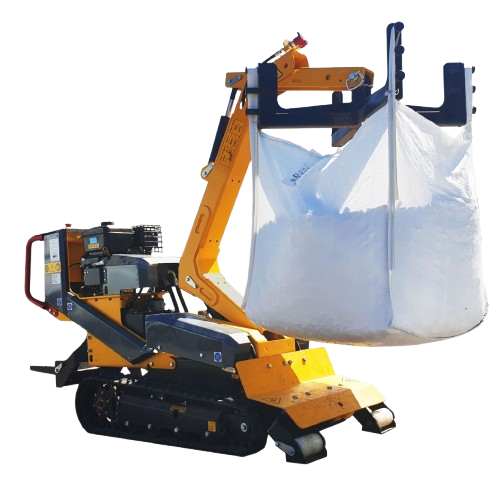
- Dragon LT1000 dumpy bag lifter for handling bulk bags of gravel, sand and topsoil.
- Plate compactor from the Weber MT range for compacting the base under the first course.
- Altrad Belle Mini Mix 150 cement mixer, from our hand tools range, for mixing post concrete on site.
You will also need a chainsaw or large circular saw for cutting sleepers, a long spirit level, string lines, a heavy-duty drill or impact driver, and suitable timber screws or brackets. Ask us what else is available if you need it.
Step by step: building a sleeper retaining wall
- Check for services. Before you dig or bore, find out where cables and pipes run. Use a LinesearchbeforeUdig enquiry and check with your utility companies, and scan the line with a cable locator if you can.
- Set out the line with pegs and string, and mark the finished height at each end.
- Cut back the bank with the mini digger, leaving room behind the wall for posts, membrane and drainage gravel. Stockpile topsoil separately from subsoil.
- Dig the footing for the first course and compact a level base of sub-base or lean concrete. The first course must be dead level along its length.
- Bore the post holes at regular intervals behind the line. Posts commonly sit at each sleeper joint and at intermediate points, with roughly a third or more of the post buried. Your design or supplier guidance will give exact spacing.
- Set the posts in concrete, plumb and in line, and let the concrete gain strength before loading them.
- Lay the first course on the base, check it for level and fix it to the posts.
- Build up the courses, staggering joints and fixing each sleeper to the posts and to the course below.
- Fit membrane, pipe and gravel as you build, rather than trying to add them at the end.
- Backfill in layers and compact lightly behind the gravel zone. Heavy compaction right against the wall can push it out of line.
- Finish the top with topsoil and planting, or a capping sleeper if you want a seat.
Fixing methods
Fixings hold the courses together and transfer the load from the sleepers into the posts. Use fixings designed for structural timber and for outdoor use.
- Long timber screws driven through the sleeper into the post are the most common method for timber walls. Pre-drill dense hardwood to avoid splitting.
- Steel angle brackets or plates on the soil side can tie sleepers to posts where screws alone are not enough.
- Steel posts with an H or channel section are used with concrete sleepers, which slot in between them.
- Pinning with steel bar through pre-drilled holes into the ground suits low raised beds, not proper retaining walls.
Avoid relying on nails or a few short screws into end grain. They loosen as the timber shrinks and swells through the seasons.
Terraced gardens on Devon and Cornish slopes
Many homes across Devon and Cornwall sit on sloping plots, from hillside villages on the edge of Dartmoor to valley-side towns in North Devon and Cornwall. Terracing with sleepers can turn an unusable bank into level lawn, beds and a seating area.
Local ground conditions matter. Heavy clay is common in Mid and North Devon and holds water through the winter, so drainage behind the wall is essential. On the shillet found in many parts of Devon and Cornwall, digging can be hard going and a post hole borer or digger saves a lot of effort. Granite areas around Dartmoor and Bodmin Moor can throw up boulders at shallow depth, so expect to adjust post positions. Springs and seepage lines on hillsides are common, and if you find running water when you dig, take advice before building over it.
Spring and early autumn are usually the best times to build. The ground is workable, and you avoid both the waterlogged clay of midwinter and the baked, hard ground of a dry summer.
Planning, boundaries and neighbours
Most low garden retaining walls do not need planning permission, but there are exceptions, and it is worth checking before you start. The Planning Portal guidance on fences, gates and garden walls explains the general height limits for walls: usually up to one metre next to a highway and two metres elsewhere without permission. It does not deal specifically with retaining walls, and listed buildings, conservation areas and properties with restrictions can be different, so ask your local planning authority if in doubt.
If you are digging close to a neighbour’s house, garage or wall, the Party Wall etc. Act 1996 can apply to excavations near their foundations, and you may need to serve notice before you start. The GOV.UK explanatory booklet on the Party Wall Act sets out when it applies. Building on a boundary line, or changing ground levels so that water runs onto a neighbour’s land, can also cause disputes, so talk to them early.
Handling sleepers safely
A full-size hardwood or concrete sleeper can weigh well over 50kg, and some weigh much more. Carrying them by hand up a sloping garden is how backs get injured and fingers get crushed.
- Move sleepers with a tracked carrier or dumper wherever you can, rather than carrying them.
- Use two people, or mechanical help, for every lift, and plan the route before you start.
- Wear gloves, safety boots and eye protection, particularly when cutting.
- Cut sleepers on firm supports so the blade does not bind, and check reclaimed timber for old metal fixings first.
- Use a dust mask when cutting treated timber, and collect the offcuts for proper disposal rather than burning them.
- Never stand downhill of a sleeper being moved on a slope.
An illustrative example: terracing a sloping back garden
Imagine a semi-detached house in a Devon market town with a back garden rising about 1.2 metres over 12 metres. Rather than one wall, the owner builds two terraces, each about 600mm high, in new treated softwood sleepers with concreted posts. This example is illustrative, not a real project.
A sensible kit list would be a Sunward SWE 08B micro digger to get through the side gate, a Hyundai 500kg tracked dumper to move spoil to a skip at the front, a post hole borer for the posts, and a plate compactor for the base. With a weekly hire, the owner can dig and set posts in the first few days, let the concrete cure, and then build the courses and backfill in the second half of the week. If rain stops play, the week gives some slack.
Common mistakes with a sleeper retaining wall
- No drainage. The wall leans out after the first wet winter.
- Posts too shallow. The posts hold the wall back, so they need to go deep into firm ground.
- A first course that is not level. Every error multiplies as you build up.
- Continuous vertical joints. Stagger joints so courses tie together.
- Building too high in one go. Terrace the slope instead.
- Using creosoted sleepers next to lawns and play areas. Choose a suitable alternative.
- Skipping the services check. Post holes and footings are exactly where cables get hit.
Frequently asked questions
How deep should sleeper wall posts go?
As a general rule, a good proportion of each post should be below ground, often around a third of its length or more, set in concrete in firm ground. Taller walls, soft ground and heavy loads need deeper posts, so follow your design or seek advice.
Do I need foundations for a sleeper retaining wall?
Yes. The first course should sit on a compacted, level base of sub-base or lean concrete, and the posts need concrete footings. Laying sleepers straight onto soil leads to uneven settlement.
How long does a sleeper retaining wall last?
It depends on the timber, how well it is treated and how wet the ground is. Hardwood and concrete last longest. Good drainage and a liner against the timber extend the life of any timber wall.
Can I build a sleeper wall on a boundary?
You can, but talk to your neighbour first and check the Party Wall Act and planning guidance. Keep the whole structure, including posts and drainage, within your own land unless you have agreed otherwise.
Should sleepers be laid horizontally or vertically?
Horizontal sleepers with posts are the most common and economical for straight walls. Vertical sleepers suit curves and a stepped top, but need more timber and a deeper trench.
What size mini digger do I need?
For a garden with narrow side access, a 0.8 tonne micro digger is usually the answer. For larger terraces with good access, a 1.8 tonne machine digs faster. Tell us your gate width and we will suggest the right size.
Hire the kit for your sleeper retaining wall
WhatsApp or call 07841 036064 (Monday to Friday, 7:30am to 5:30pm) with the machines you need, your site postcode, dates and access details, and we will come back with a quote. You can also send a written enquiry through our contact page.


